
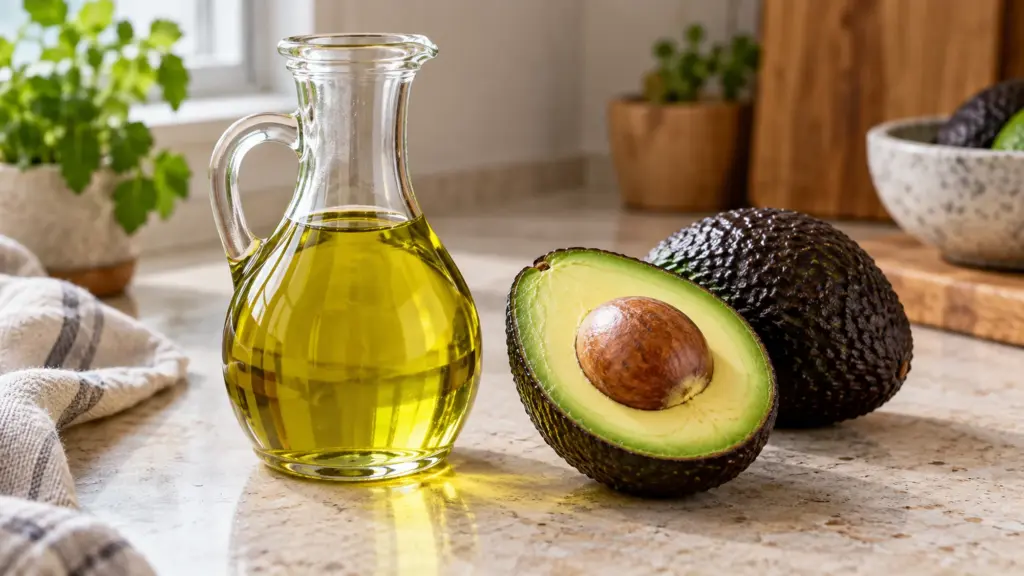
The bottle says avocado oil, but a quick scroll through cooking advice raises a surprisingly stubborn question: is avocado oil a seed oil? The easiest way to answer is to picture a cut avocado. Its soft flesh and its large central pit are different parts of the same fruit.
No. Culinary avocado oil is generally a fruit-pulp oil, made from the avocado’s fleshy tissue rather than classified as a seed oil. A blend containing avocado oil and a seed oil contains both sources.
I prefer starting with that useful distinction before discussing health or shopping claims. Origin, processing and quality answer different questions; none becomes clearer when every bottle gets squeezed into one good-or-bad category.
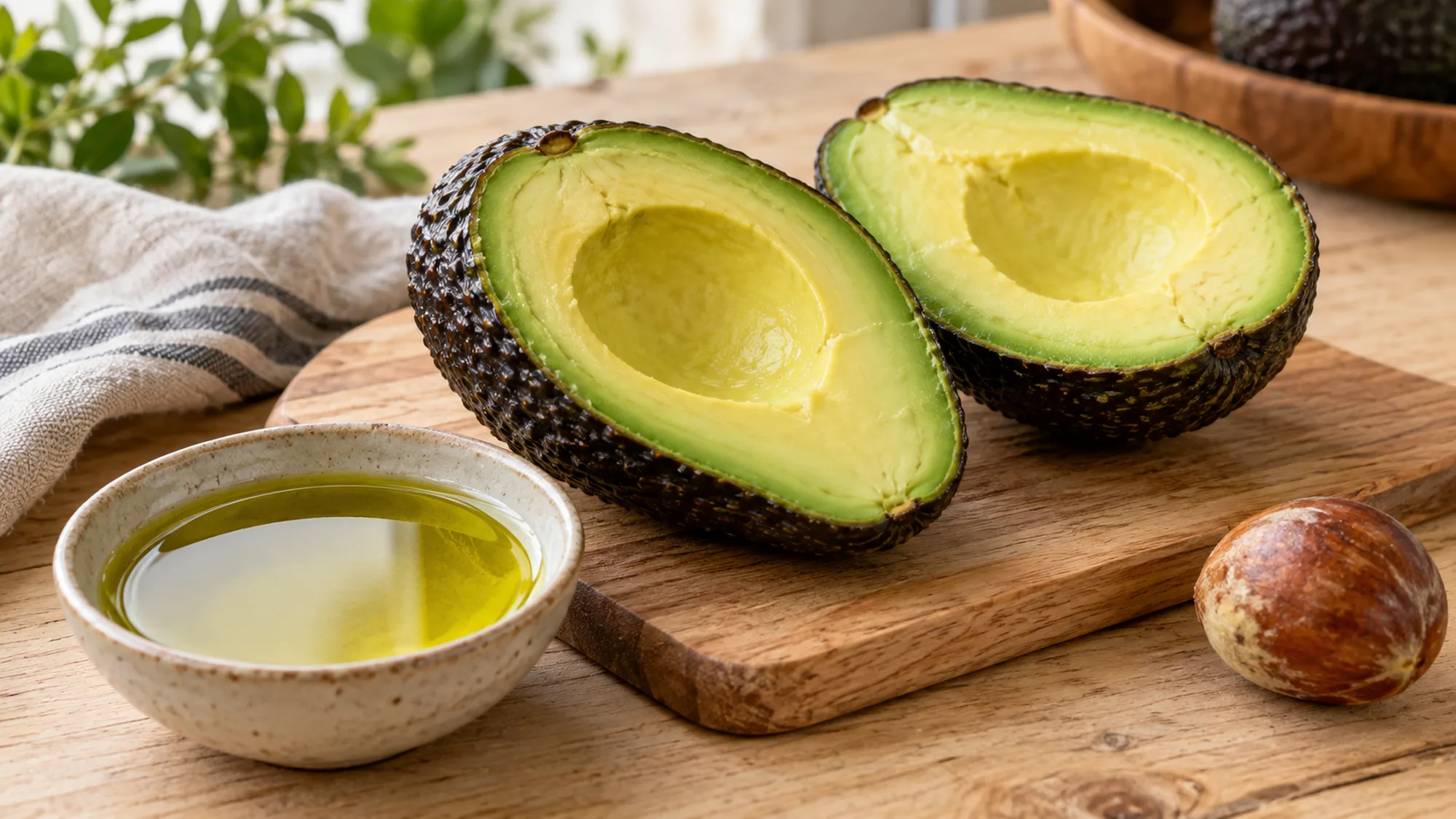
Is avocado oil a seed oil? Follow the fruit
The fleshy layer is called the mesocarp. Avocado oil is commonly recovered from this oil-rich tissue. Production can also involve whole fruit: UC Davis lists research comparing whole-fruit and mesocarp extraction. That nuance makes “the seed can never be involved” a stronger claim than the classification supports.
Think of “seed oil” as a description of a usual source, not a complete manufacturing specification. Our olive-oil source guide explains a similar distinction for another familiar fruit oil. For avocado oil, the practical comparison looks like this:
| Label or term | What it describes | What to check |
|---|---|---|
| Avocado oil | Oil from avocado fruit | Whether other oils are included |
| Seed oil | Oil associated with seeds | The particular oil, not a health slogan |
| Refined | Further processing | Flavor and intended use |
| Oil blend | More than one oil source | Every oil named in the ingredients |
Refined and unrefined are separate choices
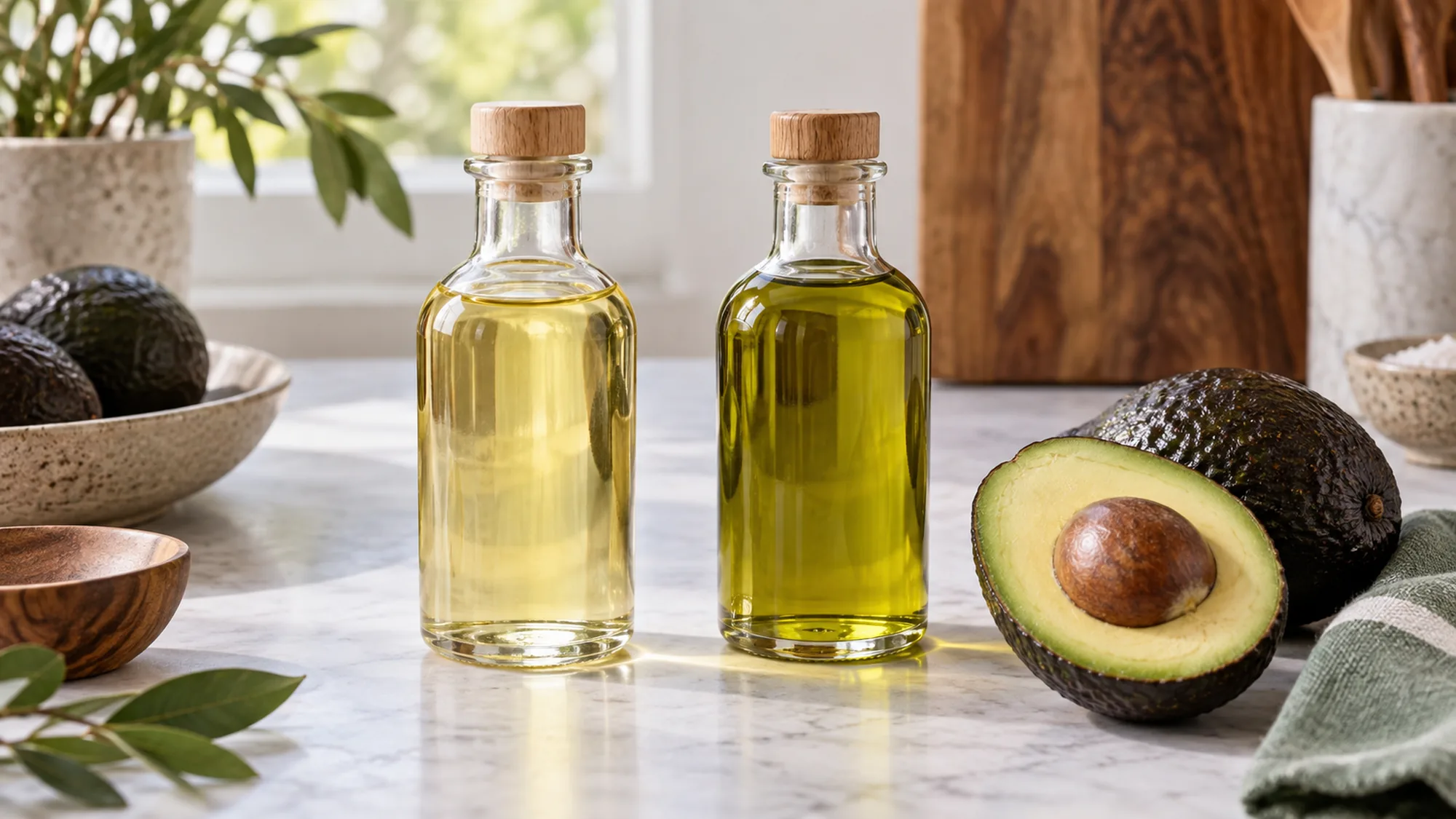
Refining does not turn avocado flesh into a seed. It changes the oil’s processing and usually its flavor and appearance. Unrefined avocado oil can have a more noticeable avocado-like flavor; refined versions are generally milder. Those are useful cooking differences when you want either a finishing flavor or a quieter background ingredient.
Color alone is a poor shopping verdict. Natural variation, processing and storage all matter, and a pretty green tint cannot establish purity. I would choose for the food I am making first, then read the bottle carefully rather than treating a particular shade as a laboratory test.
- For a dressing or finishing drizzle, choose an oil whose flavor you actually enjoy.
- For a dish with delicate seasoning, a milder oil may fit more comfortably.
- For a blended product, read the named oils; the front label may not tell the whole story.
What the label can tell you about nutrition
The American Heart Association includes avocado oil among possible healthy cooking-oil choices. Its advice emphasizes replacing saturated fats with unsaturated fats. That replacement matters more than whether the plant stores its oil in a seed or in fleshy fruit.
Avocado oil is still concentrated fat. It does not provide the same fiber or eating experience as a whole avocado, and adding it freely does not reproduce the findings of studies on whole fruit. There is no need to promise weight loss, reduced inflammation or disease prevention to explain why someone might enjoy using it.
Buying avocado oil without overreading the bottle
Quality and authenticity deserve attention, but old test results are not a permanent ranking of today’s brands. UC Davis’s avocado-oil research program describes quality and purity concerns found in its 2020 and 2023 market studies. Those findings concern the sampled products and dates, not every bottle now on a shelf.
- Check the identity: distinguish avocado oil from a product merely “made with” avocado oil.
- Check the ingredients: a declared blend is different from a product presented as a single oil.
- Check the size: a smaller bottle is sensible if you use oil slowly.
- Check the condition: avoid damaged packaging and store the oil as directed after opening.
A clear label is useful information, although it cannot independently prove purity. I would be cautious about paying extra for sweeping health language that tells me less than the actual ingredient list.
Using the bottle you bring home
Let the oil do an ordinary kitchen job: coat vegetables, dress a salad or help a pan release food. Follow the recipe’s quantity and the bottle’s intended uses. An advertised smoke point is not a target to aim for; if oil starts smoking, stop heating it and allow the pan to cool safely.
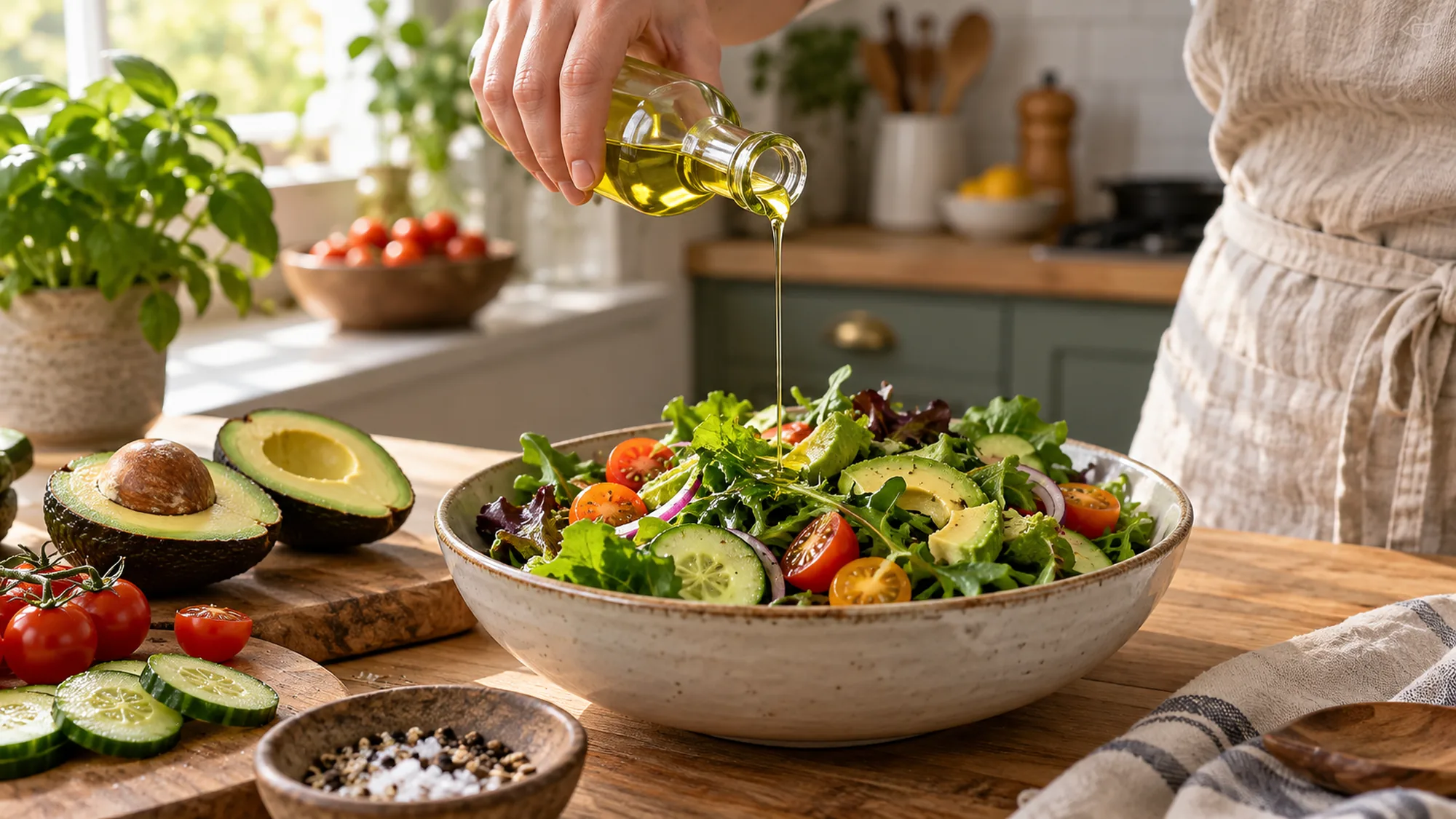
The Heart Association recommends keeping cooking oils in a cool, dark place and discarding oil that smells bad. Close the cap and keep the bottle away from a sunny window or the hot area beside the stove. Good storage is more useful than collecting an oversized bottle you rarely open.
Avocado oil is generally a fruit-pulp oil. Read blends honestly, choose processing and flavor for your cooking, and give freshness and storage the attention they deserve.
Sources
- UC Davis Food Quality Program: avocado-oil research and original publications.
- American Heart Association: choosing, using and storing cooking oils.

Emily Parker is DISHORA’s recipe-writing persona, bringing a warm, practical voice to everyday cooking. Her focus is simple ingredients, comforting flavors and clear steps that make a dish feel approachable. From cozy dinners to something sweet, Emily’s recipes invite readers to try something delicious and make it their own.