
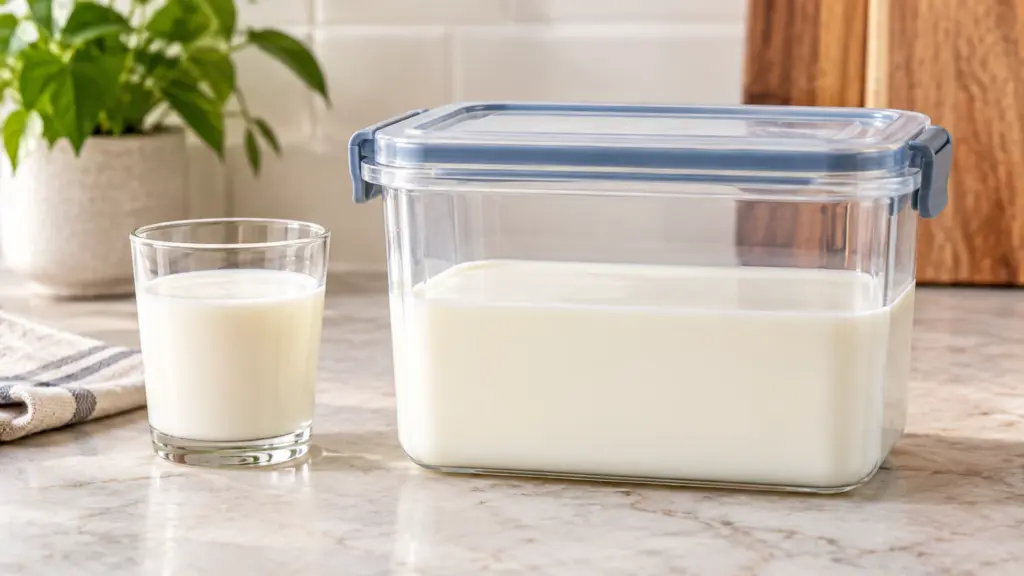
A partly used carton can turn into a small kitchen deadline. If you are wondering, can you freeze milk before it goes to waste, the answer is yes for ordinary pasteurized dairy milk, provided it has been handled safely. The more useful question is how you want to use it afterward.
You can freeze milk in a suitable container with room to expand. Thaw it in the refrigerator, mix it after thawing and expect possible separation or a less smooth texture.
I’d freeze a manageable portion for a planned dish before committing a whole gallon. Saving milk is more useful when the thawed amount has somewhere to go, rather than becoming another carton to think about.
Can you freeze milk in its original container?
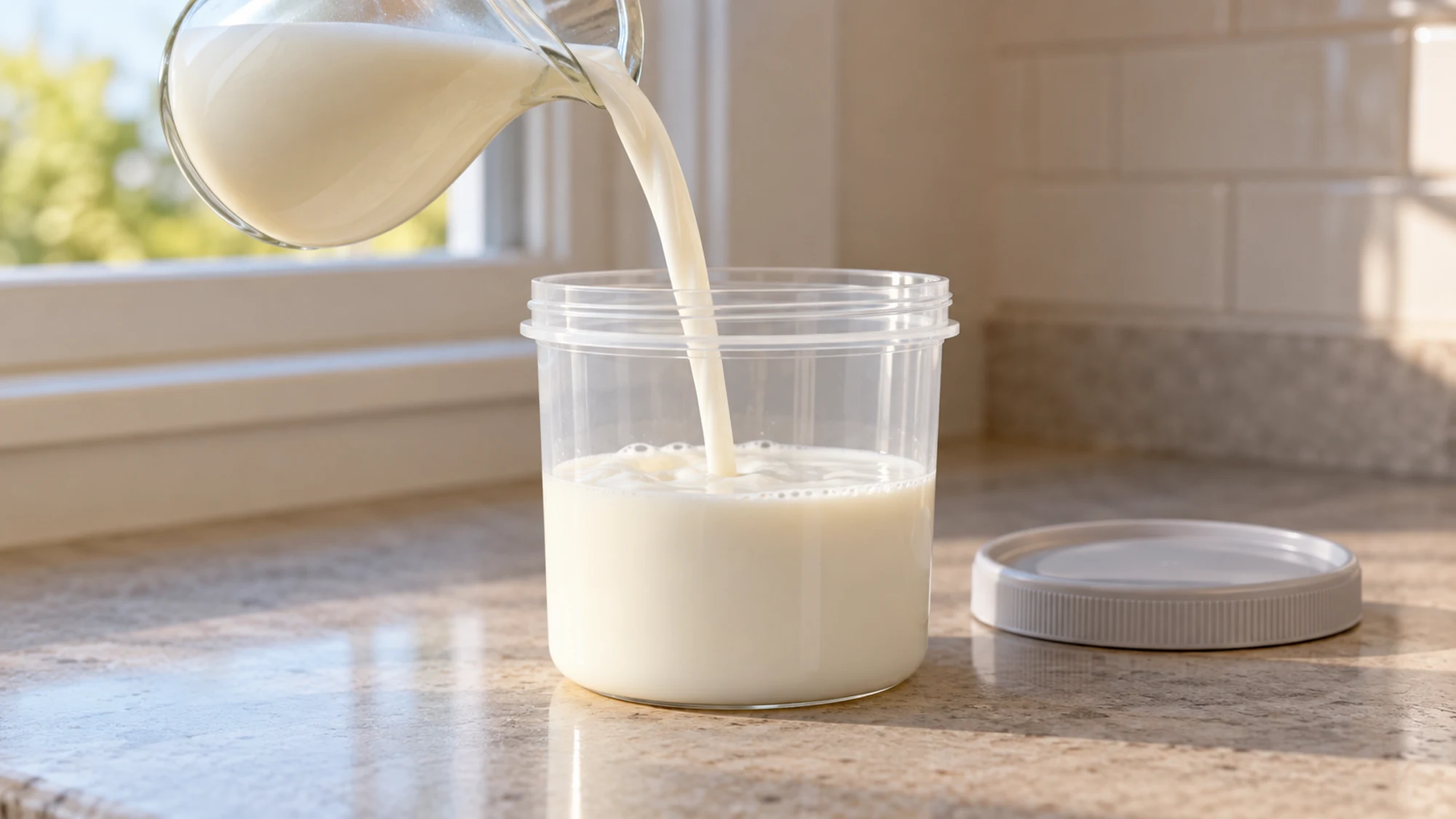
A container that works in the refrigerator is not automatically the best freezer choice. U.S. Dairy’s freezing guidance favors airtight, freezer-safe plastic and leaving about an inch of expansion space; avoid ordinary glass milk bottles, which can crack.
| Option | Practical decision |
|---|---|
| Freezer-safe plastic container | Check that it seals securely and leave headspace. |
| Original carton or jug | Confirm freezer suitability and expansion space first. |
| Ordinary glass milk bottle | Choose another container rather than risking a crack. |
Use clean containers with intact lids. If a container splits or breaks during freezing, discard the milk; the Dairy Council’s milk-freezing advice specifically cautions against using milk from damaged packaging.
Freeze useful portions while the milk is fresh
Begin with milk that has stayed properly refrigerated, rather than trying to rescue milk already spoiled or left warm. The FDA’s food-storage guidance explains that freezing stops most bacterial growth but does not kill most bacteria.
- Choose an amount that matches a realistic use, such as the milk needed for one batch of batter.
- Measure into clean freezer-safe containers, keeping the required expansion space.
- Seal, label with the contents, amount and freezing date, then freeze promptly.
- Keep the freezer at 0°F (−18°C) or below, checking with an appliance thermometer.
Freeze milk while it is still in good condition; the freezer cannot repair unsafe handling.
Thaw milk in the refrigerator
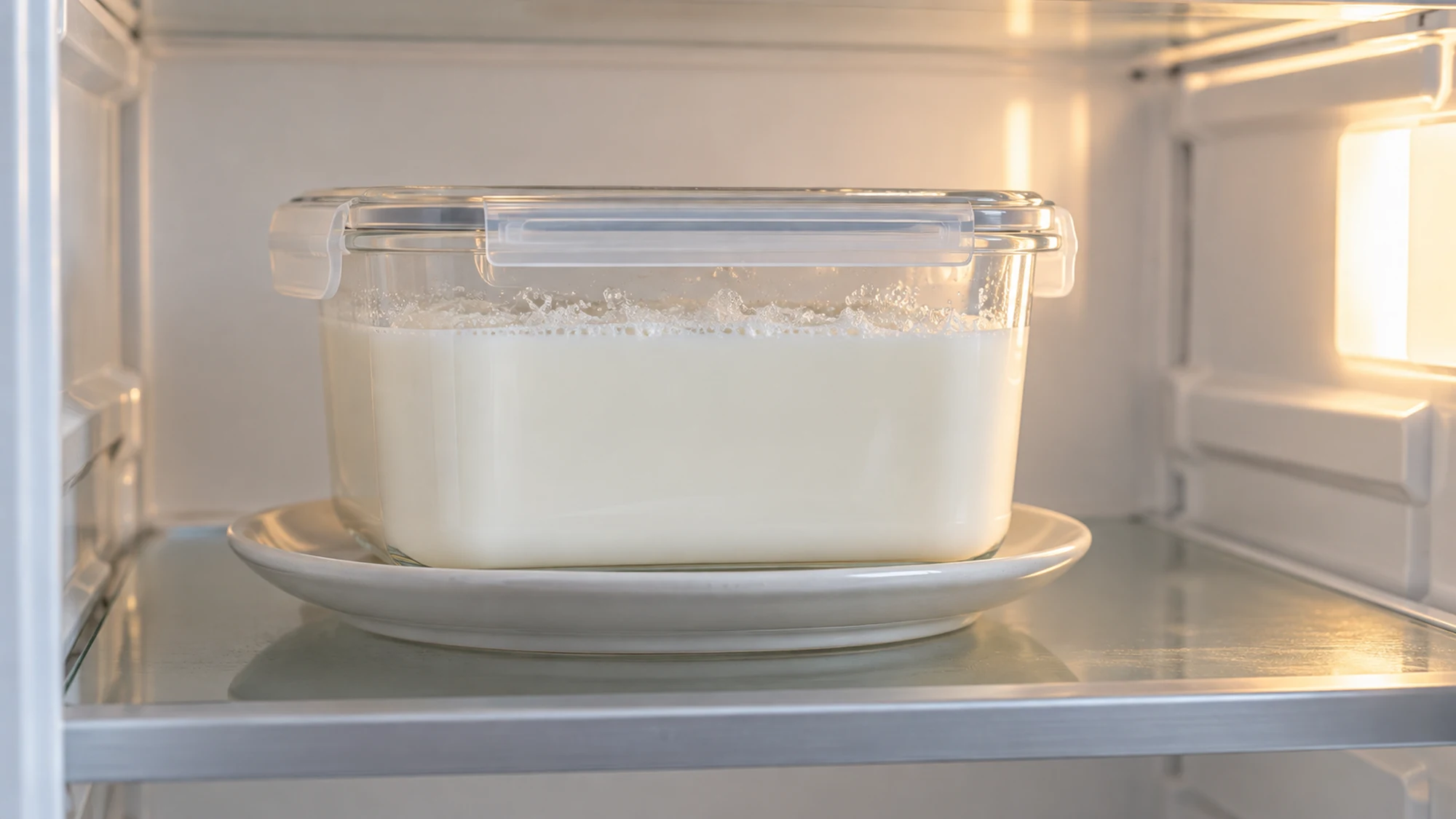
Move the sealed container to a refrigerator at 40°F (4°C) or below. Put it on a tray if you want to catch drips, and allow enough time: larger volumes thaw slowly, so a small portion is easier to plan around.
- Keep the container cold throughout thawing; do not leave it on the kitchen counter.
- Once fully thawed, shake or stir to redistribute separated components.
- Use it promptly. The Dairy Council recommends using refrigerator-thawed milk within a couple of days.
- Return unused milk to the refrigerator immediately after measuring.
The usual rule for perishable foods still applies: do not leave them unrefrigerated longer than two hours, or one hour above 90°F (32°C). That limit includes warm serving and preparation time, not just the moment you notice the milk.
What changes after milk has been frozen?
Separation can make thawed milk look less uniform and feel less silky. Stirring helps redistribute it, but the result may not match a freshly opened carton. I prefer treating that texture change as a planning detail, rather than promising that one shake makes every milk identical.
- For a cold glass: freeze a small amount first and decide whether you like the thawed texture.
- For cooking or baking: choose a dish that already calls for milk; keep its stated amount and fat level.
- For other products: check the manufacturer’s advice for plant drinks, specialty milks or concentrated canned milk.
Ordinary drinking milk and evaporated milk do different jobs. This guide covers pasteurized dairy milk, not infant formula or breast milk, which have their own handling instructions.
Make a small freezer plan
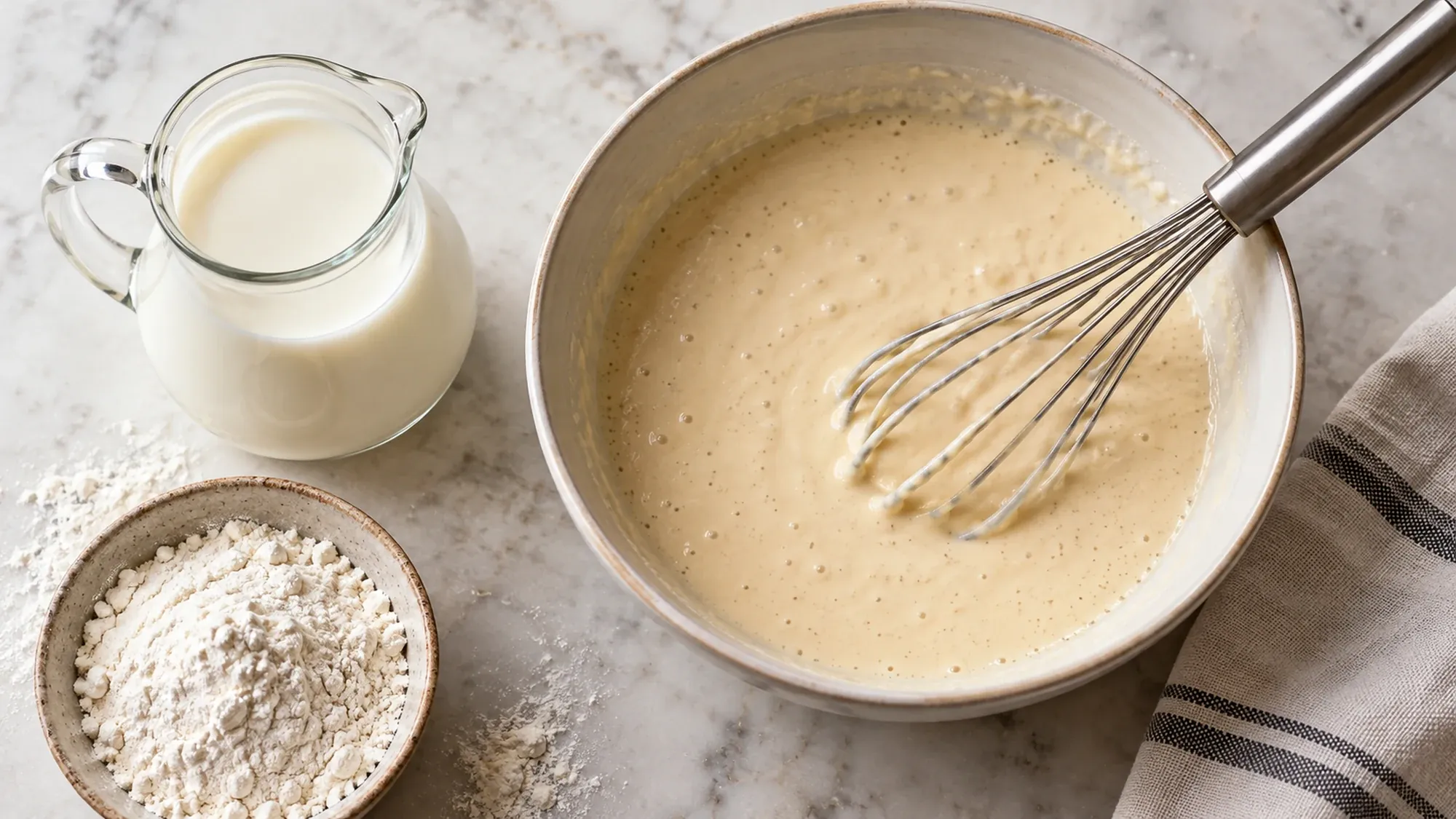
Choose a dish before thawing, and move only the amount you need into the refrigerator. A freezer label is also a useful reminder to use older portions first; do not wait for a mystery container to become part of the kitchen scenery.
For timing, U.S. Dairy recommends using frozen milk within one month for best quality. That is a quality target, not proof that any carton is safe regardless of its earlier handling. Utah State Extension distinguishes continuous frozen storage from the quality loss that can follow thawing and refreezing. Milk that was already old or mishandled does not gain a fresh shelf life simply because it became solid. Keep its earlier history in mind, and discard it if that history is uncertain or the milk shows spoilage.
My practical choice: freeze a fresh, measured portion, thaw it cold and use it soon in a dish you already want to make.
Sources
- U.S. Dairy: milk containers, thawing and quality
- Dairy Council: freezing milk and damaged packaging
- FDA: refrigeration and freezer safety
- Utah State Extension: freezing basics

Emily Parker is DISHORA’s recipe-writing persona, bringing a warm, practical voice to everyday cooking. Her focus is simple ingredients, comforting flavors and clear steps that make a dish feel approachable. From cozy dinners to something sweet, Emily’s recipes invite readers to try something delicious and make it their own.