
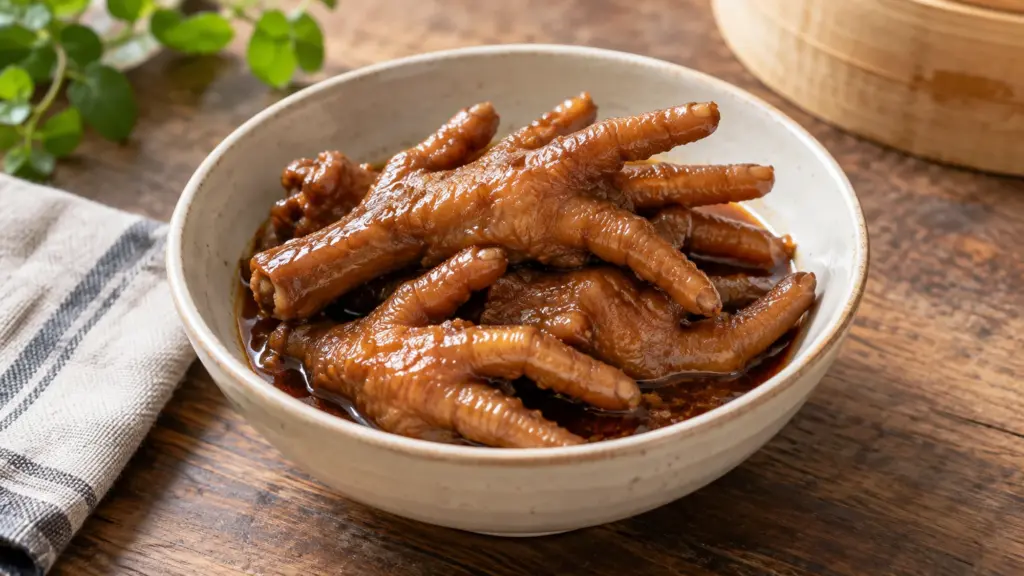
Chicken feet can look unfamiliar in a butcher’s case, even if the silky texture they bring to soup feels familiar. They are an edible poultry ingredient used in braised dishes and stocks, valued more for skin and connective tissue than for the meaty bite of a chicken thigh.
Buy chicken feet prepared for human consumption, expect small bones, and handle them as raw poultry. Their culinary appeal is texture—not a promise of healthier skin or joints.
I’d choose the finished dish you want before buying a package. Feet destined for a bowl of stock have a different job from feet served whole in sauce, and that choice makes the shopping questions much easier.
What do chicken feet taste and feel like?
Properly cooked feet have soft, slippery skin and connective tissue around many small bones. They are not boneless pieces of meat. Their mild poultry flavor takes on seasonings readily, so a savory sauce or aromatic broth often supplies much of the final character.
In Ryan Adams’s firsthand chicken-feet account, the standout feature is the gelatinous texture of a dim sum preparation. That is a useful expectation: approach them as a texture-focused food, rather than expecting the fibers or crisp skin of roast chicken.
- Braised whole: soft skin, sauce, and bones to separate carefully.
- In stock: connective tissue can contribute body to the strained liquid.
- On the plate: take small bites and leave the bones; softness does not make bones edible.
Buying chicken feet with fewer surprises
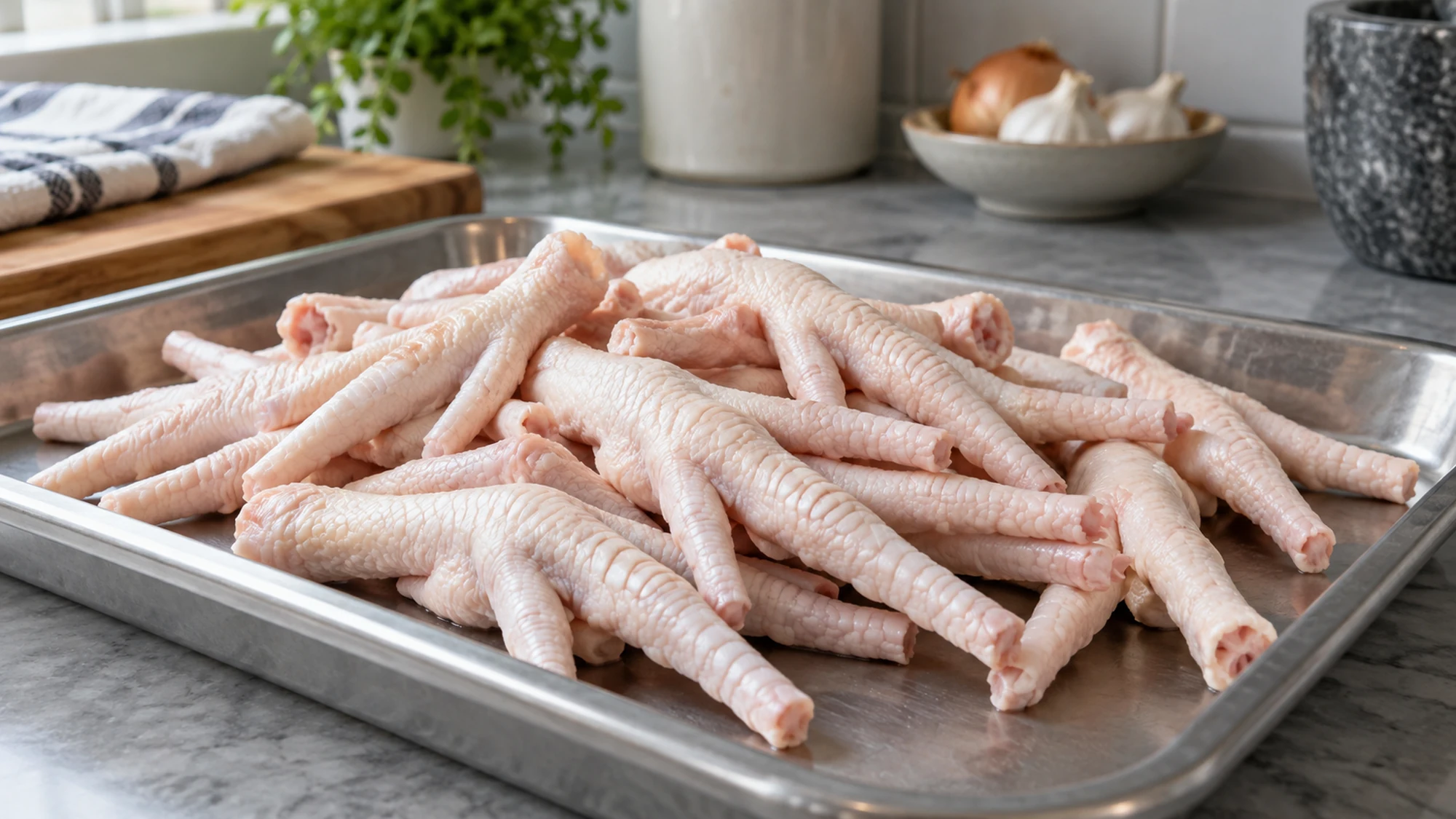
Ask a butcher or food retailer for feet sold for human consumption, preferably already processed and trimmed. Do not substitute dried pet treats or unlabeled animal-feed products. Confirm whether the package is raw, fully cooked, chilled, or frozen.
The Canadian Food Inspection Agency’s edible-feet guidance shows how much commercial preparation matters, including removal of the outer epidermis and toenails and controls for contamination. These are processing standards, not instructions to rescue dirty or damaged feet in a home sink.
| Check | Useful question | Why it matters |
|---|---|---|
| Intended use | Is this sold as human food? | Food supply and handling |
| Preparation | Are the outer skin and claws removed? | Avoid unexpected processing |
| Product state | Raw or fully cooked? | Handling and reheating differ |
| Storage | How has it been kept cold? | Maintain the cold chain |
I prefer the clearest labeled, prepared option over a package that leaves all four questions unanswered. A low price is less helpful if it also buys uncertainty.
Safe handling starts before the pot
Keep raw feet separate from ready-to-eat foods and wash your hands after handling them or their packaging. USDA’s chicken safety guidance recommends refrigeration at 40°F or below and using raw chicken within one or two days, or freezing it.
Do not rinse raw poultry under the tap to make it safe. USDA explains that splashing can spread bacteria; washing or soaking does not replace safe cooking. Start with properly processed food-grade feet rather than using rinsing as a cleanup strategy.
- Thaw in the refrigerator, or use another USDA-approved method; do not thaw on the counter.
- Clean and sanitize surfaces and utensils that contact raw poultry.
- Cook poultry to at least 165°F, checked with a food thermometer where the edible tissue is thickest without touching bone.
- Use a trusted preparation suited to the product; tenderness and a long cooking time alone do not prove safe handling.
Stock, gelatin, and nutrition claims
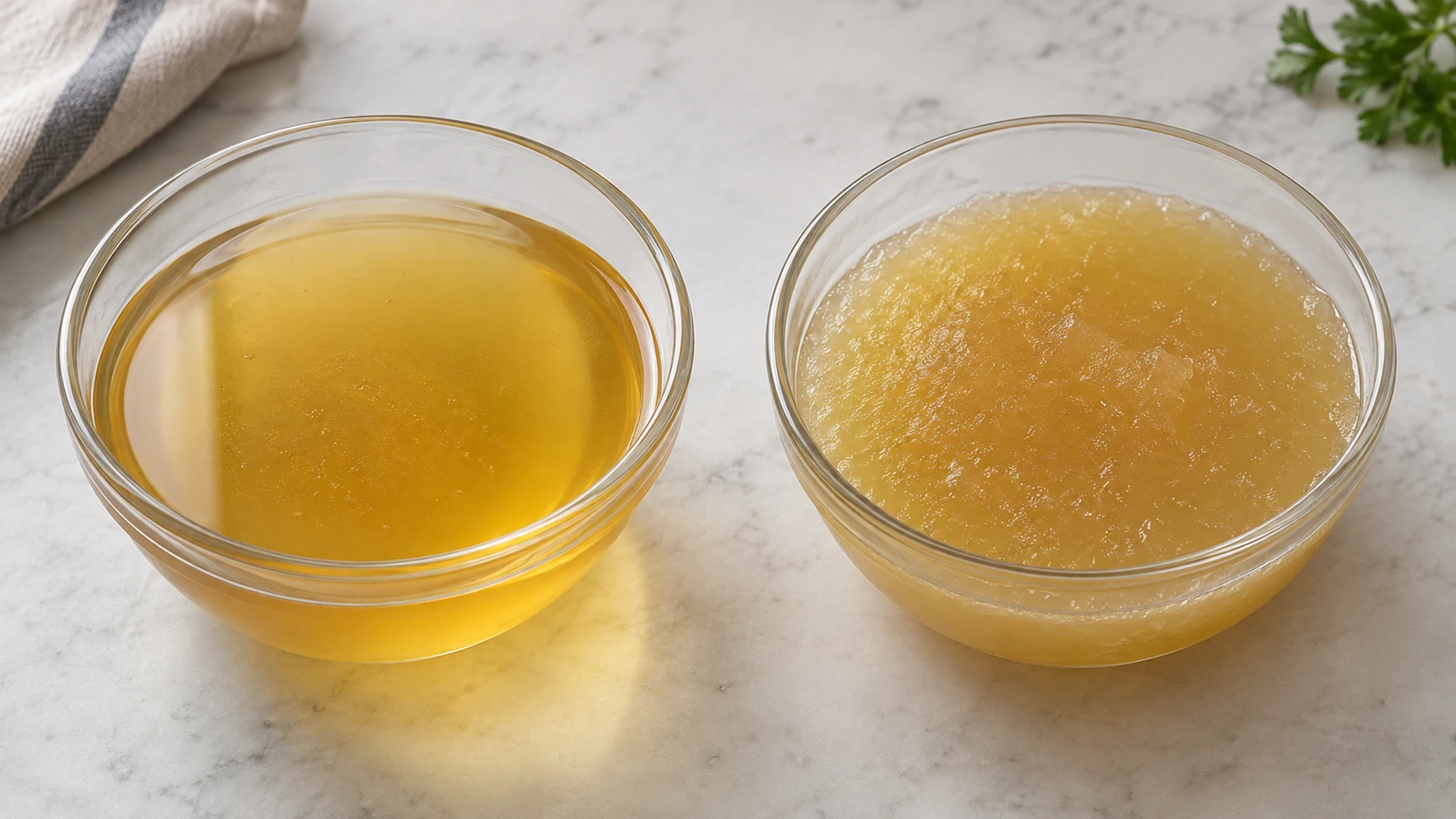
Long moist cooking can turn collagen-rich connective tissue into gelatin, giving a stock a fuller mouthfeel and sometimes a gelled texture when chilled. The degree of setting varies with concentration and preparation. A firm gel is a cooking result, not a test of vitamin content or medical benefit.
A 2023 systematic review of hydrolyzed collagen supplements reported improvements in skin measurements but also described limitations in the trials. Those studies used formulated supplements; they do not establish that eating chicken feet produces the same effects.
- Do not translate supplement doses into a serving of feet or broth.
- Sauces and added salt can change the nutrition substantially.
- Use nutrition information that matches the actual product or preparation; generic whole-foot weights include inedible bones.
Store the food safely and enjoy its texture
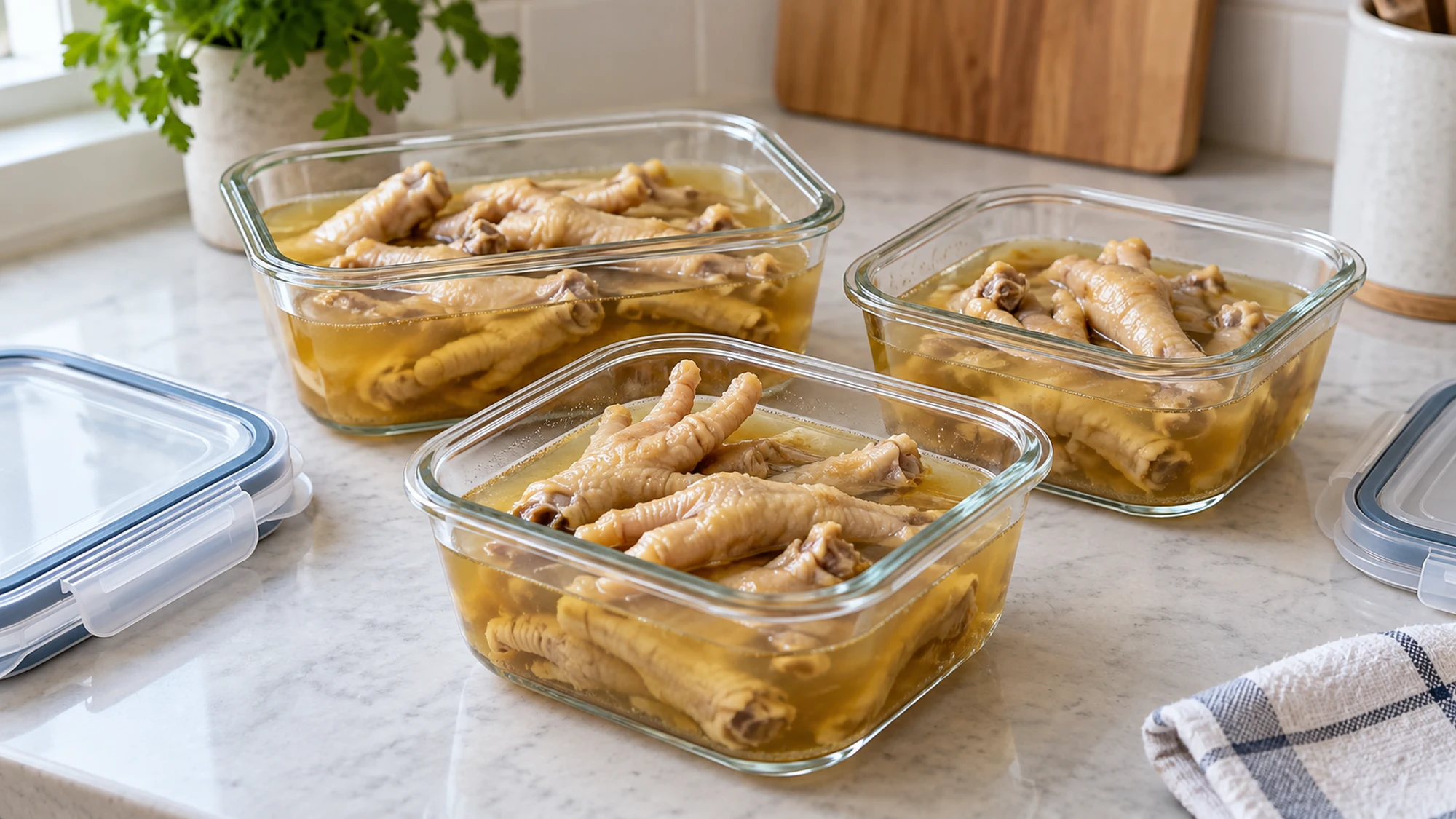
Divide cooked feet and broth into shallow containers and refrigerate promptly, within two hours—or one hour above 90°F. USDA’s leftover guidance recommends using refrigerated leftovers within three to four days or freezing them for longer storage. Reheat poultry leftovers to 165°F.
If you want a meat-free soup base on another day, DISHORA’s vegetable stock guide covers that separate approach. For feet, I’d keep the goal straightforward: a well-handled ingredient, the texture you enjoy, and no need to attach a wellness promise to dinner.
Treat chicken feet as a food with a specific texture and careful handling needs. Buy clearly, cook safely, separate the bones, and chill leftovers promptly.
Sources
- Ryan Adams: firsthand culinary description
- CFIA: preparation of edible poultry feet
- USDA: chicken handling and cooking
- USDA: why poultry washing is discouraged
- USDA: safe leftovers
- Nutrients: collagen-supplement review, 2023
- Polymers: chicken-feet gelatin extraction study

Emily Parker is DISHORA’s recipe-writing persona, bringing a warm, practical voice to everyday cooking. Her focus is simple ingredients, comforting flavors and clear steps that make a dish feel approachable. From cozy dinners to something sweet, Emily’s recipes invite readers to try something delicious and make it their own.