
The freezer aisle can make a simple scoop feel like a vocabulary test. Lactose free ice cream may still be made with milk and cream; the lactose is addressed during production. A dairy-free frozen dessert is a different option, usually built around plant ingredients rather than dairy.
Choose for the need first: lactose-free dairy can suit lactose intolerance, but it is not suitable for a milk allergy.
I’d start with that distinction before comparing flavors. The front of a tub introduces the product; the ingredient list, allergen information, and Nutrition Facts tell you much more.
What makes lactose free ice cream different?
Lactose is the naturally occurring sugar in milk. Lactose intolerance involves trouble digesting it, while milk allergy is an immune reaction. NIDDK explains this difference, which matters far more than whether a dessert looks creamy.
Some dairy ice creams use lactase enzyme to break lactose into simpler sugars. For example, LACTAID’s cookies-and-cream product information describes that process while listing milk and cream as ingredients. This is an example of how the label works, not a claim that every brand or flavor uses an identical formula.
- Lactose-free: look for the product’s explicit lactose claim.
- Dairy-free or plant-based: check the full ingredients and allergen information.
- Reduced-fat or no-added-sugar: these are separate claims and do not establish lactose content.
Lactose-free, dairy-free, and other frozen choices
These labels answer different questions. Use the comparison as a starting point, then read the actual package. A cookie swirl, chocolate coating, or sauce can change the ingredients even within the same brand.
| Type | Usual base | Key check |
|---|---|---|
| Lactose-free dairy ice cream | Milk and cream | Still contains milk protein |
| Plant-based frozen dessert | Oat, soy, nut, or coconut ingredients | Check allergens and nutrition |
| Ordinary frozen yogurt | Cultured dairy | Do not assume lactose-free |
| Sorbet | Often fruit, water, and sugar | Check the individual formula |
I prefer comparing the exact flavor rather than relying on a brand-wide impression. A plain vanilla tub and a cookie-filled tub may have different allergens, sweetness, and serving weights.
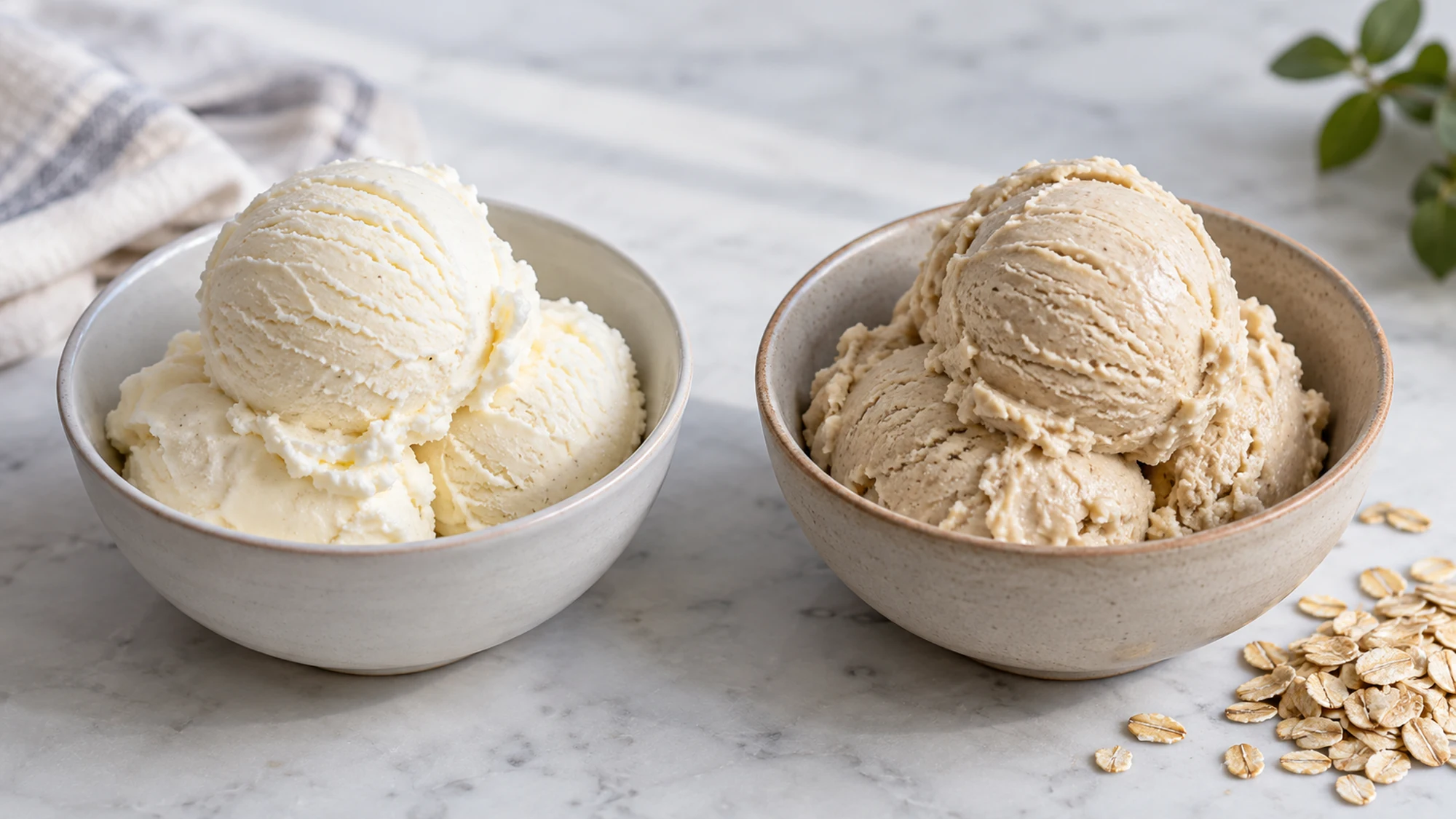
When shopping for several people, keep the packages available until everyone has checked them. Serving two similar-looking desserts in matching bowls can create confusion. I’d give each tub its own clean scoop and keep the product names clear, particularly when one guest needs to avoid a specific ingredient.
Read the label in a useful order
For milk allergy, a lactose-free claim is insufficient. The FDA’s food-allergy guidance explains that major allergens used as ingredients must be identified on the label. Read the ingredients and any “Contains” statement every time, because formulas can change.
Plant-based products can contain other allergens, such as soy or tree nuts. In a scoop shop, shared scoops, tubs, toppings, and equipment add another question; ask how the shop handles your specific allergy rather than treating the freezer sign as an assurance.
- Identify the exact flavor and lactose or dairy claim.
- Read every ingredient, including mix-ins and coatings.
- Check the allergen declaration and any cross-contact information.
- If allergy information is unclear, contact the manufacturer or choose an option whose suitability you can establish.
Lactose-free does not mean sugar-free
Breaking lactose down does not make the rest of an ice cream disappear. Added sugar, saturated fat, calories, protein, and calcium vary by product. The FDA’s Nutrition Facts guide recommends checking serving size before comparing the amounts listed.
As a concrete example, the linked LACTAID cookies-and-cream label lists 14 grams of added sugars and 8 grams of saturated fat per ⅔-cup, 95-gram serving. Those figures belong to that product’s current listed formula; they are not universal values for lactose-free ice cream.
- Compare equal serving weights when possible.
- Use added sugars and saturated fat as separate checks.
- Check protein, calcium, and vitamin D if comparing dairy and plant-based options.
- Count toppings too; the dessert bowl may be larger than the labeled portion.
Choose a scoop you can enjoy comfortably
NIDDK notes that lactose tolerance varies and that lactose-free or reduced-lactose milk products can help reduce intake. A label cannot guarantee that a dessert will cause no digestive symptoms for every person.
If symptoms continue despite avoiding lactose, get advice rather than assuming all dairy is the explanation. For a broader look at milk ingredients in cooking, DISHORA’s evaporated milk guide explains another concentrated dairy product that needs its own label check.
- Choose a modest portion of the flavor you actually want.
- Use a clean scoop and return the tub to the freezer promptly.
- Keep the packaging available when serving guests with dietary needs.
The best freezer decision starts with the correct claim, continues with the full label, and ends with a portion that suits you.
Sources
- NIDDK: lactose intolerance and milk allergy
- NIDDK: eating with lactose intolerance
- FDA: food allergens and labels
- FDA: understanding Nutrition Facts
- LACTAID: specific product ingredients and nutrition

Emily Parker is DISHORA’s recipe-writing persona, bringing a warm, practical voice to everyday cooking. Her focus is simple ingredients, comforting flavors and clear steps that make a dish feel approachable. From cozy dinners to something sweet, Emily’s recipes invite readers to try something delicious and make it their own.