
A cold root beer sounds like a simple choice when you want something fizzy without another coffee. But does root beer have caffeine? The familiar flavor and creamy foam cannot answer that question.
Some root beer contains caffeine and some does not. In current US examples, regular Barq’s lists 22 mg per 12 fl oz, while Barq’s Zero Sugar and Mug Root Beer are caffeine-free. Check the exact brand, version and package.
That small distinction matters when you are choosing an evening drink, tracking your daily intake or buying for someone who avoids caffeine. This guide uses manufacturer information, with US products as the reference; another country or product version can differ.
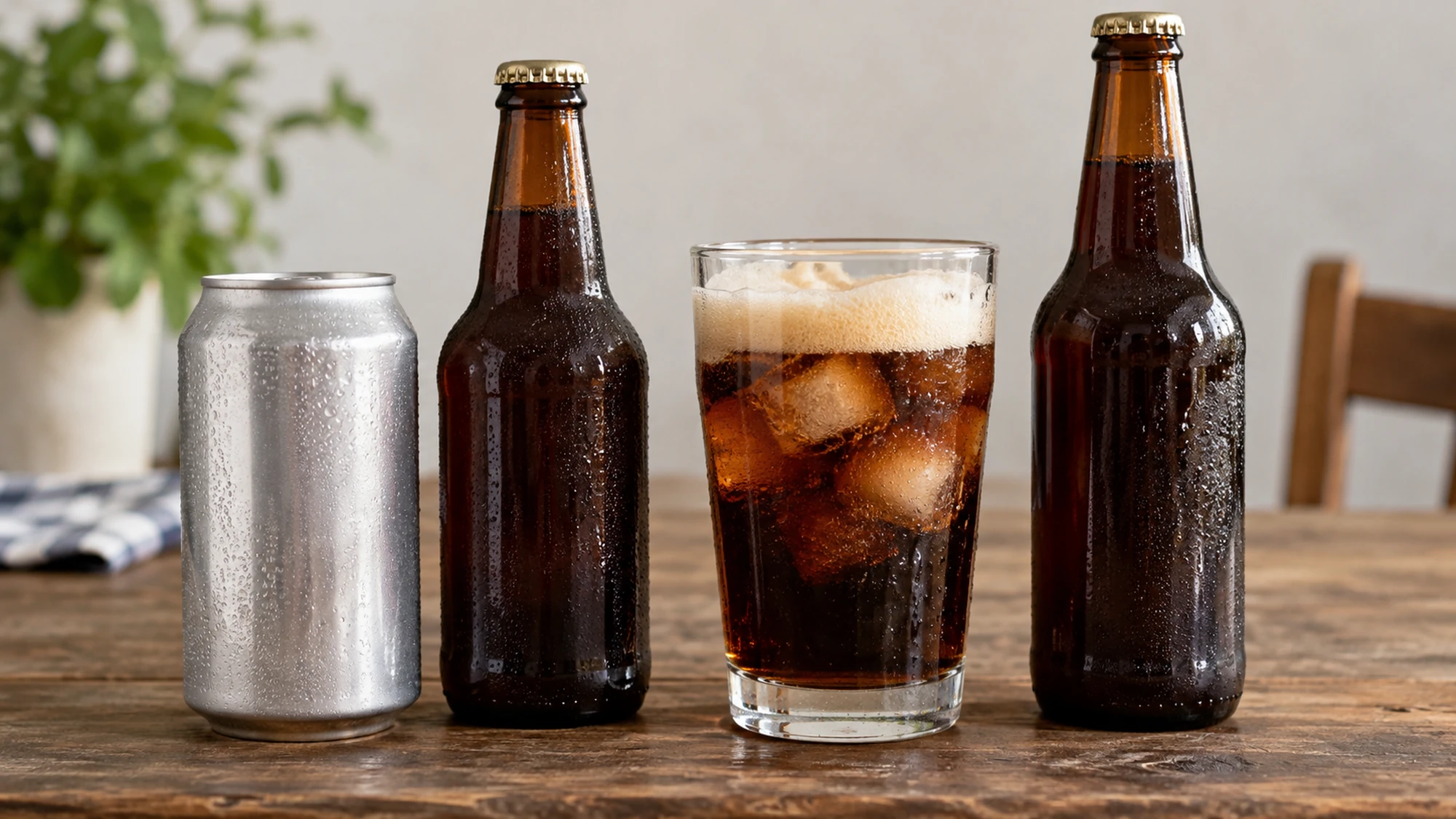
Does root beer have caffeine? Compare the actual product
According to Coca-Cola’s Barq’s product page, regular Barq’s Root Beer contains caffeine and lists 22 mg per 12 fl oz. The same page describes Barq’s Zero Sugar Root Beer as caffeine-free. A change in the product name can therefore change the answer, even within one brand.
| Product | Reference amount | Caffeine |
|---|---|---|
| Barq’s Root Beer, regular | 12 fl oz | 22 mg |
| Barq’s Zero Sugar Root Beer | 12 fl oz comparison | Caffeine-free |
| Mug Root Beer | 12 fl oz | 0 mg |
The PepsiCo product-facts listing for Mug reports 0 mg for its 12-fl-oz reference. PepsiCo also cautions that formulas and packaging can change, so check what is actually on sale rather than treating an old comparison chart as permanent.
Choose by the full product name. “Root beer,” “zero sugar” and “diet” are not universal caffeine categories.
Read beyond the front of the can
The FDA’s caffeine guidance says added stand-alone caffeine must appear in the ingredients list on packaged foods. The milligram amount is often available from the manufacturer, even when it is not prominent on the package.
- Look for an explicit caffeine-free statement on the exact product.
- Read the ingredients for caffeine; do not use sugar or calorie content as a shortcut.
- Check the manufacturer’s current product facts for milligrams and serving size.
- Match the country, flavor and regular or zero-sugar version.
I’d keep a photo of the current label if I were comparing a few favorites. It is easier to check the precise bottle than to remember which version a general chart meant. An unlabeled glass, naturally, cannot provide that information.
A larger serving changes the total
A caffeine amount belongs to a quantity, not just a brand. For the regular Barq’s formula listed at 22 mg per 12 fl oz, drinking 20 fl oz would work out to about 37 mg. That is a proportional estimate from 22 × 20 ÷ 12, not a separate verified label claim for every 20-ounce package.
- Check whether the listed amount is per serving or per container.
- For a shared bottle, count the volume you actually drink.
- Do not assume a large fountain cup contains a known amount after ice and refills.
For strict tracking, use the facts for the exact package or fountain product. A calculated estimate is useful only when the underlying formula matches.
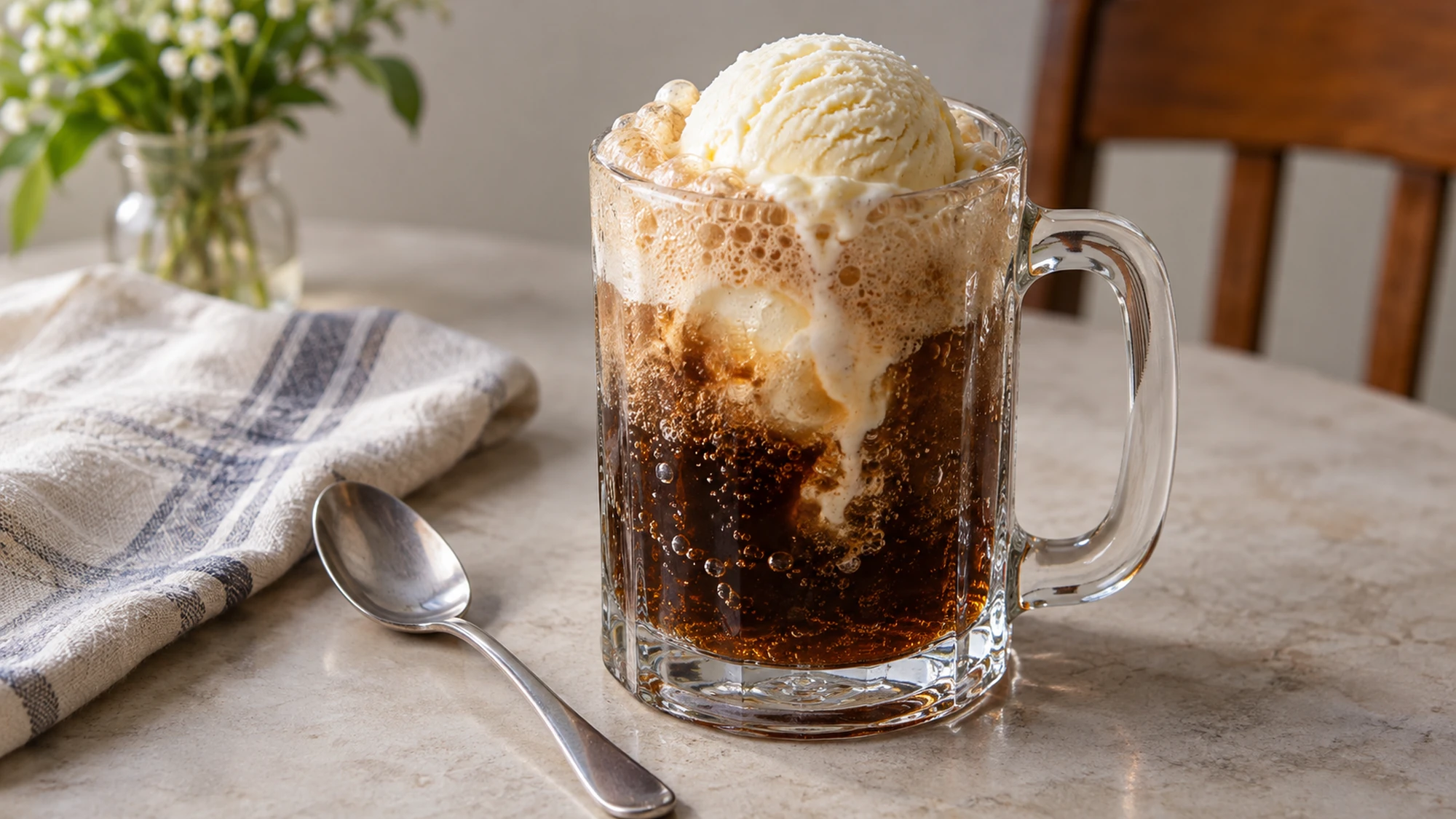
What about fountain root beer and root beer floats?
Fountain drinks deserve their own check. A&W Restaurants describes its made-fresh root beer as caffeine-free. That supports this specific restaurant product; it does not verify every bottled root beer, international version or soda-machine selection.
A float keeps whatever caffeine is in its soda base. Adding vanilla ice cream does not remove that caffeine, and a different ice cream flavor or added coffee could change the drink again. I prefer checking the soda first because that is the simplest place to settle the main question.
- At a restaurant, ask for the precise brand and version.
- Check the chain’s own beverage information when it is available.
- If the product cannot be identified and avoiding caffeine is essential, choose a clearly identified caffeine-free drink.
Caffeine-free answers one question about the drink
Caffeine-free and sugar-free mean different things. A root beer can have no caffeine while still containing added sugar, or have no sugar while containing caffeine. Consider those details separately, using the Nutrition Facts panel and ingredients for the product in front of you.
If you are comparing other sodas, our Coke Zero caffeine guide uses the same brand-and-size approach. The coffee and caffeine guide offers more context about personal sensitivity and sleep.
You do not need to memorize every root beer formula. Start with the exact product, check its caffeine statement and serving size, and choose the drink that fits the question you actually need answered.

Emily Parker is DISHORA’s recipe-writing persona, bringing a warm, practical voice to everyday cooking. Her focus is simple ingredients, comforting flavors and clear steps that make a dish feel approachable. From cozy dinners to something sweet, Emily’s recipes invite readers to try something delicious and make it their own.