
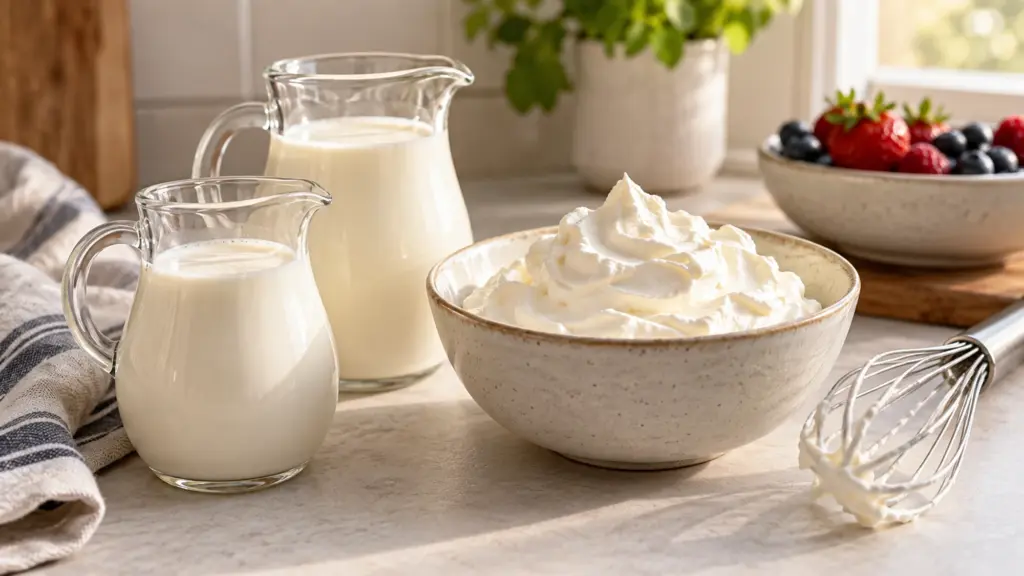
The recipe says heavy cream, but the carton in your fridge says heavy whipping cream. Is heavy cream the same as heavy whipping cream? It is an easy moment to pause when a sauce is warming or a dessert still needs its topping.
Yes—in the United States, heavy cream and heavy whipping cream are two permitted names for cream with at least 36% milkfat. You can generally substitute one for the other in the same amount, provided the product is otherwise suitable for your recipe.
The word that deserves your attention is “heavy.” A carton labeled simply whipping cream can fall into a different fat range. Sweeteners, flavorings and the recipe’s need for whipped or liquid cream matter, too.
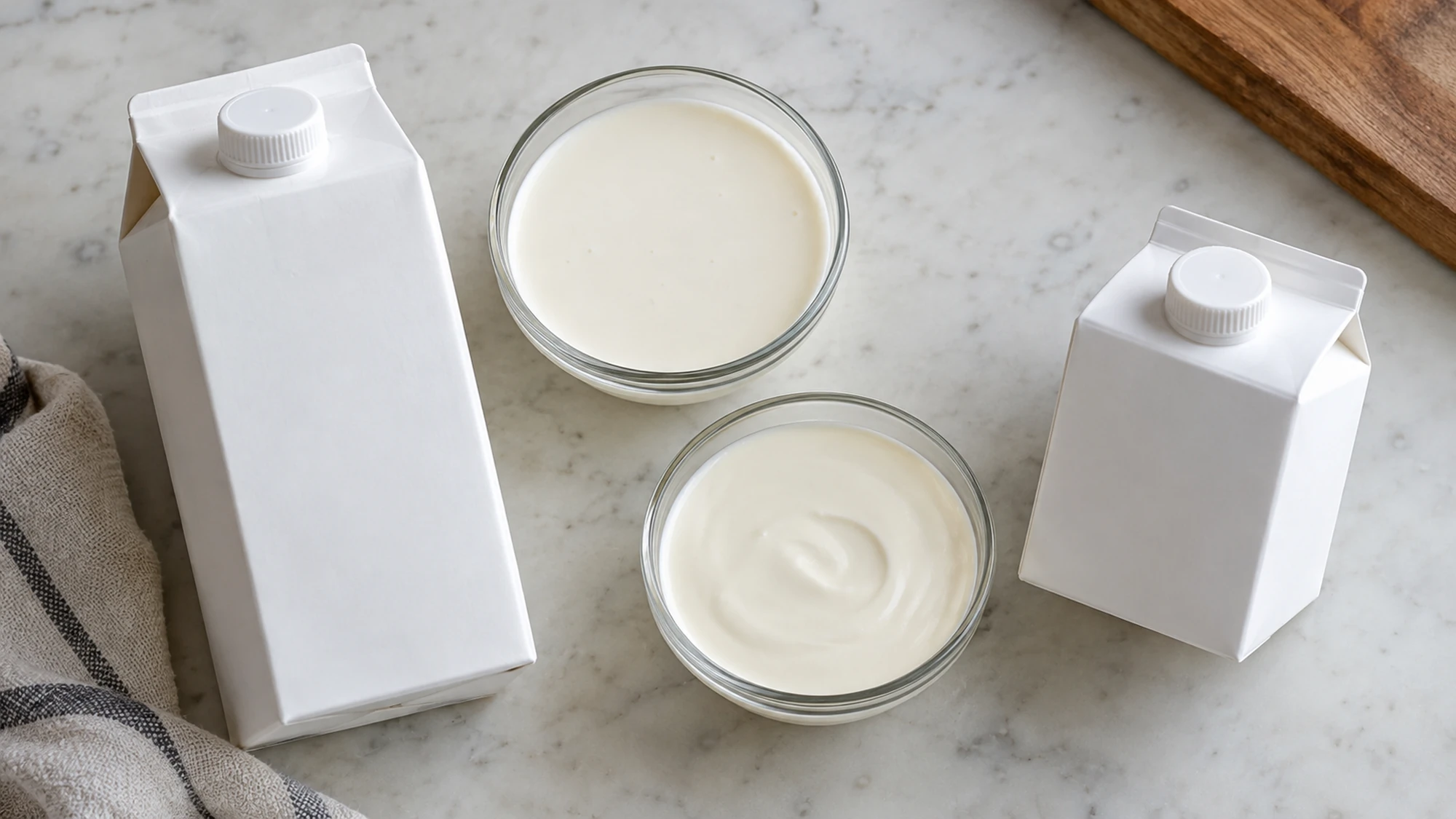
Is heavy cream the same as heavy whipping cream in the US?
The answer comes from the US standard of identity for heavy cream. It requires at least 36% milkfat and explicitly allows the alternative name heavy whipping cream. The longer name does not mean that air or sugar has already been added.
Both are sold as liquid cream. Turning that liquid into a whipped topping is a separate step, and sweetening it is another choice. I’d pick an unsweetened carton for general cooking because it can move comfortably between a savory soup and a dessert.
The two names identify the same US cream category. They do not guarantee that every brand has an identical fat percentage or ingredient list.
Compare the names on nearby cartons
The whipping cream standard covers at least 30% but less than 36% milkfat. Traditional half-and-half contains at least 10.5% but less than 18%. These are US definitions; names on imported products may follow different conventions.
| Label | Milkfat by weight | Practical distinction |
|---|---|---|
| Heavy cream | At least 36% | Liquid cream suitable for whipping |
| Heavy whipping cream | At least 36% | Alternative name for heavy cream |
| Whipping cream | 30% to less than 36% | Lower-fat whipping category |
| Half-and-half | 10.5% to less than 18% | Milk-and-cream mixture |
A rounded fat number on a small Nutrition Facts serving is not always enough to calculate a precise percentage. Start with the product name and any declared milkfat percentage; ask the manufacturer if your project depends on an exact specification.
When a one-for-one substitution works
For a recipe that calls for liquid heavy cream, a suitable liquid heavy whipping cream is the straightforward swap. Use the same stated measurement and keep the rest of the recipe’s directions. The name change alone does not call for adding water, milk or butter.
- For soups and sauces, check that the cream is plain rather than vanilla-flavored or sweetened.
- For ganache or a set dessert, follow the recipe’s specified fat content when one is given.
- For a whipped topping, measure the liquid cream before whipping if that is what the ingredient list requests.
- For recipes written outside the US, compare the actual fat percentage rather than translating the product name alone.
“One cup cream, whipped” and “one cup whipped cream” describe different measurements. Read the ingredient wording before deciding how much to pour.
If the cream will not whip, check temperature and technique
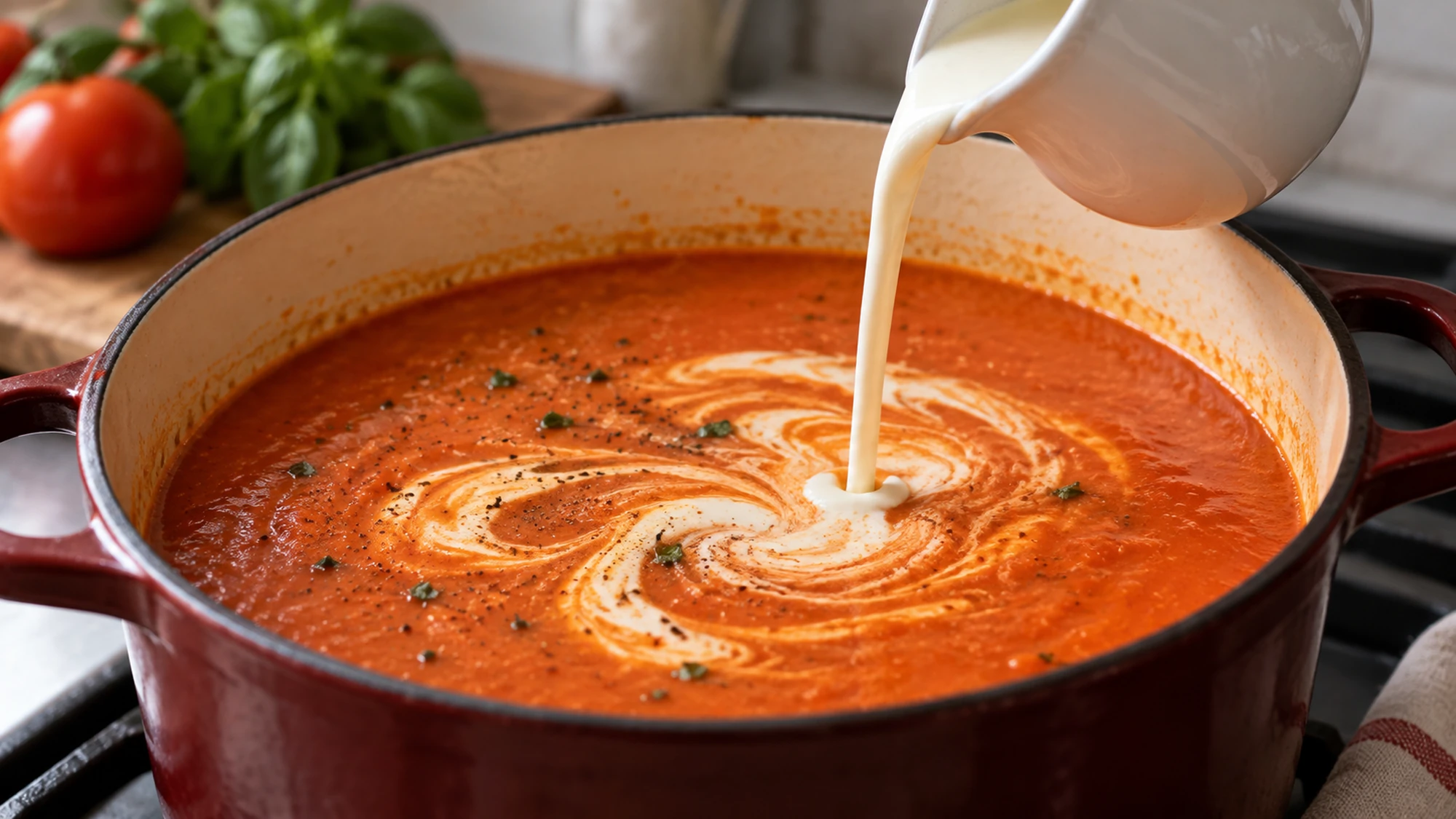
The carton’s longer name is not a promise of automatic peaks. King Arthur Baking’s whipping guidance explains why cold cream and chilled tools help the fat support the foam. Watch the changing texture as you mix rather than relying on a fixed number of minutes.
- Keep the cream cold until you are ready to use it.
- Pause to check the peaks as the whisk begins leaving trails.
- Stop at the texture your dessert needs; prolonged beating can make cream grainy and eventually separate it.
I prefer a slightly softer, spoonable topping for fruit because it settles gently around the pieces. A recipe that needs structure may call for firmer peaks or a stabilizer. That is a question about the finished topping, not whether “whipping” appears on a heavy-cream carton.
Choose the carton for the job
Check the ingredients, package directions and date before buying. Land O’Lakes’ storage advice requires refrigeration and gives its opened heavy whipping cream a seven-to-ten-day window. That is product-specific advice; follow the directions on your own carton.
If you are considering a shelf-stable substitute, our evaporated milk guide explains another product whose name and concentration matter. It should not be assumed to behave like whipping cream.
For US recipes, plain heavy cream and plain heavy whipping cream are usually an easy exchange. Match the fat category, check the flavoring, and measure the cream in the form the recipe requests.

Emily Parker is DISHORA’s recipe-writing persona, bringing a warm, practical voice to everyday cooking. Her focus is simple ingredients, comforting flavors and clear steps that make a dish feel approachable. From cozy dinners to something sweet, Emily’s recipes invite readers to try something delicious and make it their own.