
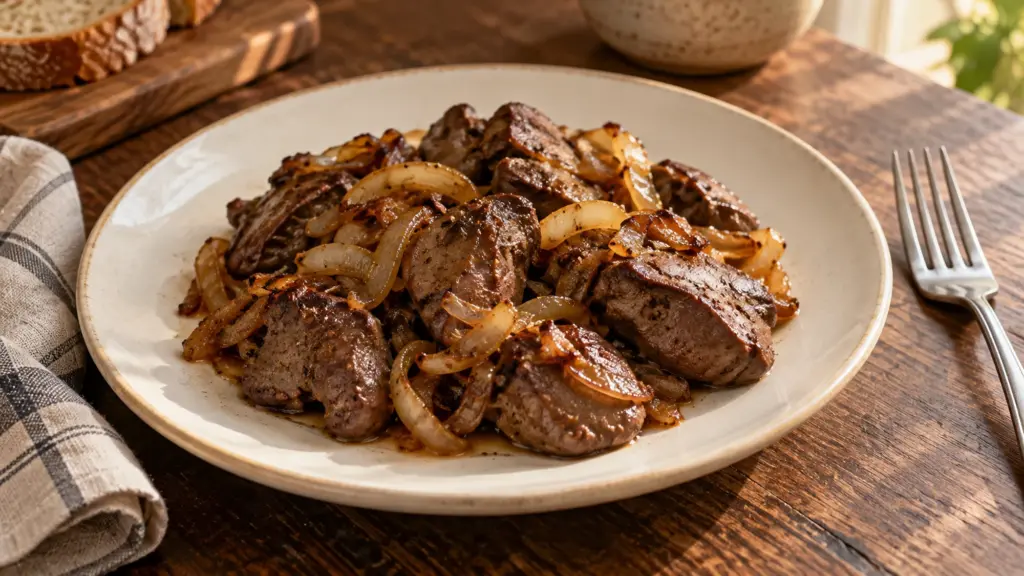
A tub of chicken liver looks very different from a familiar pack of breasts or thighs. The deep burgundy color, soft lobes and unmistakably rich flavor can make it feel like an ingredient with its own rulebook.
Chicken liver is an edible organ meat with a strong, savory flavor. Cook its center to 165°F with a food thermometer, and consider portions and frequency carefully because liver supplies concentrated preformed vitamin A.
The useful questions are simple: what does it taste like, how do you handle it, and does it fit your eating pattern? You do not need to turn it into a superfood to appreciate what makes it distinctive.
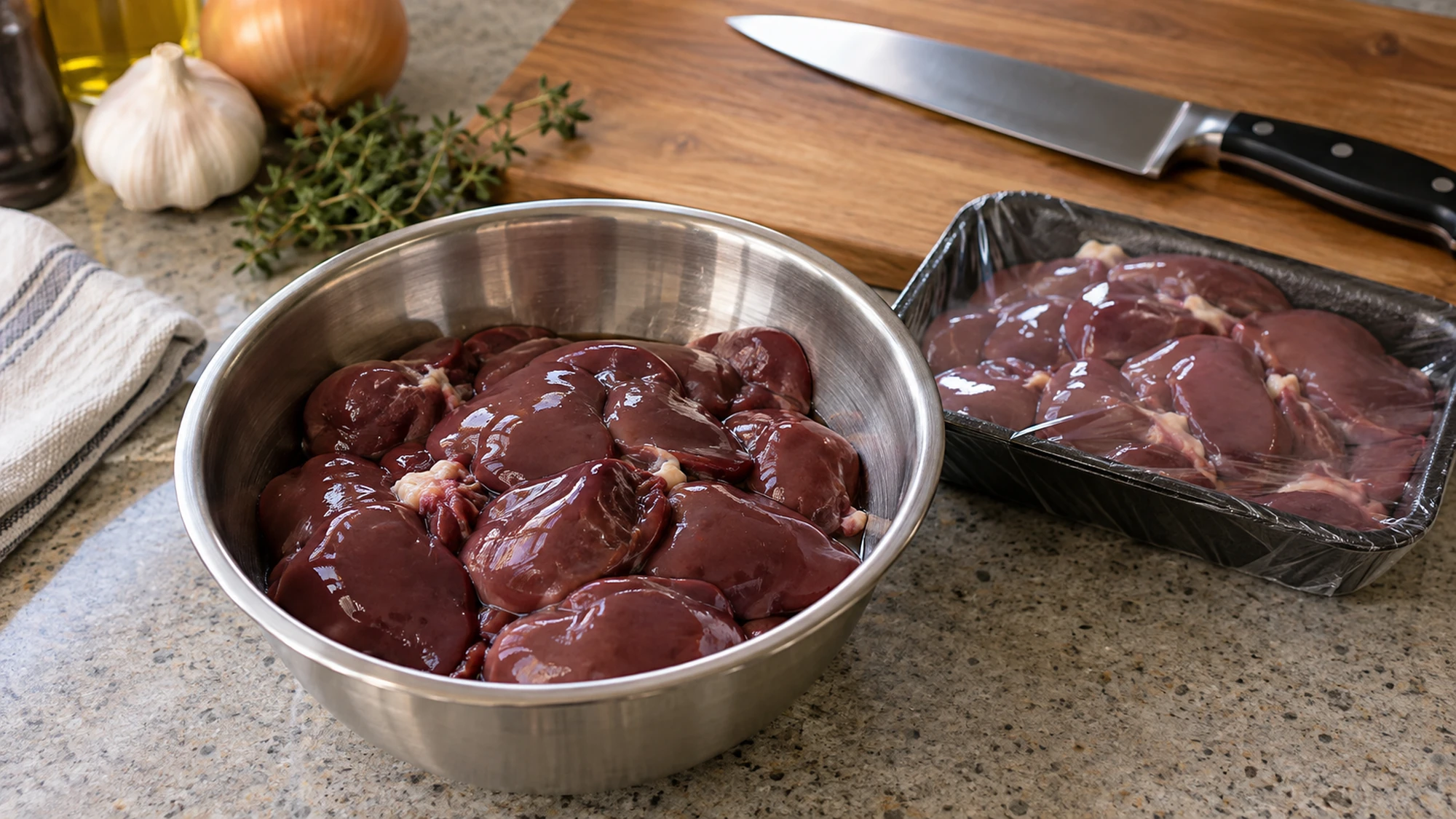
What does chicken liver taste like?
Chicken liver has a pronounced earthy, slightly mineral flavor and a fine, tender texture when cooked carefully. It does not have the stringy fibers of breast meat, and it can become grainy or dry with prolonged cooking. Browning adds savory depth, but the center still needs the safe temperature discussed below.
I’d pair its richness with something bright, such as lemon, and something gently sweet, such as cooked onions. Those contrasts make more sense to me than trying to bury its character beneath a heavy sauce.
- For a milder introduction, try a small amount alongside familiar sides.
- Keep seasoning focused: onion, pepper and herbs leave room for the liver itself.
- If the organ-meat flavor simply is not appealing, there is no nutritional requirement to learn to love it.
Cook chicken liver to 165°F, even for pâté
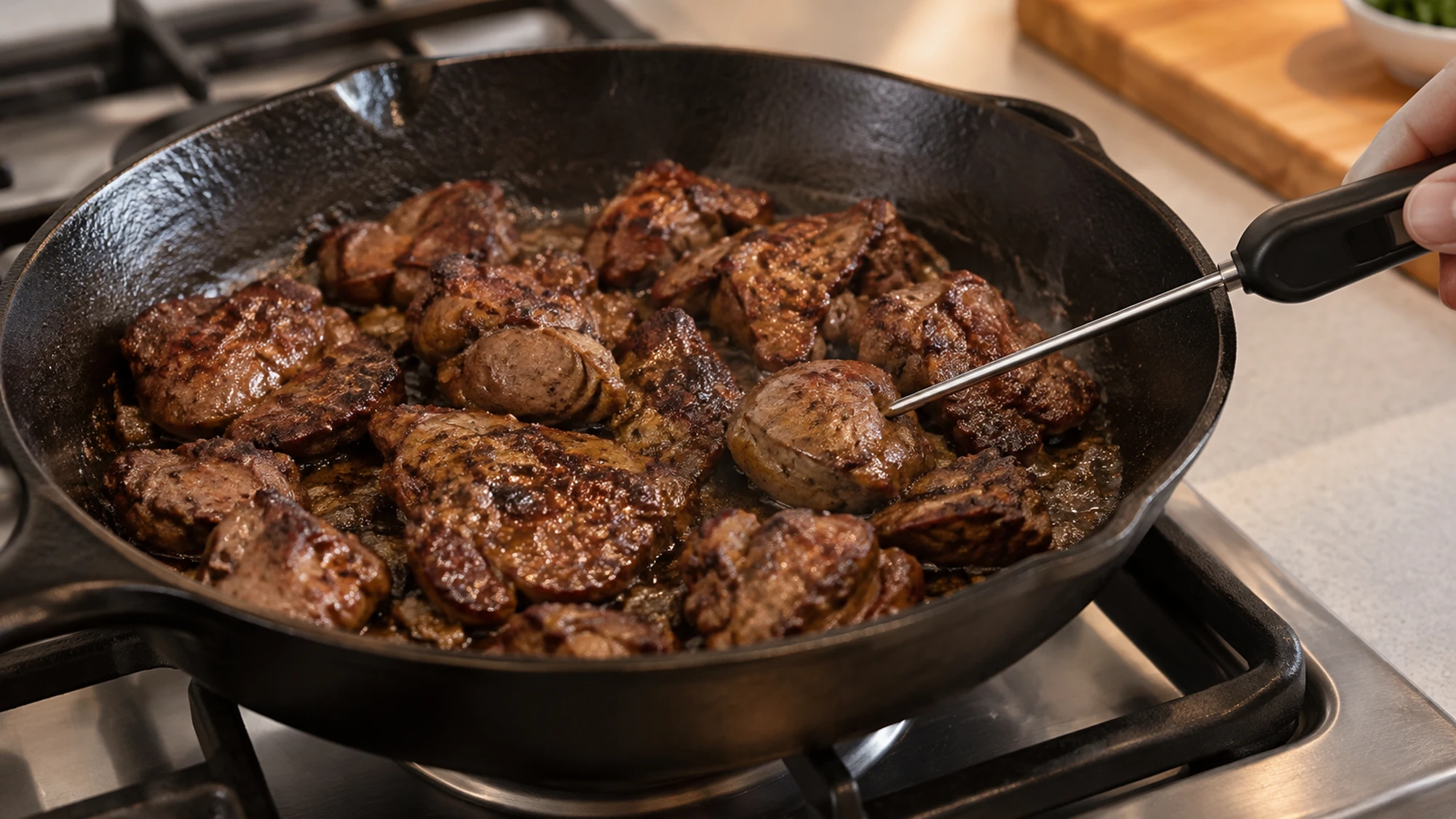
The CDC’s chicken liver guidance explains that Campylobacter can be inside the liver. A browned surface does not settle the question: the center must reach 165°F, about 74°C, measured with a food thermometer. This applies to liver intended for pâté as well as pieces served whole.
- Check the thickest part with an appropriate thin probe, keeping the sensing area in the food.
- Check more than one piece when sizes vary; the largest pieces may heat differently.
- Keep raw liver, its juices and utensils away from ready-to-eat foods. Wash hands and clean food-contact surfaces.
Use temperature as the safety check. Color, a soft center, a quick sear or a recipe’s promised cooking time cannot prove the inside is safe.
Buying and storing chicken liver
Choose intact, cold packaging and plan the meal before buying. FoodSafety.gov’s cold-storage chart gives fresh poultry pieces a refrigerator window of one to two days at 40°F (4°C) or below. For liver, follow any more specific package directions and freeze promptly if your plan changes.
| Stage | Useful check |
|---|---|
| At the store | Cold product; undamaged, leak-free package |
| At home | Covered container that catches raw juices |
| Before serving | Center reaches 165°F / about 74°C |
| Cooked leftovers | Refrigerate promptly; use within 3–4 days |
The same chart lists three to four days for refrigerated cooked meat or poultry leftovers. Date the container instead of relying on memory. Smell is useful for spotting obvious spoilage, but a normal smell cannot establish that food has been handled safely.
Why vitamin A changes the portion conversation
The NIH vitamin A fact sheet identifies liver and other organ meats as sources of preformed vitamin A. This is different from the carotenoids in foods such as carrots. An ingredient can supply useful nutrients without being something to eat in large amounts every day.
NIH sets an adult upper limit of 3,000 micrograms a day for preformed vitamin A from all sources, including food and supplements. That is a ceiling, not a goal. The amount in a meal depends on the liver, the cooked portion and the preparation; a scoop of pâté and a plate of whole livers are not equivalent servings.
If you are pregnant or might become pregnant, discuss liver and vitamin A supplements with your prenatal clinician. Excess preformed vitamin A can harm fetal development; the word “nutritious” does not remove that concern.
Build the meal around flavor, not a health promise
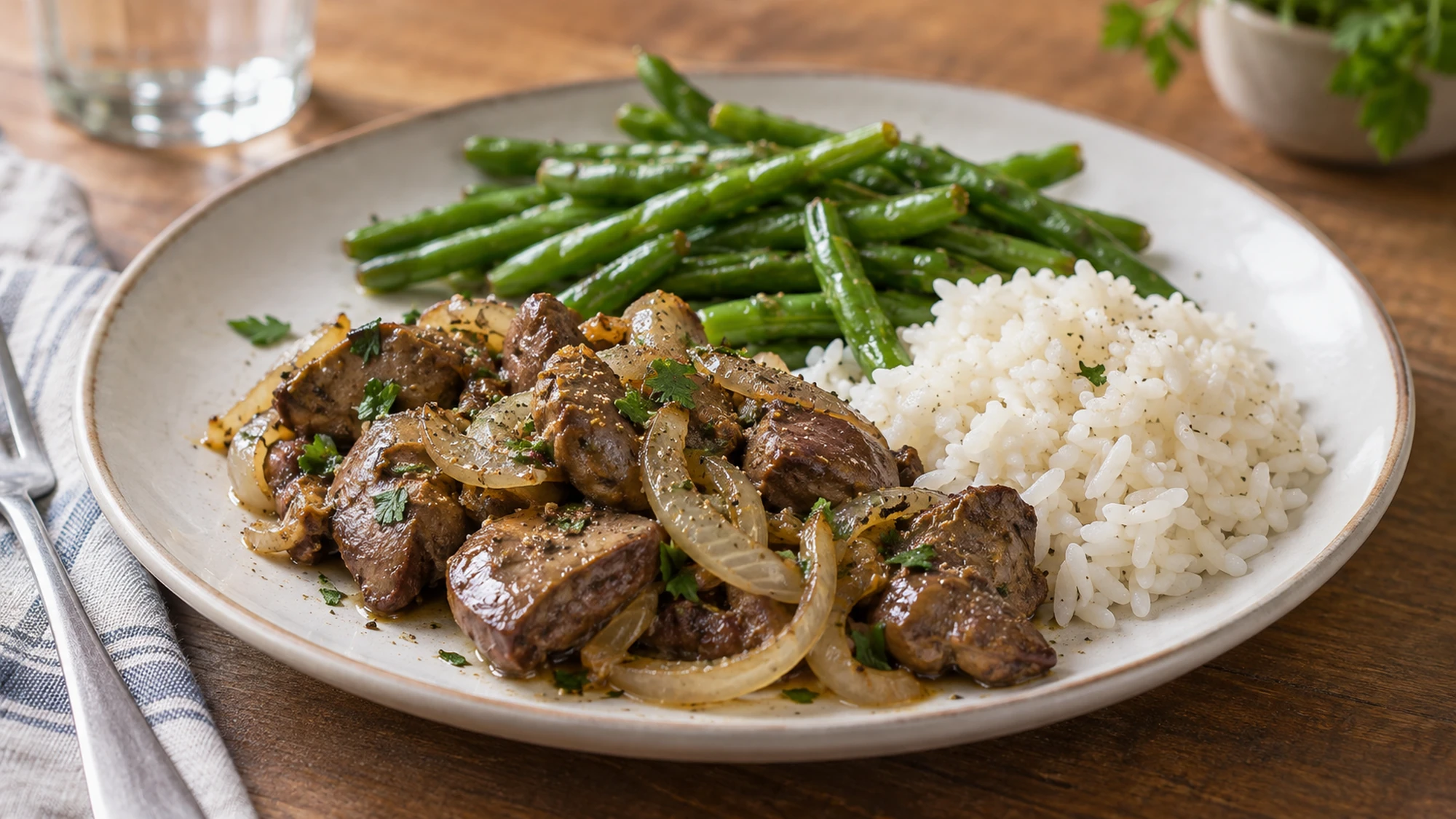
I prefer a modest portion with vegetables and a familiar starch because it leaves the strong flavor enjoyable rather than overwhelming. Our guide to cooking rice is a useful companion for that simple plate.
- Think about your usual diet and supplements before deciding how frequently to eat liver.
- Do not use liver as a home treatment for tiredness or suspected nutrient deficiency.
- Choose another protein when liver does not suit your preferences or individual medical advice.
Enjoy chicken liver for what it is: a distinctive ingredient that rewards sensible portions, careful handling and a thermometer. Keep those basics ahead of any dramatic nutrition claim.

Emily Parker is DISHORA’s recipe-writing persona, bringing a warm, practical voice to everyday cooking. Her focus is simple ingredients, comforting flavors and clear steps that make a dish feel approachable. From cozy dinners to something sweet, Emily’s recipes invite readers to try something delicious and make it their own.