
A bottle marked distilled can prompt a surprisingly practical question: does this belong in a drinking glass, or is it only for an appliance? Start with what the product is made for. The treatment name is useful information, but the intended use and the condition of the bottle matter, too.
Yes, you can drink distilled water that is produced and sold as drinking water. Distillation leaves many minerals behind, but it is not a promise that every possible contaminant is absent. Choose a suitable drinking-water product and handle it cleanly after opening.
I’d look for clear drinking-water information before getting drawn into claims about perfect purity. A familiar treatment word should make the label easier to understand, not replace reading the rest of it.
What happens during distillation?
The FDA describes distillation as turning water into vapor, then condensing that vapor back into water while leaving minerals behind. This is different from simply keeping the water that remains in a boiling saucepan: collection and condensation are part of the process.
According to the CDC’s home water treatment guide, distillation removes germs and many chemicals, but not some volatile organic compounds, solvents and certain pesticides. A home system needs to match the problem in the source water, with maintenance according to its instructions.
Distilled, purified and mineral describe different things
Some words describe treatment; others describe where the water comes from. The FDA includes distillation among processes that can produce purified bottled water when the required standards are met. Reading those terms accurately is more useful than trying to rank bottles by how scientific the name sounds.
| Label term | What it tells you |
|---|---|
| Distilled | Water has been vaporized and condensed through distillation. |
| Purified | Qualifying treatment can include distillation or reverse osmosis. |
| Spring water | An origin description; it does not name every treatment used. |
| Mineral water | An underground-source water with naturally occurring dissolved minerals meeting FDA criteria. |
Clear water can look the same across several categories. Use the label and supplier’s quality information to understand the product.
What about the minerals?
Distilled water is not a dependable way to obtain the minerals removed during treatment. The NIH magnesium fact sheet explains that magnesium comes from foods and can also come from water, with amounts varying substantially by source and brand.
If mineral intake is the reason you are comparing bottles, look for actual composition information rather than assuming all bottled waters provide the same amount. The words “with minerals added” also deserve a closer read: the particular minerals and amounts are what matter to that comparison.
I prefer treating this as a food-and-drink question rather than a purity contest. Choosing a water does not assess your whole diet, and a low-mineral bottle is not evidence of a special cleansing or therapeutic effect.
Can you drink distilled water as your usual water?
A distilled product sold as drinking water belongs within the bottled-water system described by the FDA. The CDC recommends checking the source, treatment and supplier contact information. These details help answer concrete quality questions that the front label may leave open.
Choose a safe drinking water you find practical and pleasant, while following any personal fluid or mineral guidance from your healthcare team. This guide is about ordinary drinking-water choices, not special instructions for infant formula, nasal rinsing or medical equipment; those uses have separate requirements.
- Confirm that the product is intended for drinking, especially when shopping outside a grocery beverage section.
- Check that the original seal and container are intact.
- Use the maker’s quality information when you need to know what testing or treatment has been performed.
Keep the water suitable after opening
Treatment does not prevent later contamination. CDC safe-storage guidance recommends clean, covered containers, cool storage and protection from sunlight and toxic substances. Follow the bottle’s own instructions after opening.
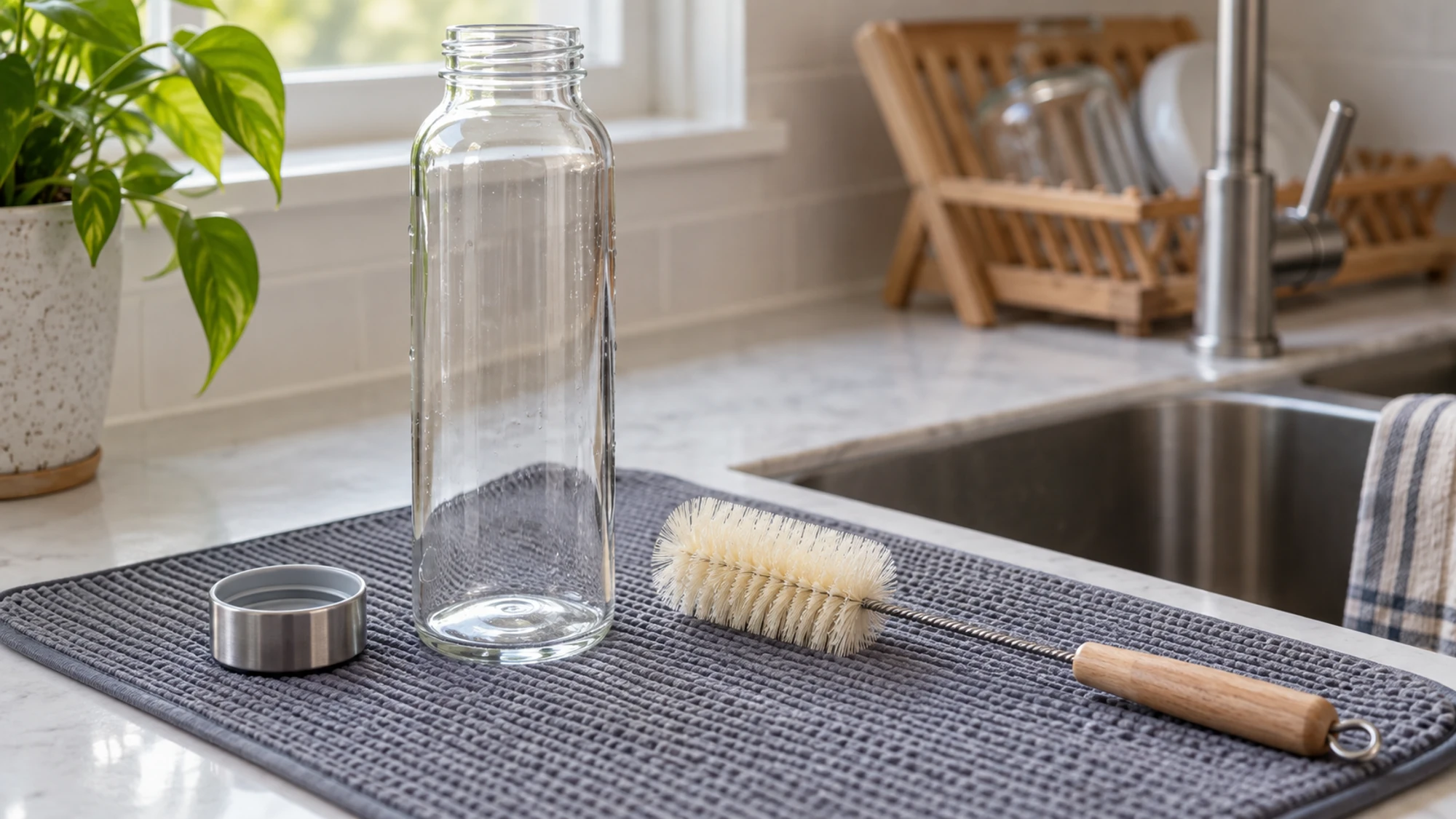
Pour into a clean glass and keep the cap and bottle opening clean. For reusable containers, follow their cleaning instructions; never reuse a container that held toxic chemicals. For ideas beyond plain water, browse DISHORA’s Drinks collection.
Distilled drinking water can be a practical choice. Read the intended use, understand the treatment’s limits, and store the bottle cleanly. Those checks are more useful than an unsupported promise of perfect purity.
Sources
- FDA: bottled water types and standards.
- CDC: home water treatment systems.
- NIH: magnesium sources.
- CDC: bottled water safety.
- CDC: safe water storage.

Emily Parker is DISHORA’s recipe-writing persona, bringing a warm, practical voice to everyday cooking. Her focus is simple ingredients, comforting flavors and clear steps that make a dish feel approachable. From cozy dinners to something sweet, Emily’s recipes invite readers to try something delicious and make it their own.