
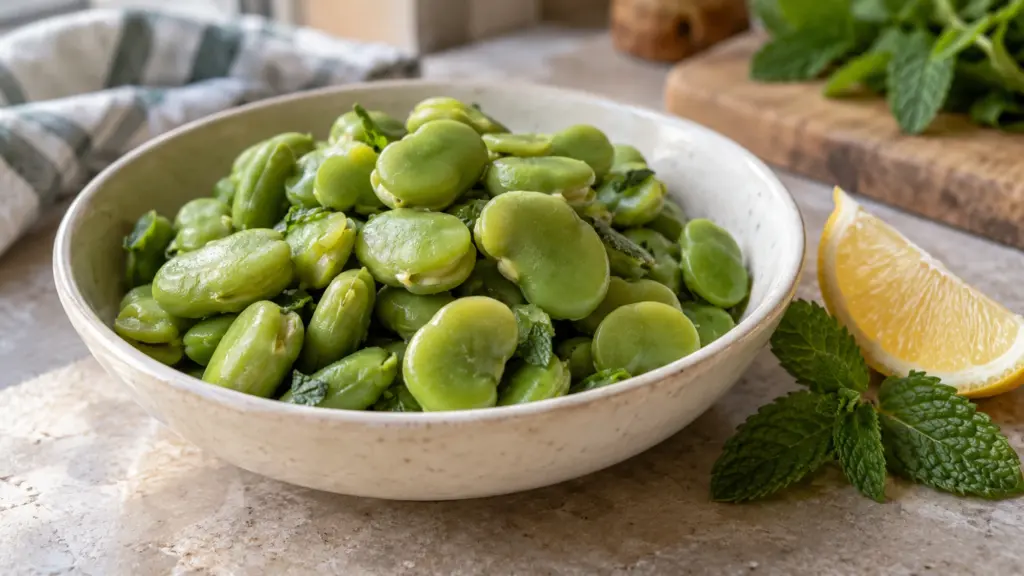
Fresh fava beans arrive wrapped in generous green pods, while dried favas can look like an entirely different pantry ingredient. Both belong to the same bean, but they ask different things of the cook. Knowing which form you bought makes choosing a meal much easier.
Fava beans, also called broad beans, are Vicia faba. They are sold fresh, frozen and dried, with different preparation needs. People with G6PD deficiency should avoid them because they can trigger hemolysis, a harmful breakdown of red blood cells; cooking is not a reason to disregard that precaution.
I’d choose fresh beans when their green color and individual shape matter, and dried beans when a soft, hearty base is the goal. The package is more useful than a one-size-fits-all cooking time.
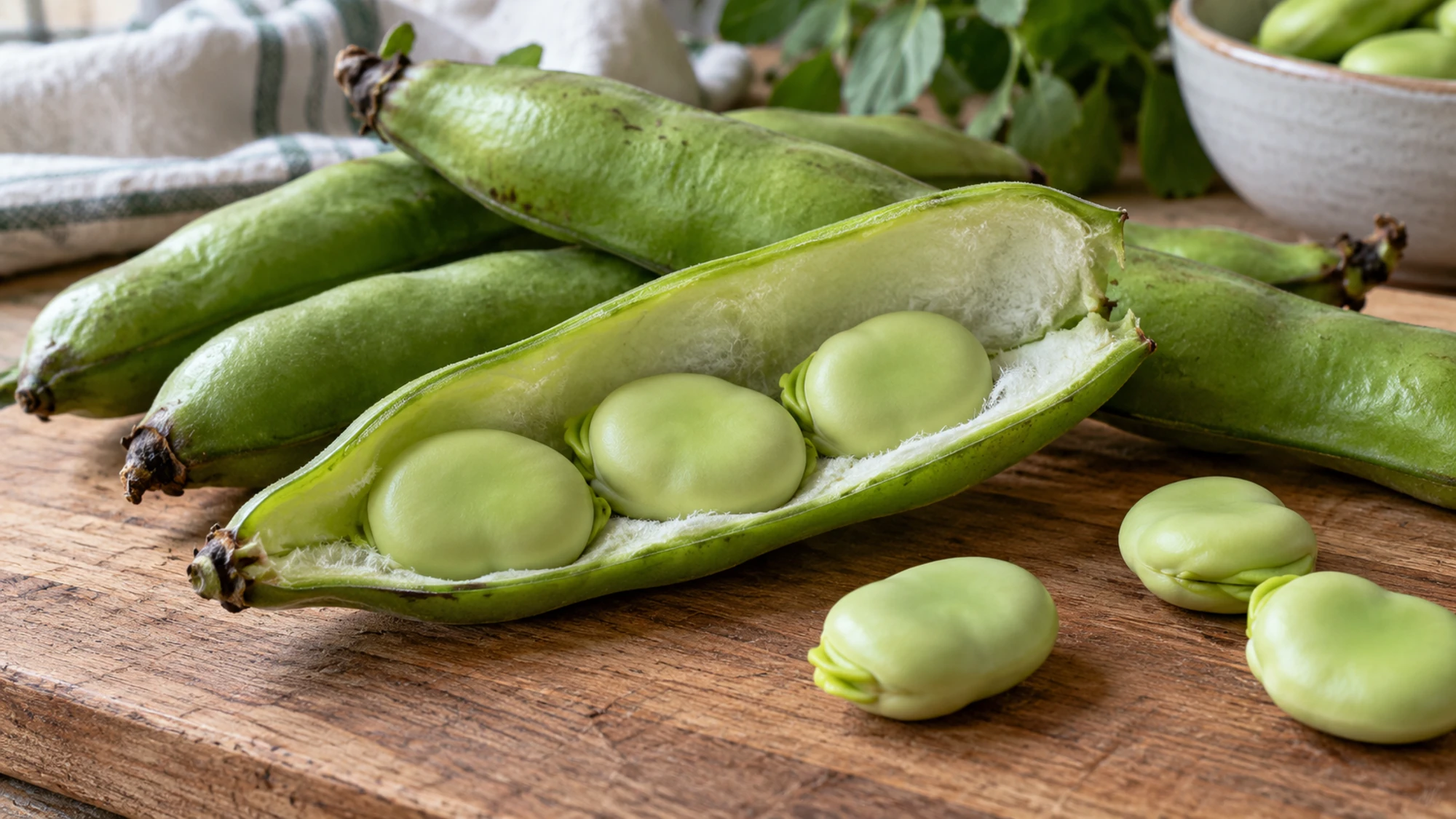
What are fava beans, and which kind do you have?
Oregon State University identifies favas as Vicia faba, harvested as green beans or allowed to mature and dry. They are different from lima beans and edamame, even though a bowl of pale or green shelled beans can look similar at a glance.
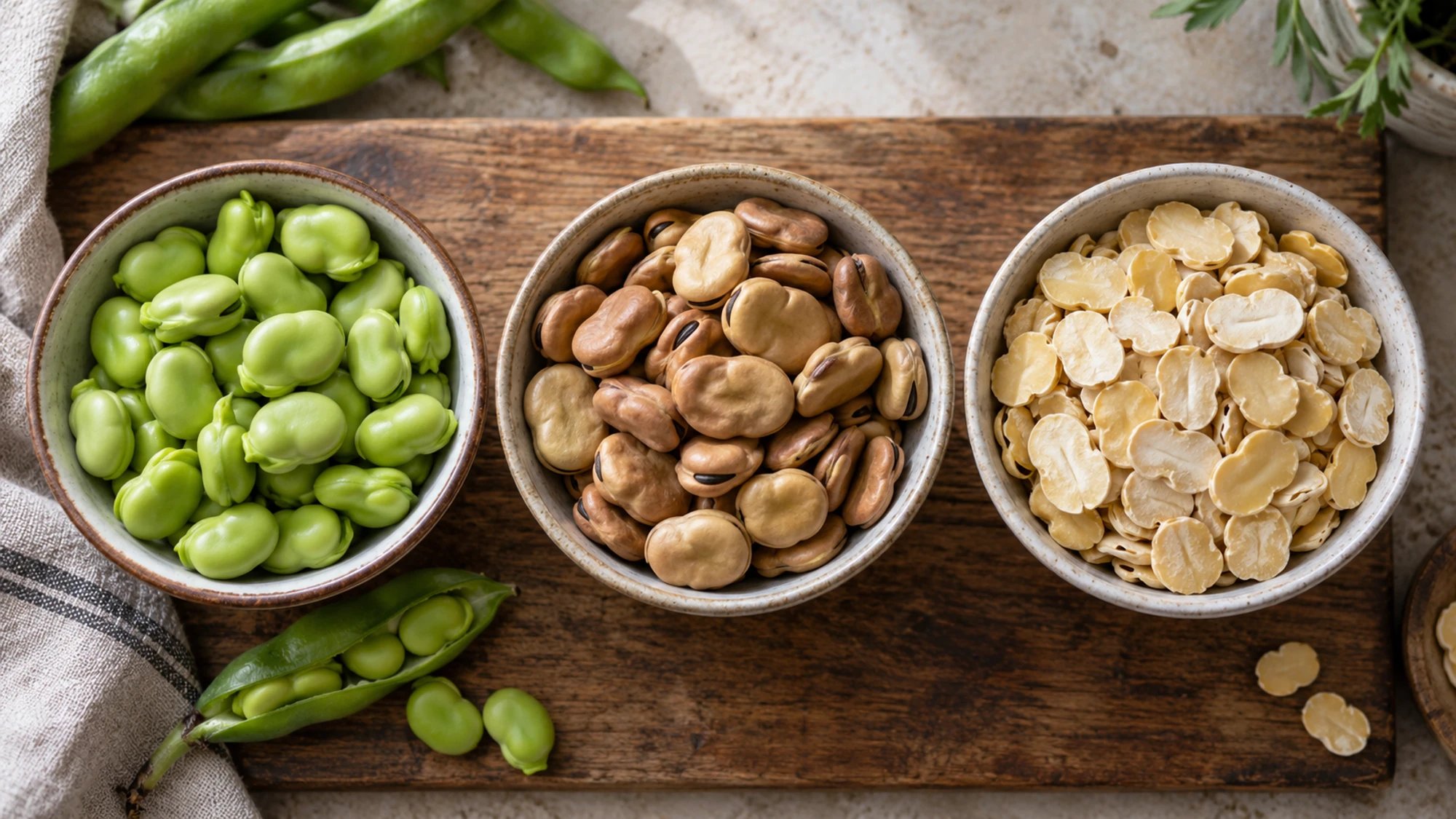
| Form | What to check |
|---|---|
| Fresh in pods | The pod weight includes material you will remove. |
| Frozen shelled | Check whether the seed coats remain and follow cooking directions. |
| Whole dried | Allow for soaking or other preparation specified on the package. |
| Split dried | Usually skinless; can soften into a different texture. |
| Canned | Read whether ready to eat, and check salt and added ingredients. |
A recipe that calls for a cup of shelled fresh beans is not asking for a cup of whole pods. Likewise, a dry measurement cannot stand in for a cooked one. Check the ingredient’s starting condition before comparing quantities.
Why do fresh favas seem to have two skins?
There is the outer pod, then a pale coat around each bean. OSU Extension describes shelling, blanching and removing that membrane to reveal the bright green interior. The individual coat can feel tougher than the bean underneath, especially as the beans mature.
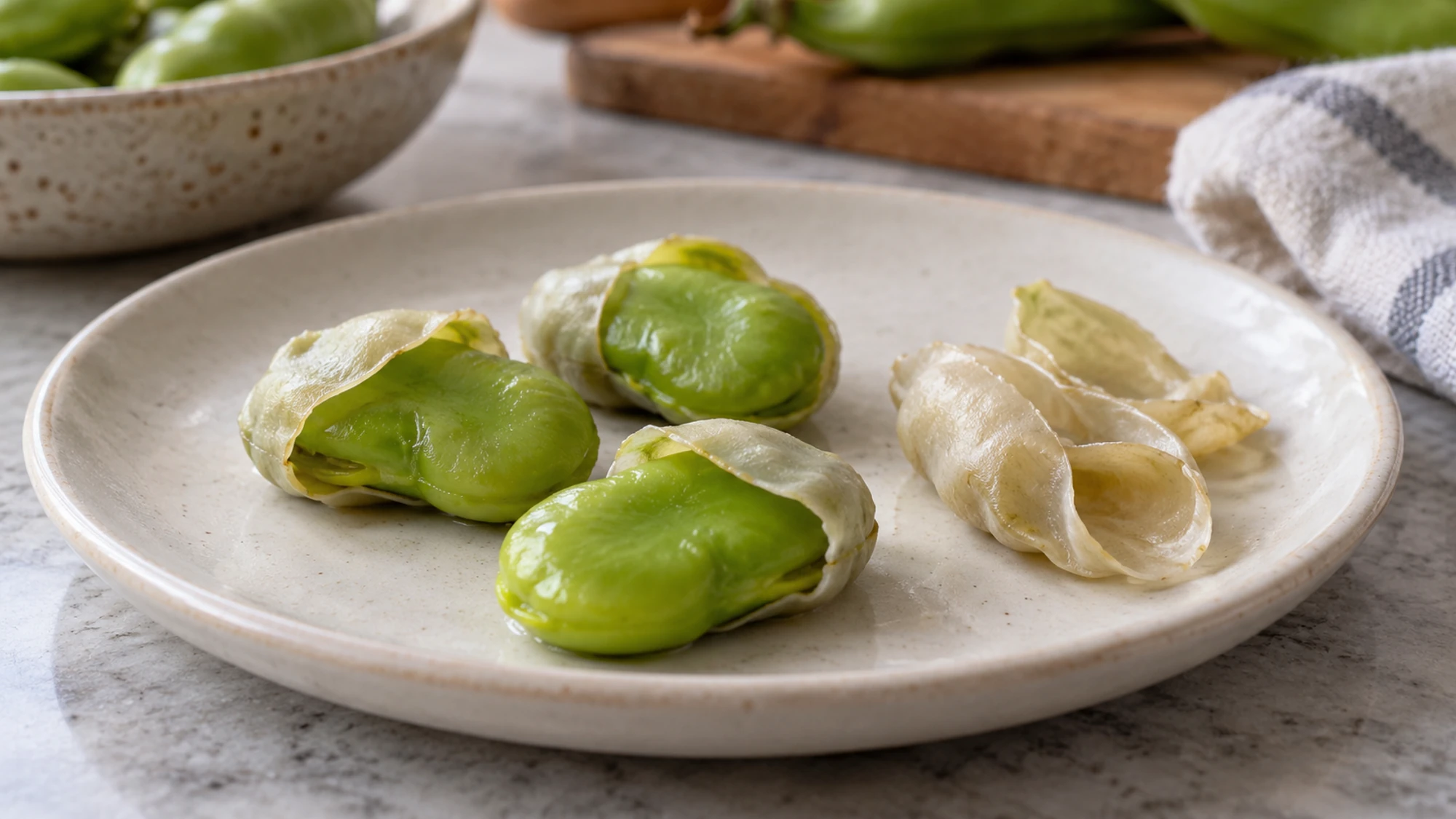
- Keep “shelled” and “peeled” separate in your shopping notes: they can describe different stages.
- Look at frozen beans before assuming all the peeling is already done.
- For dried beans, use directions written for whole or split beans, as appropriate.
I prefer the peeled green interior for a delicate salad or a smooth spread. That is a texture choice, not a safety treatment for someone who must avoid favas.
Where fava beans fit nutritionally
USDA MyPlate includes cooked fava beans among protein foods. Like other pulses, dried beans also contribute carbohydrate and fiber; the University of Maine’s pulse guide explains that broader nutrient profile.
Compare equivalent forms and portions when reading nutrition information. Dry beans weigh less before absorbing cooking water, while canned products may contain added salt. A spread with oil, a plain cooked serving and a fried snack will not have identical nutrition simply because each contains favas.
Fava beans can contribute to a varied meal, but a nutrient list is not evidence that they treat a health condition.
The G6PD deficiency precaution matters
MedlinePlus explains that fava beans can trigger hemolytic anemia in people with this inherited enzyme deficiency. The reaction is called favism. Not everyone has the same reaction, so another person’s experience is not a useful safety test.
The Royal Children’s Hospital guidance lists fava beans as a trigger to avoid. If G6PD deficiency is known or suspected, discuss dietary guidance with a clinician instead of trying a small amount. After eating favas, symptoms such as dark urine, jaundice or shortness of breath need prompt medical assessment.
Buy for the week, then choose your meal
For fresh beans, look for sound green pods and refrigerate them. OSU Extension suggests using beans in their pods within five to seven days. Keep dried beans dry and follow the product’s storage guidance; frozen and canned versions have their own instructions.
Cooked favas can accompany soft polenta or become a spread with herbs and lemon. For a separate bean option with a different starting ingredient, our white bean dip uses cannellini beans. Do not assume a substitution has been tested.
Choose the form that suits the meal, allow for shelling and peeling, and follow its preparation directions. Keep the G6PD precaution ahead of any serving idea.
Sources
- Oregon State: fava beans.
- OSU Extension: fava preparation and storage.
- MedlinePlus: G6PD deficiency.
- Royal Children’s Hospital: G6PD guidance.
- USDA MyPlate: protein foods.
- University of Maine: dried pulses.

Emily Parker is DISHORA’s recipe-writing persona, bringing a warm, practical voice to everyday cooking. Her focus is simple ingredients, comforting flavors and clear steps that make a dish feel approachable. From cozy dinners to something sweet, Emily’s recipes invite readers to try something delicious and make it their own.