
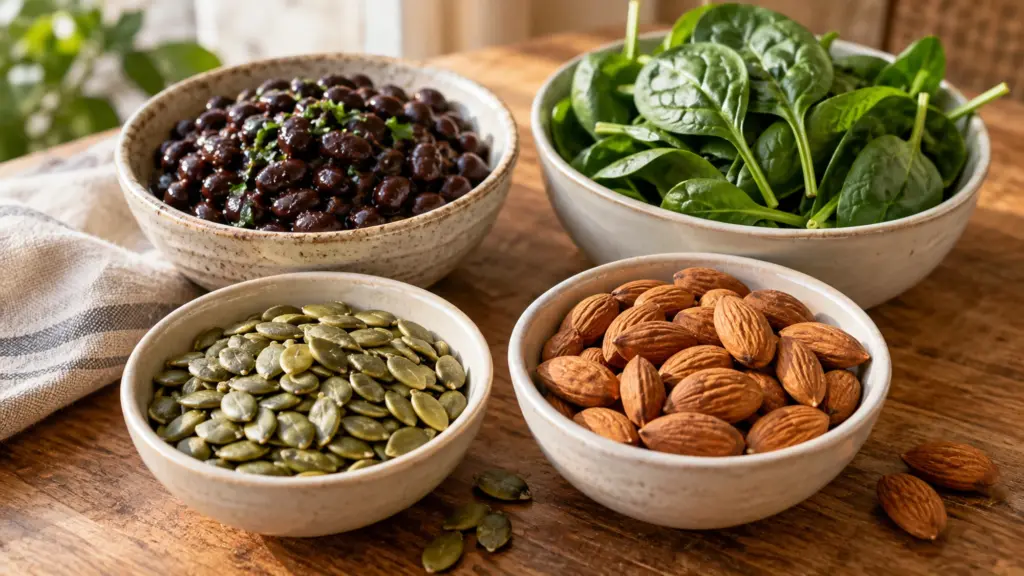
Wondering what foods are high in magnesium? Start with the familiar foods in your grocery basket, rather than a powder promising to transform your day. A handful of seeds, beans in a lunch bowl and greens alongside dinner offer several ways to include this mineral.
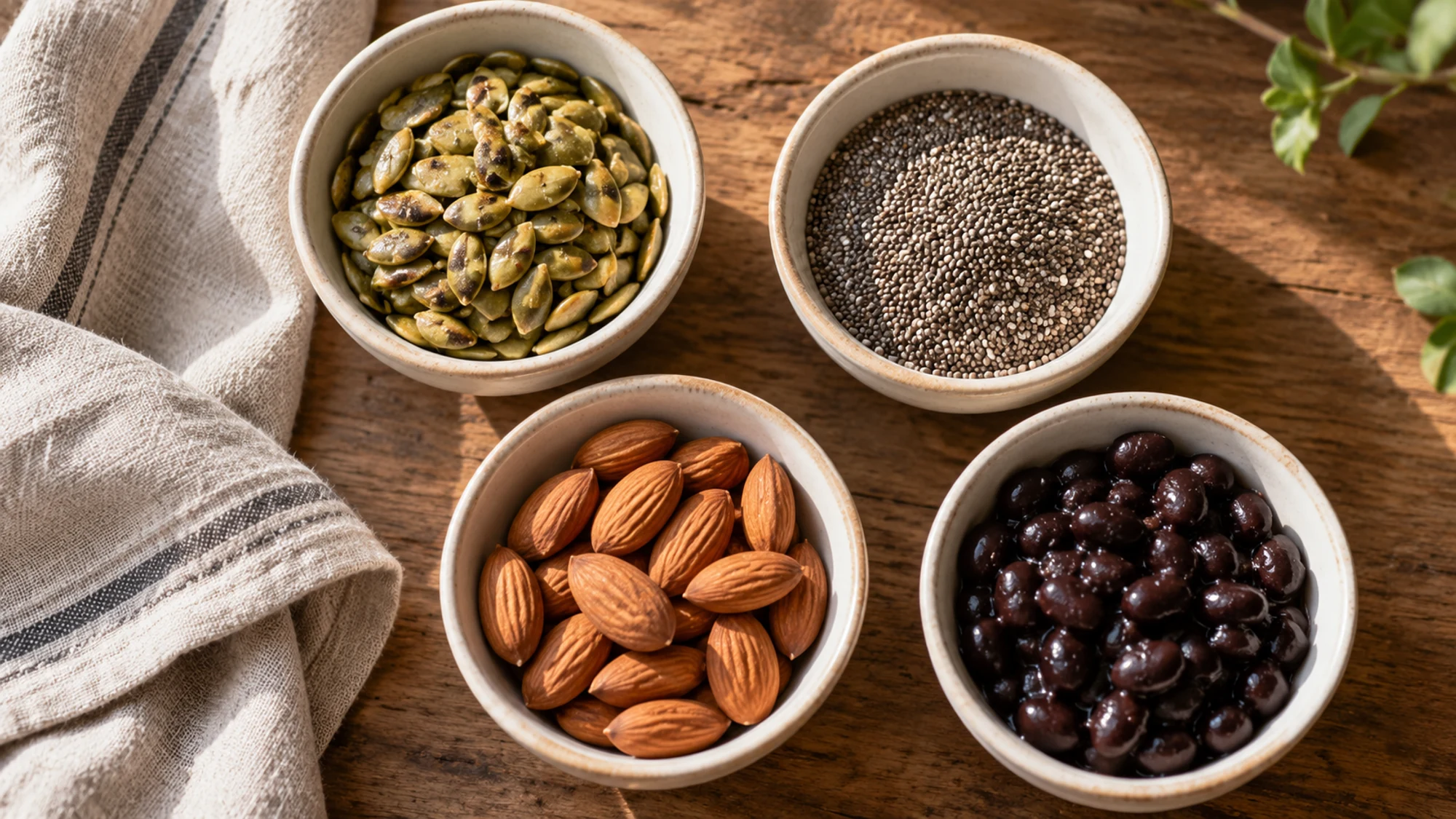
Roasted pumpkin seeds and chia seeds are especially concentrated sources of magnesium. Almonds, cooked spinach, black beans and whole grains contribute too. Compare actual portions: a food can make a useful contribution without meeting the FDA’s “high” threshold in one serving.
I like a food list that leaves room for taste and budget. The most useful choice is one that fits a meal you actually want to eat.
What foods are high in magnesium?
The NIH Office of Dietary Supplements food table gives these reference amounts. Preparation and serving size belong beside the numbers; these are examples, not exact measurements of every brand or bowl.
| Food and preparation | Serving | Magnesium |
|---|---|---|
| Pumpkin seeds, roasted | 1 ounce | 156 mg |
| Chia seeds | 1 ounce | 111 mg |
| Almonds, dry roasted | 1 ounce | 80 mg |
| Spinach, boiled | ½ cup | 78 mg |
| Black beans, cooked | ½ cup | 60 mg |
| Brown rice, cooked | ½ cup | 42 mg |
Treat the table as a starting point for shopping. A sprinkle of seeds is smaller than an ounce, while a generous bowl of beans may contain more than half a cup. Photos illustrate the foods, not weighed reference servings.
What “high” means on a nutrition label
The FDA uses a magnesium Daily Value of 420 mg for label comparisons. Its general guide calls 20% DV or more per serving high. That is 84 mg, so the pumpkin and chia seed portions above clear that threshold; the other listed portions do not.
- Compare equal quantities. Check whether a label describes one tablespoon, one ounce or an entire container.
- Keep useful contributors. A food below 20% DV still belongs in the bigger picture of a varied day’s eating.
- Read the whole label. Sodium, added sugars and the serving size also matter when choosing between packaged foods.
The DV is a shared reference, not everyone’s individual requirement. NIH’s consumer guidance lists adult recommendations of 400–420 mg for men and 310–320 mg for women, with different needs during pregnancy and across ages.
Make magnesium foods part of ordinary meals
I would start with one meal rather than redesigning the whole pantry. Pick a food from the list that suits what you already serve, then choose another on a different day. These are flexible serving ideas, without a prescribed menu or a calculated magnesium total.
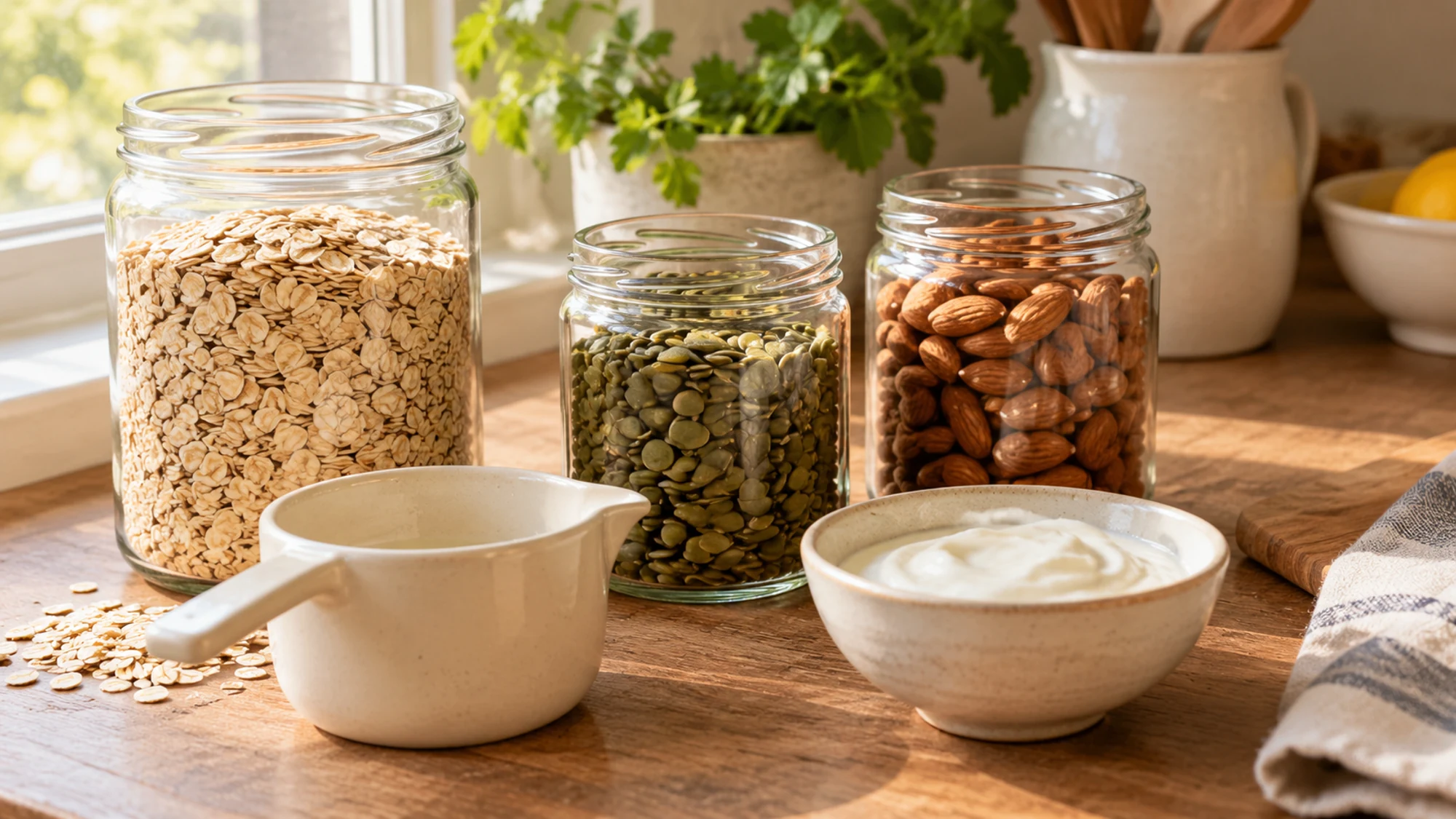
- Breakfast: Add almonds or seeds to oatmeal or plain yogurt. Keep the amount comfortable for the portion you enjoy.
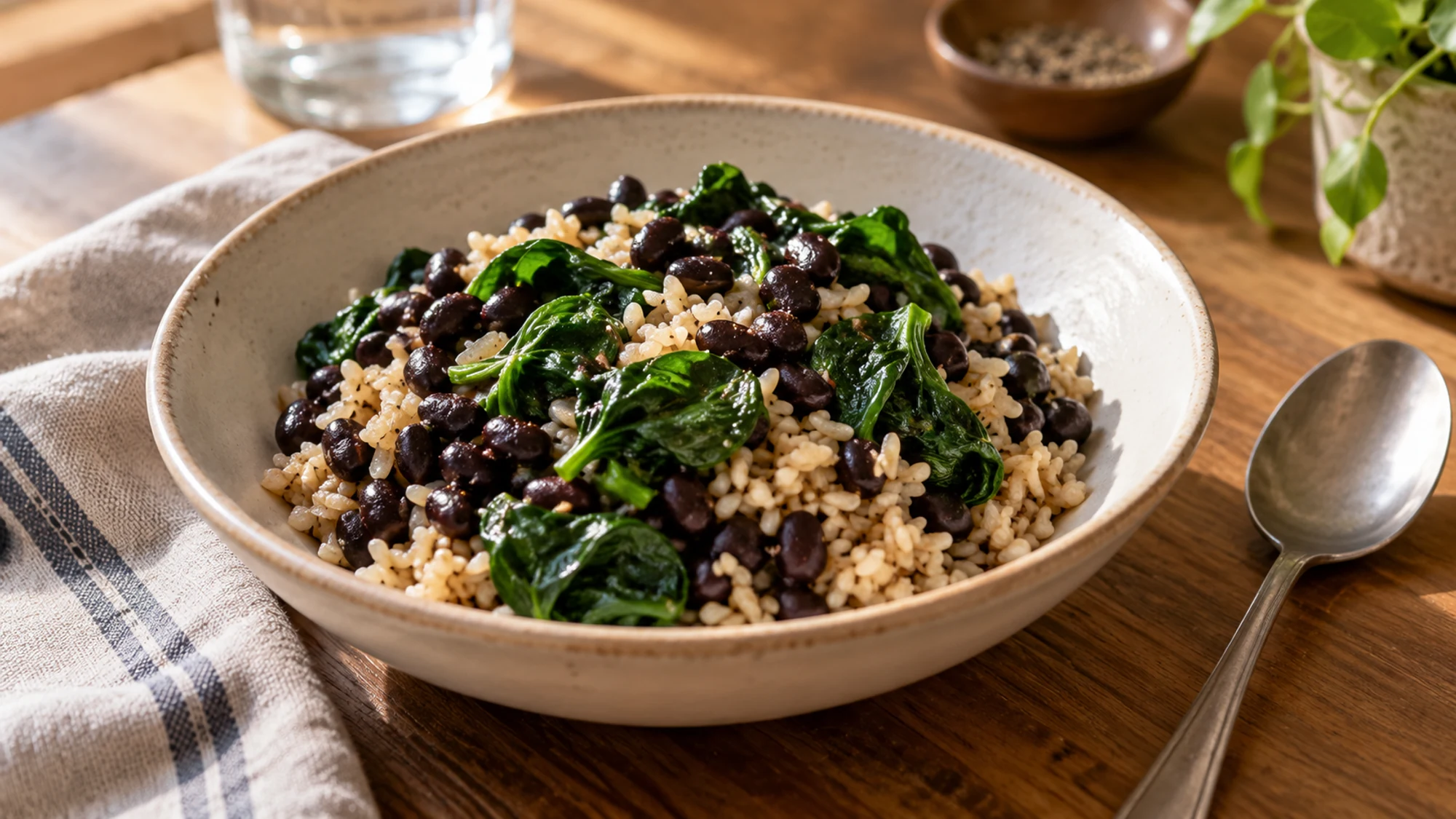
- Lunch: Build a rice bowl around beans and vegetables, using brown rice when it suits the dish.
- Dinner: Add a bean-based meal to the rotation. Our sausage white bean kale soup shows one way beans and greens can share a bowl; its ingredients differ from the reference table.
- Shopping: Choose foods that fit your allergies, dietary needs and budget. No single seed, nut or grain is mandatory.
Combine variety with convenience. A repeatable lunch you enjoy is more useful than a supposedly perfect food you leave untouched.
What magnesium foods can and cannot tell you
Magnesium supports normal muscle and nerve function and other essential processes, as NIH explains. Knowing a food contains magnesium does not establish that eating it will treat a symptom or prevent disease.
NIH also notes that research linking higher magnesium intake with some heart-health outcomes cannot always separate magnesium from other dietary factors. An association is not a promise about a particular snack, and a food-content table cannot prove claims about sleep or anxiety.
I prefer keeping the promise modest: these foods help build a varied diet. They do not need a “miracle mineral” story to earn a place on the table.
Food choices and supplements are different decisions
A grocery guide cannot diagnose deficiency. NIH describes assessment as involving clinical judgment and laboratory information. Persistent symptoms deserve medical assessment rather than a guess based on one day’s meals.
- Avoid automatic supplementation. NIH warns that supplemental magnesium can cause diarrhea and interact with medicines.
- Check individual circumstances. Kidney disease can increase the risk from excessive magnesium; discuss supplements with your clinician.
- Keep the goal practical. Start with varied foods you can use regularly, and seek tailored advice if a health condition affects your diet.
Choose a few magnesium-containing foods, compare sensible portions and keep the rest of the meal in view. Nutrient numbers are useful guides, not a competition to reach the largest single serving.
Sources
- NIH: magnesium food amounts and clinical context
- NIH: magnesium needs, health evidence and supplement cautions
- FDA: Daily Values and label comparisons

Emily Parker is DISHORA’s recipe-writing persona, bringing a warm, practical voice to everyday cooking. Her focus is simple ingredients, comforting flavors and clear steps that make a dish feel approachable. From cozy dinners to something sweet, Emily’s recipes invite readers to try something delicious and make it their own.