
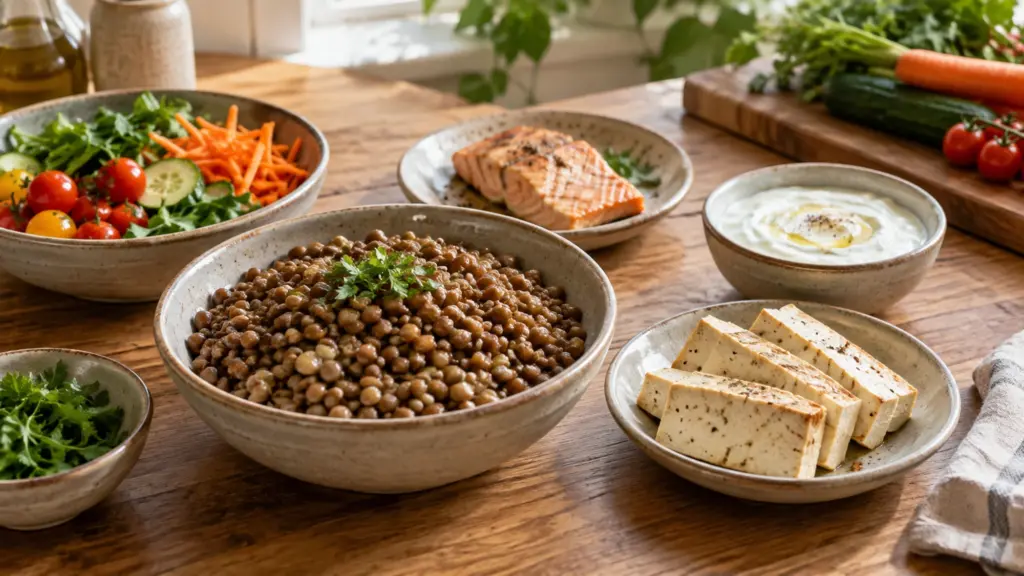
A yogurt label, a gym video and a nutrition calculator can give you three different protein numbers before breakfast. If you’re asking how much protein do I need a day, start by finding out what each number is meant to describe.
The 2025–2030 U.S. Dietary Guidelines give a protein target of 1.2–1.6 grams per kilogram of body weight daily. The longstanding adult RDA is 0.8 g/kg; these are different benchmarks, and health conditions can change the right amount for you.
I’d rather make those numbers useful at the table than turn every meal into homework. Here’s how to compare the guidance, do the arithmetic and leave room for the rest of a satisfying meal.
Why you keep seeing two protein targets
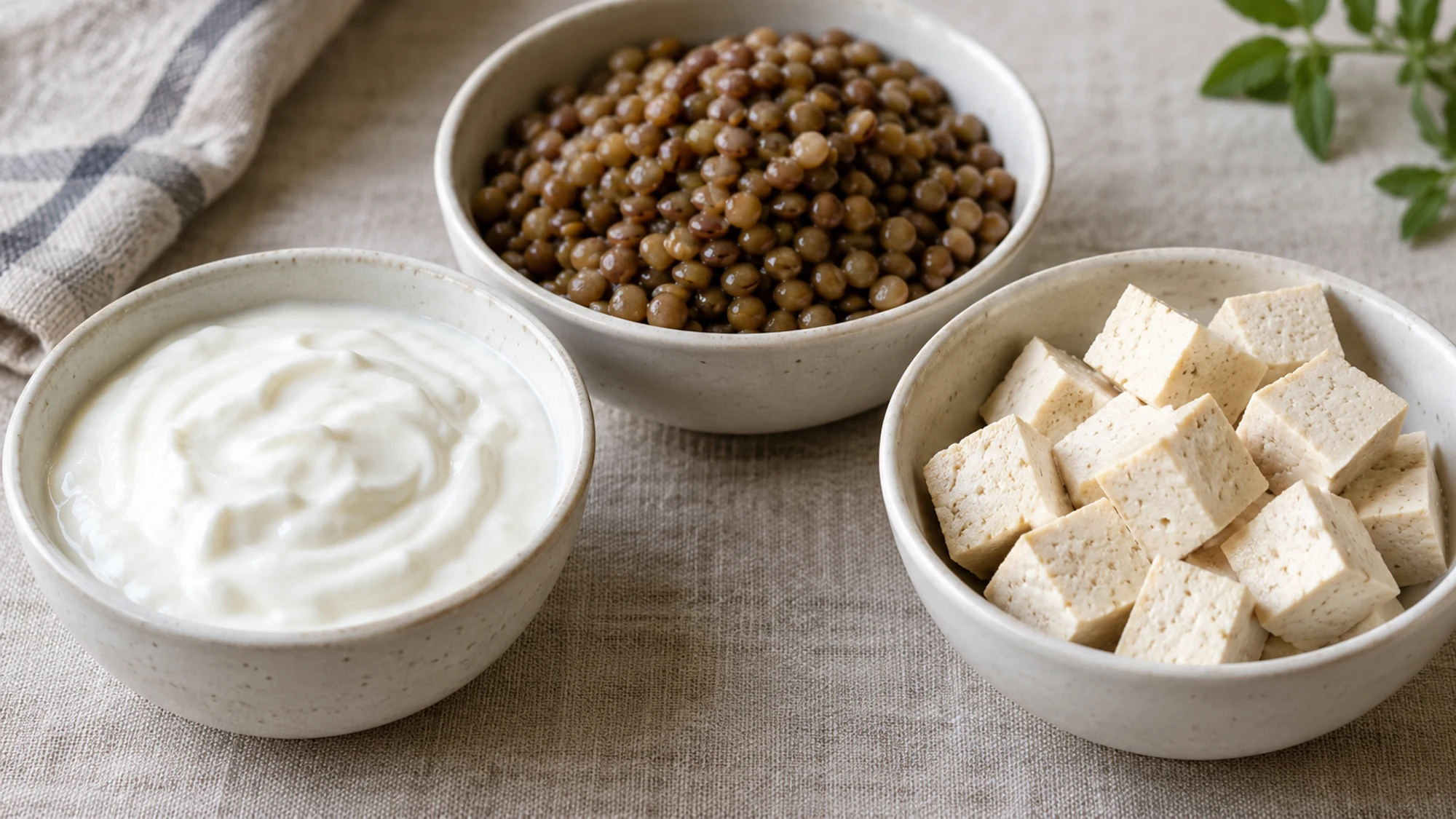
The current Dietary Guidelines for Americans, 2025–2030 recommend 1.2–1.6 g/kg/day. That is a daily target, counting protein from all foods, rather than a direction to add that much protein powder.
The NIH Office of Dietary Supplements also describes the established healthy-adult RDA of 0.8 g/kg/day. The National Academies defines an RDA as an intake designed to cover the needs of nearly all healthy people in its group; it is neither a maximum nor a diagnosis of what one person needs.
Neither number means that eating below it on a single day proves a deficiency. These tools describe usual intake; a professional assessment considers the broader eating pattern and health context rather than grading one lunch.
Calculate a range without mixing up the units
Divide pounds by 2.2 to estimate kilograms, then multiply kilograms by the chosen factor. For example, 154 pounds is about 70 kilograms: 70 × 1.2–1.6 gives 84–112 grams of protein per day.
The table shows calculated comparisons, not individual prescriptions. Body size alone cannot account for training, illness, pregnancy, appetite or a clinician’s advice about which weight to use.
| Body weight | 0.8 g/kg RDA | 1.2–1.6 g/kg target |
|---|---|---|
| 60 kg / 132 lb | 48 g | 72–96 g |
| 70 kg / 154 lb | 56 g | 84–112 g |
| 80 kg / 176 lb | 64 g | 96–128 g |
| 90 kg / 198 lb | 72 g | 108–144 g |
Keep the units straight: grams of protein are not grams of chicken, tofu or yogurt. A 150-gram serving of a food does not contain 150 grams of protein; the nutrition label or a reliable food database supplies that second number.
Training changes the question
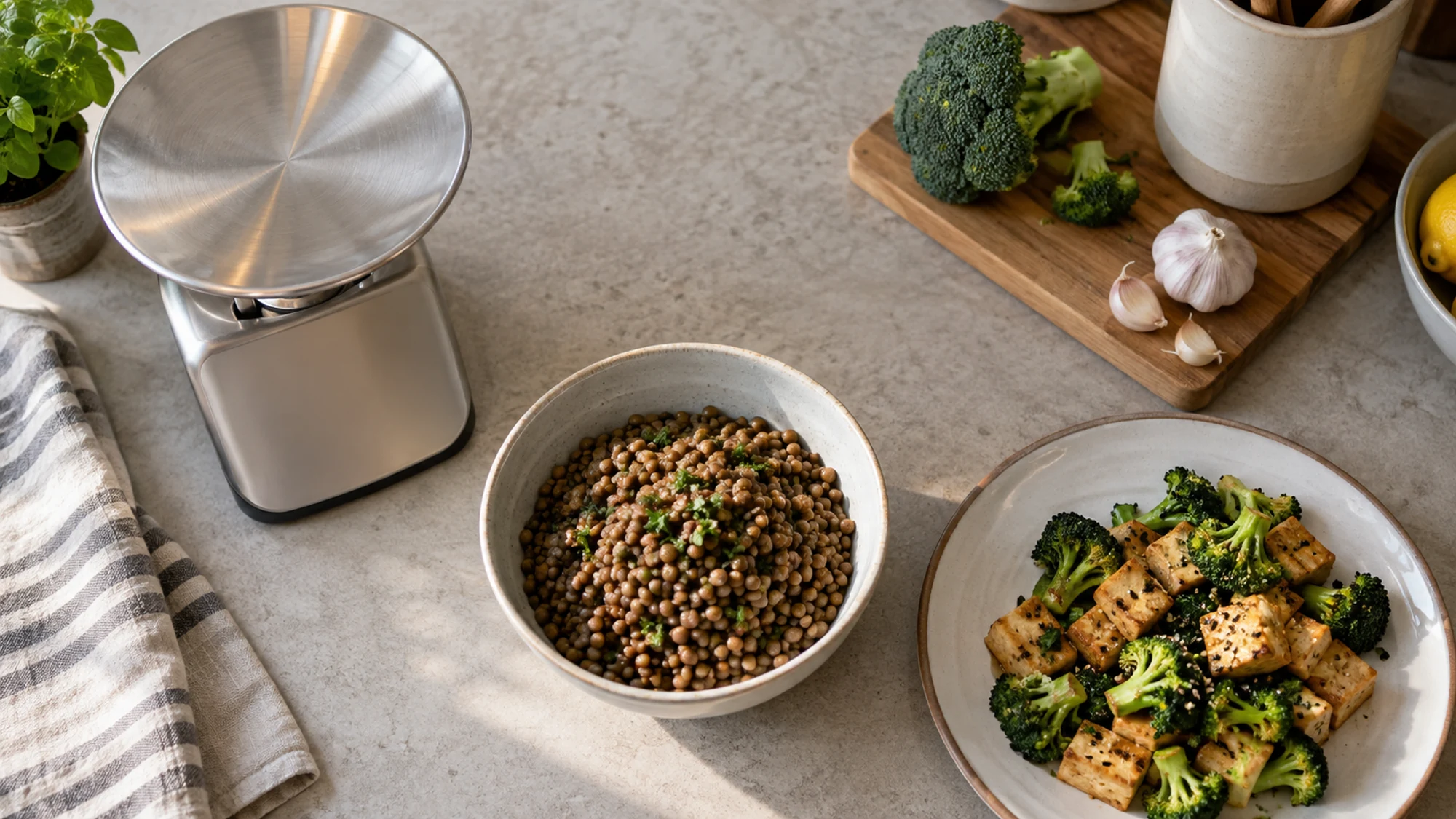
For athletes, the NIH sports-nutrition fact sheet describes roughly 1.2–2.0 g/kg/day, depending on the activity and circumstances. A demanding training block deserves more individual planning than an occasional walk.
A meta-analysis of 49 resistance-training studies found that adding protein modestly improved muscle and strength gains, with no further average fat-free-mass benefit beyond about 1.6 g/kg/day. That finding concerns healthy adults doing resistance training; it does not establish one perfect dose for every age, sport or medical condition.
The practical lesson is to match the plan to the activity instead of assuming that more always delivers more benefit. Training consistency, enough overall food and recovery belong in the same conversation.
Build meals before buying a supplement
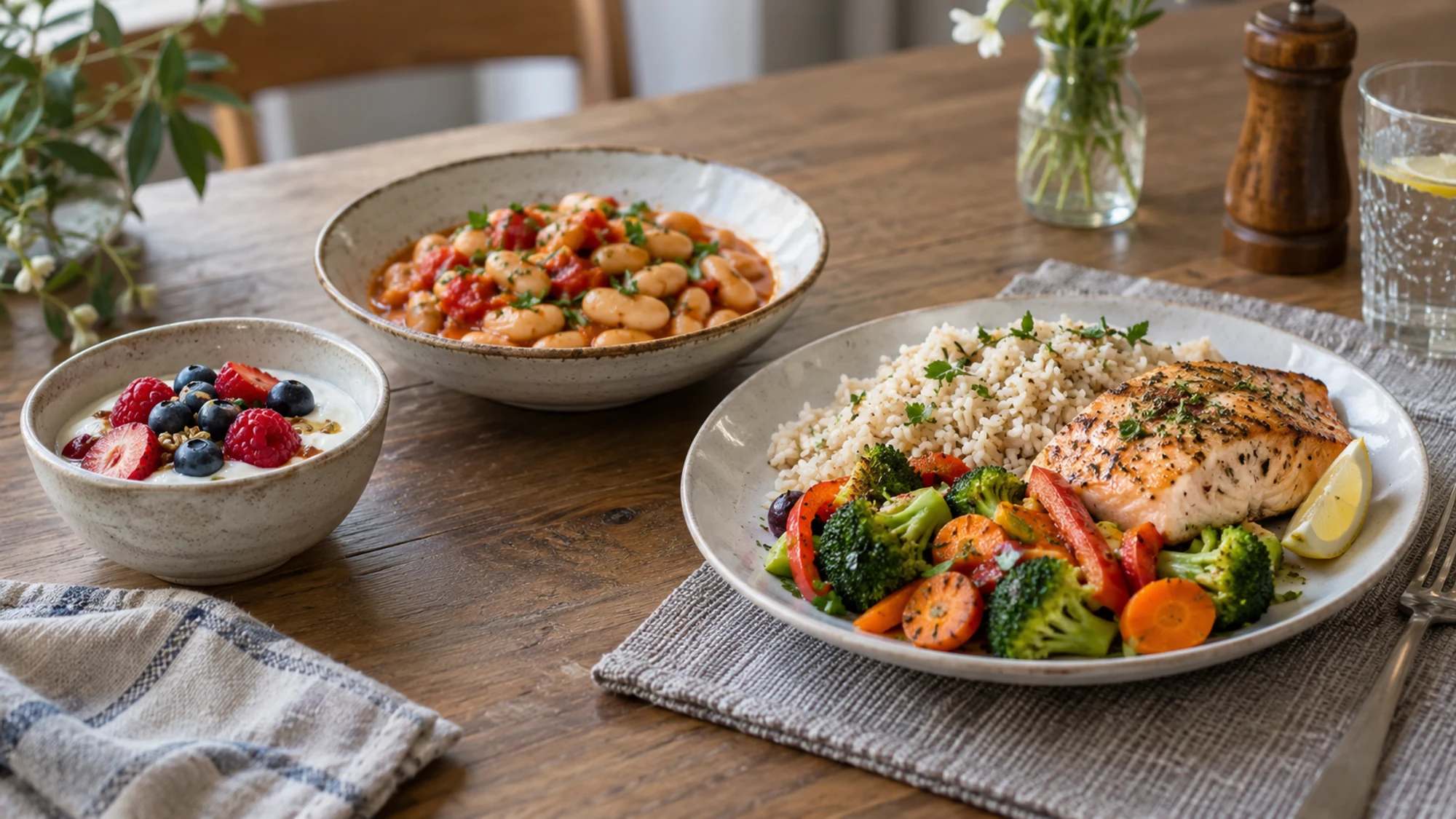
Pick a protein-containing food you actually enjoy at each meal: beans, lentils, tofu, eggs, fish, poultry or dairy. I like this starting point because it turns an abstract daily target into a shopping decision.
Read the protein grams per serving and check how much you eat. If a label lists 15 grams per serving and you eat two servings, that contributes 30 grams; include the other foods in the meal too.
- Spread protein-containing foods across breakfast, lunch and dinner rather than leaving the whole job for the evening.
- Compare similar portions when choosing yogurt, tofu or a packaged food; brand and preparation can change the number.
- Keep vegetables, fruit, fiber-rich carbohydrates and fats in the picture instead of letting a protein target crowd them out.
For a food-based starting point, DISHORA’s homemade yogurt guide explains ordinary yogurt preparation. Strained and unstrained yogurts differ, so use a matching product label when counting protein.
Know when a calculator is not enough
Kidney disease is a clear reason to personalize this advice. NIDDK explains that some people with chronic kidney disease need to moderate protein, while dialysis can increase needs.
Children, pregnancy, recovery from illness and unintentional weight loss also deserve age- or condition-specific guidance. A registered dietitian can connect the number with your health, budget and ability to eat enough.
Use a clearly identified benchmark, calculate it in kilograms, then check how it fits your meals and circumstances. A useful protein plan should make eating clearer, not make a higher number the goal by itself.
Sources
- U.S. Dietary Guidelines for Americans, 2025–2030
- NIH: exercise, protein and the adult RDA
- Morton and colleagues: resistance-training meta-analysis
- NIDDK: nutrition with chronic kidney disease
- National Academies: what an RDA means

Emily Parker is DISHORA’s recipe-writing persona, bringing a warm, practical voice to everyday cooking. Her focus is simple ingredients, comforting flavors and clear steps that make a dish feel approachable. From cozy dinners to something sweet, Emily’s recipes invite readers to try something delicious and make it their own.