

Sometimes the spoonful of dough is the dessert you actually want. The answer to how to make edible cookie dough starts with the flour, before the chocolate chips: use a commercially treated wheat flour explicitly labeled for eating without baking. This version also skips eggs, then adds butter, brown sugar and vanilla for a soft, scoopable chocolate-chip dough.

Choose flour labeled ready to eat, leave out the eggs and mix a batch meant for the spoon.
I prefer small scoops because this dough is rich, sweet and full of little chocolate bites. A short chill gives it more shape without turning it into a frozen dessert. There is no baking step hiding at the end, so choosing the right flour is a real ingredient requirement, not an optional shortcut.
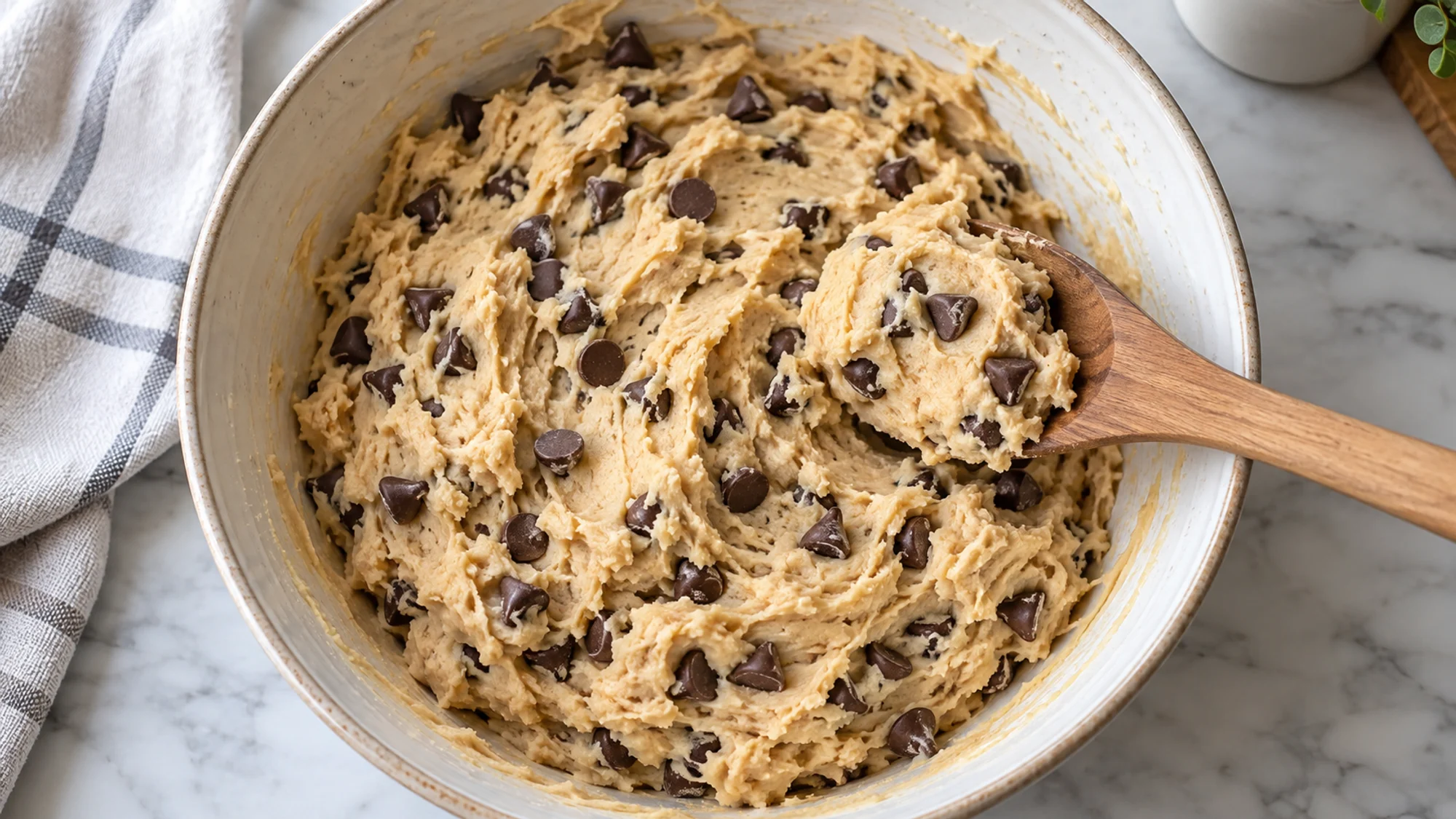
Serving suggestions
Spoon the chilled dough into small bowls or dessert cups and serve with teaspoons. The batch makes about two cups, enough for eight modest portions. I would let very cold dough stand for a few minutes if it feels firm, just long enough to soften the butter slightly and make scooping easier.
A few small pieces can go over ice cream, or you can offer a little dough beside sliced strawberries. Those are serving ideas rather than ingredients in the measured card. Keep the portion manageable: the appeal is the contrast between the creamy brown-sugar base and the chips, not a towering bowl you cannot finish.
For a dessert spread, set out a small amount and keep the rest refrigerated. Refill with a fresh chilled portion instead of leaving the whole batch out. If you would rather bake something with chocolate, a fudgy brownie offers a different texture and a conventional cooking step.
A small scoop gives you plenty of soft dough and chocolate in each bite.
Variations
Mini chocolate chips spread little bits of chocolate through every spoonful, while regular chips give a more distinct bite. Either works at the measured volume. White chocolate or chopped ready-to-eat chocolate changes the flavor, so choose what you like and check the label if allergies matter.
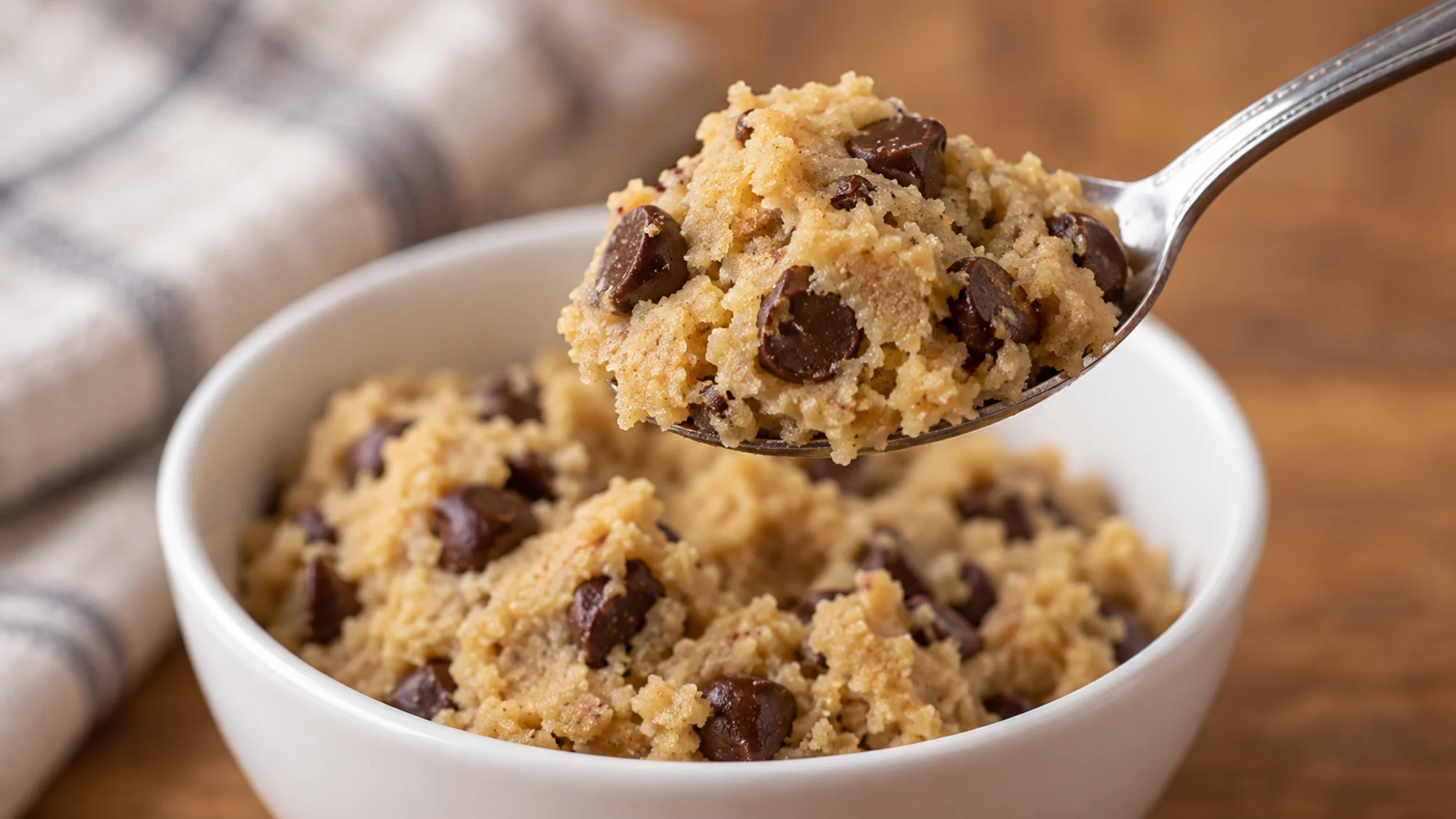
The flour needs more care than the mix-ins. Look for commercially treated ready-to-eat flour whose package specifically permits unbaked use. Some treated flours still require cooking. If you cannot confirm the intended use, save this recipe until you can get the correct ingredient.
Start with the smaller amount of milk because flour absorption varies. Add the final tablespoon gradually only if the dough feels dry or difficult to scoop. Melted butter can make the mixture greasy, so use softened butter instead. This recipe has no eggs or leavening and is designed for spooning, rather than baking into cookies.
Change the chocolate if you like, but keep the flour requirement intact.
Health benefits
This is a sweet treat, with sugar and saturated fat from the base and chips. Removing eggs serves the preparation method; it does not automatically make the dessert lighter or suitable for every diet. Enjoy a portion that feels satisfying within the rest of your day.
Ready-to-eat flour still contains wheat unless the package says otherwise, and butter and milk add dairy. Chocolate chips may introduce other allergens. Read all the labels rather than assuming egg-free means allergy-free. For a different dessert built around fruit and yogurt, try frozen yogurt bark on another occasion.
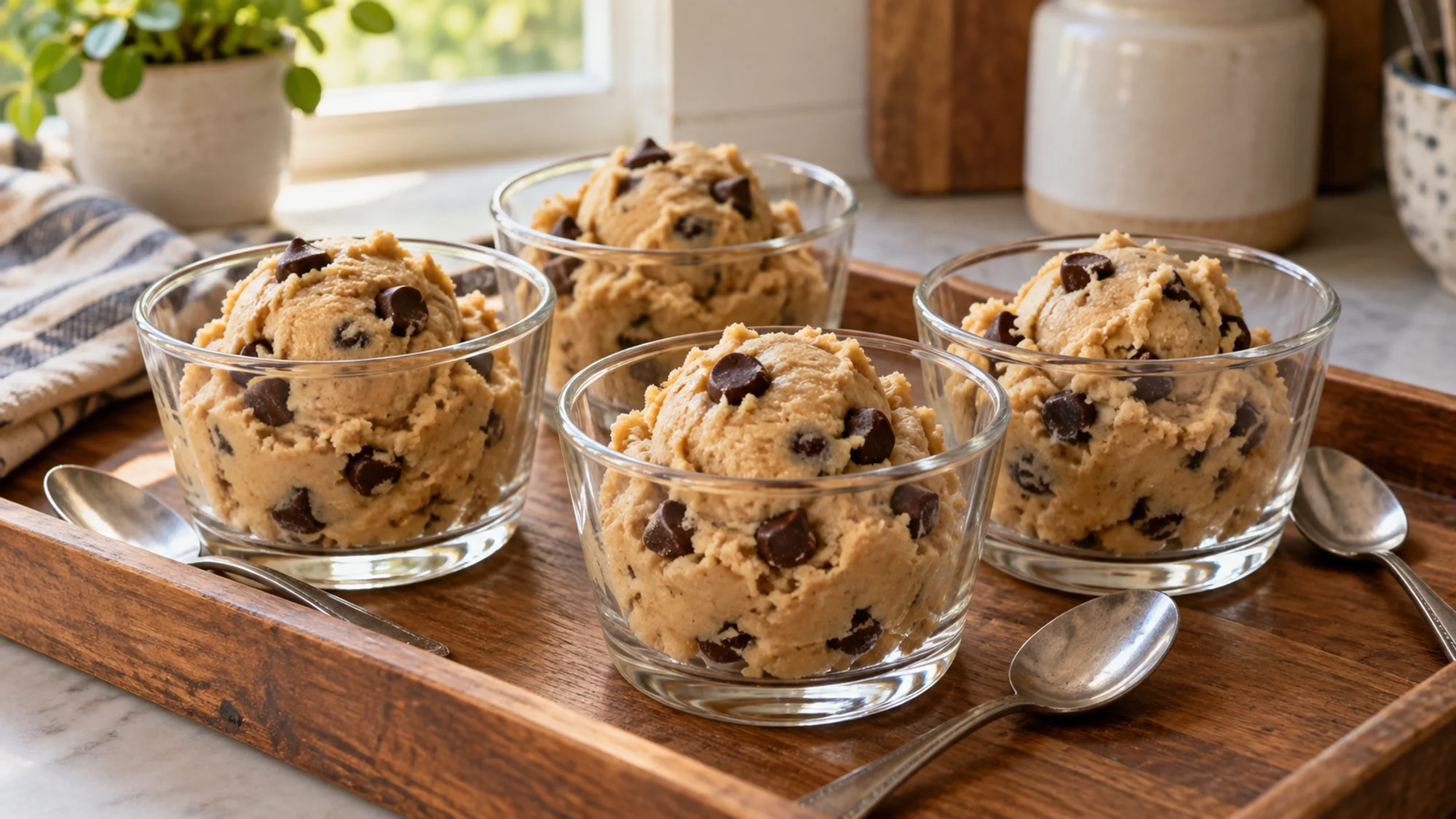
Keep flour handling in mind even when a recipe contains no eggs. Home heating is not a reliable substitute for a commercially validated ready-to-eat product. Use clean utensils, separate the dough from ordinary raw baking ingredients and refrigerate leftovers promptly.
Treat it as dessert, and make the ingredient labels part of the recipe.
Motivation conclusion
Once the right flour is on hand, the mixing is straightforward: a soft butter base, a little milk and chocolate chips folded through at the end. Take your time blending the sugars so the dough is even, then let the refrigerator give it a firmer, scoopable texture.
There is no need for an elaborate topping or a special appliance. A wooden spoon, a small bowl and a few chocolate chips are enough to make the finished dessert feel complete. Portion a little for now, cover the rest and keep the pleasure of that first spoonful simple.
Begin with the right flour, then enjoy the soft, chocolate-studded scoop.
How to Make Edible Cookie Dough Recipe

Ingredients
- 1 cup commercially heat-treated, ready-to-eat wheat flour About 120 g; package must explicitly permit eating without baking. Do not use ordinary raw flour or home heat-treated flour.
- 1/2 cup unsalted butter 113 g, softened but not melted
- 1/2 cup packed light brown sugar 100 g
- 2 tbsp granulated sugar
- 1 tsp vanilla extract
- 1/4 tsp salt
- 2–3 tbsp pasteurized milk Start with 2 tablespoons; add the third only if needed
- 1/2 cup semisweet chocolate chips Ready-to-eat chips
Equipment
- Two clean mixing bowls
- Measuring cups and spoons
- Wooden spoon and flexible spatula
- Small scoop For portioning
- Lidded food-storage container
- Refrigerator
Instructions
- Check that the flour package explicitly says it is ready to eat without further cooking. Measure 1 cup into a clean bowl. If the package requires baking or the label is unclear, do not use it for this no-bake recipe.
- In the second bowl, beat the softened butter, brown sugar and granulated sugar with a wooden spoon for about 2 minutes, until evenly blended and a little fluffy. Stir in the vanilla, salt and 2 tablespoons pasteurized milk.
- Stir in the measured ready-to-eat flour until no dry pockets remain. If the dough is too stiff to scoop, stir in the remaining 1 tablespoon milk a little at a time, using only what is needed. Fold in the chocolate chips.
- Cover and refrigerate for 20 minutes for a firmer scoop. Divide into 8 small servings, approximately ¼ cup each; the total yield is about 2 cups. Keep the remaining dough covered and refrigerated.
Notes
Tried this recipe?
Let us know how it turned out!Emily Parker is DISHORA’s recipe-writing persona, bringing a warm, practical voice to everyday cooking. Her focus is simple ingredients, comforting flavors and clear steps that make a dish feel approachable. From cozy dinners to something sweet, Emily’s recipes invite readers to try something delicious and make it their own.