
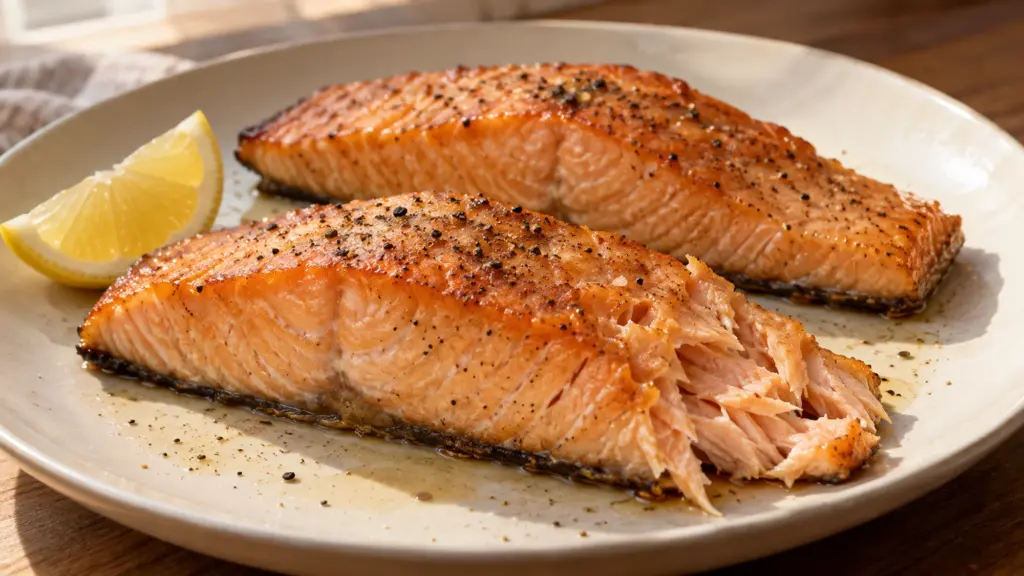
Fish on the grill can feel like a race between sticking and drying out. The simplest answer to how to grill salmon is to start with skin-on portions, dry the surface and let the skin face the heat. A closed lid cooks the top gently while the underside holds the fillet together, so there is no need for constant turning.
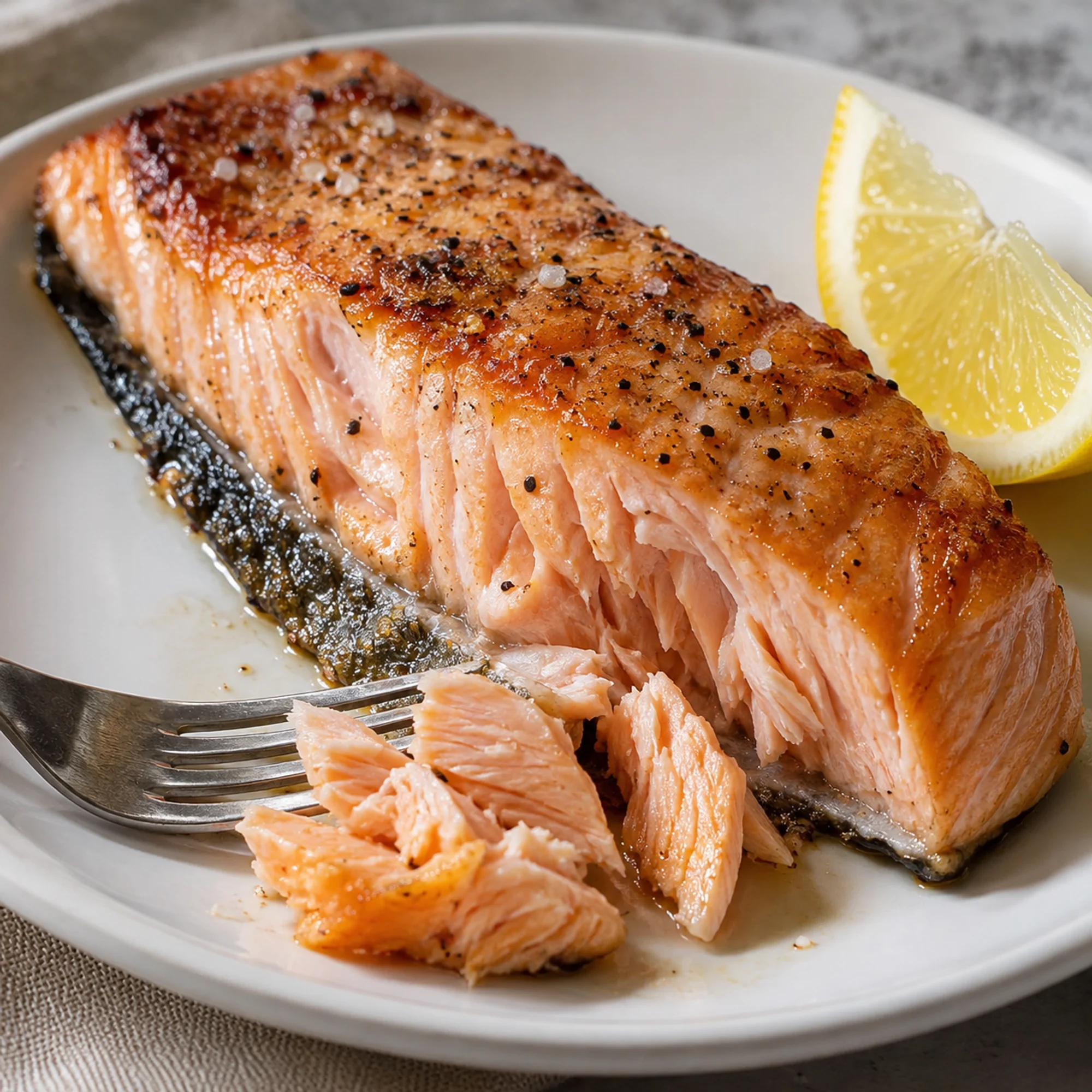
Keep the skin underneath, leave the fish alone and check the center before serving.
I prefer lemon at the table rather than a sugary coating on the grill. It brightens the salmon without hiding its flavor or adding another thing that can scorch. With oil, salt and pepper doing the seasoning, the useful skills here are steady heat, patient handling and a quick thermometer check.
Serving suggestions
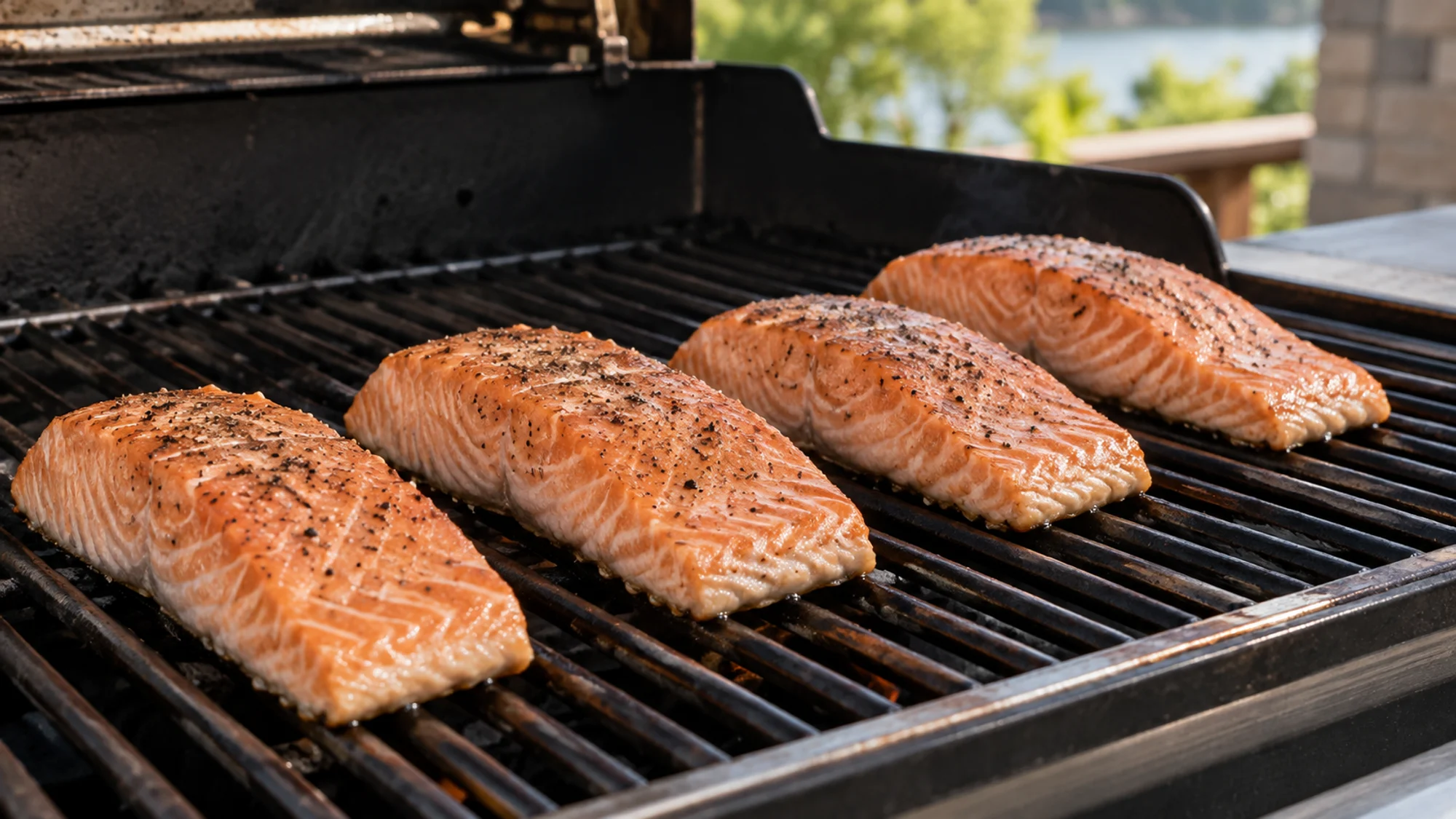
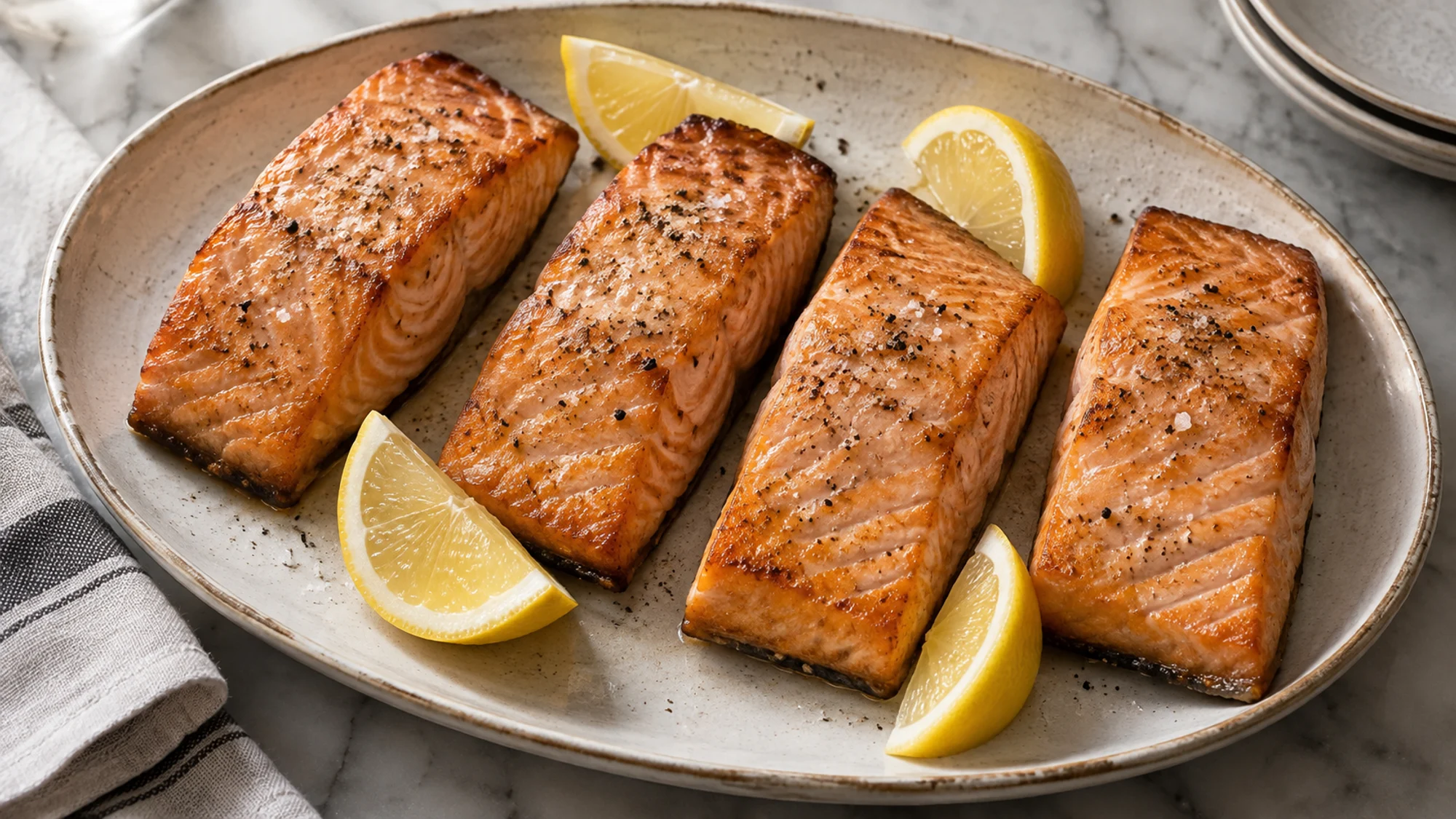
Serve the salmon while the surface is warm and the center separates into moist flakes. A lemon wedge gives everyone control over the acidity. Add fluffy long-grain rice and a crisp cucumber salad for a simple plate, or use roasted potatoes if you want something more substantial.
For a vegetable side, garlic and lemon green beans carry the citrus flavor across the meal. I would keep any dressing or sauce alongside the fish so the skin has a chance to stay crisp. A little plain yogurt mixed with herbs is a serving option, rather than part of the measured recipe.
Cold leftover salmon is useful over greens or tucked into a grain bowl. Chill it promptly in a shallow covered container, then break it into larger flakes just before serving. Keep cooked fish on a clean plate, separate from the tray that held the raw portions.
Choose one satisfying starch and one fresh vegetable, then let the salmon lead.
Variations
Center-cut fillets of similar thickness cook more evenly than a mixture of thick portions and thin tail pieces. Farmed and wild salmon can both work, but leaner fish may dry sooner. Begin checking early and remove each portion when its own center reaches the target temperature.
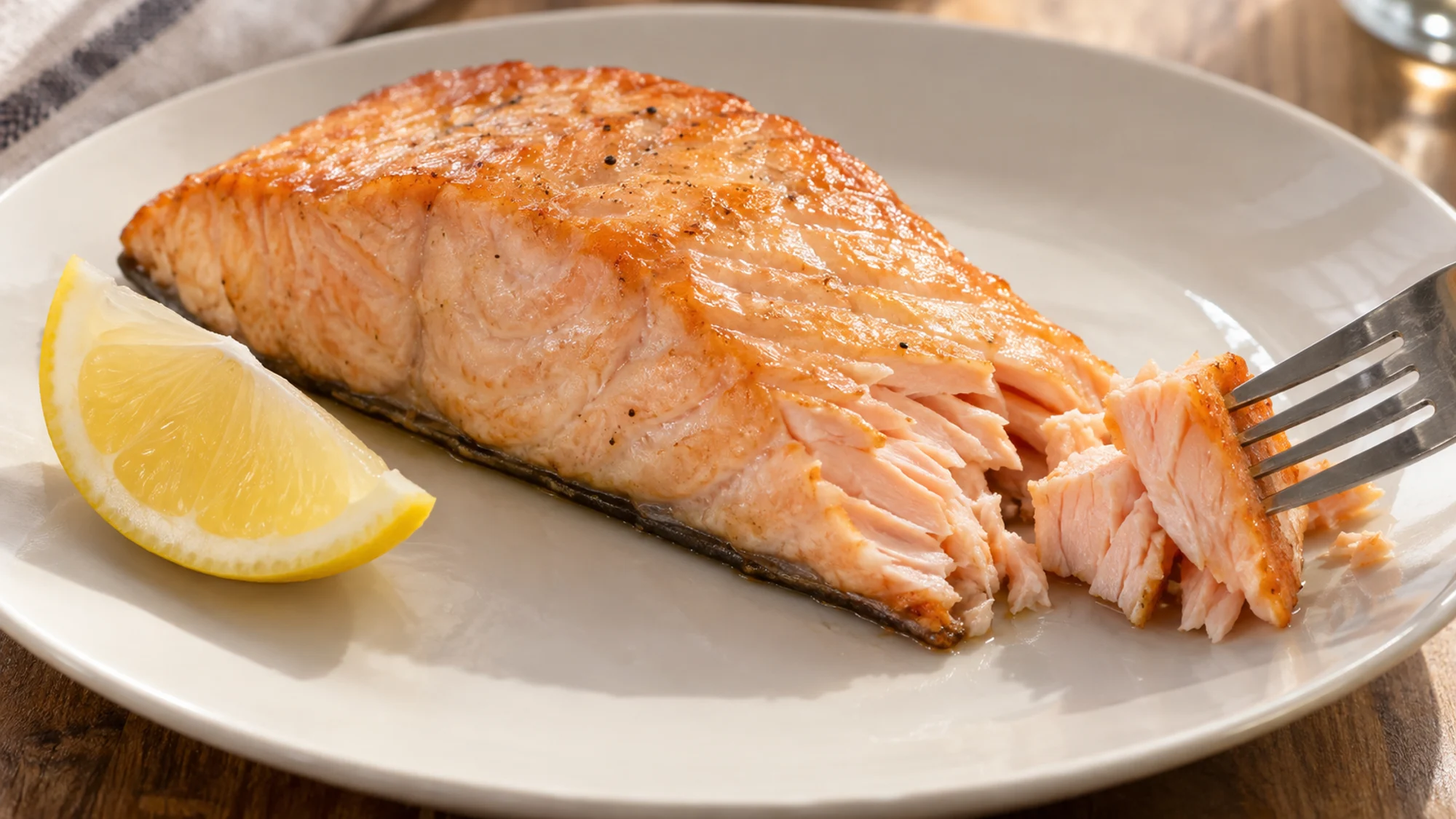
The skin-side-down method leaves the upper flesh without the dark stripes of a flipped fillet. That is expected. If your usual idea of grilled fish includes a crosshatched top, think of this version as a gentler way to keep delicate portions intact. The browned skin provides the grilled contrast.
Keep a cooler area ready in case the underside colors faster than the middle cooks. Move the fish carefully with a wide spatula and close the lid again. A glaze, cedar plank or foil packet changes how heat reaches the salmon, so each deserves its own instructions rather than an automatic swap here.
Match the timing to the thickness, and give the fish a cooler landing spot if needed.
Health benefits
Salmon provides protein and omega-3 fats, making it a useful option within a varied eating pattern. The amount of fat and other nutrients differs by species and portion size. This recipe uses a light coating of oil and simple seasonings, with no sugary sauce required for flavor.
For families planning seafood meals, fish choices and serving guidance can help account for age and pregnancy. Salmon falls among lower-mercury choices, but variety still matters. Pairing it with vegetables and grains gives the meal more range than fish alone.
The most practical benefit of a thermometer is consistency. For safe seafood preparation, this recipe takes the thickest center to 145°F before removal. Opaque flakes offer a useful visual cue, but they do not replace that check when you have a thermometer available.
A balanced plate and a clear doneness check make a useful combination.
Motivation conclusion
Grilled salmon does not require a long marinade or a dramatic flip. Start with dry fish and a properly heated grill, leave room around the portions and resist poking at them every minute. Let the lid do its share of the work while you prepare the sides.
Once the center is ready, lift carefully and serve without a long wait. The reward is a simply seasoned piece of fish that breaks into tender flakes. Keep the lemon close, take the first bite and let the small details of the method carry the meal.
Steady heat and a patient hand are plenty to begin with.
How to Grill Salmon Recipe

Ingredients
- 4 skin-on salmon fillets 6 oz each, about 1 inch thick; 1½ lb total
- 1 tbsp avocado oil
- 3/4 tsp kosher salt
- 1/4 tsp black pepper
- 1 lemon Cut into wedges for serving
Equipment
- Outdoor grill with lid
- Bristle-free grill scraper
- Rimmed tray For raw fish
- Paper towels
- Clean pin-bone tweezers
- Wide fish spatula
- Instant-read thermometer
- Clean serving plate
Instructions
- Pat the salmon dry with paper towels on a rimmed tray. Check for pin bones and remove any with clean tweezers. Refrigerate while the grill heats.
- Set up an outdoor grill for medium-high direct heat, about 400°F (205°C), with a cooler area available. Clean the grates with a bristle-free scraper and preheat with the lid closed according to the grill manufacturer’s instructions.
- Rub the avocado oil lightly over the flesh and skin of the salmon. Season with the kosher salt and black pepper.
- Place the fillets skin-side down on the hot grates, leaving space between them. Close the lid and cook without flipping. Begin checking after 8 minutes; 1-inch fillets usually take about 10–15 minutes, but thickness and grill heat vary. If the skin is darkening too fast, gently move the fillets to the cooler area and continue covered.
- Insert a clean instant-read thermometer sideways into the thickest part of each fillet. Cook until the center reaches 145°F (63°C) before removing; the flesh should be opaque and separate into flakes. Lift with a wide fish spatula onto a clean plate and serve with the lemon wedges.
Notes
Tried this recipe?
Let us know how it turned out!Emily Parker is DISHORA’s recipe-writing persona, bringing a warm, practical voice to everyday cooking. Her focus is simple ingredients, comforting flavors and clear steps that make a dish feel approachable. From cozy dinners to something sweet, Emily’s recipes invite readers to try something delicious and make it their own.