
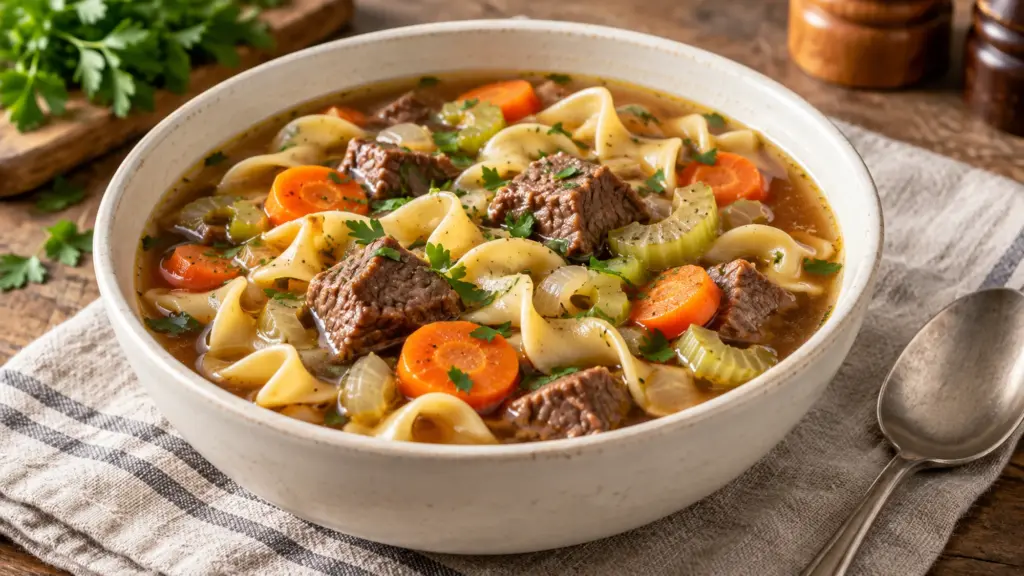
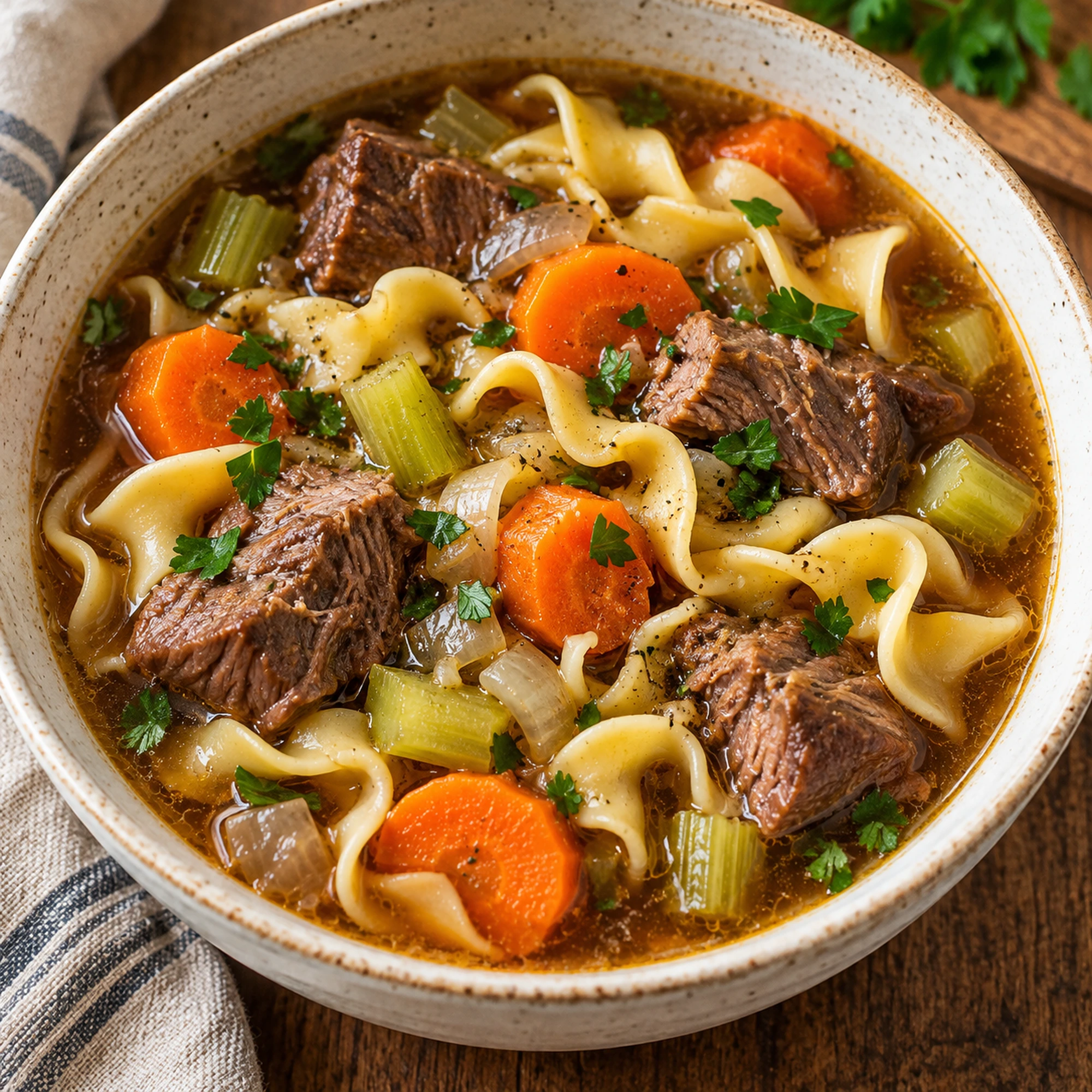
There is a small timing puzzle in a pot of beef noodle soup: the beef needs a long, gentle simmer, while the noodles need only minutes. Give each its own schedule and you get tender chuck, springy egg noodles and a savory broth that stays pleasantly soupy.
This American-style beef noodle soup pairs slow-simmered beef with carrots, celery and wide egg noodles. Cook the noodles separately, then add them to each bowl so tomorrow’s lunch does not absorb tonight’s broth.
This is a straightforward homestyle version, with thyme and parsley rather than the spices and garnishes of Taiwanese beef noodle soup or Vietnamese pho. I’d choose a well-trimmed chuck roast here: it rewards patient cooking without needing a complicated shopping list. Plan on about three hours, with much of that spent quietly simmering.
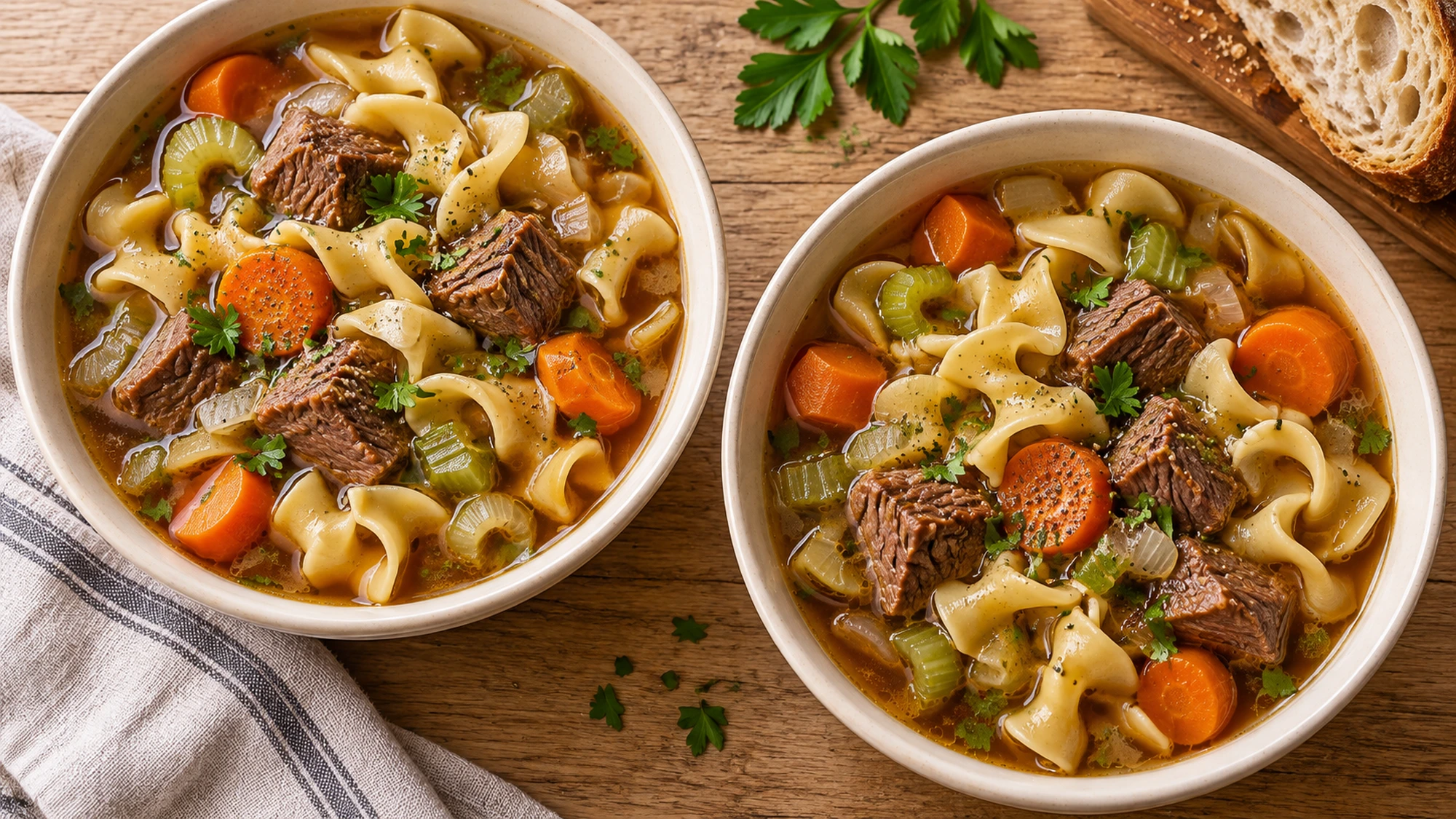
Serving suggestions for a broth-filled bowl
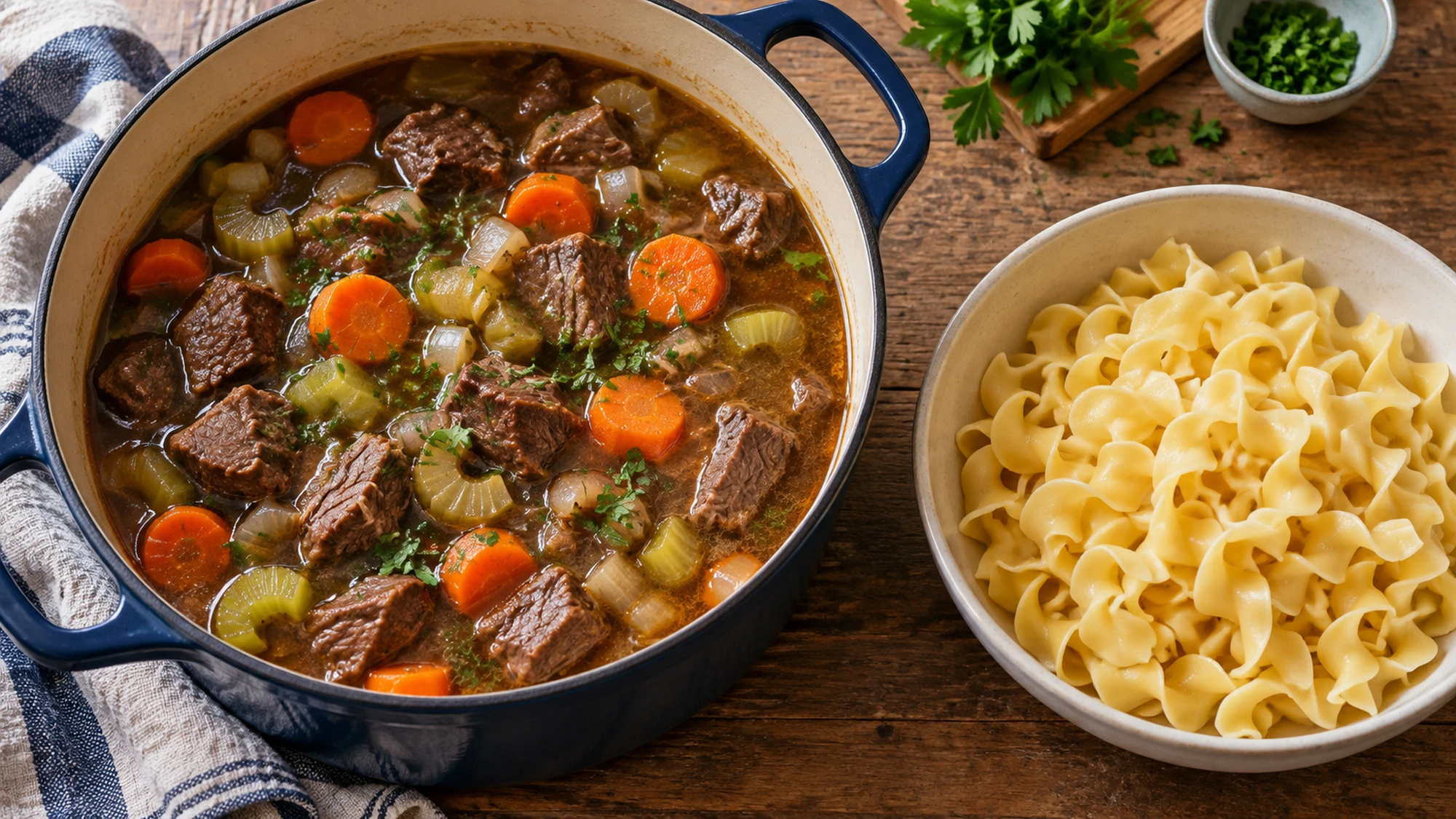
Divide the noodles among warm bowls, then ladle over the beef, vegetables and broth. That order gives everyone a fair share of the good bits. A final scattering of parsley adds freshness without turning dinner into a garnish project.
- Serve with a small piece of golden-crusted baguette if you want something for the last spoonful of broth. Start the bread ahead; its overnight schedule is separate from this soup.
- For something crisp alongside, try a simple green salad or cucumber slices. The soup already has noodles, so another starch is entirely optional.
- Set out black pepper rather than salting every bowl automatically. Broth brands vary considerably, and the flavor becomes more concentrated as liquid evaporates.
If dinner runs late, keep the soup hot and leave the noodles out until serving. Cooked noodles sitting in broth keep softening; that is useful in a casserole, less welcome when you wanted distinct ribbons.
Keep noodles and broth separate until the bowls are ready. You control the texture, the portions and how much broth remains for a second helping.
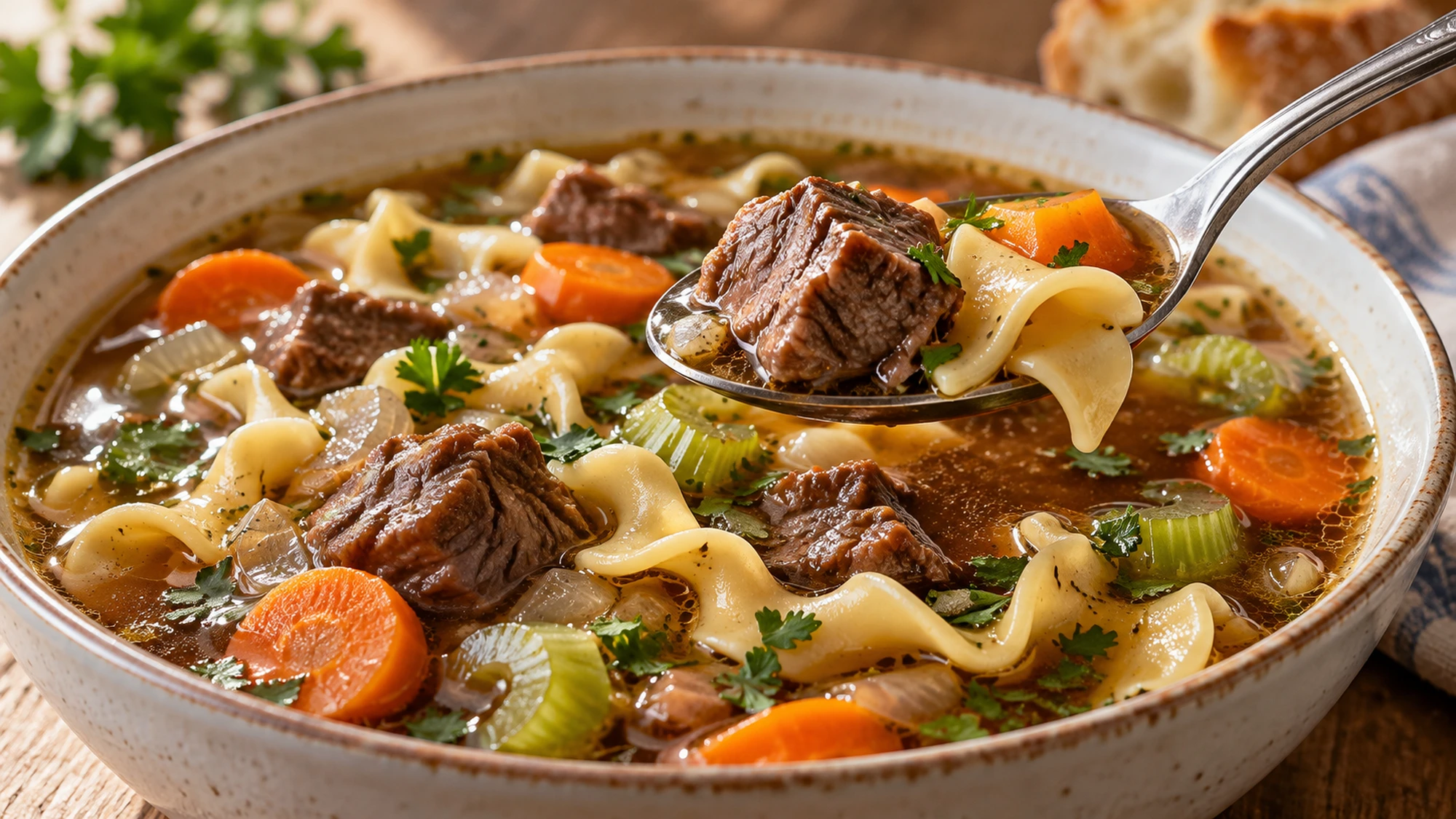
Variations that keep the soup practical
I prefer a clear, beefy broth here, without flour or cream. The browned bits on the pot and the onion supply plenty of character. Keep the simmer gentle: a rolling boil makes the pot busier without helping you judge tenderness.
- For the noodles, use dry wide egg noodles, weighing them before cooking. Another short pasta can work, but follow its package timing and expect a different bite.
- Fresh thyme can replace the dried thyme leaves: use one tablespoon of chopped fresh leaves for one teaspoon dried. Avoid the same volume of powdered thyme, which is more concentrated.
- For softer vegetables, cut the carrots smaller. For pieces that hold their shape, keep the specified half-inch slices and add them near the end, after the beef is nearly tender.
- For a make-ahead dinner, refrigerate the beef-and-vegetable base separately and boil fresh noodles when serving. Freeze the base in meal-sized portions rather than freezing a whole pot with noodles already mixed in.
Change the pasta or herbs if needed, but let tenderness decide when the beef is ready. Add the vegetables late enough to keep their texture.
Health benefits, with the whole bowl in mind
Beef contributes protein, and the carrots, celery and onion add vegetables to a filling meal. A serving also includes noodles for carbohydrate. The nutrition estimate describes one-sixth of the recipe, not a bowl of any size or a promise about what the meal will do for your health.
- Trim large outer pieces of fat before cutting the chuck. Marbling varies between roasts, so the calorie and fat estimates can change even when the ingredient weights stay the same.
- Reduced-sodium broth gives you more control, but the finished soup is not necessarily low in sodium. Taste before adding the measured salt, especially if your broth already tastes well seasoned.
- Egg noodles contain wheat and egg. Check broth labels and any substituted pasta for your own allergy needs; a different noodle does not automatically make the whole meal allergen-free.
Enjoy the combination of beef, vegetables and noodles, and adjust the serving to your appetite. The ingredient amounts and broth label are more useful than a blanket “healthy” claim.
Give the beef time, then bring everyone to the table
The most useful final check is simple: a beef cube should yield readily to a fork, while the carrots remain recognizable pieces. If the meat still feels firm, give it more gentle simmering before adding the vegetables. The clock is a guide, not the guest of honor.
Save leftovers promptly in shallow containers, with noodles separate. Refrigerate within two hours, or one hour above 90°F, and use within three to four days. Reheat leftovers to 165°F, bringing the soup to a rolling boil. A little added water can restore the broth before another bowl.
Beef Noodle Soup Recipe

Ingredients
- 1 1/2 lb boneless beef chuck roast 680 g after trimming large outer fat; cut into 3/4-inch cubes
- 2 tbsp olive oil 27 g, divided
- 1 medium yellow onion about 150 g, diced
- 3 cloves garlic about 9 g, minced
- 8 cups reduced-sodium beef broth two 32-fl-oz cartons; plus water as needed to replace evaporation
- 1 tsp dried thyme leaves not ground thyme
- 1/2 tsp ground black pepper
- 3 medium carrots about 180 g, peeled and sliced 1/2 inch thick
- 2 stalks celery about 120 g, sliced 1/2 inch thick
- 6 oz dry wide egg noodles 170 g
- 1/2 tsp fine salt 3 g; use less if broth is already salty
- 2 tbsp chopped fresh parsley about 8 g
Equipment
- 1 5- to 6-quart Dutch oven with lid
- 1 Medium saucepan
- 1 Colander
- 1 Chef’s knife and cutting board
- 1 Measuring cups and spoons
- 1 Wooden spoon, ladle and tongs
- 1 Clean plate and paper towels
- 1 Food thermometer for reheating
Instructions
- Trim large outer pieces of fat from the chuck and cut the beef into 3/4-inch cubes. Pat dry with paper towels. Dice the onion, mince the garlic and slice the carrots and celery 1/2 inch thick on a clean board. Keep raw beef and its utensils separate from the vegetables; wash hands and surfaces after handling raw meat.
- Heat 1 tablespoon oil in a 5- to 6-quart Dutch oven over medium-high heat. Brown half the beef in a single layer for about 5–6 minutes, turning to color two sides; transfer to a clean plate. Repeat with the remaining tablespoon oil and beef. Do not crowd the pot or try to cook the centers through at this stage.
- Reduce heat to medium. Add the onion and cook about 5 minutes, stirring. Add the garlic and cook 30 seconds. Pour in 1 cup of the measured broth and scrape up browned bits with a wooden spoon. Return the beef and its juices, then add the remaining broth, thyme and pepper.
- Bring just to a boil, reduce to low and cover with the lid slightly ajar. Simmer gently for 90–120 minutes, stirring occasionally, until a fork enters the beef easily with only slight resistance. Add a little water if evaporation exposes the meat or overly concentrates the broth. Tougher pieces may need longer; do not add the vegetables while the beef is still firm.
- Stir in the carrots and celery. Simmer gently for another 20–25 minutes, until the vegetables are tender and the beef yields readily to a fork. Taste and add up to the measured 1/2 teaspoon salt according to your broth.
- During the last 10 minutes of simmering, bring a separate saucepan of water to a boil. Cook the egg noodles according to package directions, usually 7–8 minutes, until just tender. Drain in a colander. Keep them separate from the soup pot, especially if saving leftovers.
- Divide the cooked noodles among six bowls. Ladle over equal shares of the beef, vegetables and broth; sprinkle with parsley. Refrigerate unused soup and noodles separately in shallow containers promptly.
Nutrition
Video
Notes
Tried this recipe?
Let us know how it turned out!Emily Parker is DISHORA’s recipe-writing persona, bringing a warm, practical voice to everyday cooking. Her focus is simple ingredients, comforting flavors and clear steps that make a dish feel approachable. From cozy dinners to something sweet, Emily’s recipes invite readers to try something delicious and make it their own.