
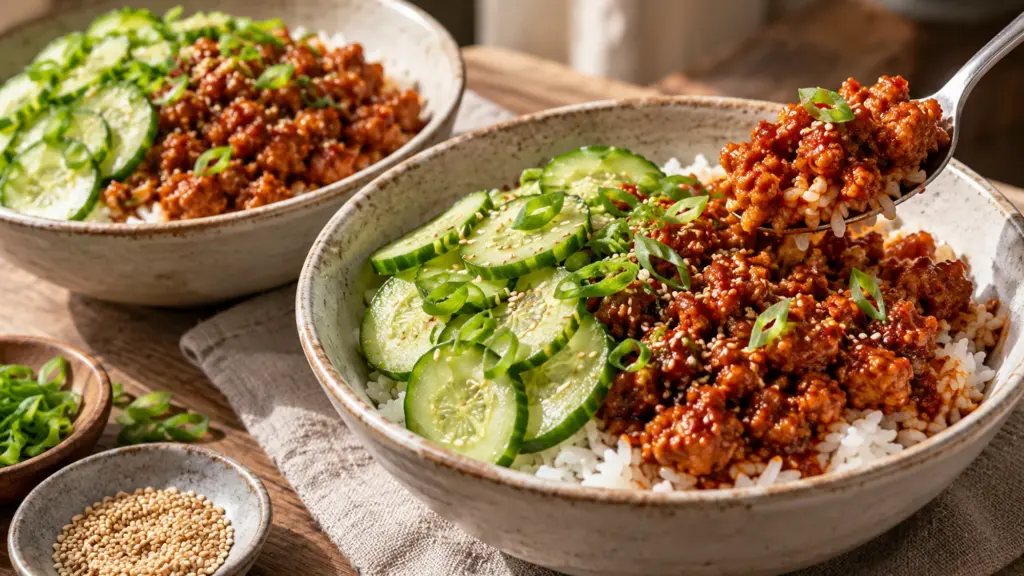
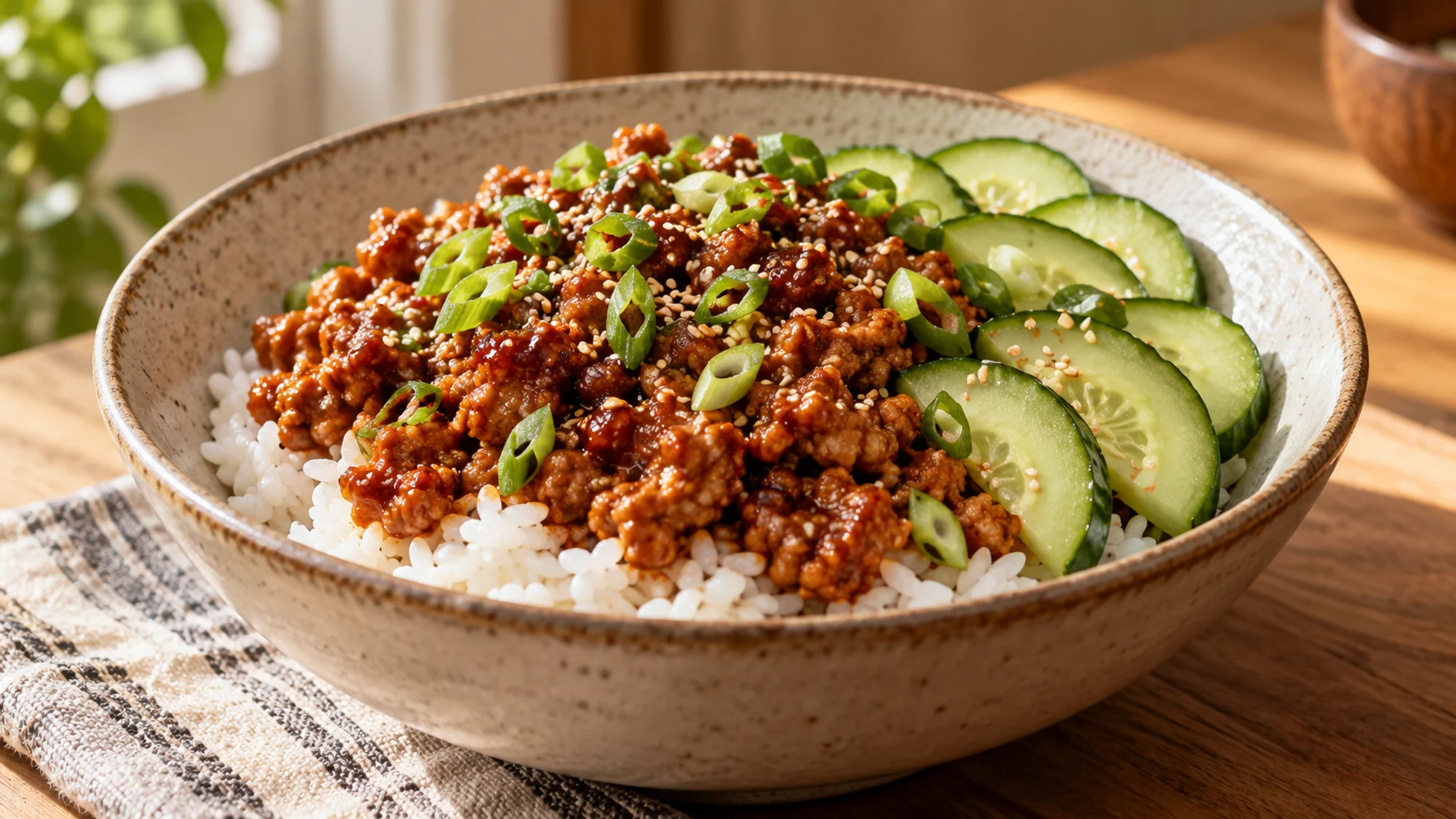
A rice bowl is especially useful when everyone wants dinner but nobody wants a complicated serving plan. These gochujang ground chicken bowls put savory, lightly sweet chili-glazed chicken over hot white rice, with cool cucumber, scallions, and sesame for contrast. The chicken cooks in one skillet, and the sauce comes together in a small bowl while it browns.
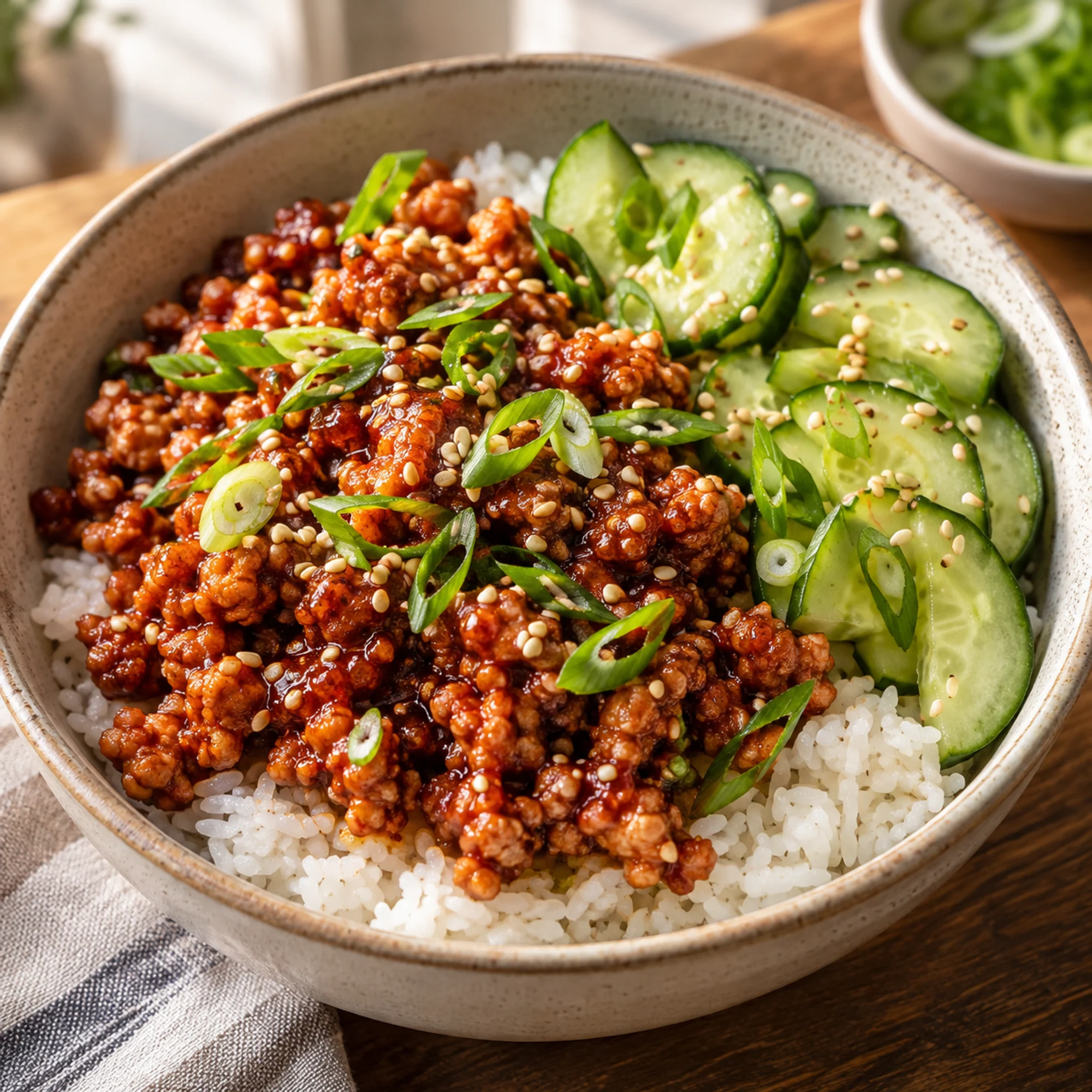
Slice the fresh toppings before handling raw chicken, then cook the meat to 165°F before adding the glaze. That keeps the cucumber cool and the cooking sequence clear.
I prefer the cucumber plain here. Its clean crunch takes the edge off the gochujang heat without another dressing. The rice stays unseasoned so the chicken glaze has room to shine. This is a practical home bowl built around a Korean chili paste, not a traditional Korean dish.
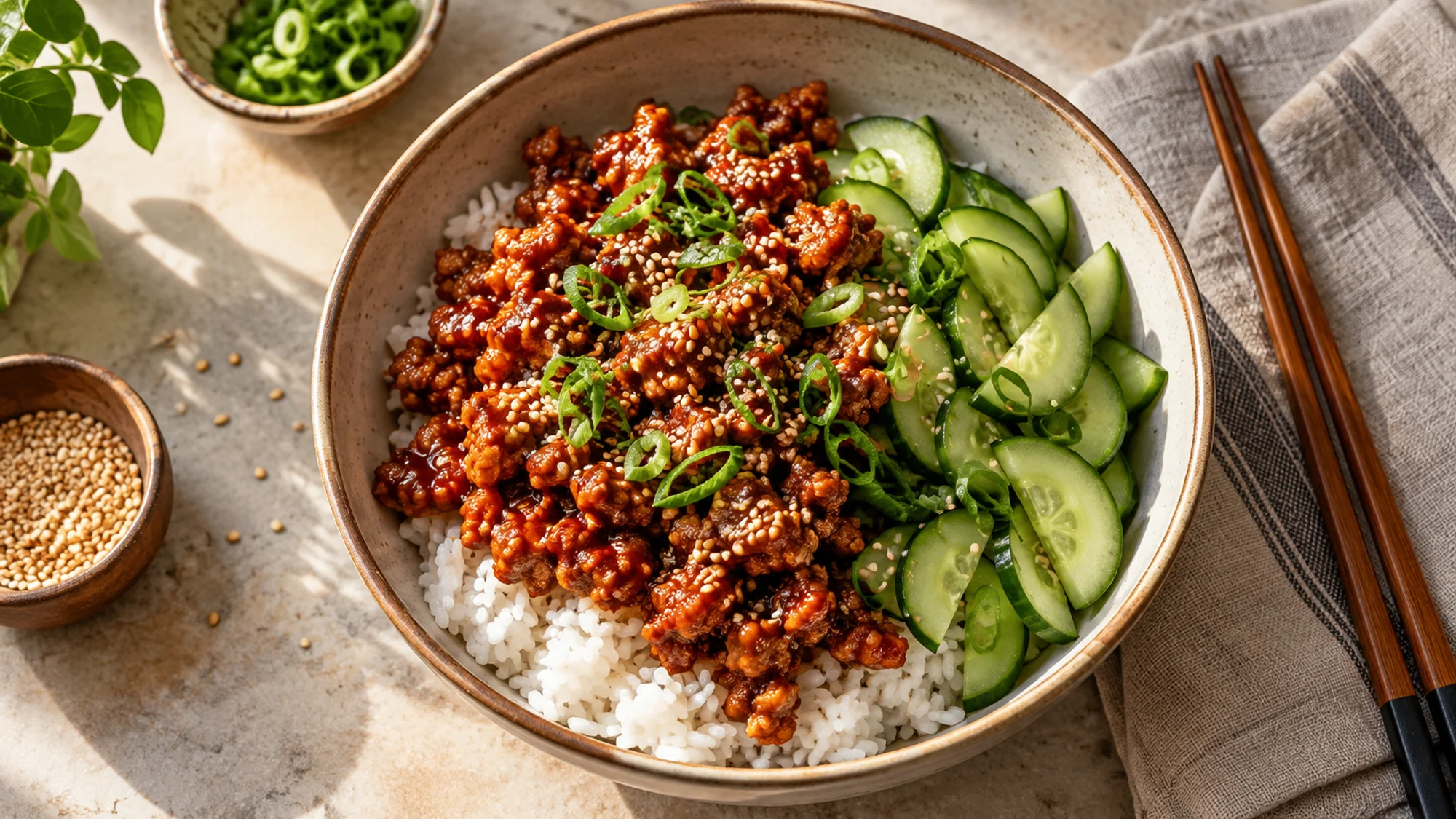
Serving suggestions for gochujang ground chicken bowls
Divide the rice and chicken evenly, then tuck a generous handful of cucumber into each bowl. Keep the cucumber separate from the hot chicken until serving so it stays crisp. Finish with scallions and a light scattering of sesame seeds. I like to bring extra cucumber to the table for anyone who wants a cooler bite.
A simple side of steamed greens can round out the meal without another sauce. For a different ready-to-assemble dinner, Dishora’s rotisserie chicken rice bowl uses a different approach to the same useful bowl format. This version is defined by the cooked ground chicken glaze and fresh cucumber.
If the rice was cooked earlier, heat it thoroughly before building the bowls. Serve the chicken hot and the cucumber cold. That temperature contrast makes the small number of ingredients feel more complete.
Hot rice and glazed chicken meet cool cucumber only at the table, where every texture stays distinct.
Gochujang chicken bowl variations
Gochujang brands vary in heat and sweetness. Start with one tablespoon instead of two if you want a gentler bowl, then taste the sauce after the chicken is fully cooked. You can stir in a little more paste and simmer briefly. This gochujang ingredient guide explains what gives the fermented chili paste its flavor.
Brown rice can replace white rice if you have a hot batch ready, though it changes the bowl’s texture and timing. Thinly shredded cabbage can stand in for some cucumber when you want an extra crunchy vegetable. Keep it raw and add it at the end, just as you would the cucumber.
For a less sweet glaze, reduce the honey to two teaspoons. I would change that before adding more vinegar, since too much acid can make the sauce taste sharp rather than balanced. Ground turkey works as a substitute, but it is still poultry and needs the same 165°F temperature check.
Adjust the heat or base grain to suit dinner, while keeping the chicken thoroughly cooked and toppings fresh.
Health benefits and balance
The bowl combines poultry protein, rice for energy, and a fresh vegetable. It is easy to add more cucumber or a side of greens if you want a larger vegetable portion. The MyPlate protein foods guide offers ideas for varying protein choices across meals.
The food thermometer is essential with ground chicken. Brown color is not a reliable safety test: check several thicker clusters and make sure they reach 165°F (74°C). The USDA poultry temperature chart lists the same minimum. Wash hands and the surfaces that touch raw chicken before assembling the ready-to-eat cucumber.
Gochujang and soy sauce can add substantial sodium, so the card uses reduced-sodium soy sauce and no extra salt. Check the gochujang label for heat and allergens. Refrigerate extra cooked rice and chicken promptly in shallow containers, and reheat leftovers to 165°F.
A balanced bowl is built from ordinary ingredients and careful cooking, without a nutrition promise.
Motivation conclusion
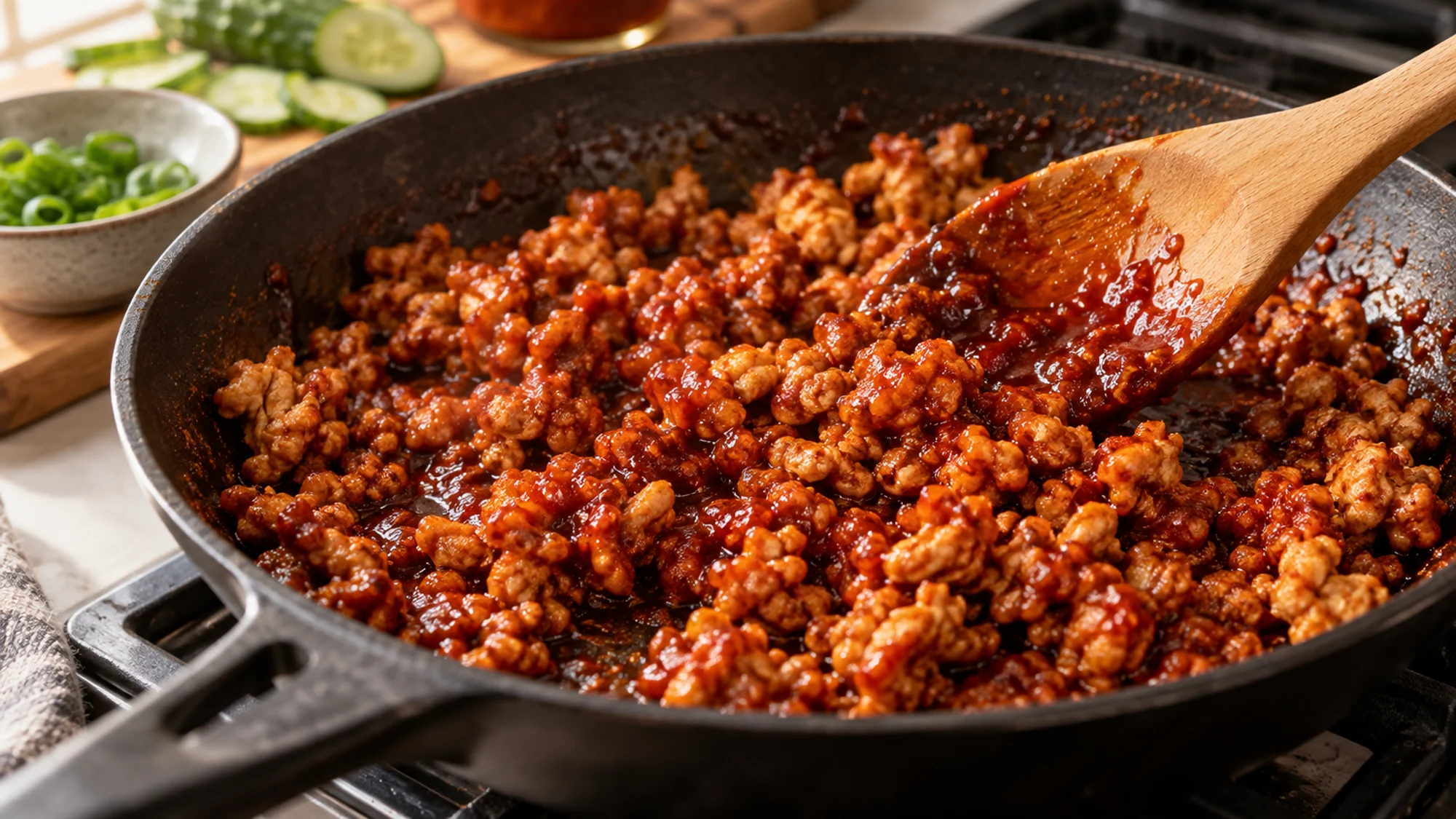
The smoothest way through this recipe is to do the cold work first: slice cucumber and scallions, set them aside, and mix the sauce. Then use one skillet for the chicken. Break up large clumps so they cook evenly, and check several places with the thermometer before adding the glaze.
Once the sauce hits the skillet, it needs only a short simmer to coat the cooked crumbles. Add a spoonful of water if it gets too thick. I would rather have a glossy sauce that falls over the rice than dry, sticky chicken. Spoon it into warm bowls and finish with the chilled toppings right away.
The payoff is a bowl that tastes lively and satisfying, with a clear cooking plan and very little cleanup.
Gochujang Ground Chicken Bowls

Ingredients
- 1 lb ground chicken
- 1 tbsp neutral oil
- 2 cloves garlic minced
- 2 tbsp gochujang
- 1 tbsp reduced-sodium soy sauce
- 1 tbsp rice vinegar unseasoned
- 1 tbsp honey
- 2 tbsp water
- 3 cups cooked white rice hot
- 1 medium cucumber thinly sliced into half-moons
- 2 scallions thinly sliced
- 1 tsp sesame seeds toasted
Equipment
- Cutting board
- knife
- Small mixing bowl
- Measuring spoons
- Large skillet
- Wooden spoon
- Instant-read food thermometer
- 4 Serving bowls
Instructions
- Slice the cucumber and scallions on a clean cutting board, then keep them chilled while you cook the chicken.
- In a small bowl, stir together gochujang, soy sauce, rice vinegar, honey, and 2 tablespoons water until smooth.
- Heat neutral oil in a large skillet over medium-high heat. Add the ground chicken and break it into small crumbles with a wooden spoon. Cook 7 to 9 minutes, stirring, until browned and an instant-read thermometer inserted into several thicker clusters reads at least 165°F (74°C). Stir in the minced garlic for the final 30 seconds.
- Pour the sauce into the skillet and stir for 1 to 2 minutes, until it coats the cooked chicken and is hot throughout.
- Divide 3 cups hot cooked rice among four bowls. Top evenly with the glazed chicken, cool cucumber, sliced scallions, and toasted sesame seeds. Serve immediately.
Notes
Tried this recipe?
Let us know how it turned out!Emily Parker is DISHORA’s recipe-writing persona, bringing a warm, practical voice to everyday cooking. Her focus is simple ingredients, comforting flavors and clear steps that make a dish feel approachable. From cozy dinners to something sweet, Emily’s recipes invite readers to try something delicious and make it their own.