
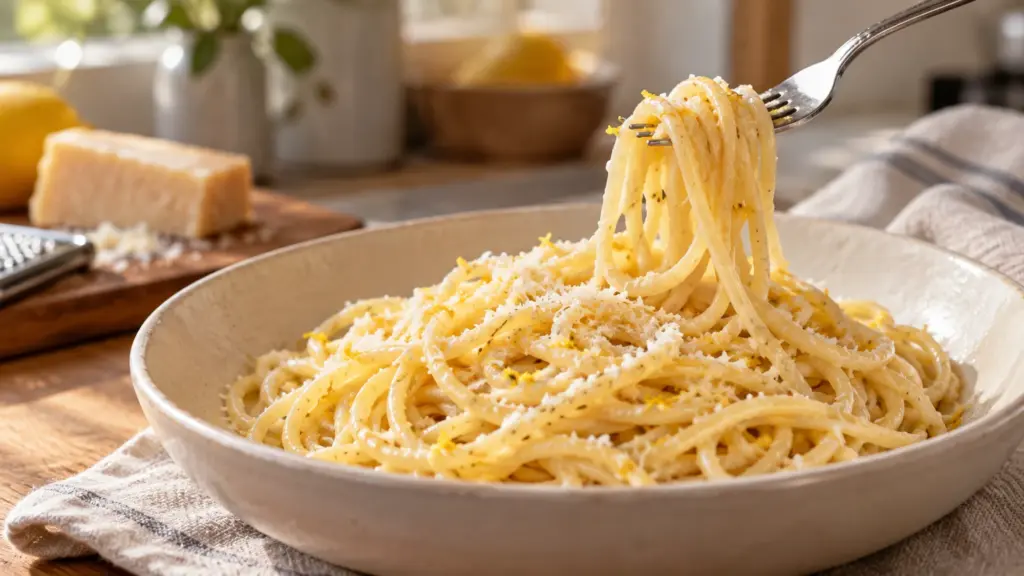
The appealing part of frozen lemon pasta is the way a small amount of grated fruit perfumes a bowl of hot spaghetti. Butter, finely grated Parmesan, and starchy pasta water make a thin, silky coating, while the frozen lemon brings the peel and a little juicy flesh into every forkful.
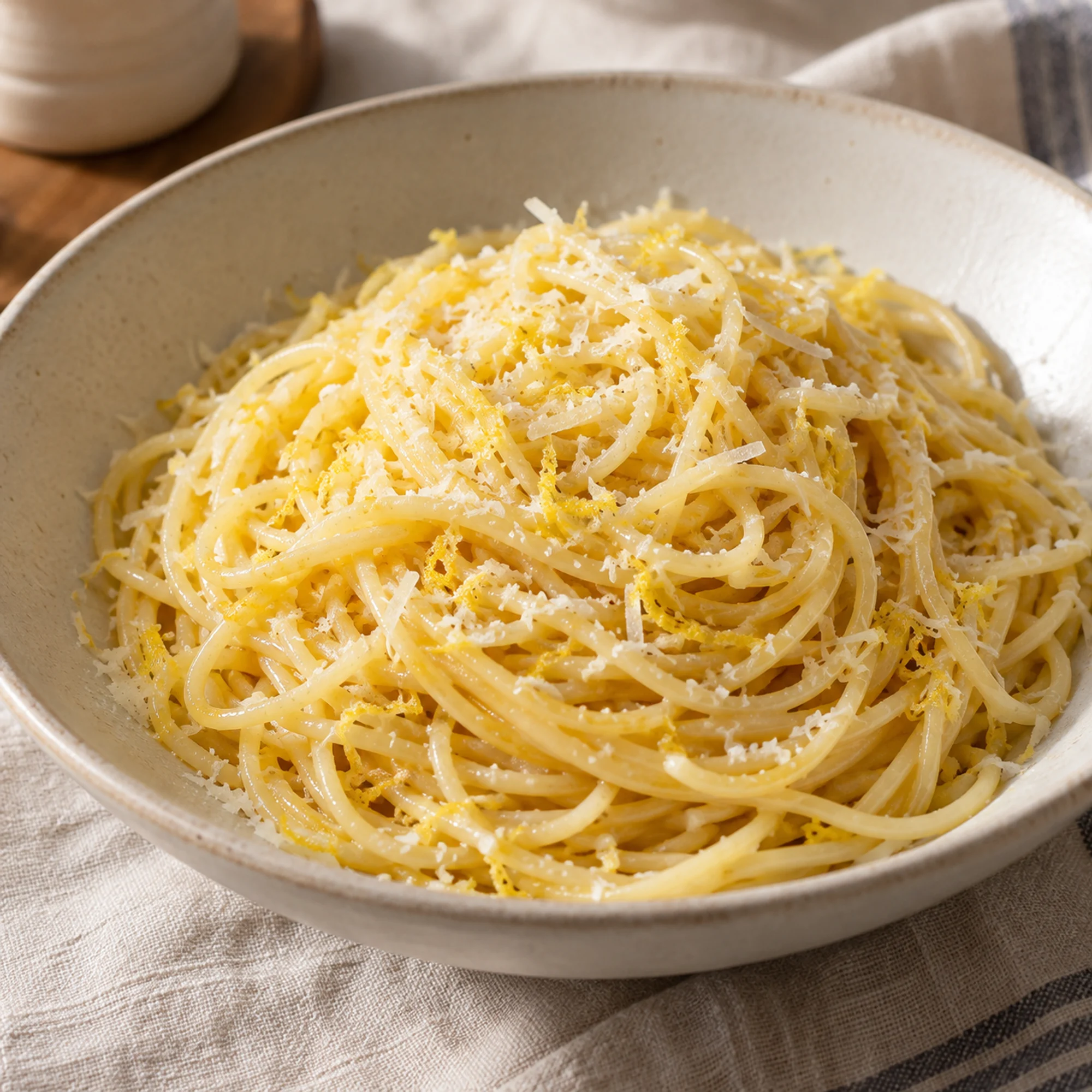
The only real advance step is freezing a clean, dry lemon until solid. Grate about one-third of it, taste the finished pasta, and add more only if you want a sharper note. Too much white pith can make the sauce bitter.
I prefer to keep this one plain so the lemon stays clear. There is no cream or garlic in the bowl; the sauce comes together when hot pasta is tossed briskly with butter, cheese, and some of its cooking water. The recipe’s total time includes the eight-hour freeze, while the cooking after that takes about 25 minutes.
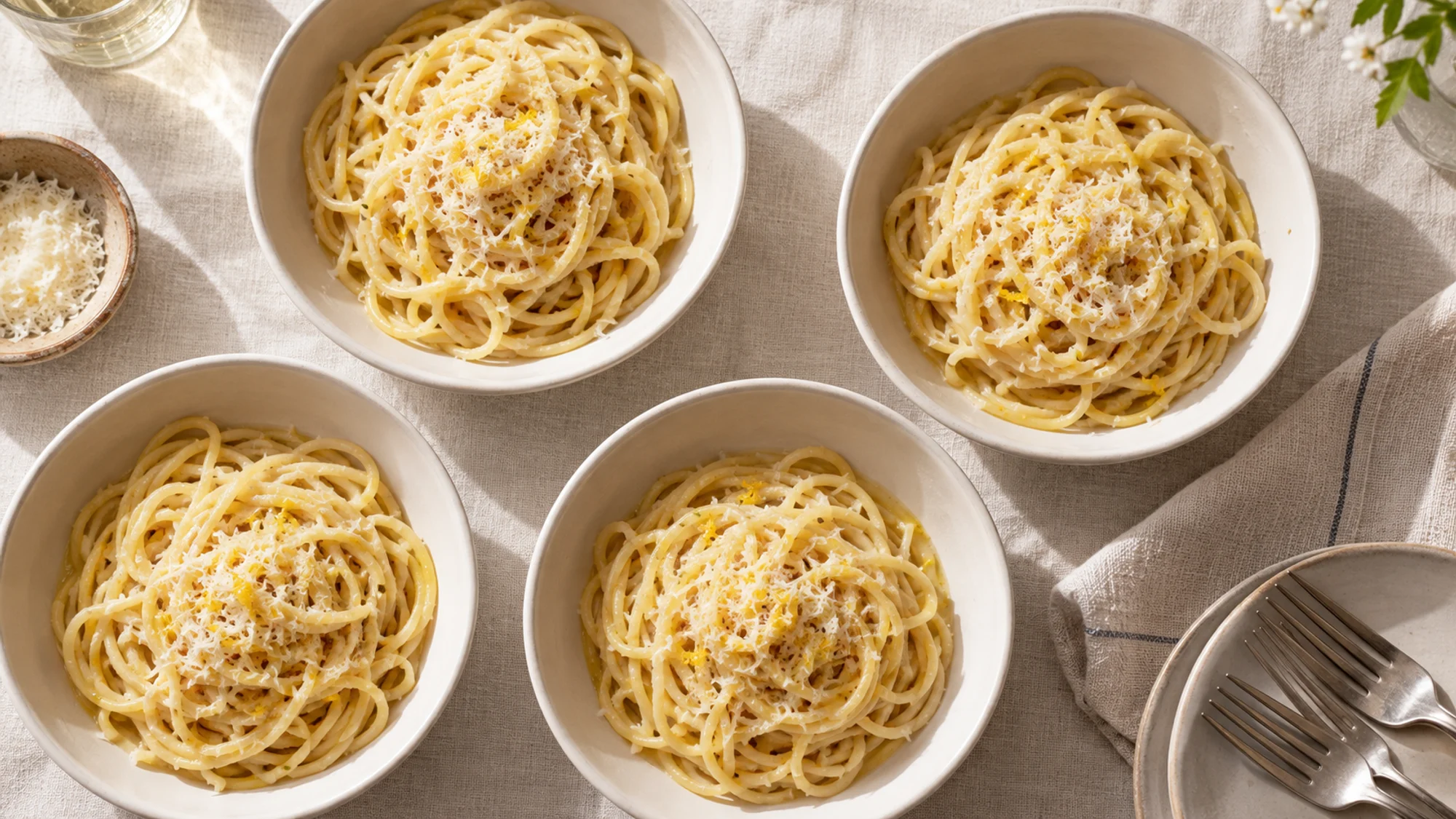
Serving suggestions for frozen lemon pasta
Serve the spaghetti as soon as the sauce turns glossy. It is at its best while the strands are hot and the butter-Parmesan coating is loose enough to move with them. Warm serving bowls help, especially if everyone is not sitting down at exactly the same moment.
A crisp green salad or quickly cooked asparagus makes a simple partner. For a more substantial dinner, pair smaller portions with grilled chicken or Dishora’s shrimp scampi. Keep the side seasoning restrained so the lemon remains the main flavor on the pasta plate.
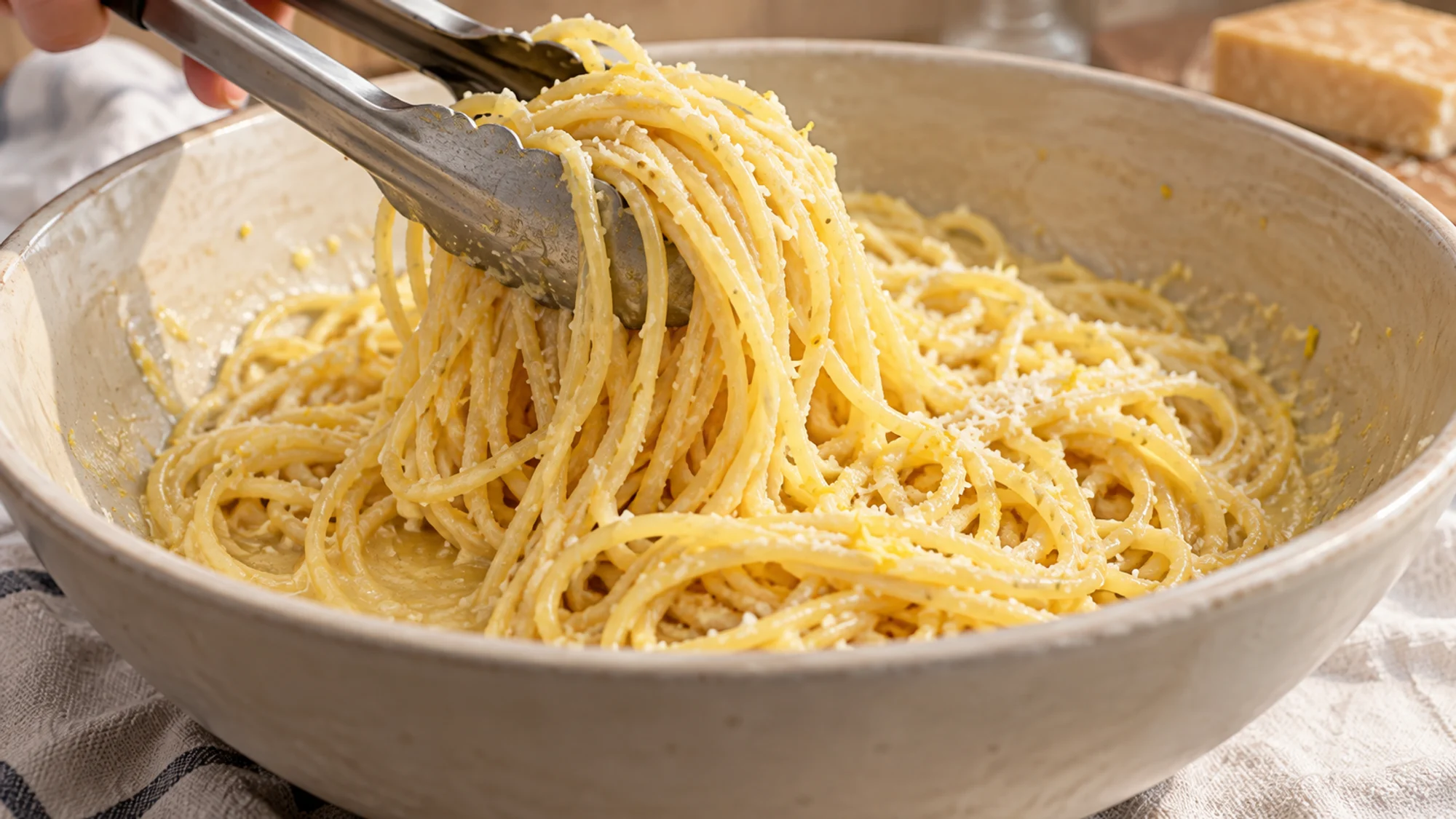
If you are serving four people, place the heatproof bowl close to the table before you drain the pasta. Tongs let you move the spaghetti straight into the sauce without losing every drop of starchy water.
I would set out extra Parmesan separately and let each person decide whether they want more. A little goes a long way once the sauce is already coating the strands.
Frozen lemon pasta variations
Spaghetti works well because its long strands pick up the light sauce. Linguine is a good substitute, but a very short pasta shape can leave more of the butter and lemon at the bottom of the bowl. Cook any shape to its own package timing.
Choose an unwaxed, thin-skinned lemon when possible. Freezing makes the fruit firm enough to grate finely, but it does not remove the bitterness of thick white pith. Begin with about one-third of the lemon, avoid the seeds, and save the rest in the freezer for another meal.
Finely grate the Parmesan so it disperses quickly when you toss. If you use a coarser grate, give the hot pasta more time and a splash more water rather than adding direct heat, which can make the cheese clump.
Black pepper gives gentle warmth. If you want more contrast, add a few extra grinds at the table; keep the sauce itself simple enough that the frozen lemon can be tasted.
Health benefits and balance
This is a pasta dish with a modest ingredient list, and it can fit comfortably into a meal with vegetables on the side. The lemon contributes aroma and a bright taste; it is not a reason to promise a special health effect from the plate.
Butter and Parmesan add richness and sodium, so use the measured amounts before deciding to add more. The salted cooking water seasons the spaghetti, and the cheese adds more salt as the sauce forms. Taste at the end rather than automatically adding extra.
Using some of the pasta water helps spread the butter and cheese over all four portions instead of leaving a thick puddle in the bottom of the bowl. It also lets the sauce stay light enough to show off the citrus.
Freshly cooked pasta has the best texture here. Refrigerate any leftovers promptly, then reheat gently with a spoonful of water to loosen the coating; the sauce will not be quite as silky as the first serving.
Motivation conclusion
Frozen lemon pasta asks you to remember one thing the night before: put a clean, dry lemon in the freezer. After that, dinner is mostly a pot of spaghetti and a bowl ready for tossing. The long wait happens while you are doing something else.
Save more pasta water than you think you need, then add it gradually. The sauce should cling in a thin sheen, not stand in the bowl like soup. If the cheese looks grainy, keep tossing with a little warm water rather than turning up the heat.
Bring the bowls to the table as soon as the strands look glossy and fragrant. It is a bright, comforting pasta whose best moment is the first warm forkful.
Frozen Lemon Pasta Recipe

Ingredients
- 1 medium unwaxed lemon, washed and dried (freeze whole; use about one-third)
- 12 oz dry spaghetti
- 2 tsp kosher salt, for the pasta water
- 3 tbsp unsalted butter, cut into small pieces
- 3/4 cup finely grated Parmesan cheese
- 1/4 tsp freshly ground black pepper
- 3/4 cup reserved starchy pasta cooking water, divided
Equipment
- small freezer-safe tray or bag
- Large pot
- fine grater or microplane
- large heatproof mixing bowl
- Tongs
- liquid measuring cup
- Measuring spoons
Instructions
- Scrub and thoroughly dry the unwaxed lemon, then freeze it whole until solid, at least 8 hours.
- Bring a large pot of water to a boil and add the kosher salt. Cook the spaghetti until al dente according to the package. Before draining, scoop out at least 3/4 cup of the starchy cooking water.
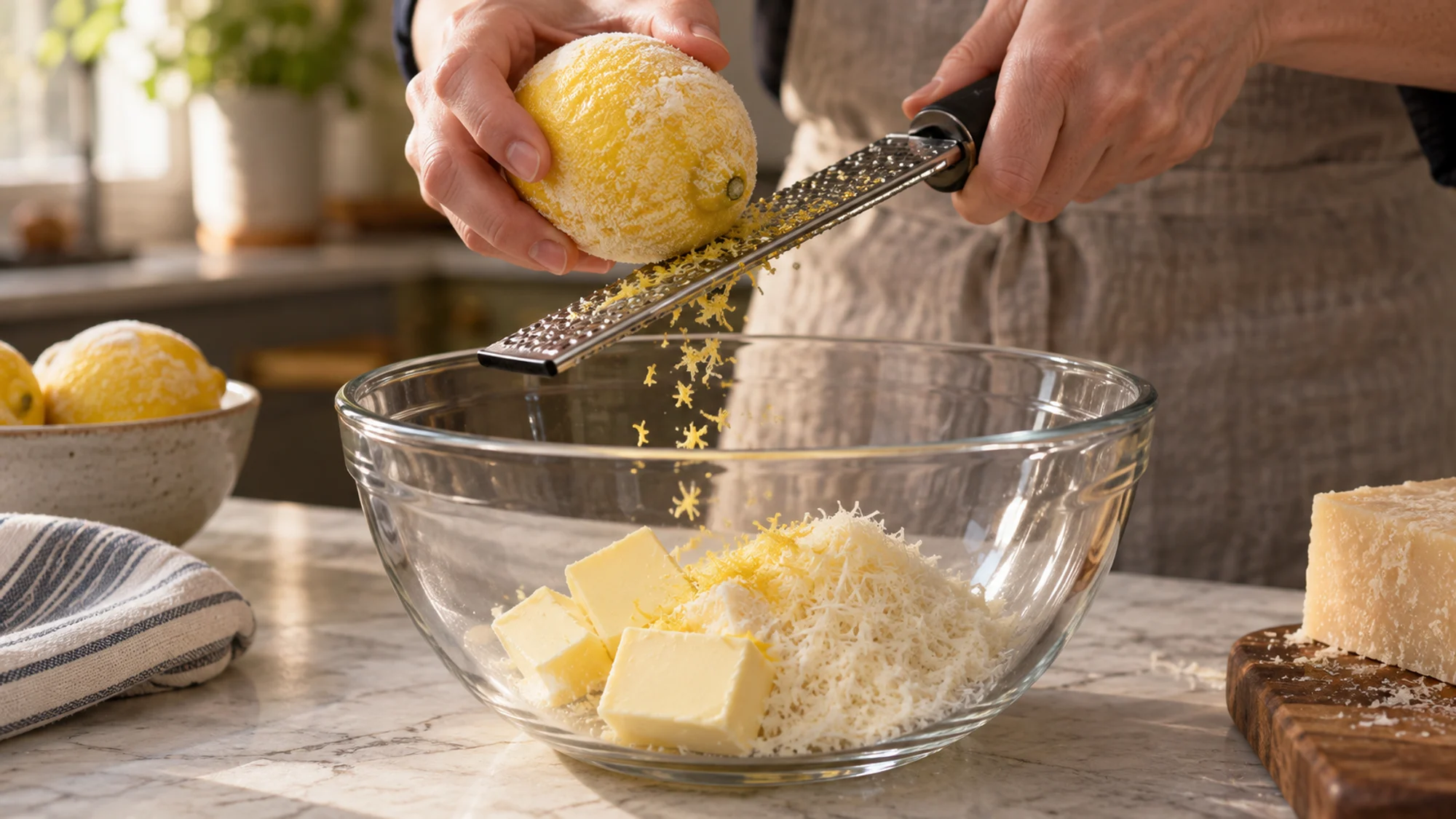
- Put the butter, finely grated Parmesan, and black pepper in a large heatproof bowl. Finely grate about one-third of the frozen lemon over the bowl, catching yellow peel and a little flesh while avoiding seeds and thick white pith. Return the remaining lemon to the freezer for another use.
- Transfer the hot spaghetti to the bowl with tongs. Add 1/2 cup of the reserved pasta water and toss vigorously until the butter melts and the cheese forms a thin, silky coating. Add the remaining water a tablespoon at a time if the pasta looks dry.
- Divide among four bowls and serve immediately while the sauce is glossy. Taste and add a little more grated frozen lemon only if you want a sharper citrus finish.
Notes
Tried this recipe?
Let us know how it turned out!Emily Parker is DISHORA’s recipe-writing persona, bringing a warm, practical voice to everyday cooking. Her focus is simple ingredients, comforting flavors and clear steps that make a dish feel approachable. From cozy dinners to something sweet, Emily’s recipes invite readers to try something delicious and make it their own.