
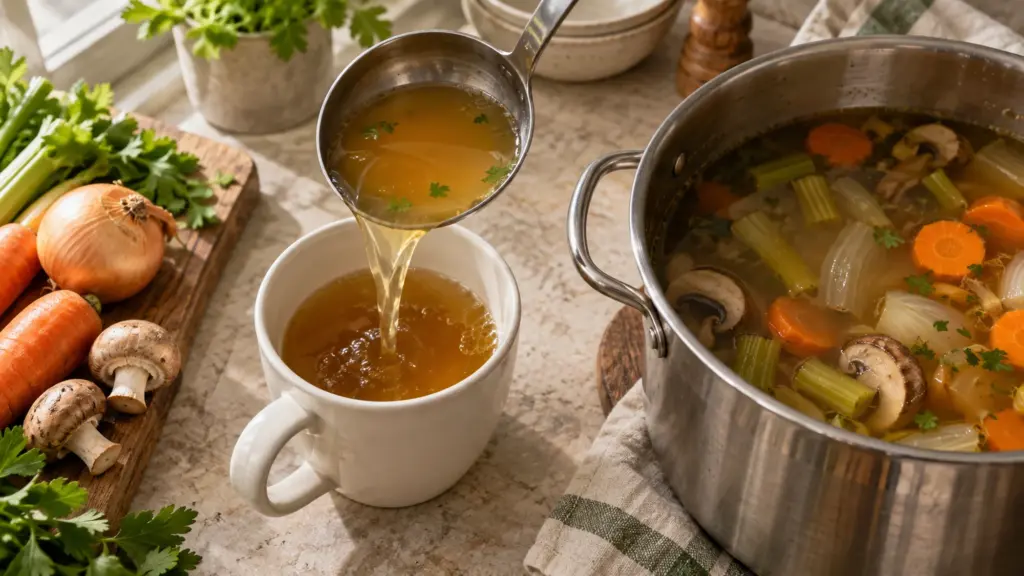
A vegetable stock should give dinner a savory starting point without taking over every flavor in the pot. If you want to know how to make vegetable stock, start with onions, carrots, celery and mushrooms, then simmer gently and strain. This unsalted version is meant for soups, rice and sauces, where you can decide on the seasoning later.
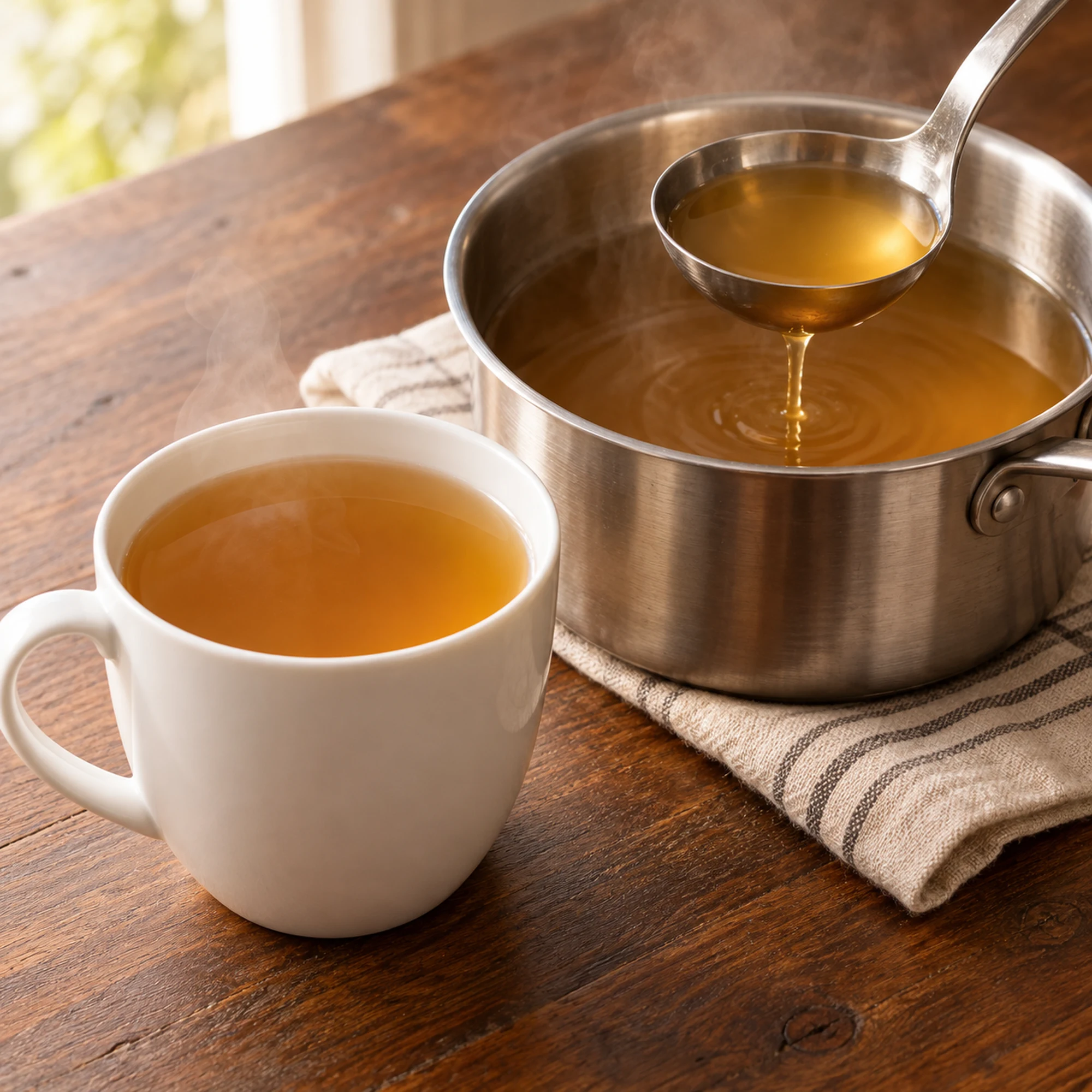
Use clean, sound vegetables, simmer gently and cool the strained stock promptly in shallow containers.
I prefer a neutral stock with a little mushroom depth rather than a strongly spiced broth. Onion brings rounded flavor, carrot adds gentle sweetness and celery gives the familiar savory aroma. Mushrooms are useful when there is no meat in the pot. The aim is an amber liquid with a clean taste, not an impressive list of everything left in the refrigerator.
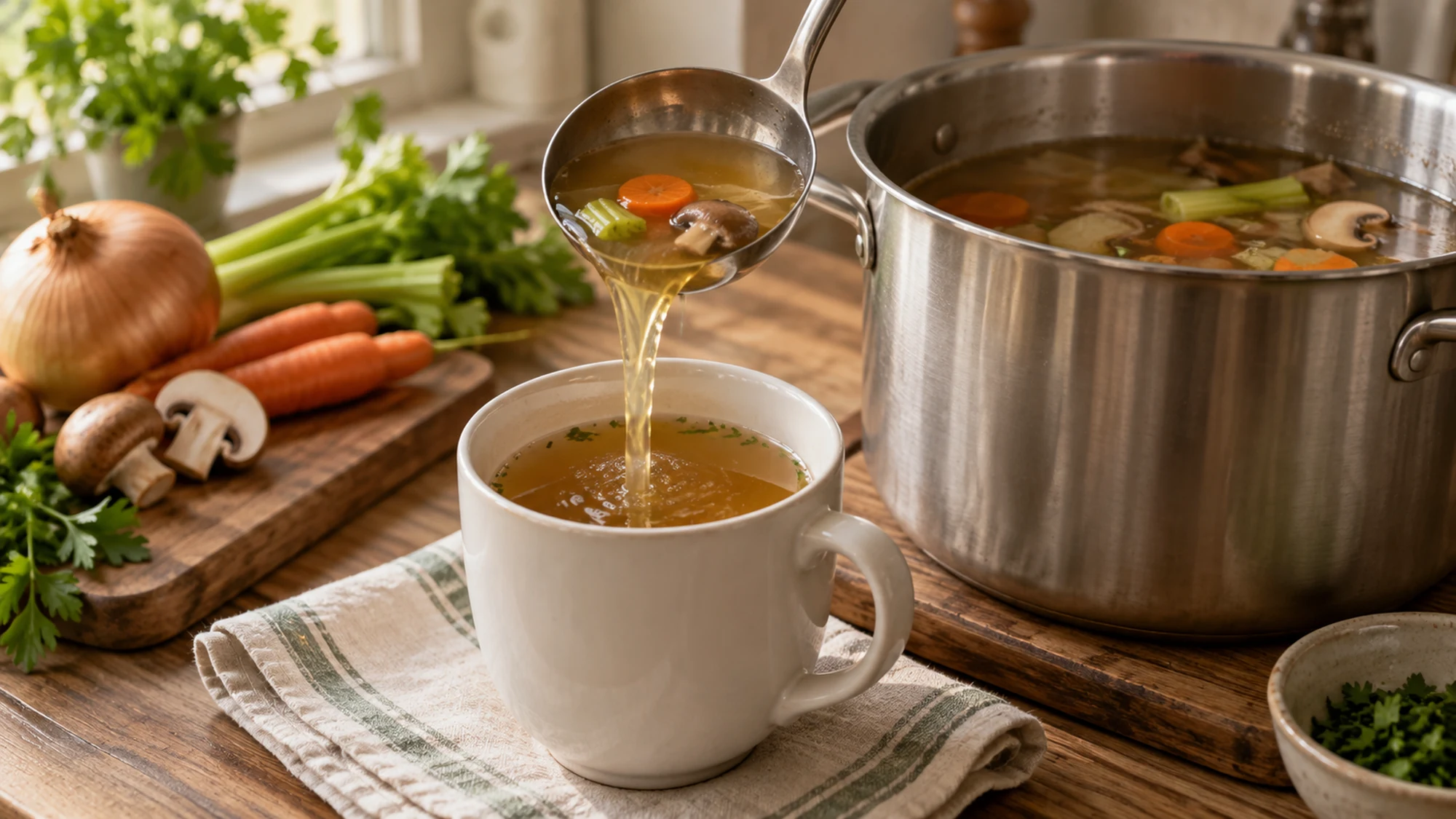
Serving and cooking with a useful base
Use the stock wherever a recipe calls for a mild vegetable cooking liquid. It works in bean soups, grain dishes and simple pan sauces. Because this batch has no added salt, taste the complete dish before deciding how much seasoning it needs. Ingredients such as cheese, canned beans or soy sauce may already contribute salt, making the unseasoned base particularly practical.
- Replace the water in a suitable soup recipe with the same measured amount of stock.
- Use it to loosen a thick vegetable puree a little at a time.
- Try it as the liquid in Dishora’s carrot red lentil soup.
- Freeze measured one-cup portions so you can thaw only what another recipe needs.
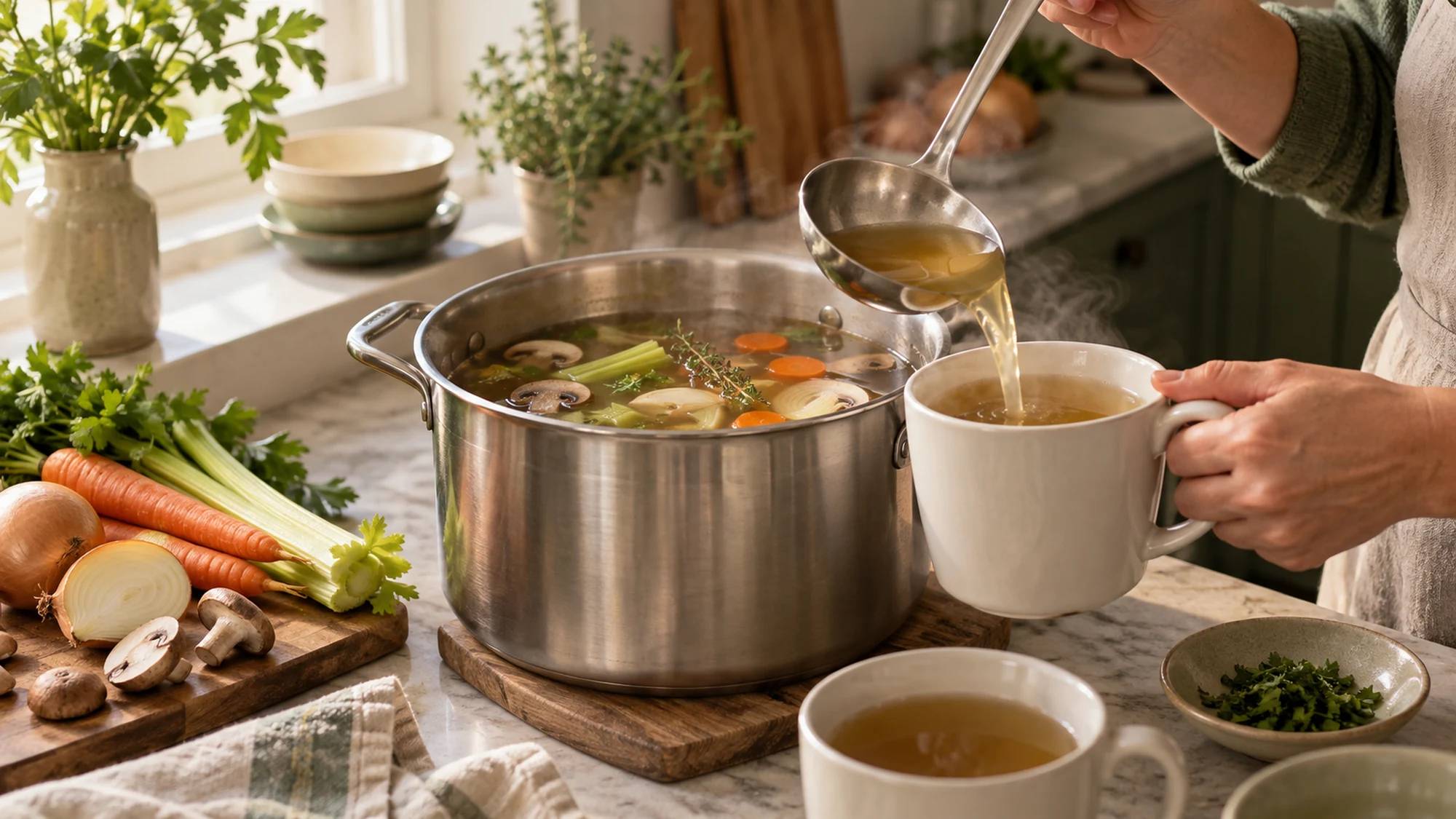
A mug of warm stock is an option, but it is a light cooking base rather than a complete meal. Add the vegetables, beans, grain or protein that your dinner needs. I would avoid heavily seasoning the whole batch just for one mug: season that portion instead and keep the remaining stock flexible for several different dishes.
Keep the batch unsalted, then season the actual soup, sauce or grain dish after its other ingredients are added.
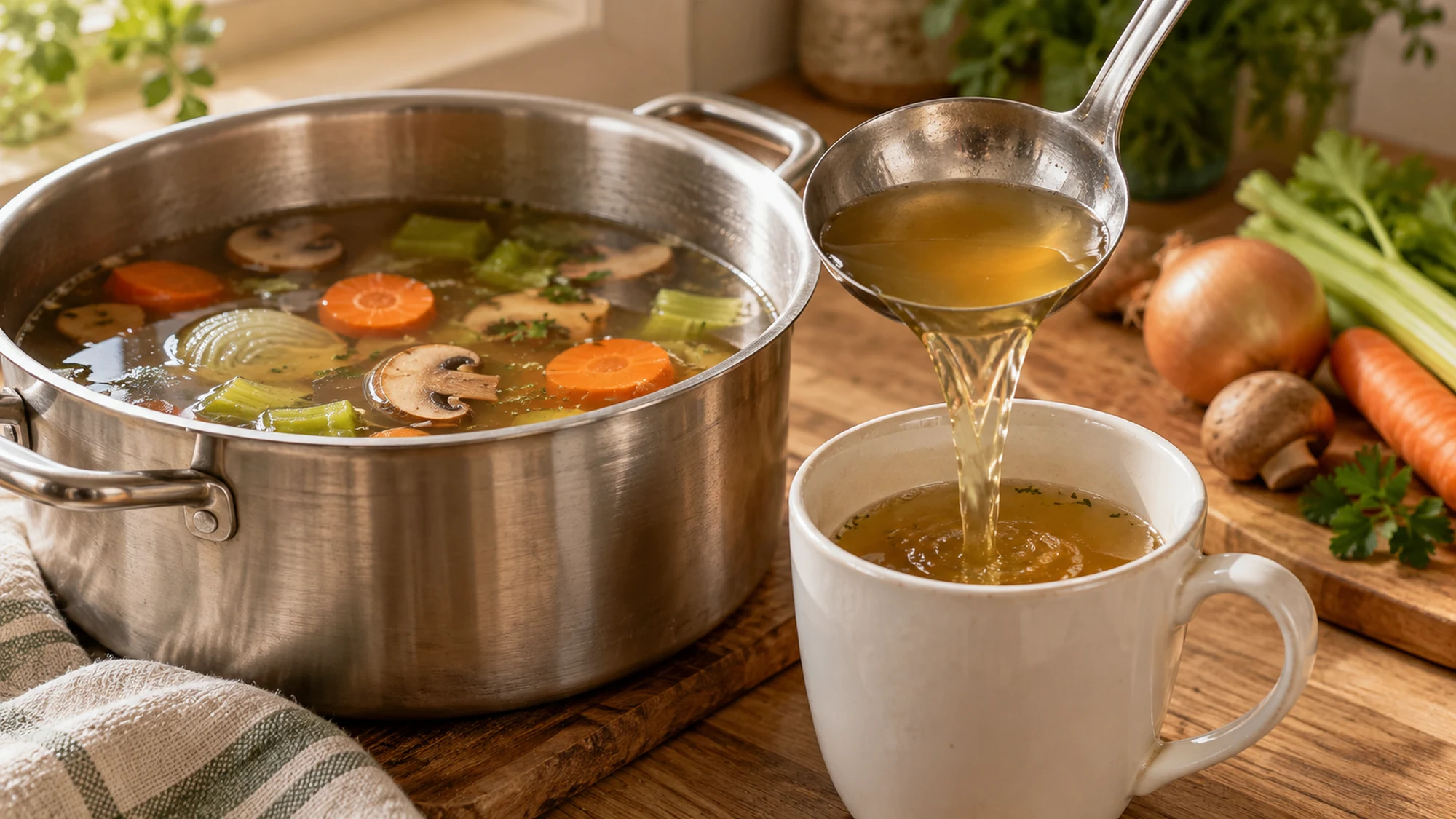
Variations and scraps worth choosing carefully
Vegetable trimmings can work when they are fresh, clean and still suitable to eat. They are not a way to rescue moldy or spoiled food. Onion ends, carrot trimmings and celery leaves are reasonable small additions, while a pot dominated by cabbage or broccoli can taste quite different. Very large amounts of onion skin also change the color and may bring an unwelcome bitter note.
- For a mushroom-forward stock, replace part of the carrot with more clean mushrooms.
- For a lighter color, leave out onion skins and avoid darkly roasted vegetables.
- For a more distinct herb flavor, add it to the finished dish rather than changing every portion of stock.
- If using frozen vegetable scraps, keep them frozen until cooking and use only scraps saved from sound produce.
Roasting the vegetables first is another method, producing a darker, sweeter flavor and requiring additional oven time. This card uses a straight simmer, so the images and instructions show that lighter version. Do not boil it fiercely or keep cooking simply because longer sounds better. Taste the liquid near the end, then strain once it has a pleasant vegetable flavor.
Choose scraps for their quality and flavor, and measure the strained yield before portioning the stock.
Health benefits with honest limits
An unsalted homemade base gives you control over the salt added to later dishes. It also offers a plant-based alternative when a recipe does not need chicken or beef stock. However, strained stock does not contain the same fiber or nutrition as eating all the vegetables. Most solids leave with the strainer, and the amount extracted into the liquid is variable.
- The card’s broth nutrition is an approximate reference estimate, not a laboratory measurement.
- There is no added salt, although vegetables naturally contain some sodium.
- Do not count a cup of strained stock as a full serving of the vegetables used to make it.
- Add substantial ingredients when you want a soup that functions as a meal.
For broader meal planning, the vegetable-group guide explains the value of eating a variety of vegetables. For ready-made stock comparisons, the sodium label guide helps distinguish differently seasoned products. Safe cooling matters too: divide hot stock into shallow containers and refrigerate promptly instead of leaving a large covered pot to cool overnight.
Use stock for flavor and cooking flexibility, while getting most vegetable nutrition from the foods you actually eat.
Make the freezer portions useful
Think about the quantities you cook with most often before filling the containers. A few one-cup portions are easier to use than one large frozen block. Label each with the date and volume, refrigerate what you will use within three to four days and freeze the rest. A mild, clearly measured stock is a small preparation that can support several different dinners.
How to Make Vegetable Stock Recipe

Ingredients
- 2 medium onions About 300 g, peeled and roughly chopped
- 3 medium carrots About 300 g, washed and roughly chopped
- 3 stalks celery About 180 g, washed and roughly chopped
- 6 oz cremini mushrooms 170 g, cleaned and halved
- 4 cloves garlic Peeled, about 12 g
- 6 sprigs parsley Washed, about 10 g
- 2 bay leaves
- 1/2 teaspoon black peppercorns
- 10 cups water 2.4 liters, plus a little if needed to adjust final yield
Equipment
- 6-quart stockpot
- Knife and cutting board
- Fine-mesh strainer
- Large heatproof bowl
- Ladle and measuring jug
- Shallow refrigerator or freezer containers
Instructions
- Wash the carrots, celery and parsley. Clean the mushrooms and peel the onions and garlic. Cut the onions, carrots and celery into rough 1-inch pieces and halve the mushrooms.
- Put all vegetables, parsley, bay leaves and peppercorns into a 6-quart stockpot. Add the 10 cups water. Bring just to a simmer, then lower the heat.
- Simmer gently, partly covered, for 45 to 60 minutes until the liquid tastes pleasantly savory. Avoid a fierce boil.
- Strain through a fine-mesh strainer into a large heatproof bowl; discard the strained solids. Measure the liquid and add fresh water if needed to make 8 cups (about 1.9 liters), or reduce a small excess briefly. Leave unsalted for flexible cooking.
- Divide into shallow clean containers. An ice-water bath can speed cooling. Refrigerate promptly, within two hours, at 40°F (4°C) or below. Use within three to four days, or freeze measured portions. Reheat refrigerated stock to a rolling boil when serving.
Nutrition
Video
Notes
Tried this recipe?
Let us know how it turned out!Emily Parker is DISHORA’s recipe-writing persona, bringing a warm, practical voice to everyday cooking. Her focus is simple ingredients, comforting flavors and clear steps that make a dish feel approachable. From cozy dinners to something sweet, Emily’s recipes invite readers to try something delicious and make it their own.