
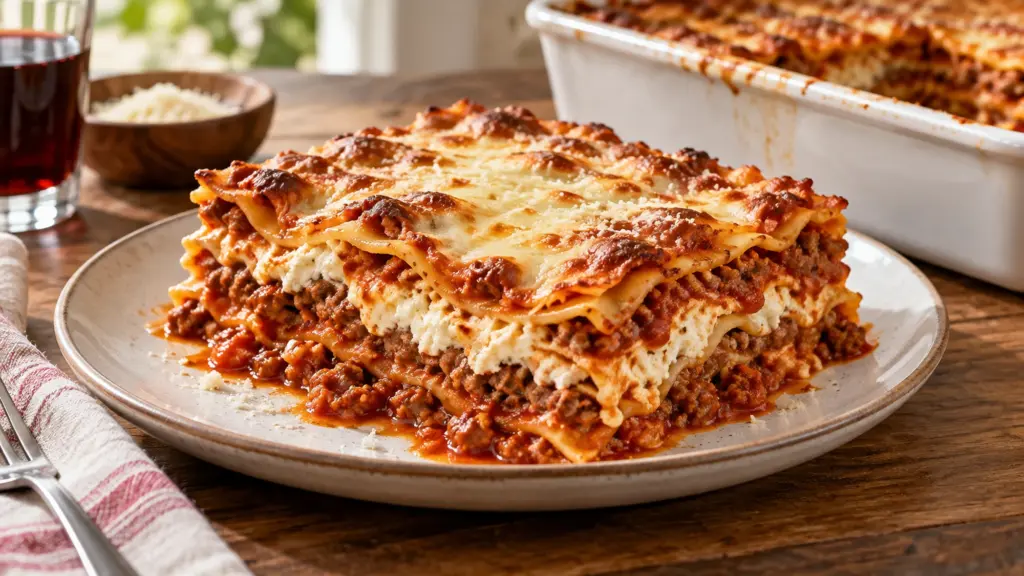
A pan of lasagne has a small timing trick: the bubbling top says dinner is close, but a short rest helps the layers stay together when you cut. This lasagne recipe combines beef and tomato sauce with ricotta, mozzarella and regular dried noodles. The result is a substantial, familiar bake with tender pasta and a browned cheese top.
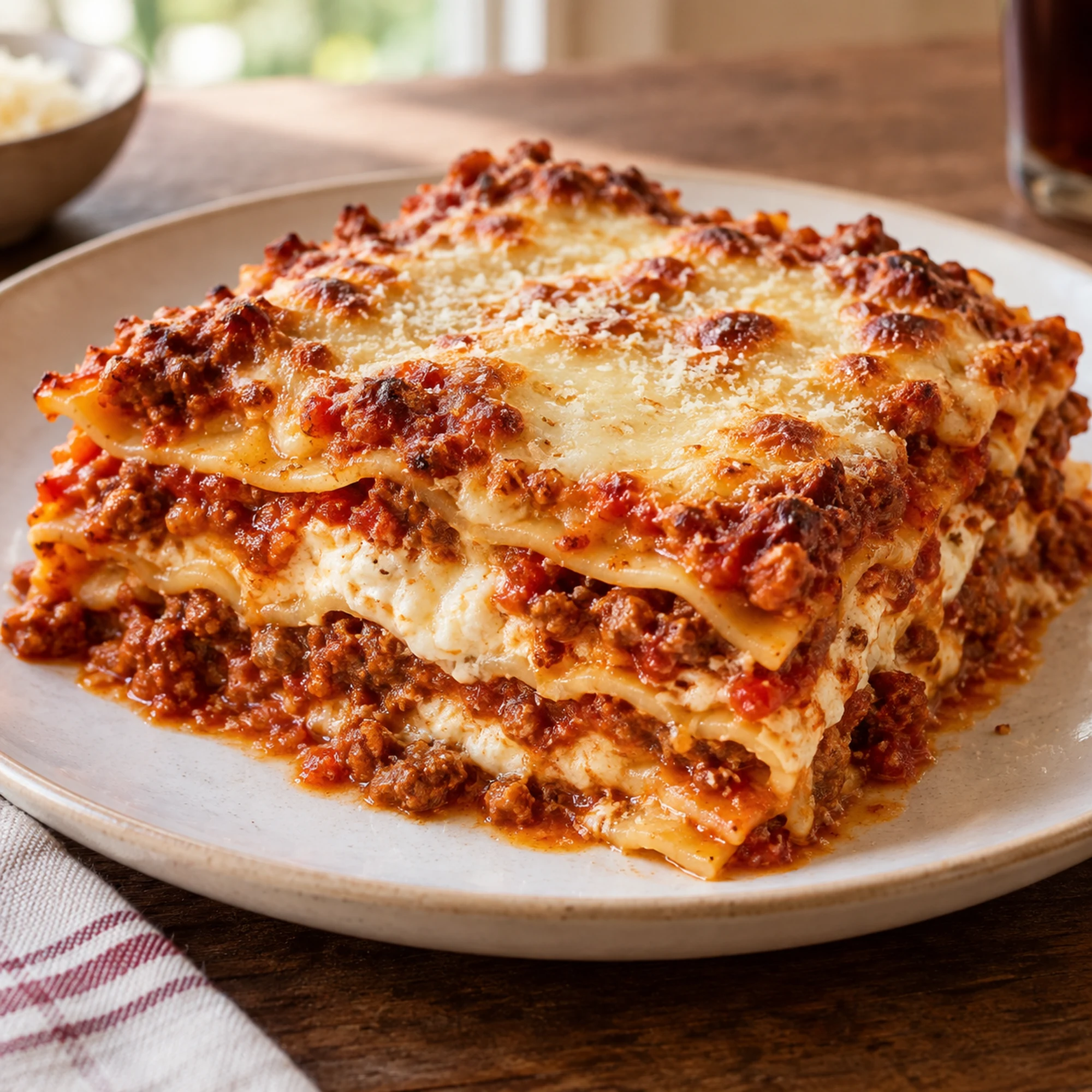
Use tender cooked noodles, a thick but spoonable sauce and a short rest after baking for layers that are easier to serve.
This is a ricotta-style, Italian-American meat lasagne rather than a traditional regional version made with béchamel. The nine-by-thirteen-inch pan makes eight portions, so it suits a shared meal or planned leftovers. I prefer a tomato-forward sauce here: it keeps the cheese layers rich without making every bite feel the same. Read the noodle package carefully, because ordinary dried pasta and oven-ready sheets need different handling.
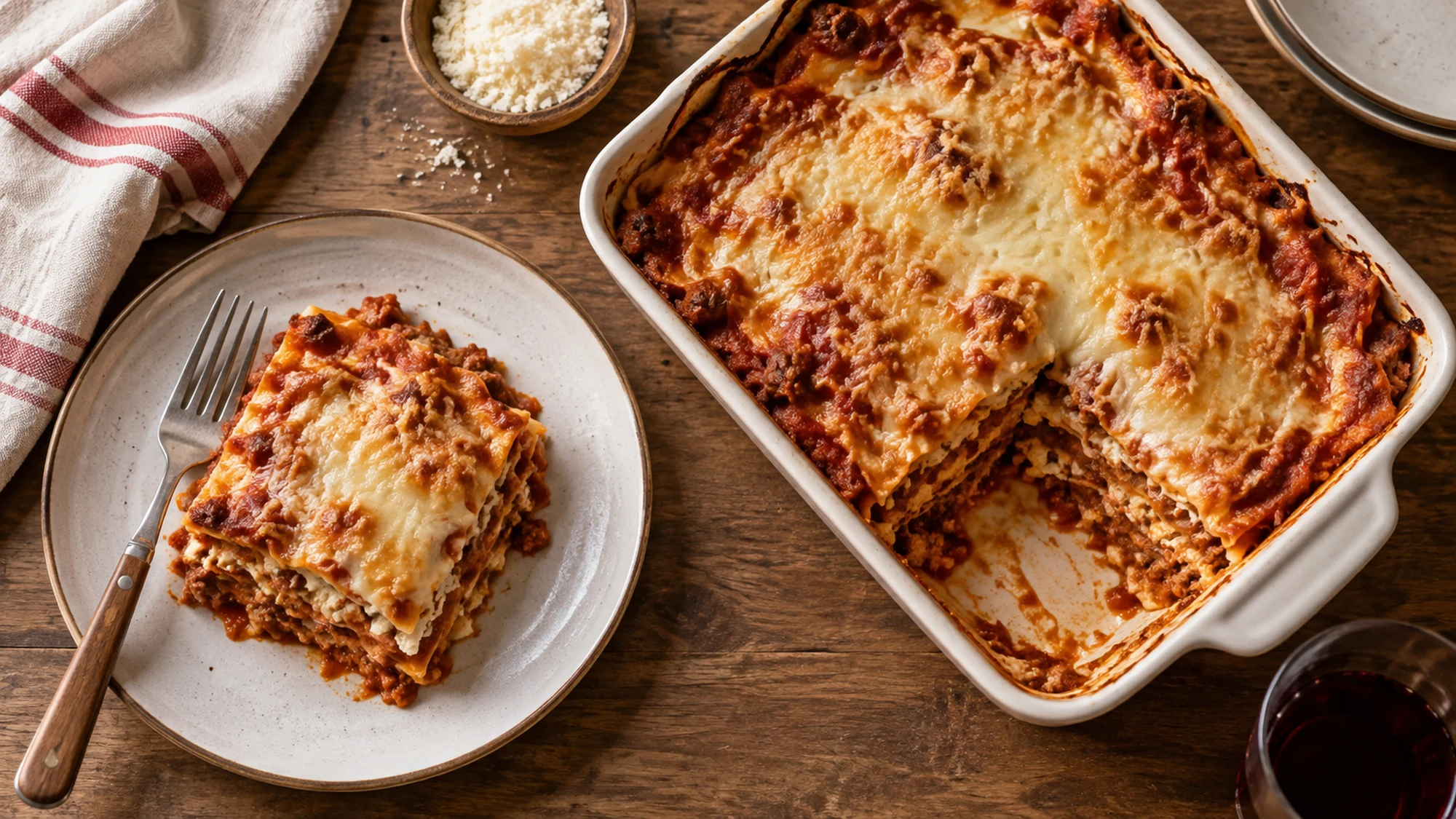
Serving suggestions around a generous pan
Lasagne already brings pasta, meat, dairy and sauce to the table, so the side dishes can have a quieter job. A crisp vegetable gives a useful contrast to the soft layers. Rest the baked pan before cutting, then use a broad spatula to support each portion from underneath. A small amount of loose sauce at the edge is normal.
- Add a fresh side: A green salad with a simple tart dressing balances the richness. Dress it just before serving to preserve its crunch.
- Choose vegetables: Steamed green beans or roasted Brussels sprouts add color and another texture without needing their own heavy sauce.
- Offer bread thoughtfully: Garlic bread is a familiar companion, but the pasta already supplies a starch. Serve it according to the meal you want.
- Save portions promptly: Divide leftovers into shallow containers and refrigerate within two hours, rather than cooling the whole dense pan on the counter.
Let the lasagne anchor dinner, add a crisp or plainly cooked vegetable and store any remaining portions in shallow containers.
Variations and the layers they change
A good substitution considers moisture as well as flavor. Wet vegetables, a thinner sauce or a different noodle can change how the finished pan holds together. I’d keep the first batch close to the card, then adjust one component at a time. That makes it easier to see whether the sauce needs more simmering or the filling needs draining.
- A leaner meat: Ground turkey can replace the beef, with a different flavor. Cook poultry thoroughly to 165°F (74°C) before assembling.
- Another filling: Cottage cheese can be used instead of ricotta, but drain excess liquid. Its texture and salt level will affect the result.
- More vegetables: Cook and drain mushrooms or spinach before adding them. Extra liquid trapped between layers can make the slices loose.
- Oven-ready pasta: Do not replace the regular cooked noodles without checking the package’s liquid and baking directions. No-boil sheets absorb sauce differently.
Keep moisture under control and follow the noodle type’s directions; flavor changes are easier when the layers remain structurally balanced.
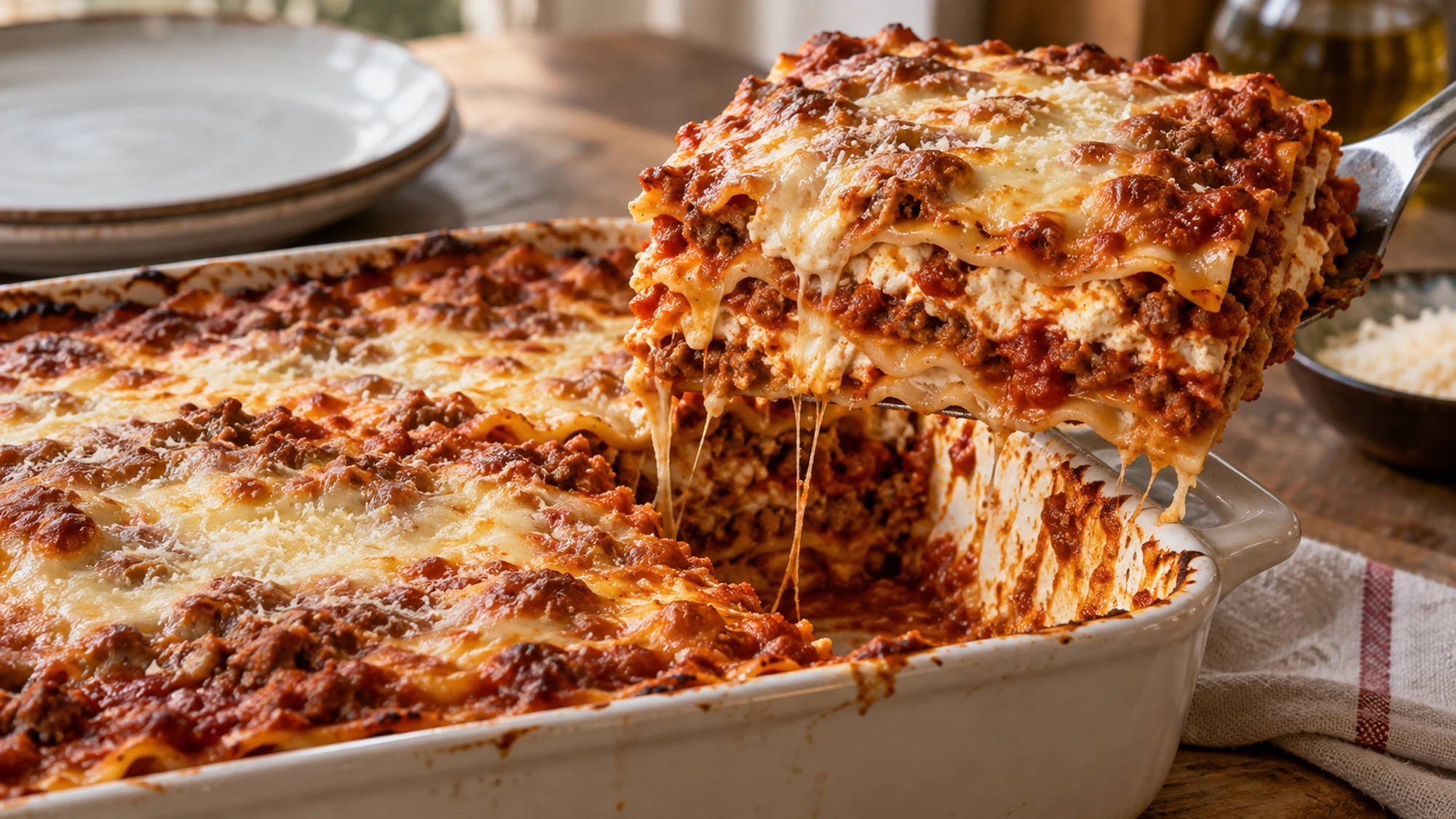
Health benefits with a practical portion
The beef and dairy ingredients contribute protein, while tomatoes add vegetable ingredients to the sauce. Cheese also adds saturated fat and sodium, and pasta contributes carbohydrate. No single ingredient turns this into a universally healthy or unhealthy meal. The card estimates one eighth of the pan using the stated quantities; your cheese labels and portion size can noticeably change those figures.
- Protein choices: Lean beef reduces the proportion of fat compared with a fattier grind. Drain any excess grease before building the sauce.
- Vegetable balance: Include a separate vegetable side rather than assuming the tomato sauce covers every vegetable need for the meal.
- Label differences: Ricotta, mozzarella and canned tomatoes vary in sodium. Compare the labels if that is an important consideration for you.
- Food safety: Cook the beef to at least 160°F (71°C), bake the assembled center to 165°F (74°C) and reheat chilled portions to 165°F.
Use a portion that fits your appetite, include vegetables and keep the protein, cheese and safe cooking temperatures in perspective.
Make room for the resting time
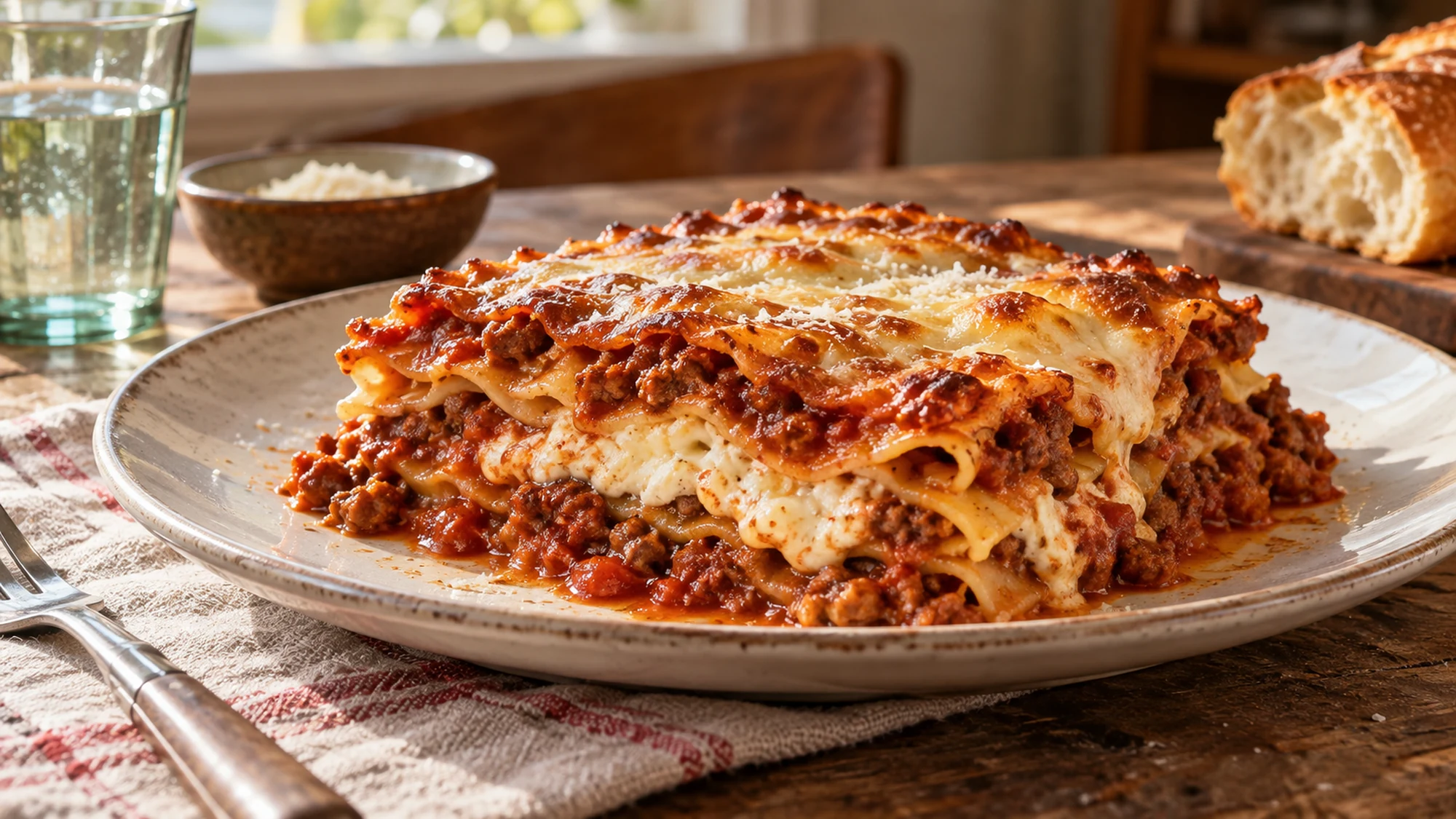
Set out the baking dish before the sauce begins, and leave enough time for assembly without rushing hot noodles. The sauce should spread easily without looking watery. Reserving some for the bottom and top helps keep the pasta covered, while the final mozzarella layer gives the bake its familiar golden surface.
When the center is hot and the cheese has browned, let the pan stand for fifteen minutes before slicing. That pause is a convenient moment to finish the salad. Keep the leftovers refrigerated at 40°F (4°C) or colder and use them within three to four days. A well-planned pan can be dinner now and another useful meal later.
Lasagne Recipe

Ingredients
- 9 regular dried lasagne noodles 8 oz / 227 g; not no-boil
- 1 tablespoon olive oil 13.5 g
- 1 medium onion 150 g; finely diced
- 2 cloves garlic minced
- 1 pound 90% lean ground beef 454 g
- 1 28-ounce can crushed tomatoes 794 g
- 2 tablespoons tomato paste 32 g
- 1/2 cup water 120 mL
- 2 teaspoons Italian seasoning
- 1 teaspoon fine salt 6 g; divided
- 1/2 teaspoon ground black pepper
- 1 15-ounce container whole-milk ricotta 425 g
- 8 ounces low-moisture mozzarella 227 g; shredded
- 1/4 cup finely grated Parmesan 25 g
Equipment
- 9 × 13-inch baking dish
- Large skillet
- Large pasta pot and colander
- Mixing bowl
- Wooden spoon
- Foil
- Food thermometer
Instructions
- Heat the oven to 375°F (190°C). Set out a 9 × 13-inch baking dish and put a large pot of water on to boil for the regular dried noodles.
- Heat the olive oil in a large skillet over medium heat. Cook the onion for about 5 minutes, then add the garlic for 30 seconds. Add the beef and cook, breaking it up, until browned and at least 160°F (71°C). Drain excess fat. Stir in the crushed tomatoes, tomato paste, water, Italian seasoning, 1/2 teaspoon salt and pepper. Simmer uncovered for 15–20 minutes until thick but spreadable.
- Cook the regular dried noodles until just tender according to the package; drain and lay apart to prevent sticking. Mix the ricotta with the remaining 1/2 teaspoon salt, half the mozzarella and the Parmesan. Reserve the remaining mozzarella for the top.
- Spread a thin coating of beef sauce in the baking dish. Add 3 noodles, half the ricotta mixture and about one third of the remaining sauce. Repeat with 3 noodles, the rest of the ricotta and another third of the sauce. Finish with the last 3 noodles, all remaining sauce and the reserved mozzarella. Keep noodles covered with sauce.
- Cover the dish with foil, keeping it off the cheese where possible. Bake for 30 minutes, uncover and bake for another 15–20 minutes until bubbling, lightly browned and at least 165°F (74°C) in the center. Add time as needed to reach the temperature.
- Rest for 15 minutes, then divide into 8 portions. Refrigerate leftovers promptly in shallow containers.
Nutrition
Video
Notes
Tried this recipe?
Let us know how it turned out!Emily Parker is DISHORA’s recipe-writing persona, bringing a warm, practical voice to everyday cooking. Her focus is simple ingredients, comforting flavors and clear steps that make a dish feel approachable. From cozy dinners to something sweet, Emily’s recipes invite readers to try something delicious and make it their own.