
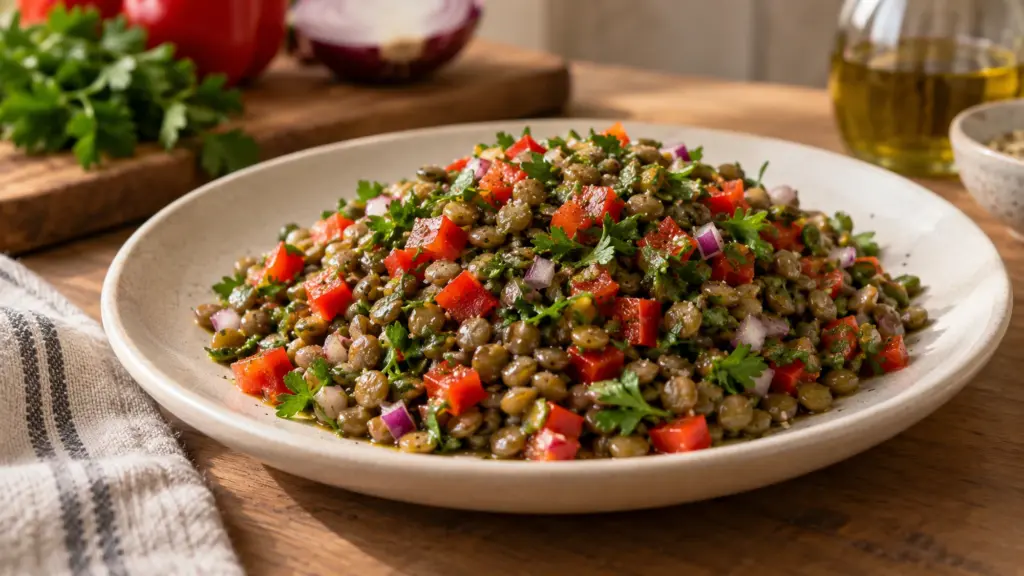
Opening the fridge to a ready bowl of something substantial is a small relief on a busy day. This make-ahead lentil salad combines firm green lentils, finely diced red pepper and onion, parsley and a lemon-Dijon dressing. It holds its bite because the base has no delicate leaves and the lentils are cooked until tender without falling apart.
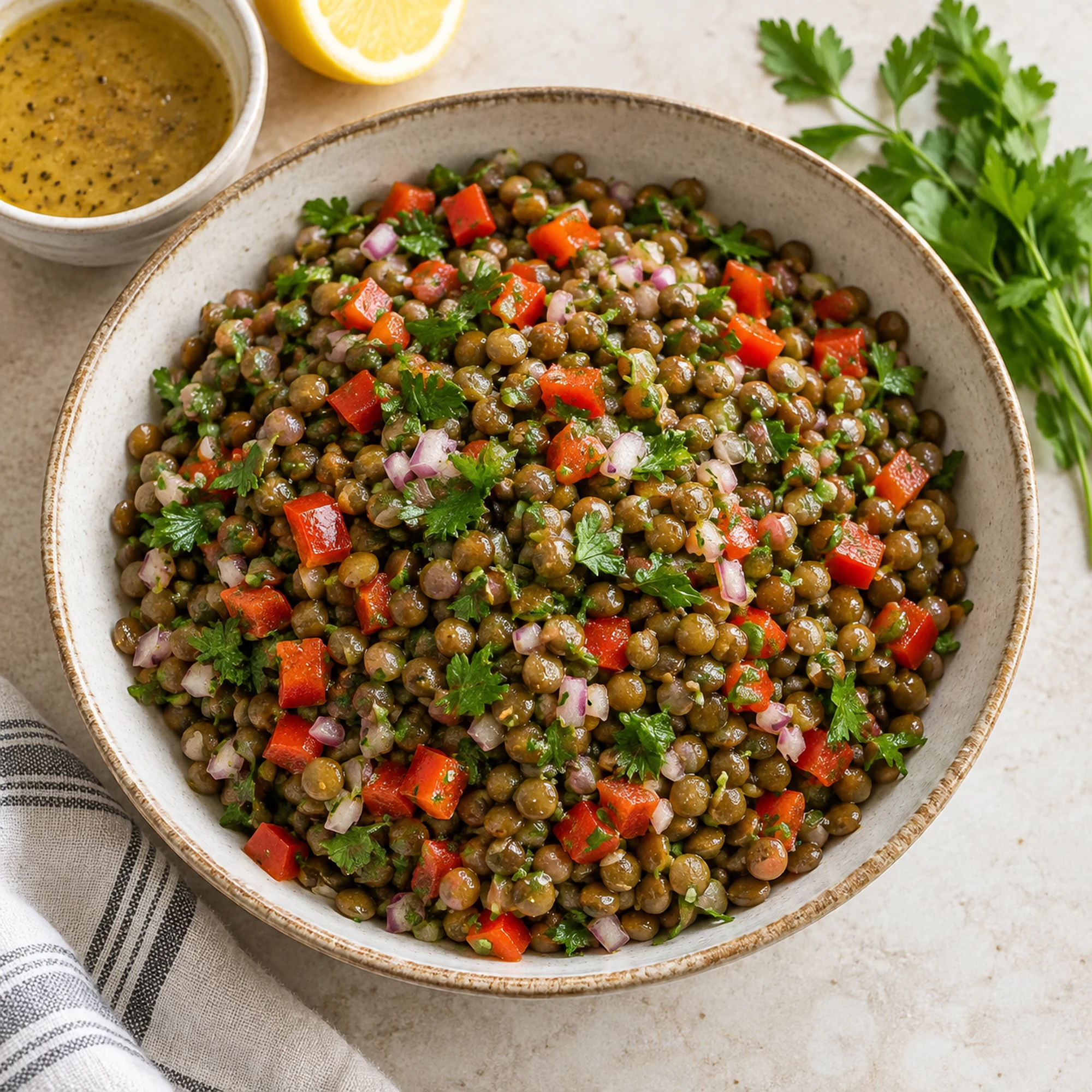
Use whole green lentils, drain them well and cool briefly before dressing. Refrigerate promptly, then enjoy within four days.
I prefer this pared-back mixture for planning ahead: the pepper gives crunch without a watery pool at the bottom of the container. The dressing brings brightness, while the lentils make the salad more substantial than a bowl of leaves. Choose a gentle simmer rather than a rolling boil, and taste a lentil before deciding that the timer has the final word.
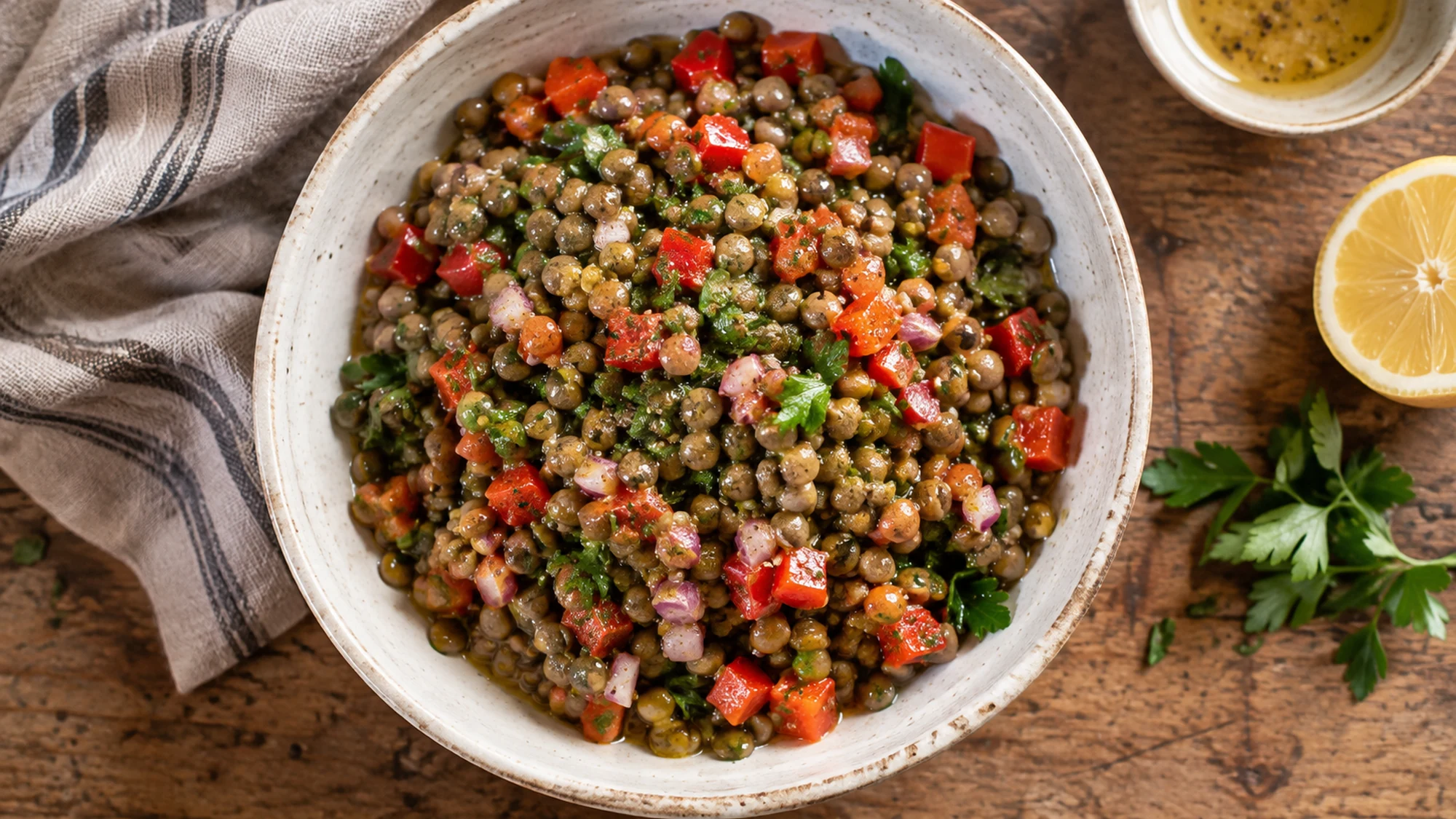
Serving Suggestions for Lentil Salad
Serve a generous side portion alongside cabbage and white beans, grilled chicken or fish. It also fits into a lunch box with bread and a little extra produce. The card makes four portions; turning one into a larger main-meal bowl changes both the portion size and its nutrition estimate.
- Spoon the chilled salad over fresh arugula just before eating so the leaves stay lively.
- Add a boiled egg or another suitable protein if that suits your lunch.
- Pack bread separately instead of letting it soak up the dressing overnight.
- Stir the container before serving to redistribute dressing that has settled.
Taste after chilling, when flavors can seem quieter. A squeeze of lemon may wake it up without requiring more oil. For a packed lunch, keep the container cold with an ice pack until you can refrigerate it. The cold-storage guidance is useful for planning how long prepared food belongs in the fridge.
Keep the prepared base chilled, then add bread, greens or extra toppings when you are ready to eat.
Variations That Work for Make-Ahead Meals
Whole brown or black lentils can stand in for green ones, with cooking adjusted to the package and a tender-but-intact taste test. Split red lentils soften too readily for the texture promised here. Canned lentils offer a shortcut, but use about three cups drained, rinse well and check the label for salt.
- Replace red onion with finely sliced scallions for a milder bite.
- Use chopped chives with parsley if you want a different herbal finish.
- Swap lemon juice for a smaller amount of vinegar, then adjust by tasting.
- Add cucumber, tomatoes or feta only near serving if you want to preserve the base’s simple storage texture.
I’d keep any extra leafy greens outside the storage container. Dressing and time can make them limp, even when the lentils are still good. If you add cheese or another topping, account for its nutrition and dietary requirements separately. This salad is flexible, but that flexibility works best when additions have a clear purpose.
Make changes around the firm lentil base, and save delicate or juicy additions for serving time.
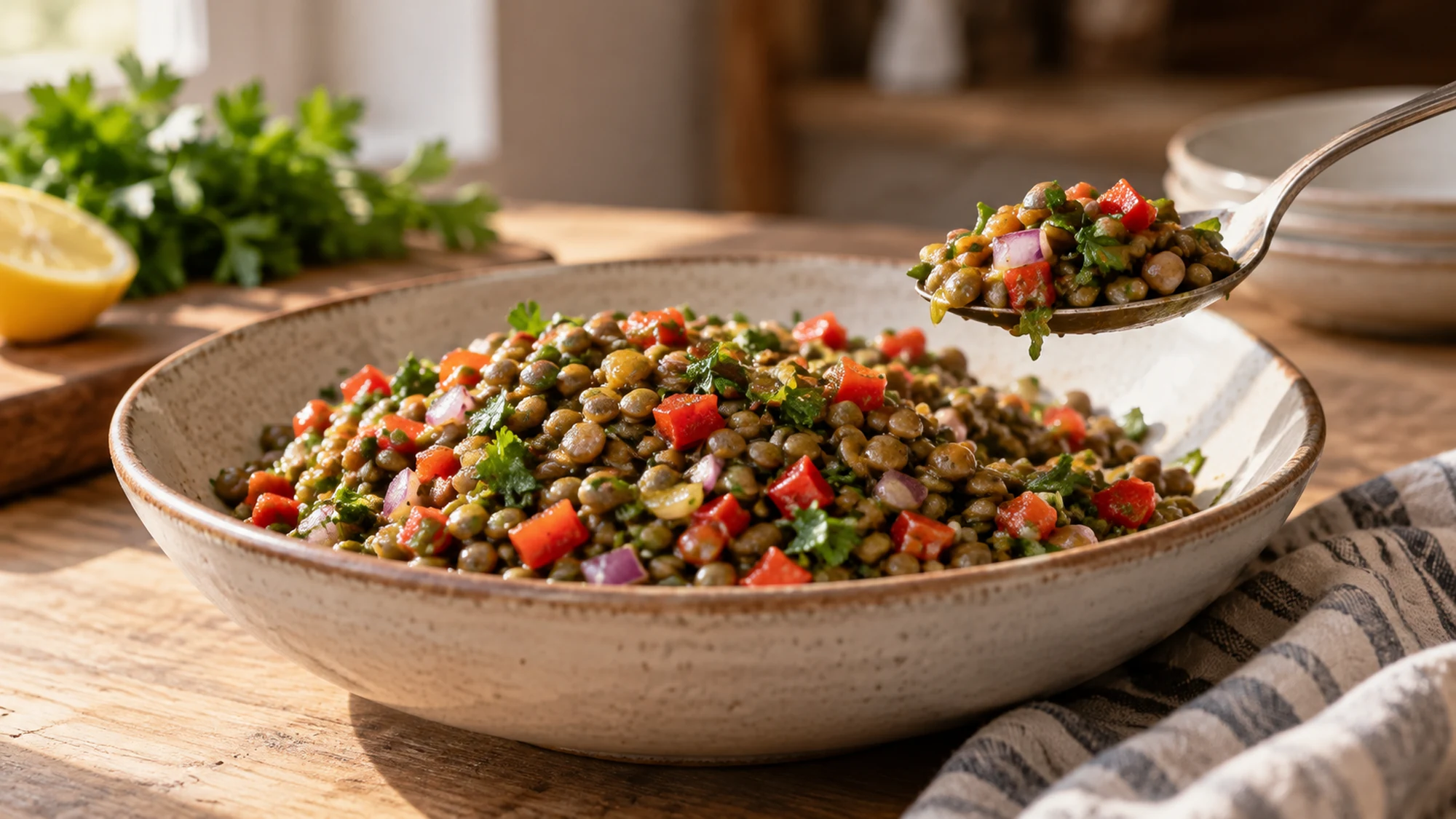
Health Benefits and Portion Awareness
Lentils contribute plant protein and fiber, making this a useful way to bring more legumes into meals. They also provide iron and folate, though no single salad can cover everyone’s nutritional needs. The estimate for one quarter of this recipe is about 320 calories, 13 grams of protein and 7 grams of fiber.
- Measure the olive oil; dressing is part of the portion, not a free extra.
- Check Dijon and canned-lentil labels if you need to watch sodium.
- Increase legume portions gradually if larger amounts of fiber make you uncomfortable.
The lemon and red pepper bring vitamin C to the same plate as the lentils’ plant-source iron. That is a useful pairing rather than a promise about an individual’s iron status. The legume food-group guide explains how beans, peas and lentils can fit into varied meals. For storage, refrigerate within two hours and keep the salad at 40°F or below.
Enjoy the legumes, vegetables and measured dressing together, with portions and chilled storage kept in mind.
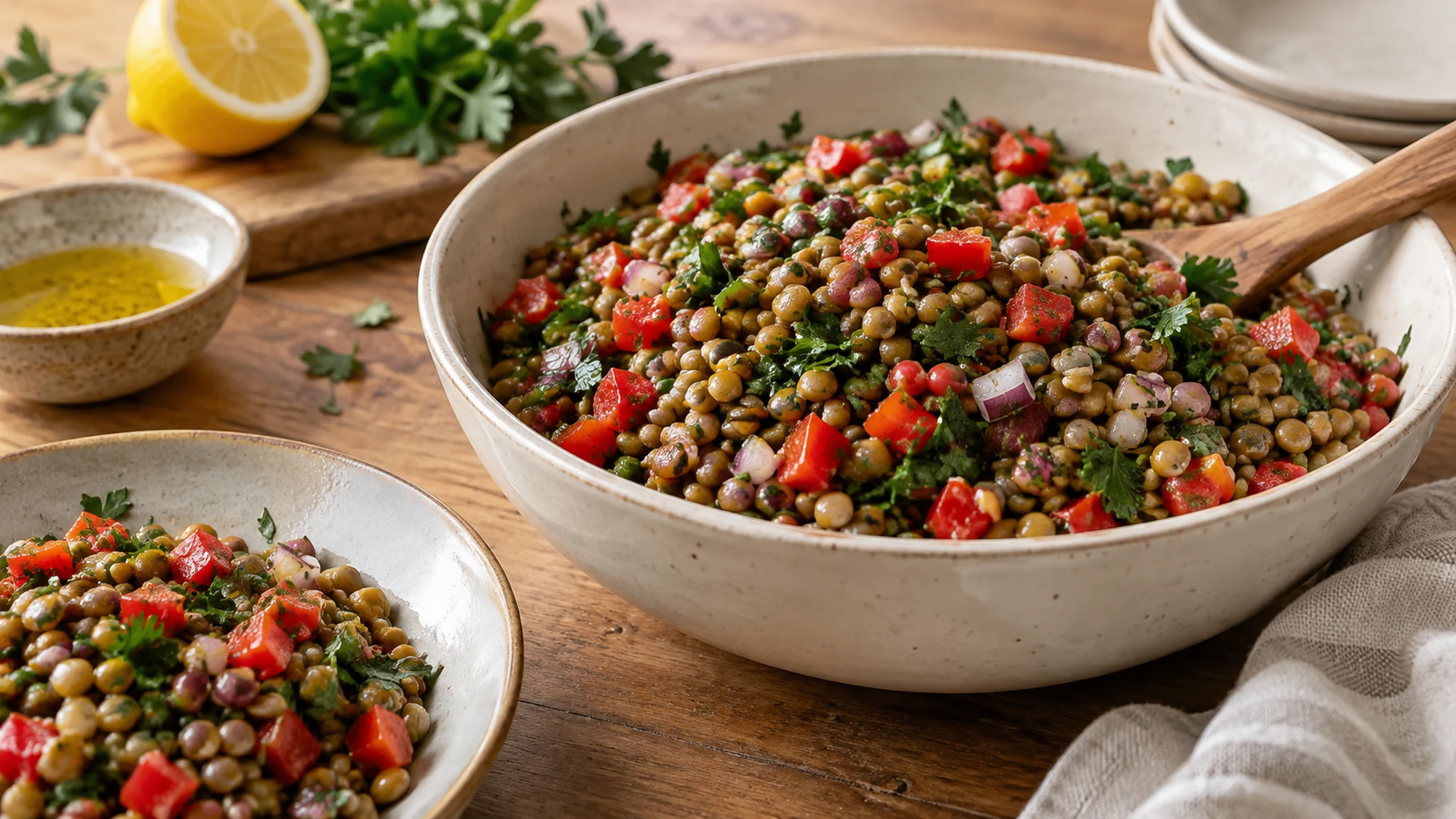
A Useful Bowl for the Days Ahead
The nicest thing about a prepared salad is that it leaves you fewer decisions when you are hungry. I’d make the plain base first and decide on accompaniments day by day. That keeps a practical batch from feeling like the same exact lunch on repeat.
Start with a small saucepan of lentils, give them a gentle simmer and drain thoroughly. Those steps protect the texture that makes this make-ahead lentil salad worth keeping. The card below gathers the quantities and method, including the cooling and storage details, so the next meal can begin with opening a well-planned container.
Make-Ahead Lentil Salad Recipe

Ingredients
- 1 cup dry green lentils about 200 g, picked over
- 3 cups water for cooking; add a little more if needed
- 1 large red bell pepper about 160 g, finely diced
- 0.5 cup red onion finely diced, about 80 g
- 0.25 cup flat-leaf parsley chopped
- 3 tbsp olive oil
- 3 tbsp fresh lemon juice
- 2 tsp Dijon mustard
- 1 clove garlic finely grated
- 0.5 tsp fine salt
- 0.25 tsp ground black pepper
Equipment
- Medium saucepan
- Fine-mesh strainer
- Cutting board and chef’s knife
- Large mixing bowl
- Whisk
- Shallow lidded storage container
Instructions
- Pick through the dry lentils, removing debris. Rinse them thoroughly under cool running water in a fine-mesh strainer.
- Put lentils and water in a medium saucepan. Bring to a boil, then reduce to a gentle simmer and cook for about 20–30 minutes, checking the package guidance and tasting early. Add water if needed to keep them submerged. Stop when tender but intact.
- Drain well and spread in a shallow clean bowl. Cool for about 20 minutes, just until no longer hot; do not leave out for more than 2 hours in total.
- Whisk olive oil, lemon juice, Dijon, garlic, salt and pepper in the large bowl until blended.
- Add the cooled lentils, diced pepper, red onion and parsley. Toss gently. Divide into shallow lidded containers and refrigerate promptly at 40°F (4°C) or below. Serve chilled. Use within 4 days.
Nutrition
Video
Notes
Tried this recipe?
Let us know how it turned out!Emily Parker is DISHORA’s recipe-writing persona, bringing a warm, practical voice to everyday cooking. Her focus is simple ingredients, comforting flavors and clear steps that make a dish feel approachable. From cozy dinners to something sweet, Emily’s recipes invite readers to try something delicious and make it their own.