
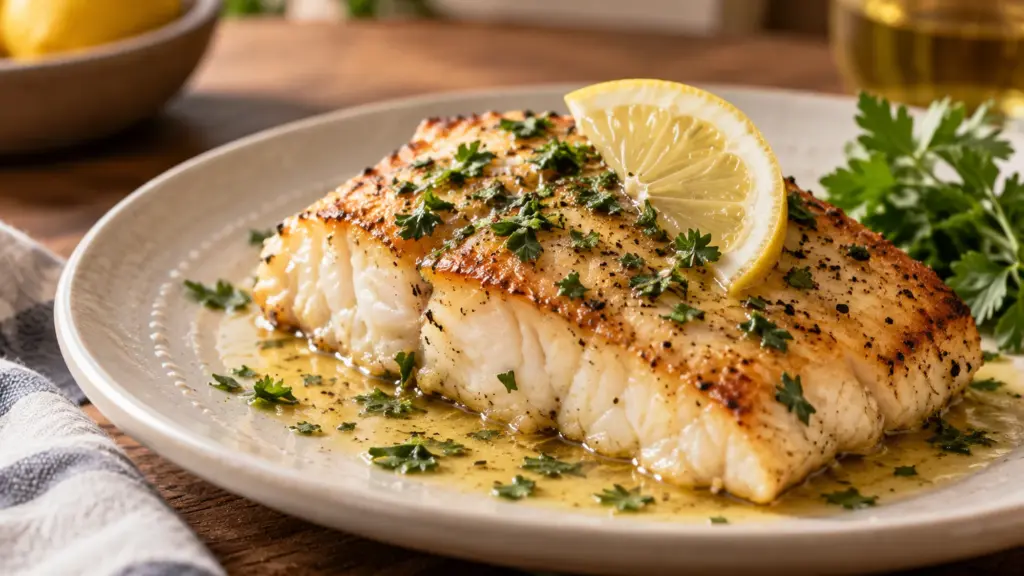
A pale fillet can become a lovely dinner when its surface meets a hot pan without a puddle of water in the way. This mahi mahi recipe starts with thoroughly dried fish, then adds a simple lemon-garlic butter sauce after the fillets are cooked. You get a lightly golden exterior, a firm flaky center and bright citrus without a thick coating.
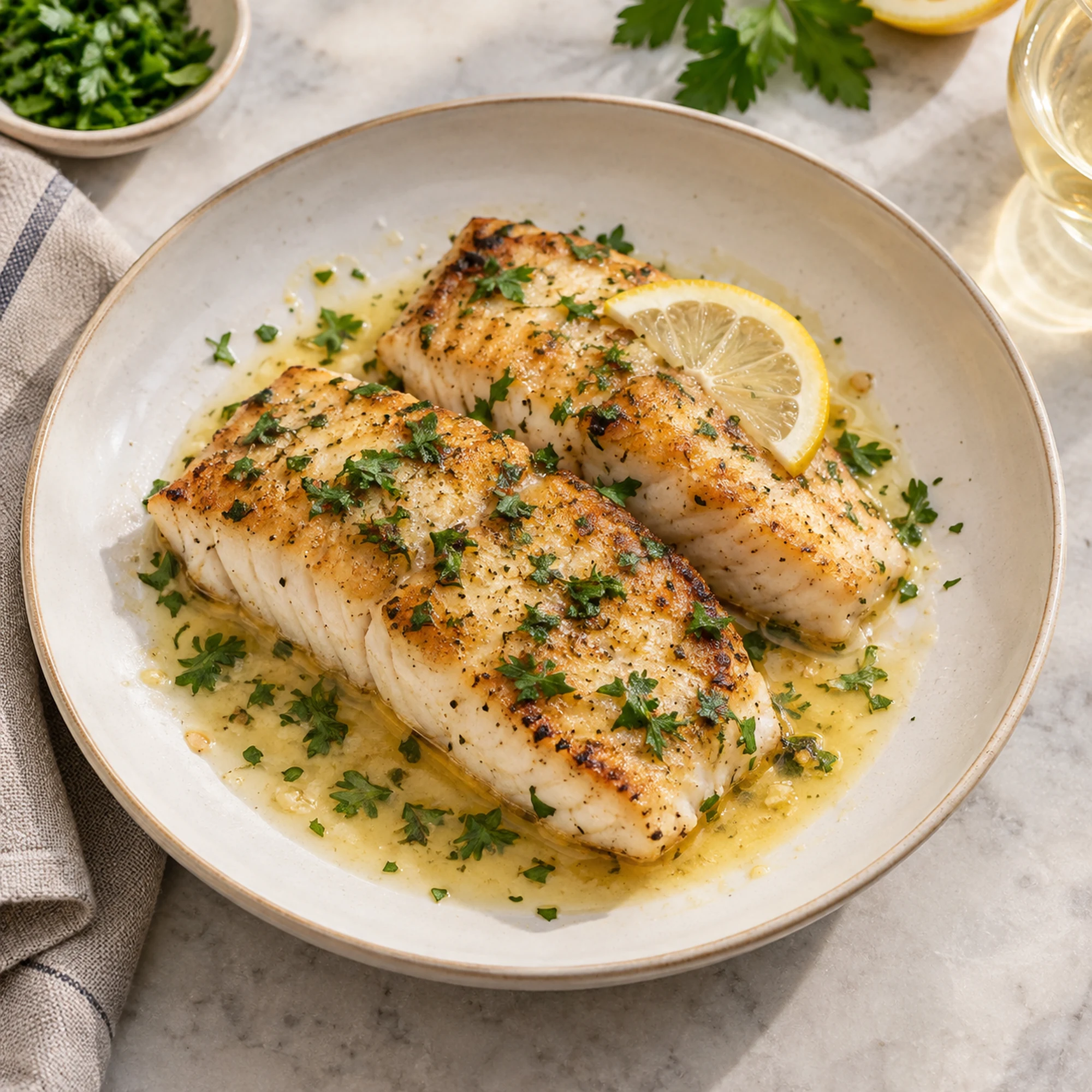
Dry the fillets well, leave room in the skillet and cook to 145°F. Make the lemon butter sauce over low heat after removing the fish.
I prefer the sauce kept modest so the fish remains the main event. Mahi mahi has a firm texture that is friendly to a spatula, but it still deserves gentle handling. Use fillets of similar thickness, and treat the suggested minutes as a guide. A thermometer tells you more than a rigid timer can.
Serving Suggestions for Lemon Butter Mahi Mahi
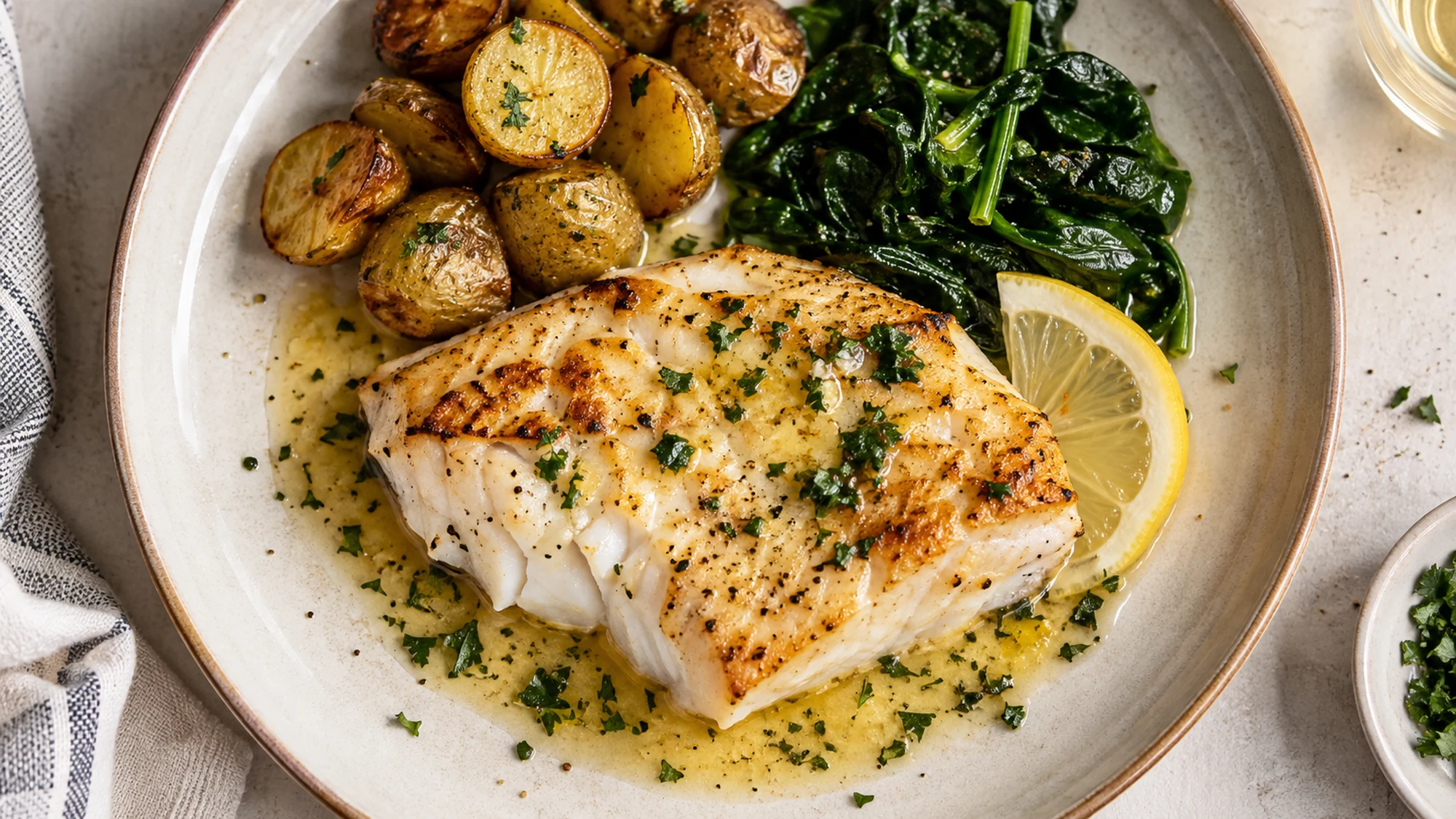
Bring the fish to the table as soon as the sauce is ready. Warm plates are useful if you are serving several people, and having the sides finished first keeps the fillets from waiting around. Spoon the sauce across the fish rather than flooding the plate; a small amount carries plenty of lemon and garlic flavor.
- Serve with plain rice or a jacket potato to catch the pan sauce.
- Choose steamed green beans, broccoli or a crisp salad for a fresh contrast.
- Put the lemon wedges alongside the fish so diners can add acidity to taste.
For a lunch the next day, refrigerate a spare portion promptly in a shallow covered container. Keep cooked fish at 40°F or below and use it within three to four days, though its texture is nicest sooner. Reheat leftovers to 165°F, gently and with a little moisture. For buying and thawing, the seafood handling guide explains the useful basics.
Finish the sides before searing, then serve the fish promptly with just enough sauce to coat it.
Variations Without Losing the Golden Sear
Frozen mahi mahi is a sensible option when fresh fillets are unavailable. Thaw it in the refrigerator and follow the package directions, particularly any instruction to remove vacuum packaging before thawing. Pat away surface moisture thoroughly. Ice-cold wet fish dropped into a crowded skillet is much more likely to steam than develop a good surface.
- Use cod or another firm white fish, adjusting cooking time to its thickness and checking for 145°F.
- Replace parsley with finely chopped chives for a gentler herbal finish.
- Increase lemon at the table instead of adding lots more juice to the pan.
- For a dairy-free variation, use a suitable butter alternative and expect a different flavor and nutrition estimate.
I’d avoid flour or breadcrumbs in this version because the lightly browned fish is its own visual hook. If the fillet resists the spatula, give it a little longer before forcing it. Lower the heat when the pan begins to smoke, and keep the garlic out of the hot searing stage so it does not turn bitter.
Keep the surface dry and the pan roomy; most flavor changes can happen after the fish is cooked.
Health Benefits and Seafood Portions
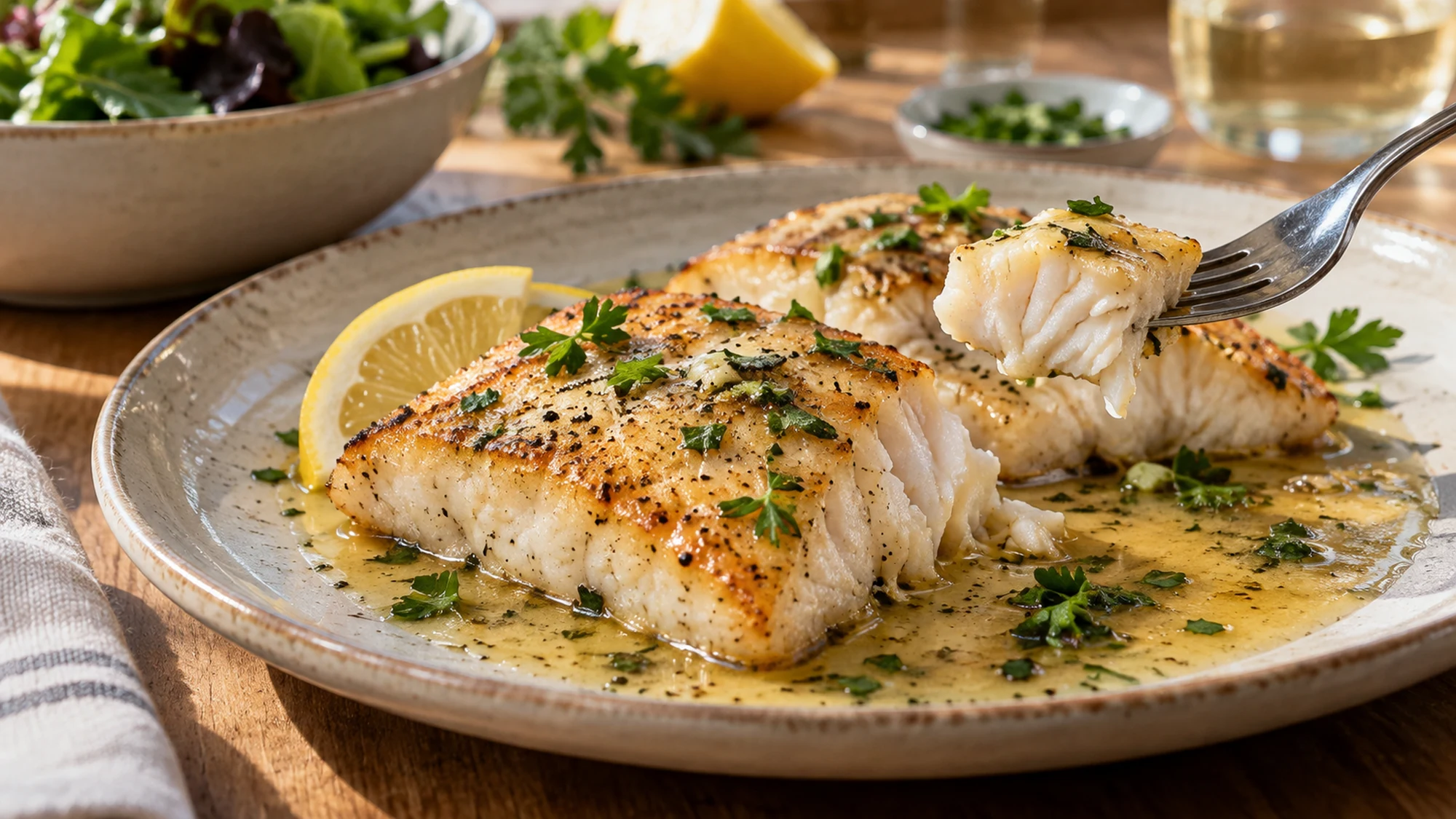
Mahi mahi contributes protein without the sauce needing to be heavy. The estimate is about 230 calories and 32 grams of protein for one six-ounce fillet with its share of sauce. Those figures exclude sides and vary with the actual fillet weight. Butter and oil still count, even when the sauce looks light on the plate.
- Measure the butter and oil so the card’s estimate remains useful.
- Add vegetables and a suitable starch to build the meal you need.
- Choose a variety of fish across meals instead of relying on one species for every seafood dinner.
For people who are pregnant or breastfeeding and for young children, fish choices and portions need attention. Mahi mahi appears in the fish-choice guidance as a “Good Choice,” rather than the lowest-mercury category. Cook it thoroughly to 145°F and keep raw fish separate from the salad, utensils and serving plates.
The fish supplies protein; measured sauce, varied seafood choices and safe handling make the meal more thoughtful.
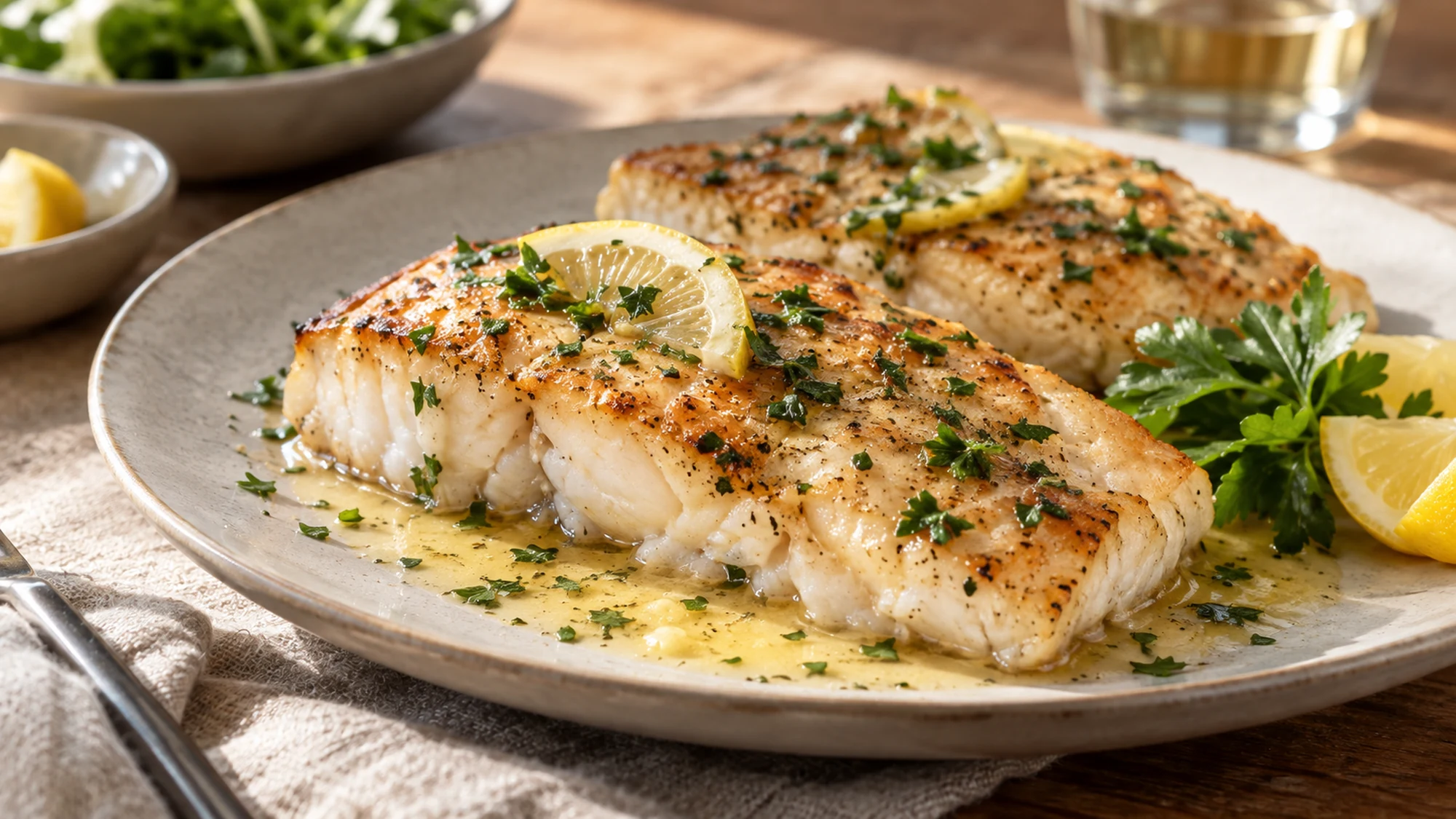
A Clear, Bright Fish Dinner
A golden edge, a gentle flake and a little lemon butter are enough to make this fish feel inviting. I’d put my attention into the dry surface and cooking endpoint before fussing over an elaborate garnish. Those details affect the bite far more than a crowded plate does.
Take a moment to set out the spatula, thermometer and sauce ingredients before you start. The sear moves quickly once the fish enters the skillet. Follow the card below for the quantities, watch the fillets rather than only the clock, and let this mahi mahi recipe earn its place through a clean, simple finish.
Mahi Mahi Recipe

Ingredients
- 4 6-ounce skinless mahi mahi fillets thawed if frozen, about 1 inch thick
- 1 tbsp olive oil
- 2 tbsp unsalted butter
- 2 cloves garlic minced
- 2 tbsp fresh lemon juice
- 2 tbsp water
- 0.5 tsp fine salt
- 0.25 tsp ground black pepper
- 1 tbsp flat-leaf parsley chopped
- 4 lemon wedges for serving
Equipment
- 12-inch skillet
- Fish spatula
- Cutting board and chef’s knife
- Measuring spoons
- Instant-read thermometer
- Clean paper towels
Instructions
- Pat the thawed fillets thoroughly dry with clean paper towels. Season both sides with the salt and pepper.
- Heat the olive oil in a 12-inch skillet over medium-high heat until shimmering. Add the fillets with room between them. Cook without moving for about 3–4 minutes, until the underside is golden and releases with gentle pressure from the spatula.
- Turn the fillets carefully and cook for about 2–4 minutes more, adjusting heat as needed, until the thickest part reaches 145°F (63°C). Transfer to a clean plate. Timing depends on thickness.
- Reduce heat to low. Add butter and garlic and stir for about 30 seconds, without browning the garlic. Add lemon juice and water; stir, scraping up light golden pan bits. Simmer for about 1 minute.
- Spoon sauce over the fish, sprinkle with parsley and serve immediately with lemon wedges.
Nutrition
Video
Notes
Tried this recipe?
Let us know how it turned out!Emily Parker is DISHORA’s recipe-writing persona, bringing a warm, practical voice to everyday cooking. Her focus is simple ingredients, comforting flavors and clear steps that make a dish feel approachable. From cozy dinners to something sweet, Emily’s recipes invite readers to try something delicious and make it their own.