
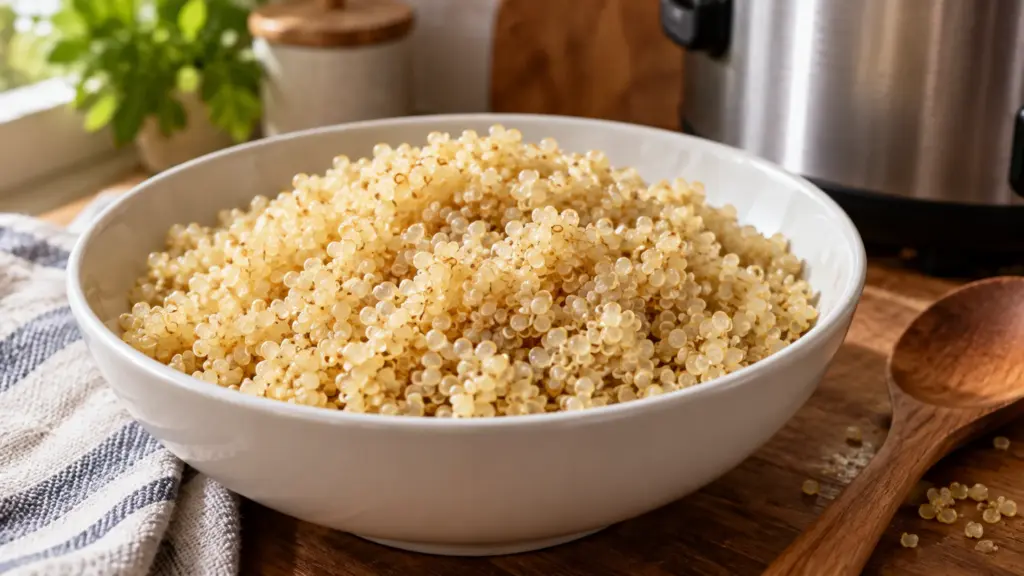
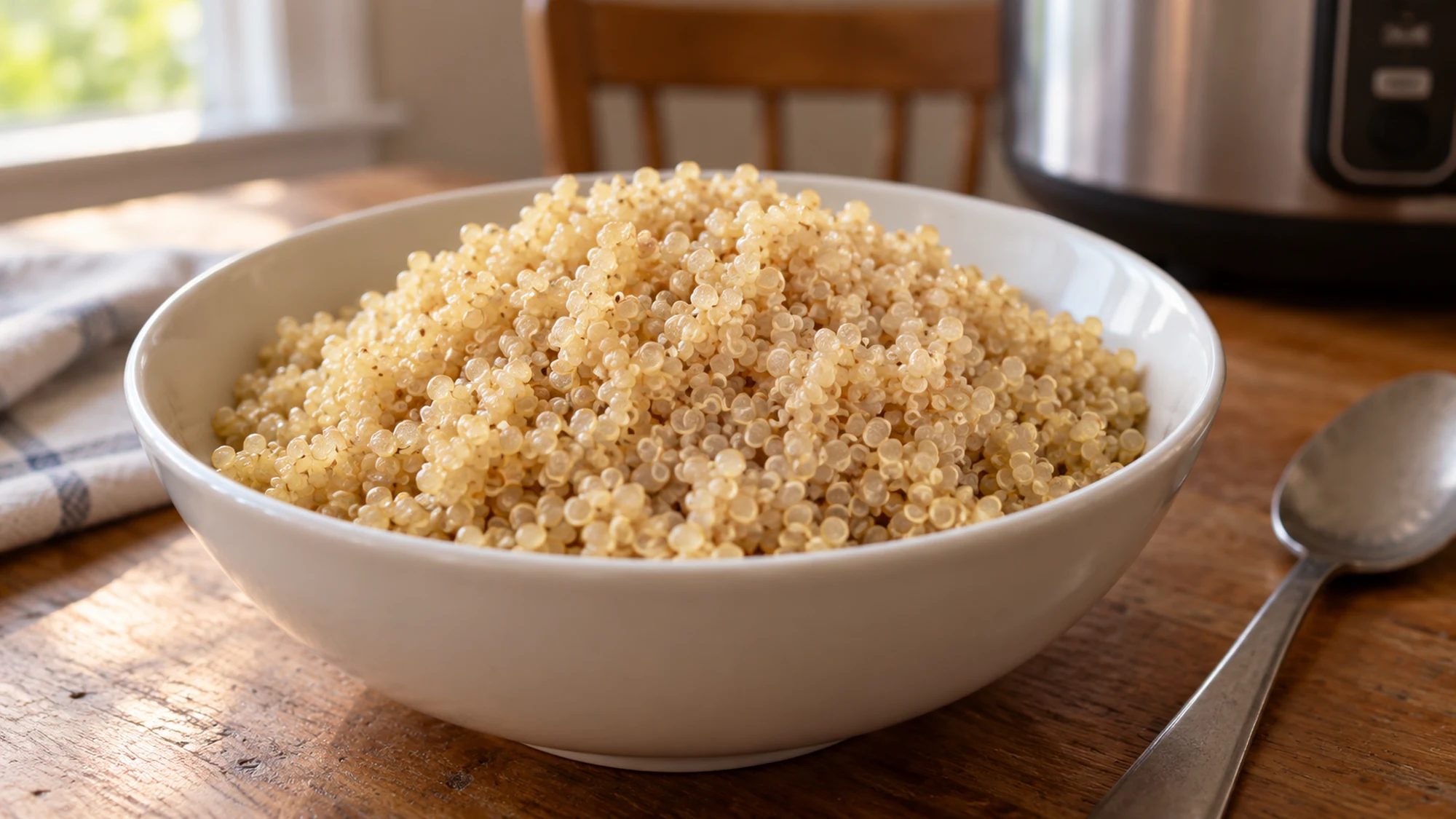
Learning how to cook quinoa in a rice cooker starts with a small detail: the machine matters. Some cookers have a quinoa setting and matching water line; others use a specified quick-grain program. Rinse the quinoa, measure grain and water consistently, then use the instructions for your model. The goal is tender grains that separate when fluffed, with their pale germ rings visible.
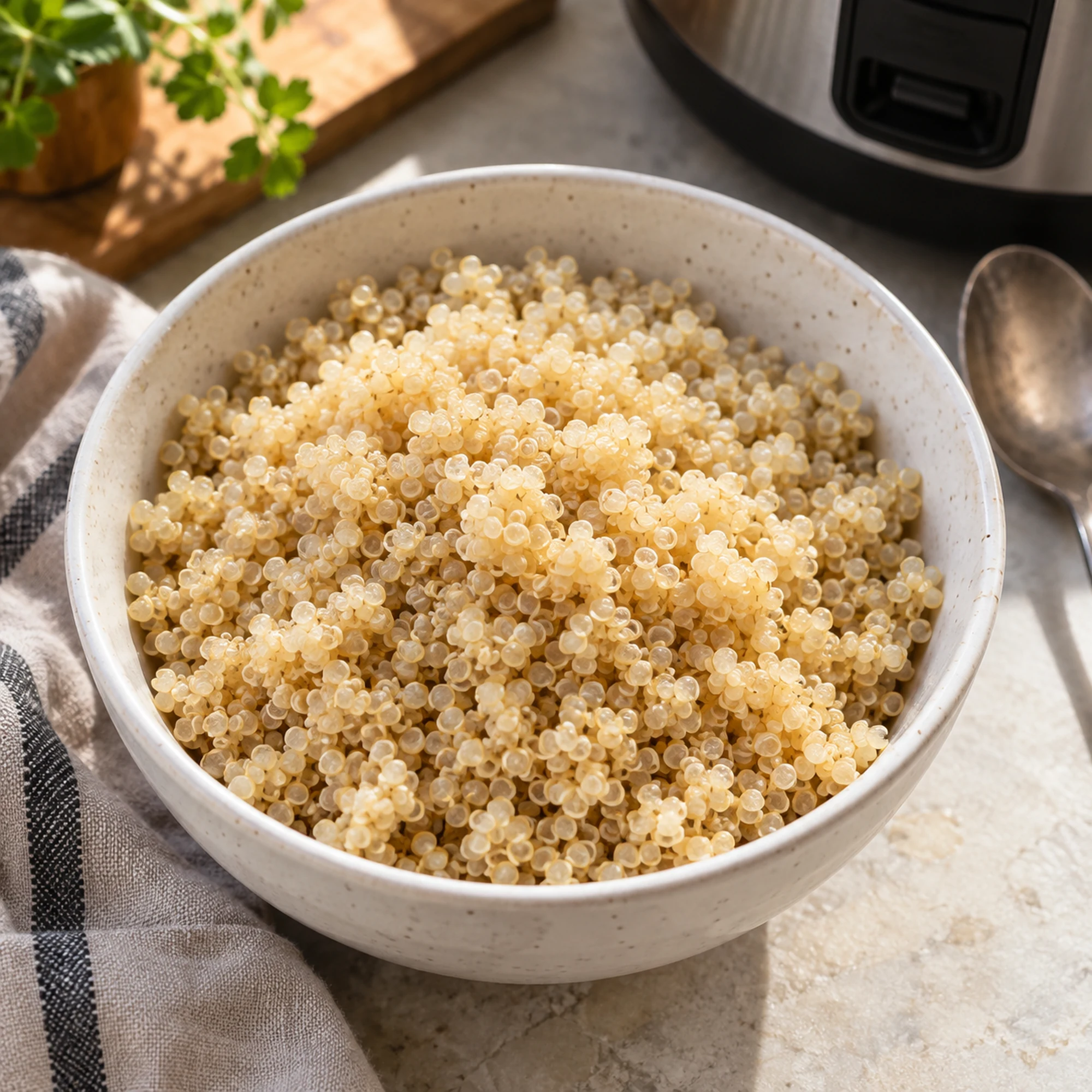
Rinse quinoa, measure grain and water with the same cup, and follow the program specified for your rice cooker.
I prefer checking the manual before choosing a water ratio. A rice cooker does not lose moisture in exactly the same way as an open saucepan, and a conventional on-off cooker can behave differently from a programmed model. The card gives a 1-to-1¼ ratio for compatible quick-grain cookers, while making the manufacturer’s instructions the deciding guide when they specify a different amount.
Rinsing is a small step with a useful purpose: it removes loose surface material and can reduce the bitter taste associated with quinoa’s natural coating. Even a pre-rinsed product can benefit from a brief rinse if the package allows it. Use a fine-mesh strainer so the tiny seeds stay put, then drain well before transferring them to the cooking pot.
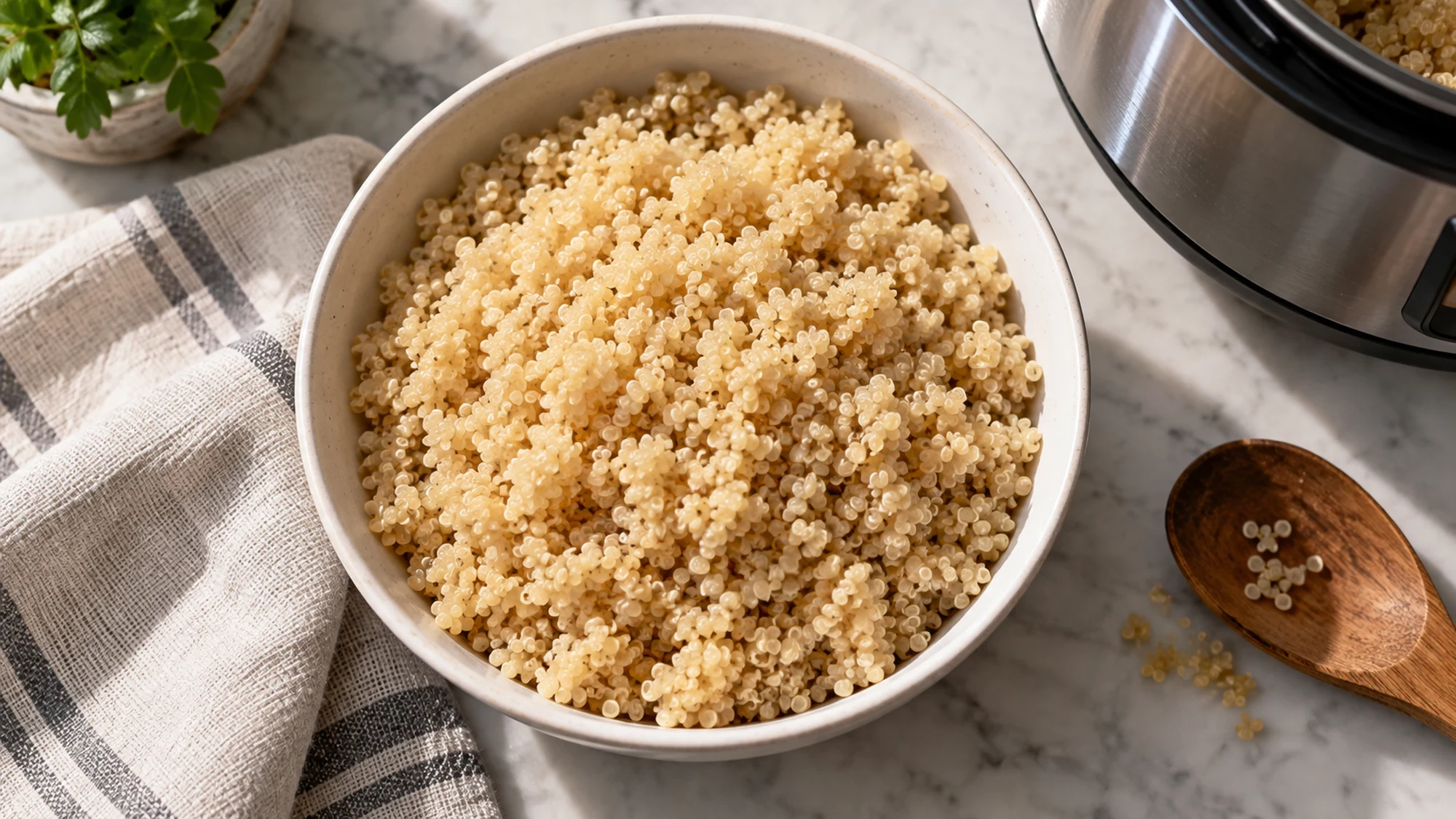
Serving suggestions for rice cooker quinoa
Serve cooked quinoa as a side with beans, vegetables, chicken or cooked fish. Fluff it with a paddle instead of stirring firmly with a metal spoon, then let a little steam escape before adding dressing. The grains should feel tender without sitting in visible water. I would taste a spoonful before serving so you can catch any firm center or excess moisture.
Quinoa also works in a lunch bowl, where its small grains fit between roasted vegetables and a protein topping. Dishora’s cabbage and white bean skillet can sit beside it for a simple plant-focused meal. If making a cold salad, cool the cooked quinoa promptly in a shallow container rather than leaving a deep rice-cooker pot on the counter for hours.
Fluff gently and taste the grains before serving, then cool any extra promptly.
Variations
Use the same cup for both quinoa and water. A cup supplied with a rice cooker is often smaller than a standard US measuring cup, and mixing the two creates an unintended ratio. You can measure both with either system when following a ratio, but use the supplied cup for the appliance’s marked fill lines. Those lines correspond to the manufacturer’s measuring system.
A dedicated quinoa setting is the clearest option when your cooker has one. Fill to its stated line and follow the manual’s program. For compatible models without that setting, a manufacturer may specify a quick cycle and measured water. The rice cooker setting guide explains its own model limits; do not transfer one brand’s tested ratio to every other cooker.
- White quinoa is a useful starting point because its cooking cues are easy to see.
- Red or mixed quinoa may keep a firmer bite and can need a different cycle or a little more time.
- Broth can replace water when your manual permits it, but it changes sodium and flavor.
- I would keep the first batch plain so you can judge the texture before adding several variables.
If the cooker stops but the grains are still firm, first check whether the measured water and chosen cycle matched its directions. Make a small adjustment on the next batch rather than doubling the water. If the bottom becomes dry while the top remains firm, consult the manual’s grain guidance. Opening the lid repeatedly during cooking can also disturb a programmed cycle.
Use the manufacturer’s quinoa line or tested ratio; one cooker setting does not fit every machine.
Health benefits
Quinoa provides carbohydrate, plant protein and some fiber. It is an edible seed that is often served like a grain. The estimated side serving in the card uses one quarter of a dry US cup’s finished yield; cooked volume varies with hydration. For ideas about fitting grains and similar foods into a meal, the grain-food guide offers practical portions and variety.
- Plain quinoa is naturally gluten-free, but packaged blends or flavored products can contain other ingredients.
- Check the label if gluten or another allergen matters.
- Optional salt and broth also change the nutrition estimate.
- Keep the finished portion in perspective: adding oil, cheese, nuts or a rich dressing changes the bowl even when the quinoa itself was cooked in water.
Cooked quinoa needs prompt cooling and refrigeration if it will be saved. Use shallow containers, and reheat leftovers thoroughly when serving them hot. The cooked-food storage guide explains safe cooling and reheating. Avoid treating the warm setting as an unlimited storage plan; follow the appliance’s directions for how long food can safely stay there.
Plain quinoa contributes protein and fiber, while broth, dressings and added salt change the finished serving.
Start with the manual and one measuring cup
Measure with one cup system, rinse well and let the cooker run the appropriate program. Rest briefly, then fluff and inspect the grains. If they are still firm, add a small splash of water and use an additional cycle allowed by the manual; if they are wet, let excess steam escape before serving. Once you know your model’s result, the method becomes easy to repeat.
How to Cook Quinoa in a Rice Cooker Recipe

Ingredients
- 1 cup dry quinoa about 170 g; use the same measuring cup for quinoa and water
- 1 1/4 cups water 300 ml; for compatible quinoa or quick-grain cookers, use the manufacturer’s amount when different
- 1/4 teaspoon fine salt optional
Equipment
- Rice cooker
- Fine-mesh strainer
- Standard US measuring cups or kitchen scale
Instructions
- Measure quinoa with a standard measuring cup, using the same cup for water. Rinse in a fine-mesh strainer under cool water, rubbing grains gently, then drain well.
- Transfer quinoa to the inner pot. Add 1 1/4 cups water and optional salt only if your manual supports that ratio and cycle. For a quinoa setting or marked quinoa water line, follow the model-specific instructions instead.
- Close the lid and start the quinoa or quick-grain cycle. If your cooker has only basic rice programs, consult its manual for grain settings; models do not all use the same ratio or cycle.
- When the cooker switches to warm, leave the lid closed for 5 minutes. Open and fluff with a rice paddle. If the center is still firm, add a splash of water and run a short additional cycle.
Nutrition
Video
Notes
Tried this recipe?
Let us know how it turned out!Emily Parker is DISHORA’s recipe-writing persona, bringing a warm, practical voice to everyday cooking. Her focus is simple ingredients, comforting flavors and clear steps that make a dish feel approachable. From cozy dinners to something sweet, Emily’s recipes invite readers to try something delicious and make it their own.