
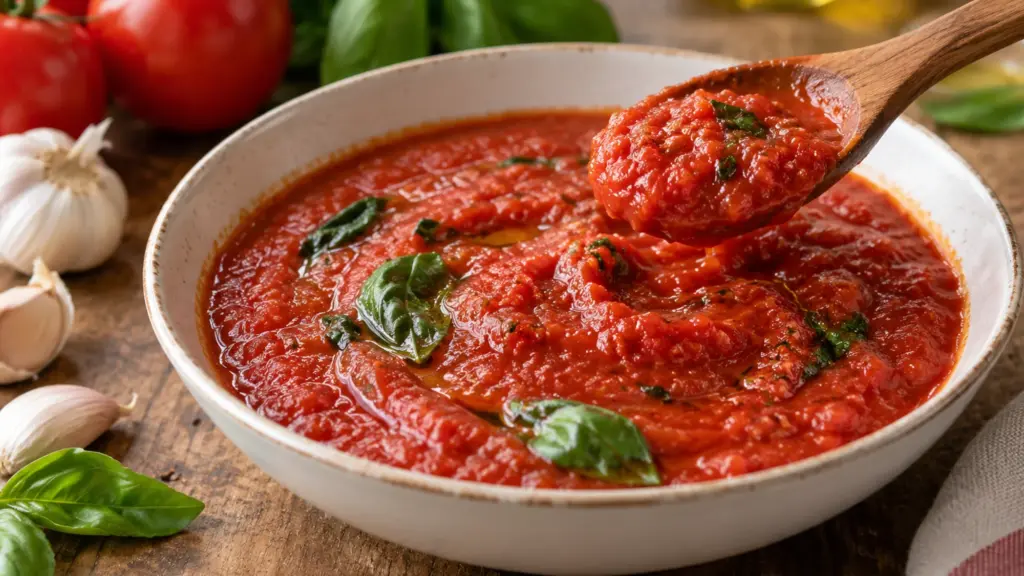
The moment a pot of tomatoes starts bubbling, the question is whether to leave it alone or keep adding ingredients. For pomodoro sauce, I would choose restraint: good tomatoes, olive oil, garlic, basil, and salt are enough to make a bright, spoonable sauce. A gentle simmer thickens them without burying their flavor.
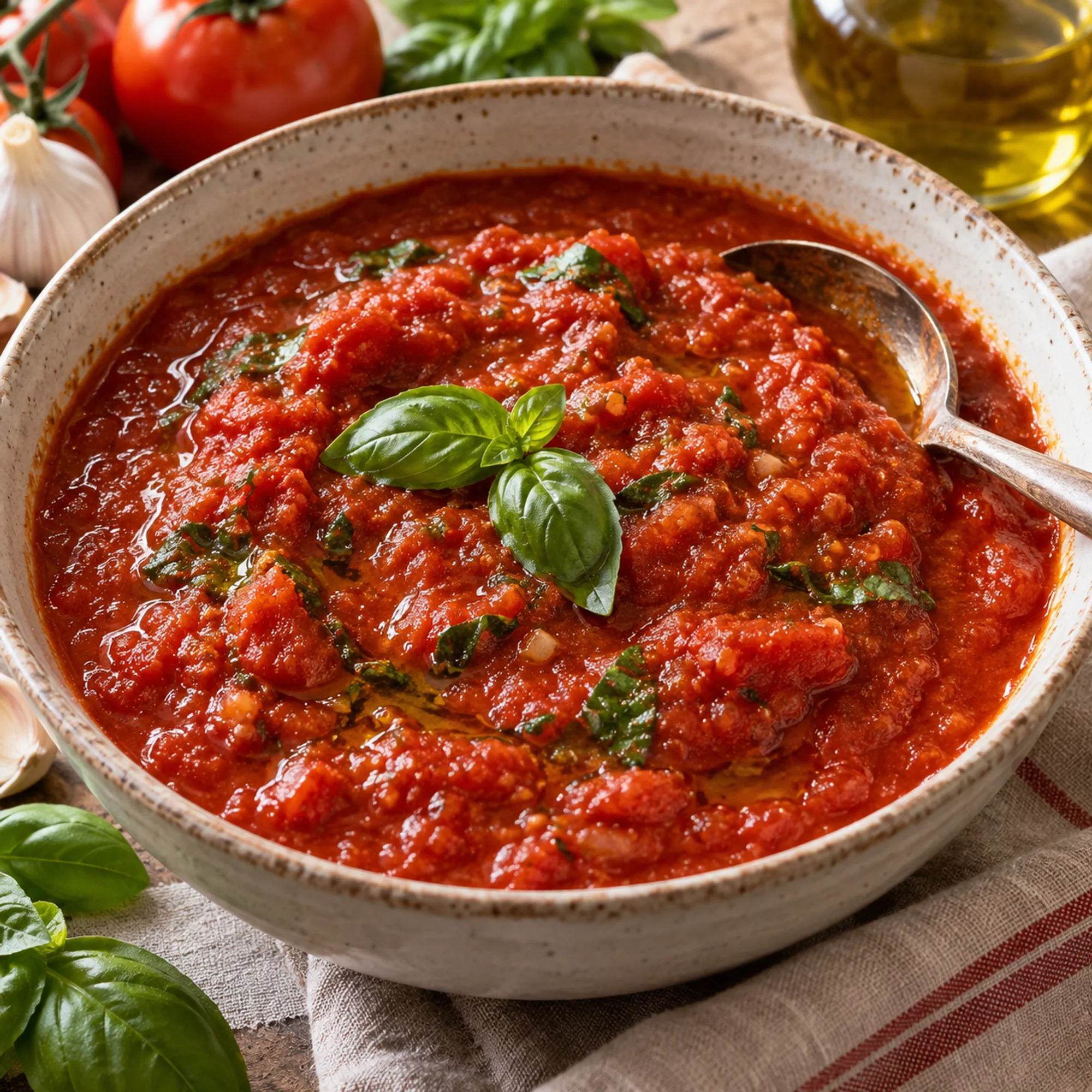
Cook sliced garlic gently in olive oil, add crushed whole tomatoes and salt, simmer until thick, then fold in fresh basil off the heat. The result is a simple, vivid pomodoro sauce for pasta, pizza, or a bowl of vegetables.
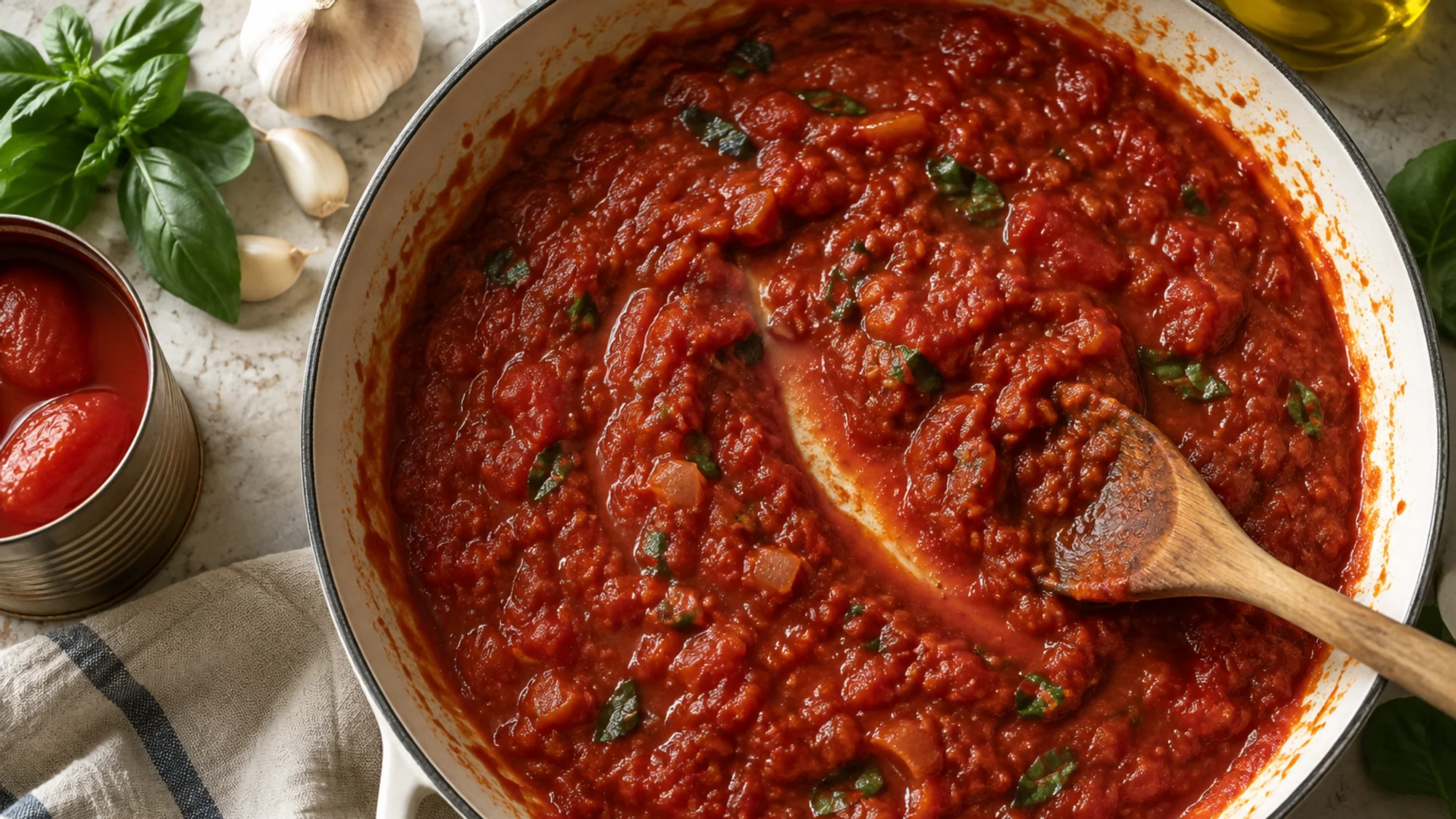
Crush the canned whole tomatoes by hand in a bowl or with a spoon in the pan; leaving a few small pieces gives the sauce a lively texture. I prefer a sauce that still tastes of tomato rather than one sweetened into submission. If your can tastes sharp at first, let the sauce simmer before deciding whether it needs adjustment.
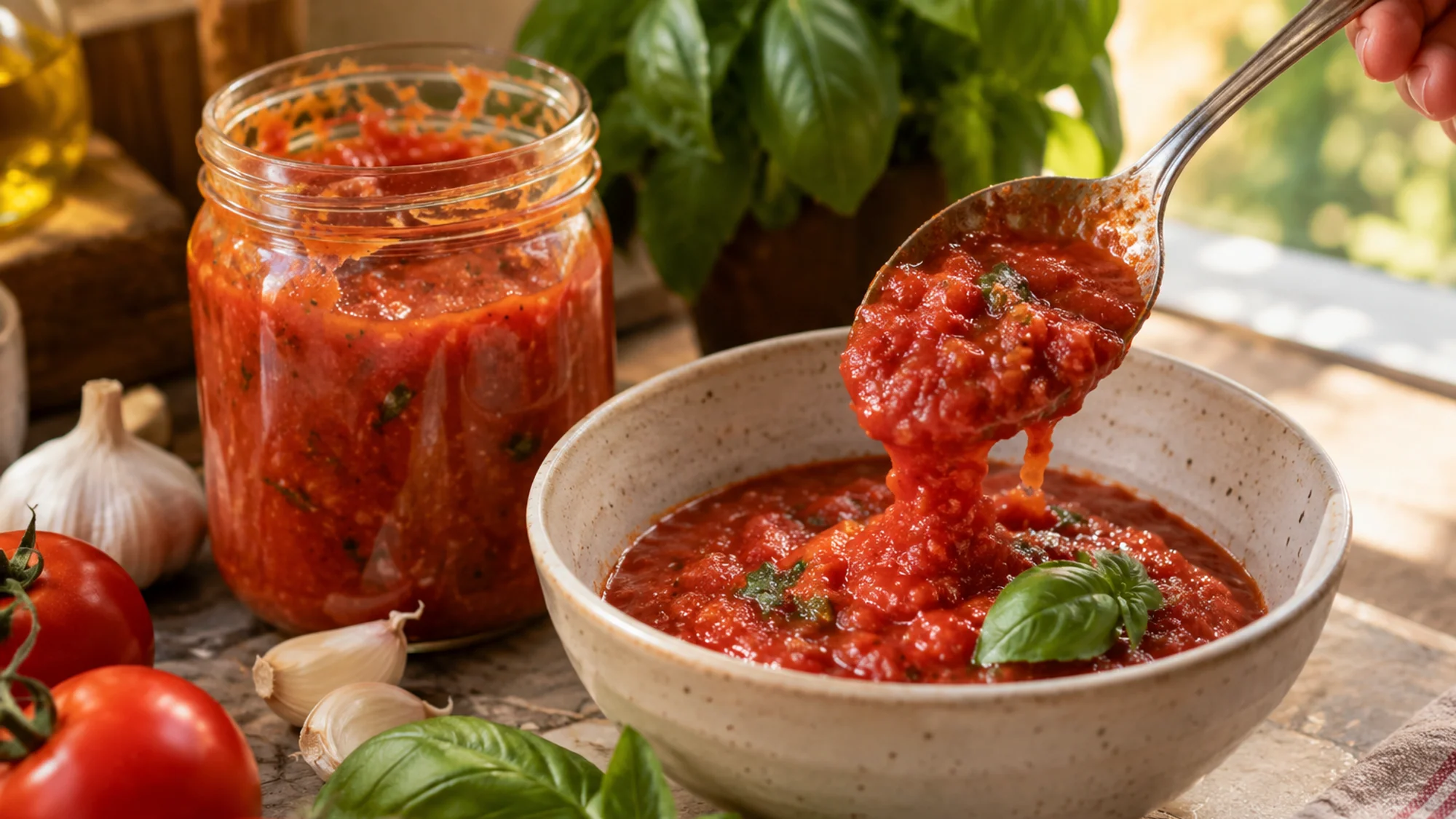
Keep the heat at an easy bubble and stir more often near the end, when the sauce is thicker and can catch on the pan bottom. Add basil after turning off the heat so its aroma stays fresh. The recipe card gives measurements and timing, while the spoon trail tells you when the sauce is ready.
Serving suggestions
The obvious partner is pasta: loosen a portion of sauce with a spoonful of pasta cooking water and toss it with hot noodles until every strand is coated. For a seafood meal, use a modest amount alongside squid ink pasta if you want a tomato note; the darker pasta can carry strong flavors without needing a heavy blanket of sauce.
Pomodoro also works as a spoonable topping for roasted eggplant, zucchini, or white beans. Add it just before serving so vegetables keep their texture. On pizza, spread a thin layer; too much moisture can leave the center soft.
If you are making it ahead, cool the sauce promptly, cover, and refrigerate. Reheat only what you need in a small pan, adding a splash of water if it has thickened too far. Use a clean spoon for the remaining batch.
Use this sauce as a coating rather than a flood: toss with pasta, spoon onto vegetables, or spread thinly on pizza.
Variations
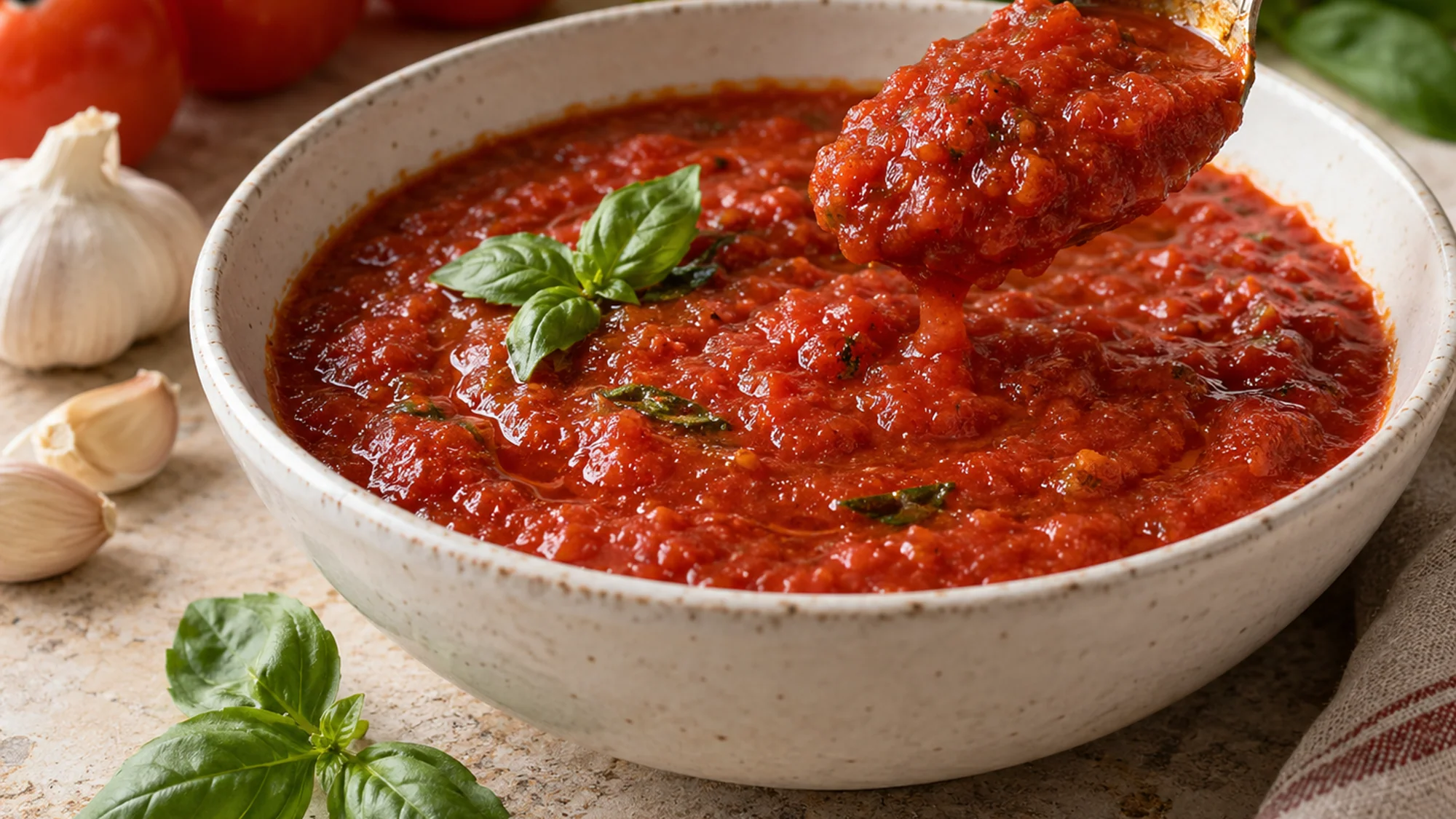
For a smoother sauce, briefly blend the cooled tomatoes before simmering or use an immersion blender at the end. A silky version clings well to small pasta shapes. If you blend a hot sauce, follow your blender’s heat guidance and avoid a sealed lid that traps steam.
A pinch of red pepper flakes in the warm oil adds gentle heat. You can replace part of the basil with oregano for a different herbal direction, but add dried oregano during the simmer and fresh basil at the finish. Keep the herbs restrained so tomato remains the lead flavor.
Tomato acidity varies by brand. If the finished sauce still tastes sharp after it thickens, a small pinch of sugar can round it out, though it should not taste sweet. More olive oil gives a richer mouthfeel; add it thoughtfully because it also changes the sauce’s energy per serving.
Choose chunky or smooth texture to suit the meal, then adjust heat or richness sparingly so the tomato remains the main flavor.
Health benefits
Tomatoes contribute nutrients such as potassium, and the olive oil brings unsaturated fat. Its bright flavor can make vegetables and beans appealing without cream. A little can help a simple plate feel complete.
The recipe’s nutrition estimate is for a quarter-cup serving of sauce, not for a full pasta dinner. The pasta, cheese, and portion size will change the meal’s totals. Canned tomatoes and salt vary in sodium, so choose a no-salt-added can or reduce the added salt if that matters to you. Taste again after simmering before the final adjustment.
The sensible benefit is the sauce’s flexible place in meals, whether you are building a vegetable side or a satisfying bowl of pasta.
Tomatoes and olive oil make a versatile base; look at the whole plate and the actual serving size when judging nutrition.
Make room for the simple version
It is tempting to keep correcting a tomato sauce while it cooks. Give it time first. When a spoon leaves a brief trail across the bottom of the pan and the sauce tastes rounded rather than watery, it is ready for the basil. Let that last handful settle in, then taste for salt.
I would keep this recipe close for an unplanned dinner: it asks for pantry staples and leaves room for whatever else is available. Serve it generously enough to taste, but let the food beneath it keep its character.
Pomodoro Sauce Recipe
Pomodoro Sauce Recipe

Ingredients
- 1 28-oz can whole peeled tomatoes with their juices; crush by hand
- 3 tablespoons extra-virgin olive oil
- 4 garlic cloves thinly sliced
- 1/2 teaspoon fine salt adjust after simmering
- 1/4 cup fresh basil leaves loosely packed; torn at the end
Equipment
- Wide saucepan
- Wooden spoon
- Bowl for crushing tomatoes
Instructions
- Pour tomatoes and their juice into a bowl. Crush by hand or with a spoon, leaving a few small pieces for texture.
- Warm olive oil in a wide saucepan over medium-low heat. Add sliced garlic and cook about 1–2 minutes until fragrant but not brown.
- Carefully add crushed tomatoes and salt. Bring to an easy bubble, then simmer gently for 25–30 minutes, stirring periodically, until thick enough to leave a brief trail behind a spoon.
- Turn off heat and stir in torn basil. Taste and adjust salt. Use immediately or cool promptly for storage.
Nutrition
Notes
Tried this recipe?
Let us know how it turned out!Emily Parker is DISHORA’s recipe-writing persona, bringing a warm, practical voice to everyday cooking. Her focus is simple ingredients, comforting flavors and clear steps that make a dish feel approachable. From cozy dinners to something sweet, Emily’s recipes invite readers to try something delicious and make it their own.