
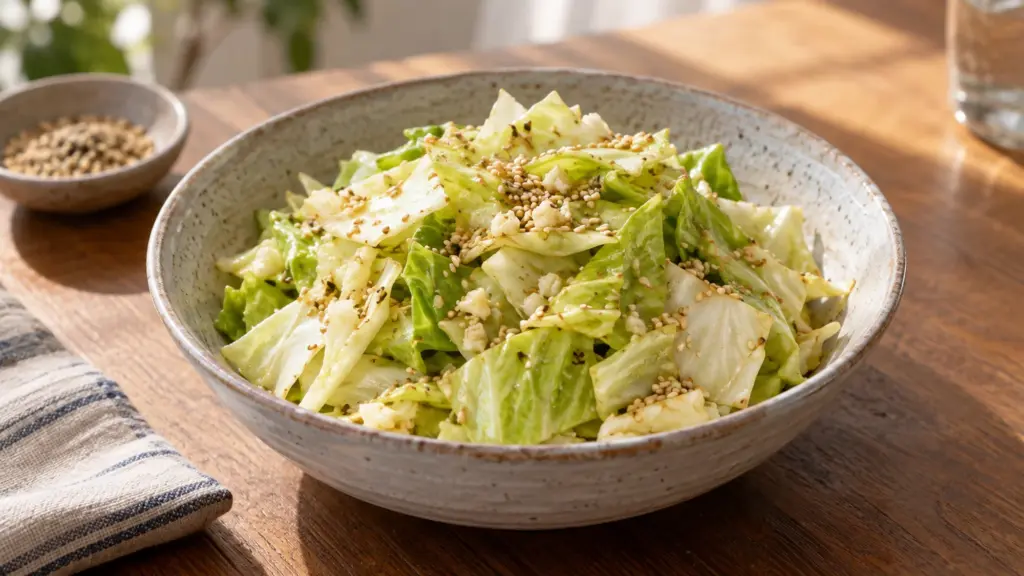
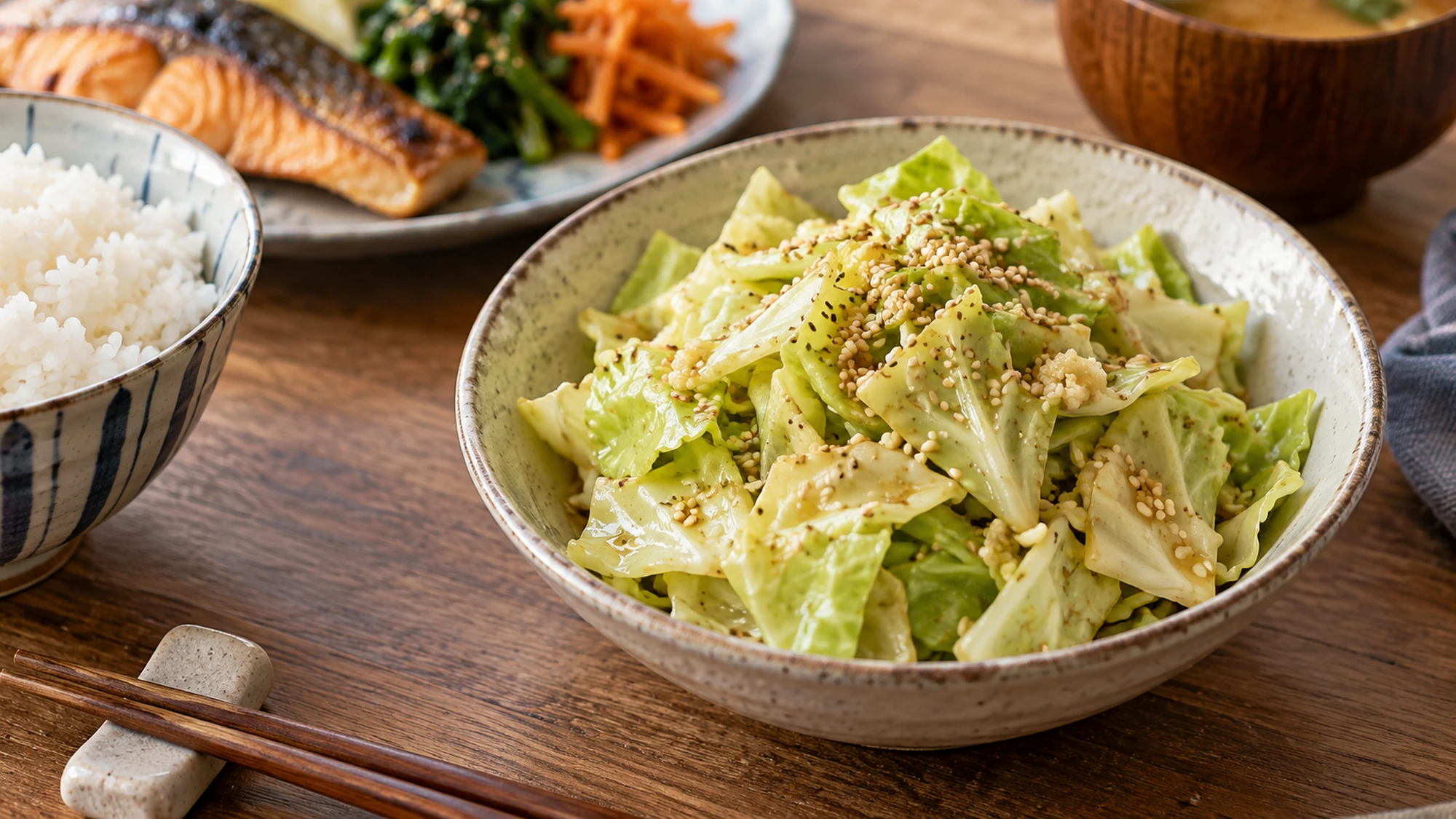
Yamitsuki cabbage is a Japanese-style side of crisp green cabbage tossed with garlic, toasted sesame oil and savory seasoning. The name is often translated as “addictive cabbage”; the appeal is simpler: cool crunchy leaves, fragrant garlic and nutty sesame. This version uses vegetarian umami seasoning, so it fits beside tofu, rice or noodles.
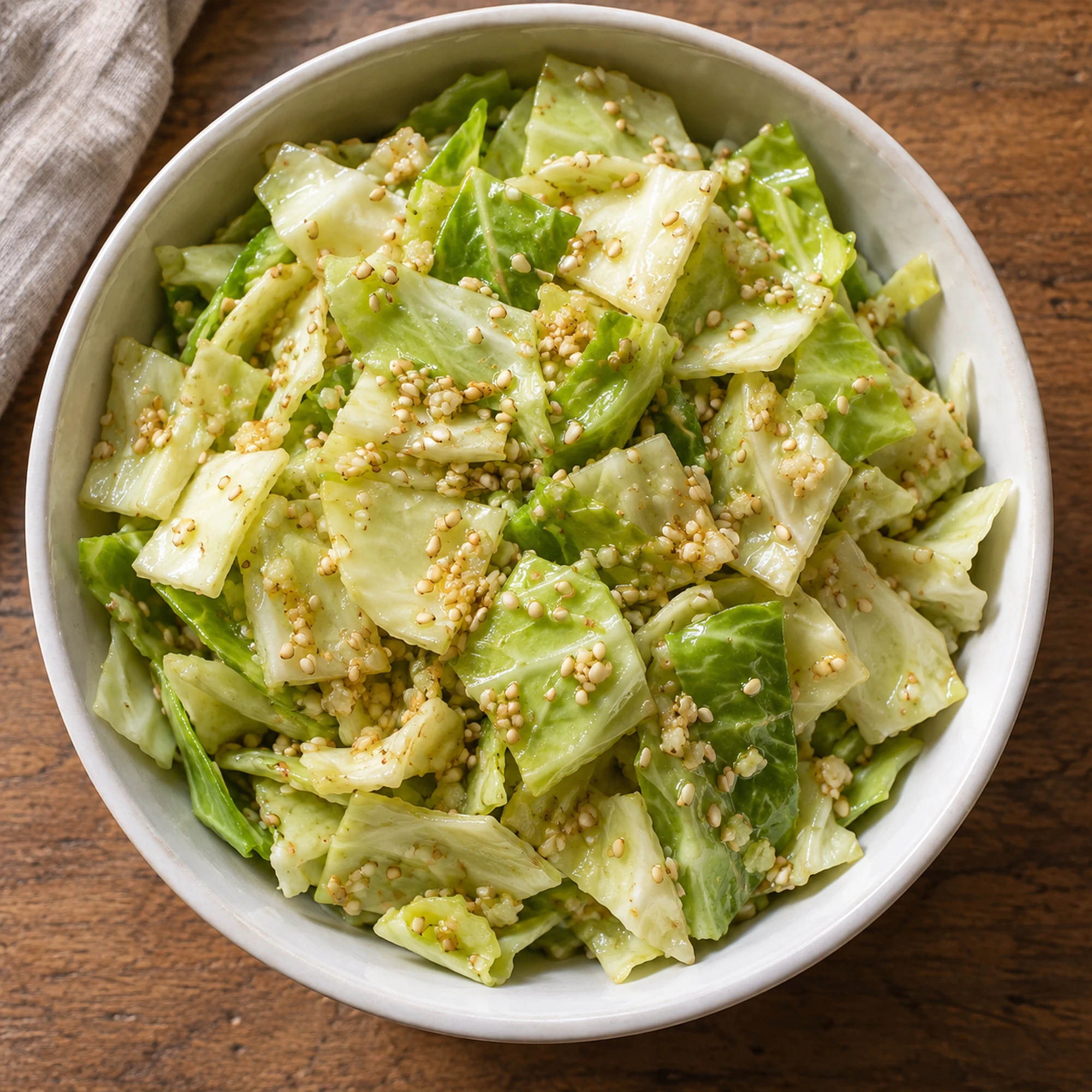
Dry the cabbage thoroughly, season it evenly, and serve soon after tossing so the leaves stay crisp.
The recipe begins with 320 grams of cabbage, about four firmly packed cups. Tear or cut the leaves into fork-size pieces. Dry them thoroughly; water left on the leaves dilutes the seasoning. A salad spinner is quick, but a clean towel works too.
The seasoning has three jobs: salt wakes up the cabbage, umami powder adds depth, and sesame oil carries garlic across the leaves. Crushing some sesame seeds releases their aroma, while a few whole seeds keep the finish textured. Tossing the dry seasoning first helps avoid salty or garlicky pockets.
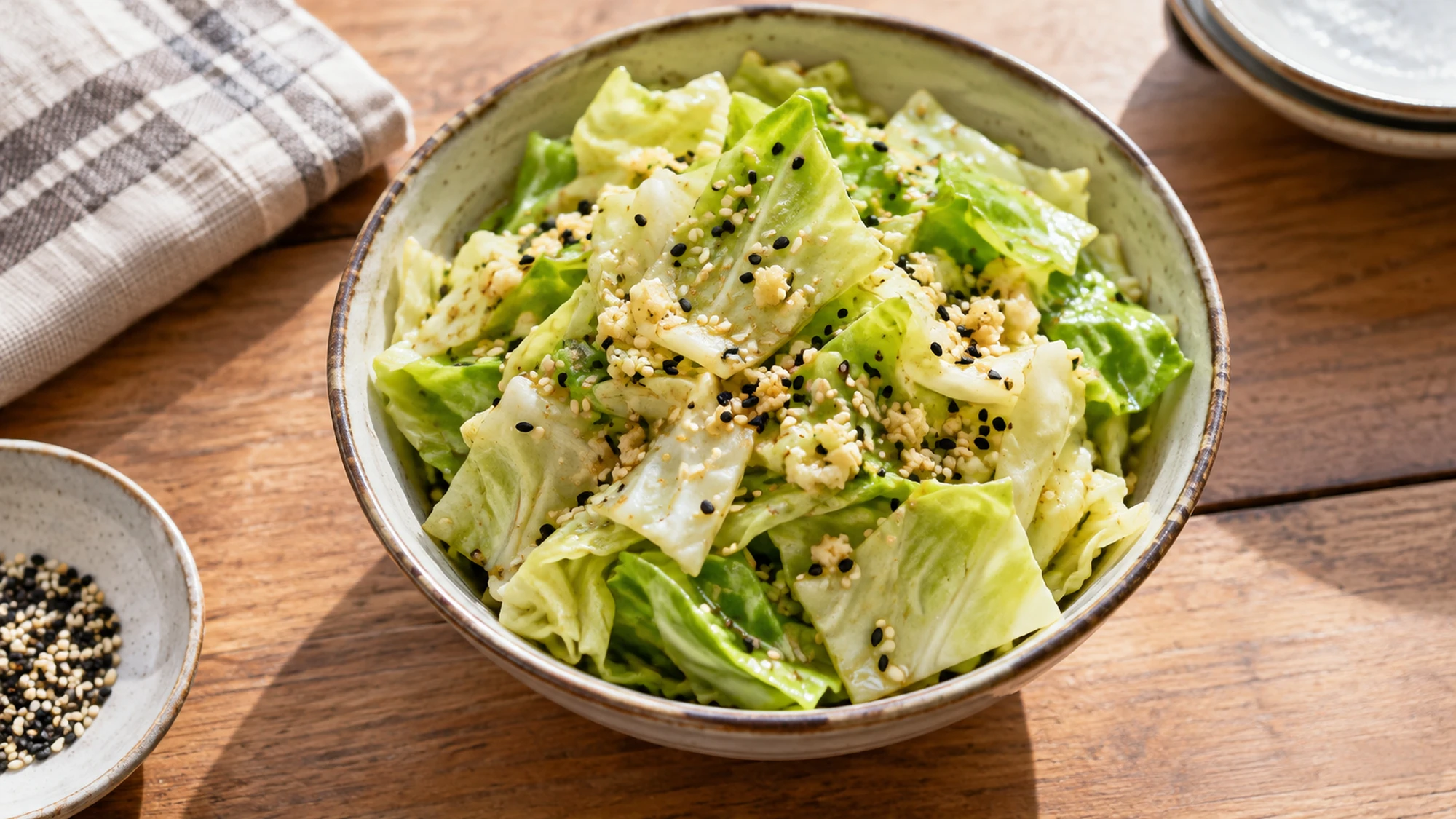
Serving suggestions for yamitsuki cabbage
Serve this as a small side with rice, grilled tofu, simple noodles or a Japanese-inspired dinner. The cool, crunchy cabbage adds freshness beside warm or rich dishes without another pan. Four portions are modest side servings; for a larger table, scale the cabbage and seasonings together.
The classic dish is associated with Japanese barbecue restaurants and izakaya menus. Just One Cookbook describes home variations built around cabbage, salt, garlic, sesame oil, sesame seeds and an umami seasoning. For another cabbage-centered dinner, Dishora’s cabbage and white bean skillet turns the vegetable into a warm, hearty main.
Set out small portions alongside rice or noodles, and keep extra cabbage chilled until you are ready to toss it.
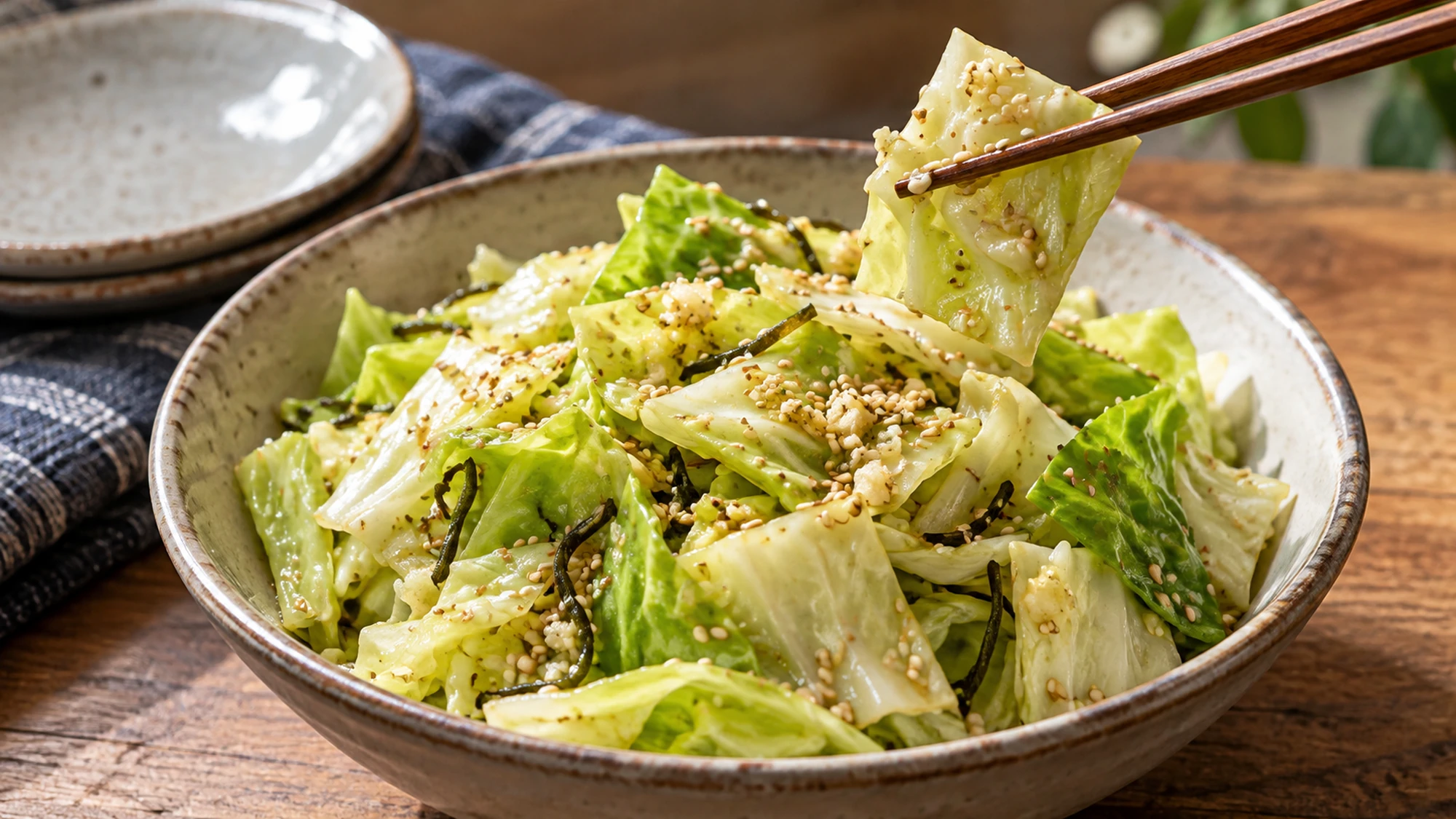
Variations and texture tips
For the vegetarian base, choose kombu powder or a vegetable bouillon powder and check its ingredient list. Some products are much saltier than others, so taste a cabbage leaf before adding more salt. Dashi powder may contain fish, and chicken bouillon is not vegetarian. A small amount is enough to add savory depth without masking the vegetable or sesame.
The Sidesmith’s yamitsuki cabbage video shows a no-cook version seasoned with salt, sesame oil and garlic, then left in the refrigerator for at least 10 minutes. This recipe uses measured cabbage and an added vegetarian umami seasoning; it is served promptly to preserve more crunch. The Just One Cookbook recipe also explains the familiar sesame, garlic, salt and umami seasoning combination and offers several seasoning options.
You can make the pieces smaller for a snack-like bowl, or tear larger leaves for a rustic platter. If raw garlic tastes too sharp, start with one small clove. A pinch of chili flakes is an optional variation, but the basic recipe stays mild so the toasted sesame and cabbage come through. Avoid adding wet sauces before serving; liquid collects at the bottom and softens the leaves.
Taste a seasoned piece before adding more salt, especially when the vegetable bouillon is already salty.
Health benefits and practical balance
Cabbage brings crunch, fiber and vitamin C, while sesame oil and seeds add a richer note. An estimated serving contains about 108 calories, 2 grams of protein, 6 grams of carbohydrates, 9 grams of fat and 3 grams of fiber. These values vary by cabbage and seasoning brand; sesame oil accounts for most of the fat and calories.
This recipe contains sesame, a major food allergen. Vegetable bouillon powders may also contain wheat, soy, celery or other ingredients, so read labels when serving guests. For a gluten-free table, choose a seasoning labeled gluten-free. The vegetarian version uses kombu or vegetable seasoning, not fish-based dashi or chicken bouillon.
Because the cabbage is raw, keep it refrigerated after washing and drying, and mix only what you expect to eat. Refrigerate leftovers promptly in a covered container; they remain safe briefly but soften as salt draws out moisture. The crispest bowl is dressed just before serving.
A small, freshly tossed bowl keeps the cabbage crunchy and makes the garlic-sesame seasoning taste vivid.
Toss a fresh bowl just before dinner
Once dry, the cabbage comes together in minutes. Measure it, shake on dry seasonings, stir garlic into sesame oil and toss with crushed seeds. Serve while the leaves are cool and snappy. Choose a vegetarian seasoning, then let cabbage, garlic and sesame shine.
Yamitsuki Cabbage Recipe

Ingredients
- 320 grams green cabbage about 4 firmly packed cups or half a small head; washed, dried and torn or cut into 1 to 1 1/2-inch pieces
- 1/2 teaspoon Diamond Crystal kosher salt reduce if using a finer or denser salt
- 1/2 teaspoon vegetarian umami seasoning kombu powder or low-sodium vegetable bouillon powder; check the label for allergens and sodium
- 2 tablespoons toasted white sesame seeds lightly crushed, plus a pinch for serving if desired
- 2 tablespoons toasted sesame oil 30 ml
- 2 cloves garlic about 1 large clove; crushed or finely grated
Equipment
- Large mixing bowl with lid or clean food-safe bag
- Small bowl
- Garlic press or knife
- Salad spinner or clean kitchen towel
Instructions
- Remove the core and cut or tear the leaves into bite-size squares, about 1 to 1 1/2 inches. Rinse, then dry very thoroughly in a salad spinner or with a clean towel. Weigh or firmly pack 320 grams (about 4 cups); extra water will dilute the seasoning.
- Put the cabbage in a large bowl with a lid or a clean food-safe bag. Sprinkle over the salt and vegetarian umami seasoning. Cover and shake gently until the dry seasoning is spread across the leaves.
- Stir the crushed garlic into the toasted sesame oil in a small bowl so the garlic disperses instead of clumping. Pour the oil mixture over the cabbage. Add the lightly crushed sesame seeds.
- Cover the bowl and shake or toss until the cabbage is evenly coated. Taste one piece before adding extra salt because bouillon brands vary. Finish with a pinch of sesame seeds and serve right away for the crispest texture.
Nutrition
Video
Notes
Tried this recipe?
Let us know how it turned out!Emily Parker is DISHORA’s recipe-writing persona, bringing a warm, practical voice to everyday cooking. Her focus is simple ingredients, comforting flavors and clear steps that make a dish feel approachable. From cozy dinners to something sweet, Emily’s recipes invite readers to try something delicious and make it their own.