
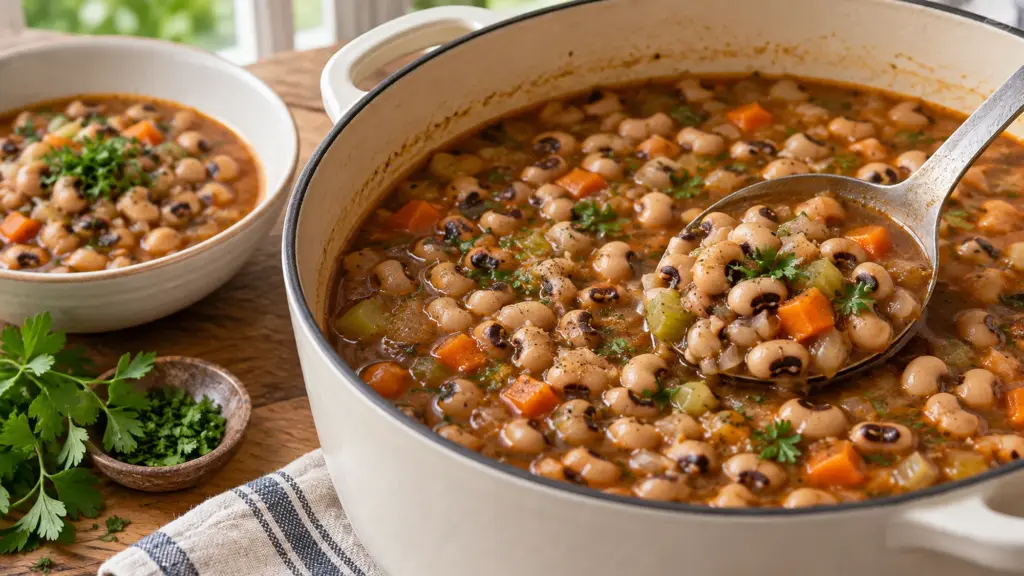
A pot of beans can be bubbling away while the centers still feel chalky. This black eyed peas recipe uses a gentle simmer and a texture check to bring the peas to a creamy, tender finish. Onion, celery, carrot and smoked paprika give the broth a savory backbone without needing bacon or a ham hock.
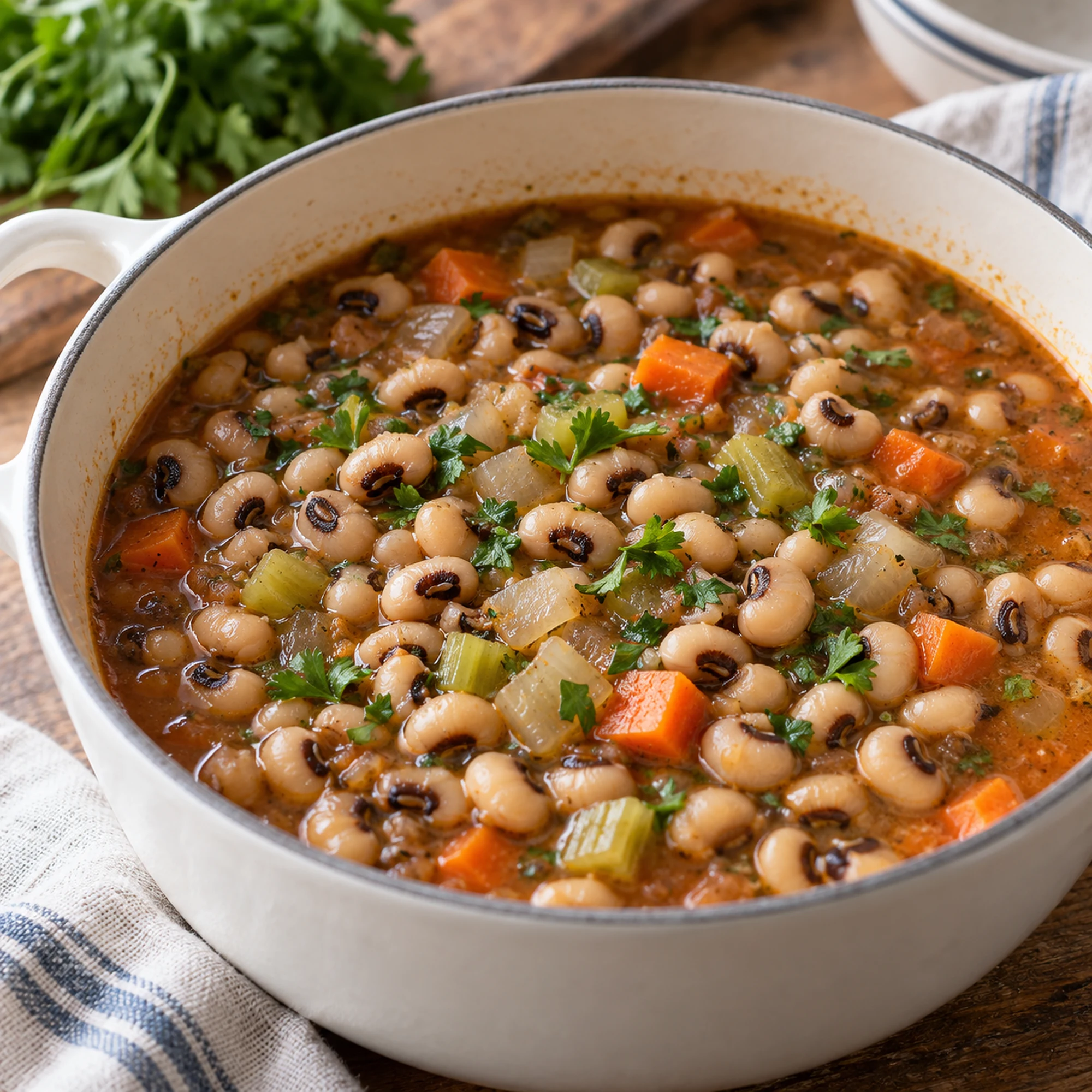
Start with sorted, rinsed dried black-eyed peas, keep enough broth around them as they simmer and add the vinegar after they are tender. Taste several peas before finishing the pot; the oldest beans usually need more patience than the timer suggests.
Black-eyed peas have a distinctive dark marking and a mild, earthy flavor. I prefer a modest amount of broth here, enough to spoon around the beans without turning the dish into a thin soup. The card makes six servings, with no soaking stage required and extra cooking time allowed when the peas need it.
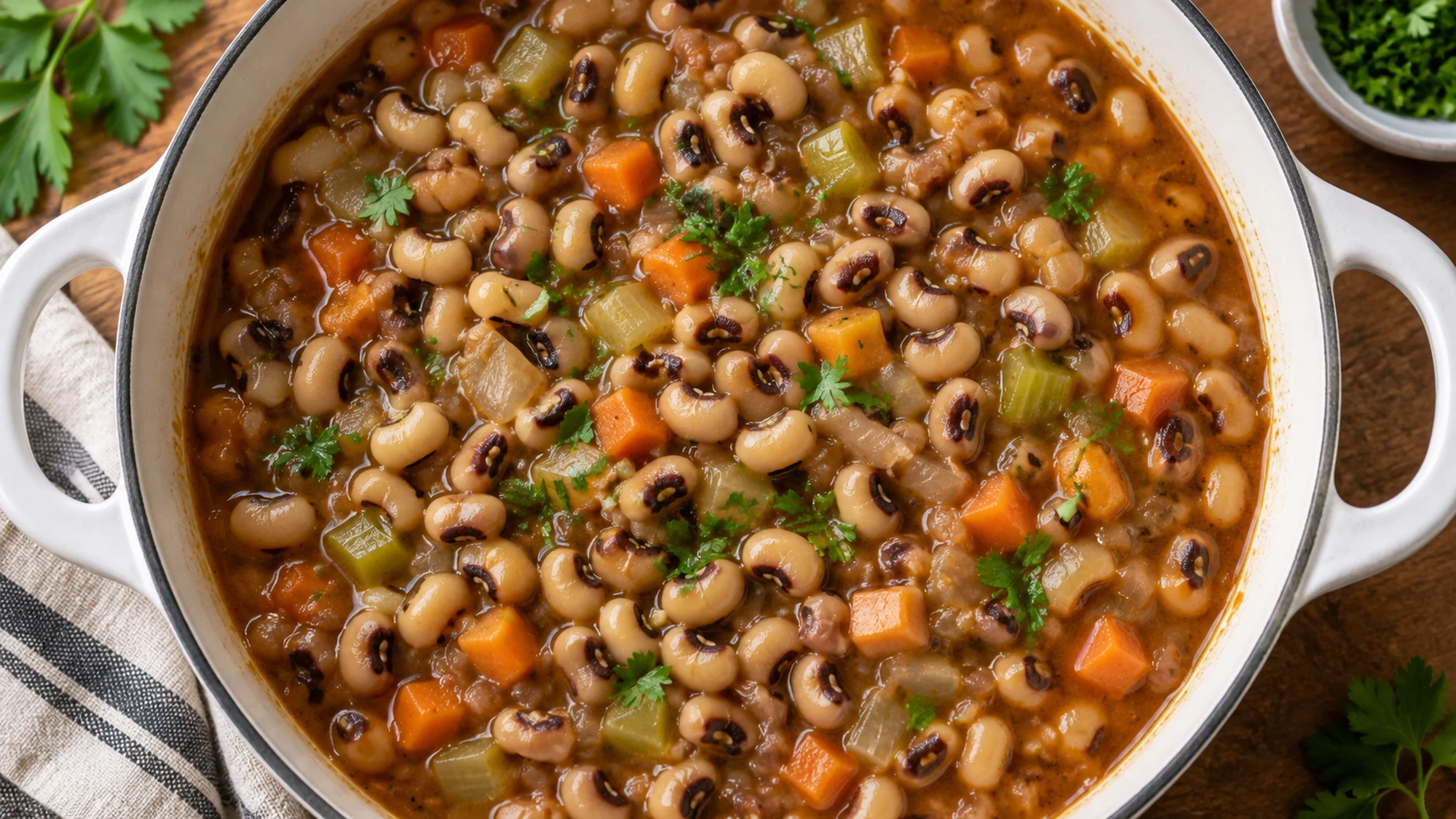
Serving suggestions for this black eyed peas recipe
Ladle the peas and a little broth into shallow bowls while they are warm. Share the vegetables among the portions. Vinegar should brighten the broth without making it sharply sour.
- Serve over rice. Plain cooked rice catches the smoky broth and makes the bowl more substantial. Keep it separate until serving so it does not absorb the pot’s liquid during storage.
- Add a green vegetable. Cooked greens, broccoli or green beans offer another flavor and texture beside the soft peas. Season them to suit the meal rather than adding them all to this pot.
- Use bread for the last spoonful. A piece of crusty baguette works well with the remaining broth. Add it at the table so it stays crisp until you want to dip it.
- Save a sensible portion. Refrigerate promptly in shallow covered containers and use within three to four days. Reheat to 165°F (74°C), adding a small splash of water if the cooled peas have thickened.
Share out the broth as well as the peas, and choose one simple accompaniment. The creamy beans and smoky vegetables already give the bowl plenty of character.
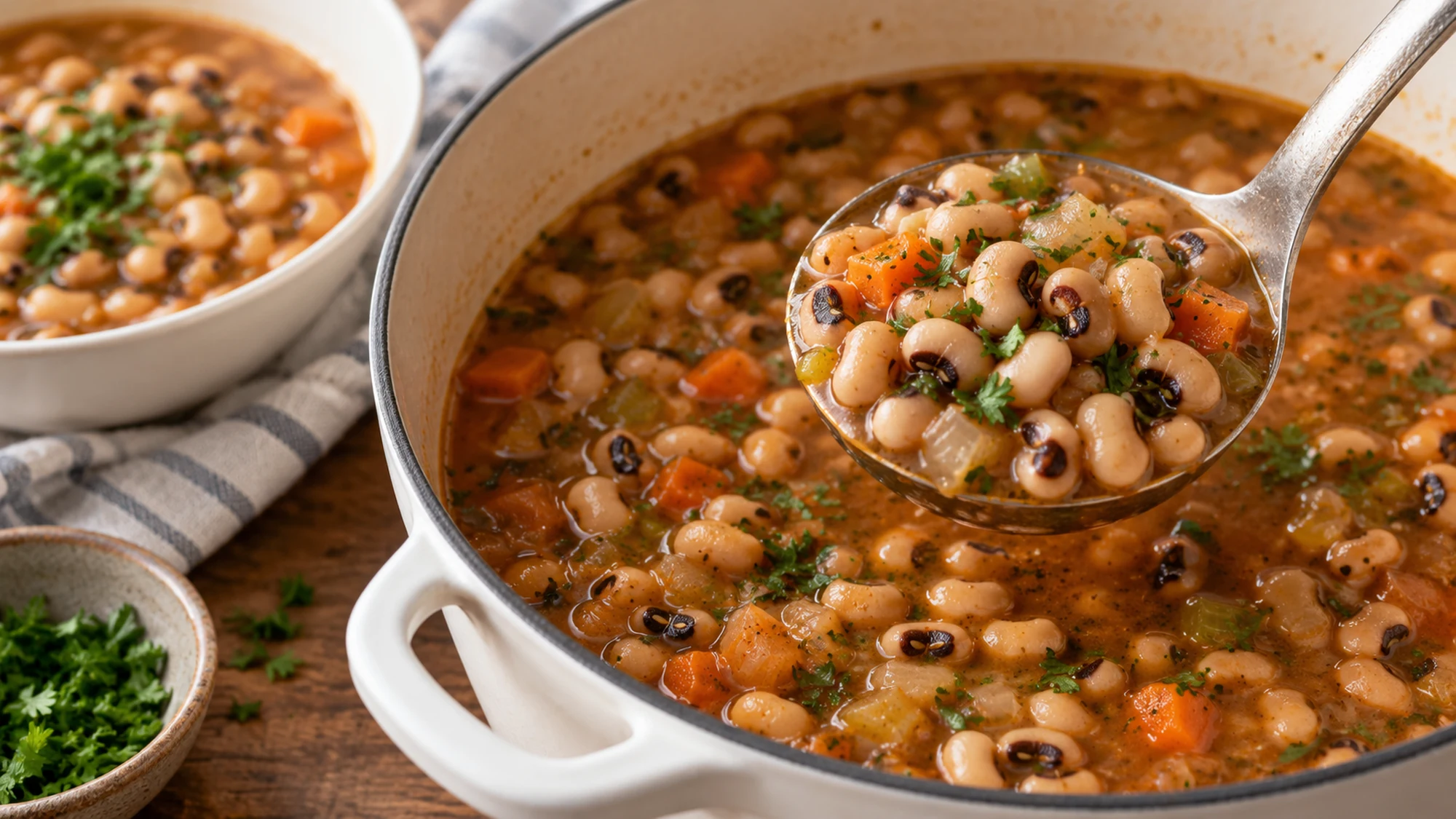
Variations that keep the peas tender
The basic vegetable broth is flexible, but the beans still need a full cook. Acidic ingredients are best saved for the finishing stage in this recipe. I would adjust the seasoning after the peas soften rather than keep adding strong flavors while waiting for their centers to catch up.
- Choose your smoky note. Smoked paprika brings a different flavor from sweet paprika. If you use the latter, expect a milder pepper note rather than the same smoky broth.
- Change the finishing acid. A small squeeze of lemon can replace the vinegar to taste. Add it after cooking, beginning sparingly so the beans remain the main flavor.
- Use water when needed. Water can replace the vegetable broth, but the seasoning will need a fresh taste check. More salt is not always the whole answer; the vegetables and paprika still need time to flavor the pot.
- Keep canned peas separate from this timing. Canned black-eyed peas are already cooked. They need a shorter, separately planned method rather than ninety minutes of simmering.
Judge doneness with several beans from different parts of the pot. A tender outside is not enough if the center still feels firm or gritty.
Health benefits of a bean-centered side
Black-eyed peas contribute plant protein and fiber, while the vegetables add variety. Olive oil contributes fat, and broth and seasoning affect sodium. These are useful parts of the meal, but this side does not need a claim about curing illness or producing a particular weight change.
- Count the full plate. Rice, bread, greens and any added meat change the meal’s nutrition. The card describes the peas and their cooking ingredients, with those sides counted separately.
- Choose broth with care. A vegetable broth can contain appreciable sodium. Read its label, choose a lower-sodium product when useful and adjust the added salt to the actual broth.
- Allow for portion differences. Six servings divide the pot evenly. A large bowl used as a main meal will contain more peas than a smaller spoonful served as a side.
- Check individual ingredients. The base has no meat or dairy ingredients, but packaged broth and spices should be checked for relevant allergens when that matters.
Use the peas as a satisfying bean component of the meal. The portion and accompaniments complete the picture.
Motivation conclusion: let tenderness make the decision
Sort the peas before the pan heats, cut the vegetables small and keep a kettle or measuring jug nearby for extra water. A quiet simmer gives the beans time to soften without a fierce boil. Finish only when the centers are creamy, then add the bright touch of vinegar and bring the pot to the table.
Black Eyed Peas Recipe

Ingredients
- 1 lb dried black-eyed peas 454 g, sorted and rinsed
- 2 tbsp olive oil
- 1 medium yellow onion 110 g, diced
- 2 celery stalks 80 g, diced
- 1 medium carrot 72 g, diced
- 3 garlic cloves 12 g, minced
- 1 tsp smoked paprika
- 1 bay leaf
- 6 cups lower-sodium vegetable broth 1.44 liters
- 0.5 tsp fine salt start with less for salted broth
- 0.25 tsp ground black pepper
- 1 tbsp apple cider vinegar
- 2 tbsp chopped fresh parsley
- 1 cup water as needed during cooking; you may need more
Equipment
- Large heavy saucepan or Dutch oven
- Colander
- Knife, cutting board and spoon
Instructions
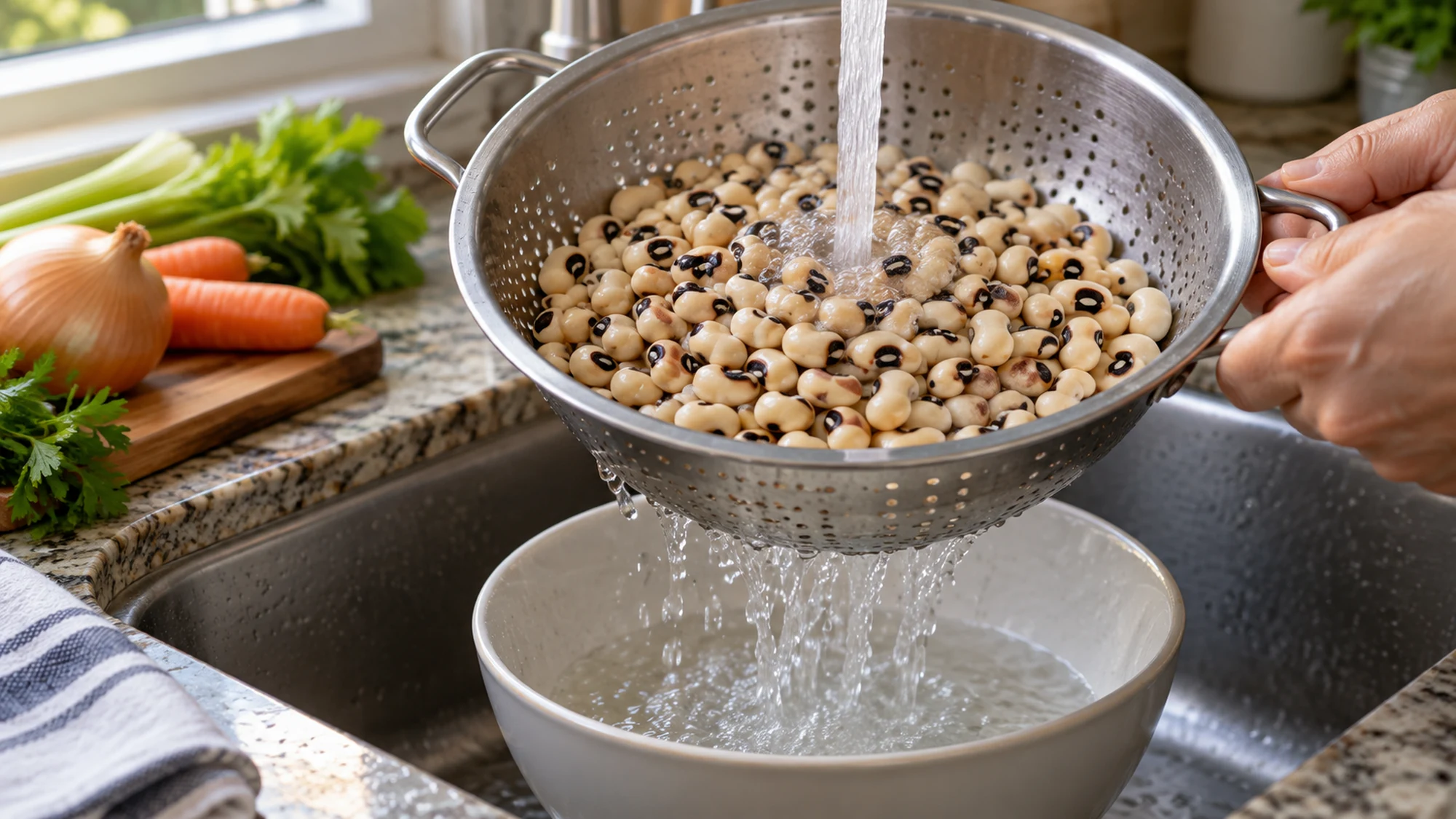
- Spread dry peas on a tray and discard stones, debris and damaged peas. Rinse in the colander. No soak is required for this version.
- Heat oil in the pot over medium heat. Add onion, celery and carrot and cook for 7–8 minutes until softened. Add garlic and smoked paprika; stir for 30 seconds.
- Add peas, bay leaf and broth. Bring to a boil, then reduce to a gentle simmer, with the lid slightly ajar. Cook for 60–90 minutes, stirring occasionally, until several peas sampled from the pot have creamy centers. Older peas can need longer. Add water as needed to keep peas covered, and reduce the heat if the bottom begins sticking.
- When tender, remove the bay leaf. If there is too much liquid, simmer uncovered briefly; leave enough broth to spoon around the peas. Stir in salt, pepper, vinegar and parsley, beginning with less salt for salty broth. Divide the pot evenly into six servings.
Nutrition
Video
Notes
Tried this recipe?
Let us know how it turned out!Emily Parker is DISHORA’s recipe-writing persona, bringing a warm, practical voice to everyday cooking. Her focus is simple ingredients, comforting flavors and clear steps that make a dish feel approachable. From cozy dinners to something sweet, Emily’s recipes invite readers to try something delicious and make it their own.