
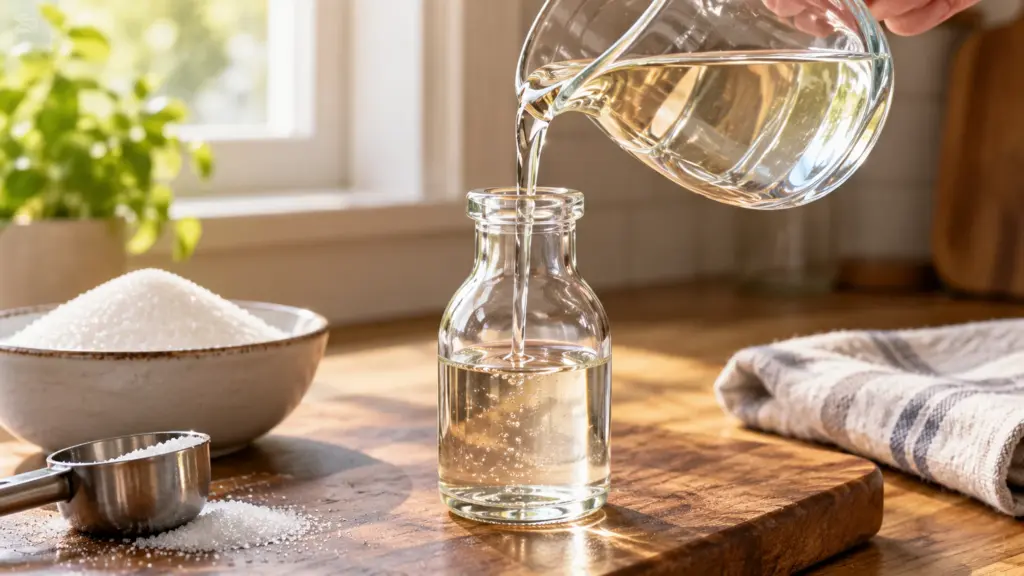
Sugar crystals have a habit of settling at the bottom of an iced drink just when you want an even sip. This simple syrup recipe dissolves white sugar in water before it reaches the glass. The result is a clear, pourable sweetener you can measure into iced tea, lemonade or another cold drink.
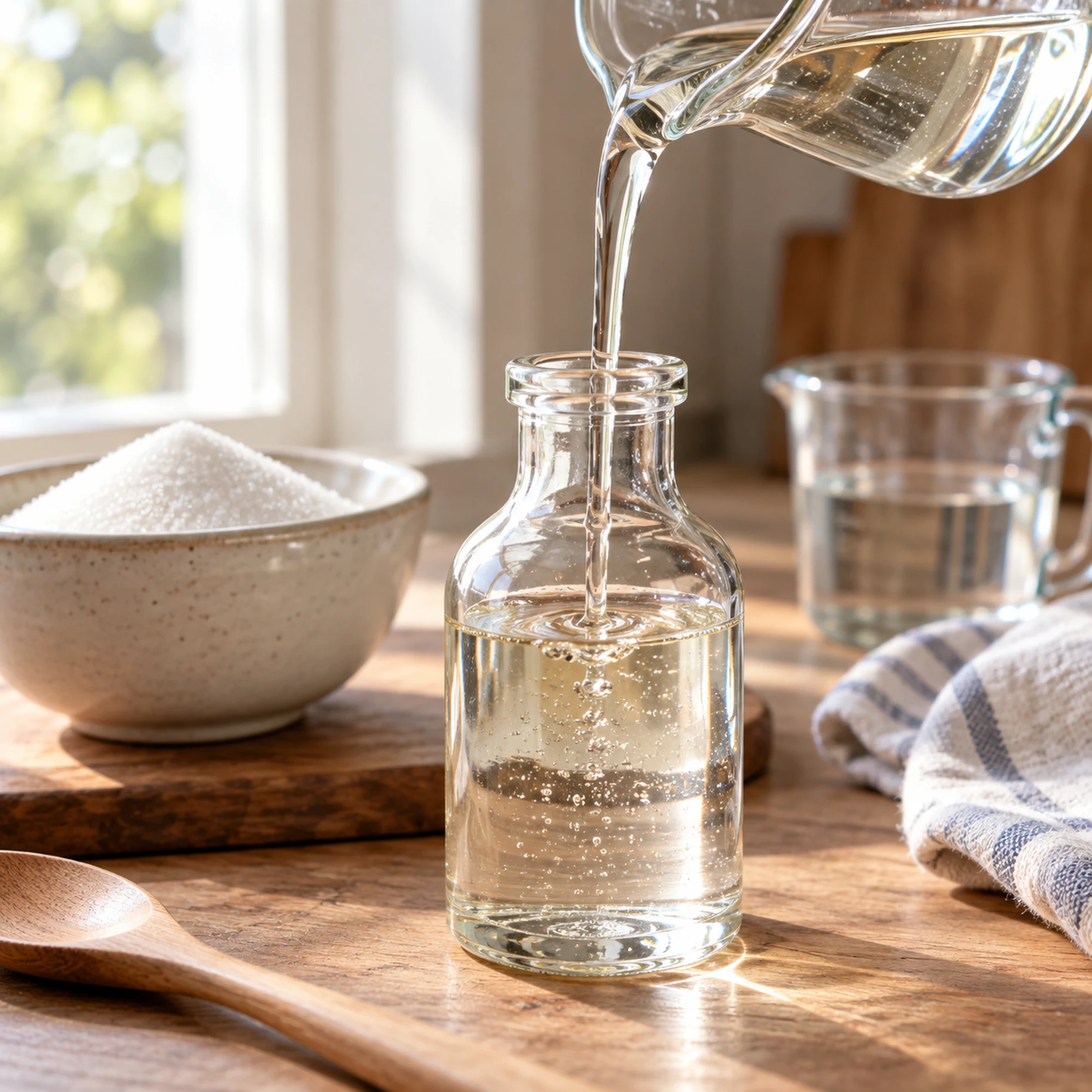
Use equal volumes of sugar and water, warm gently until the liquid is clear and stop before prolonged boiling evaporates the water. Cool the syrup and refrigerate it in a clean, covered container.
Equal volume is the convention here, not equal weight: a cup of sugar weighs less than a cup of water. I prefer stating both measurements because a small wording difference changes the concentration. This batch makes roughly one and a half cups, enough for about twenty-four tablespoon portions, with the exact yield depending on evaporation.
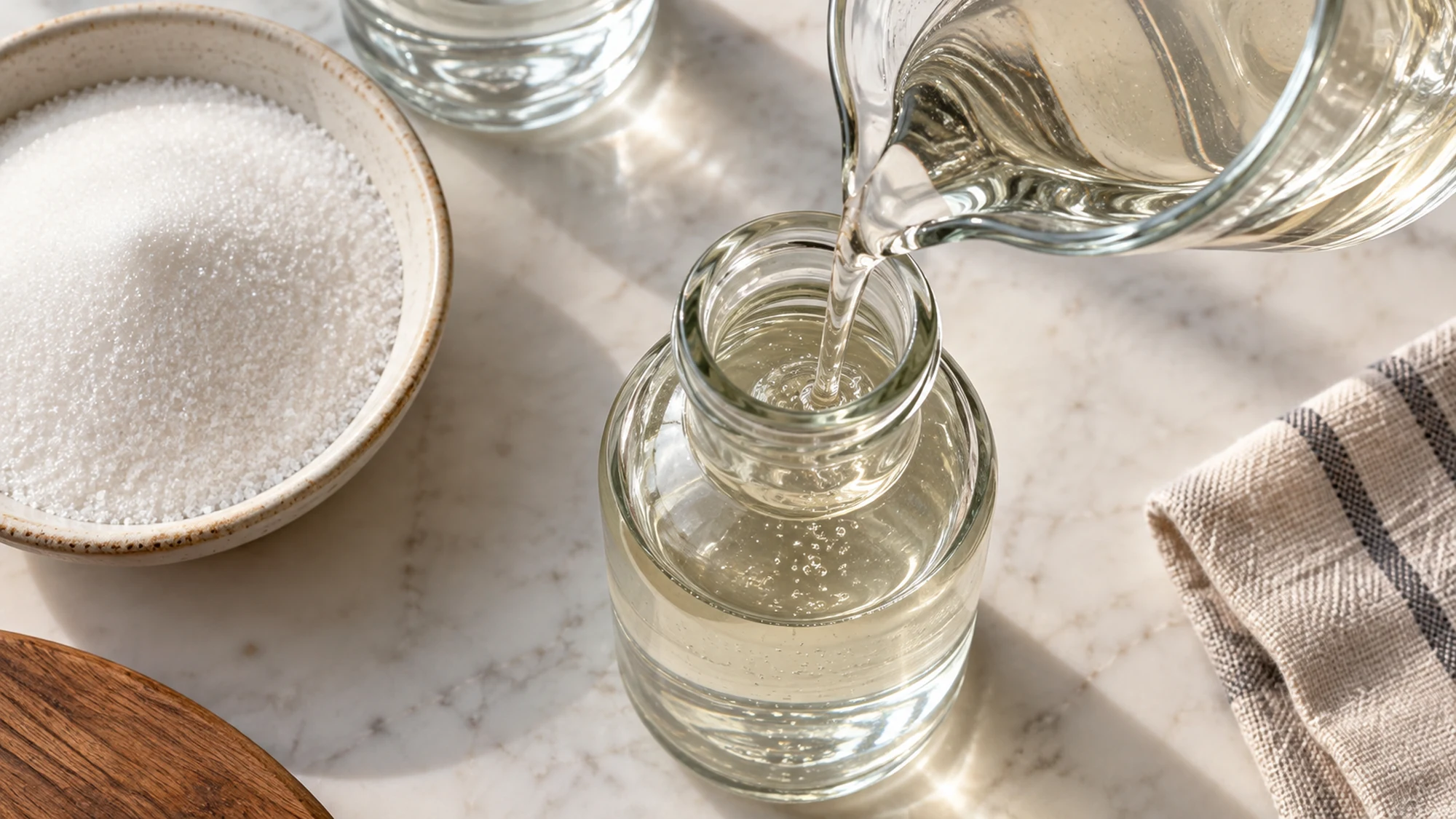
Serving suggestions for a simple syrup recipe
Add syrup to the drink a little at a time, stirring and tasting after each addition. It is easier to increase sweetness than to undo it. A measuring spoon helps you repeat the same balance in another glass.
- Sweeten iced tea evenly. Add a small measured amount after the tea has cooled, then stir before adding more ice. The dissolved sugar mixes more readily than dry granules in a cold glass.
- Balance lemonade. Start with the lemon juice and water ratio you like, then add syrup gradually. Remember that the syrup contributes water as well as sugar, especially if you use several tablespoons.
- Moisten a cake lightly. Brush a thin layer onto a cooled cake only when its recipe calls for it. Pouring syrup freely onto an already moist cake can make the crumb soggy.
- Keep drinks distinct. Café de olla builds sweetness into its cinnamon-and-piloncillo method. This plain syrup is more useful when you want to adjust a cold drink separately.
Use a small measure, stir well and taste the actual drink. The bottle gives you control over sweetness rather than a reason to add the same amount to every glass.
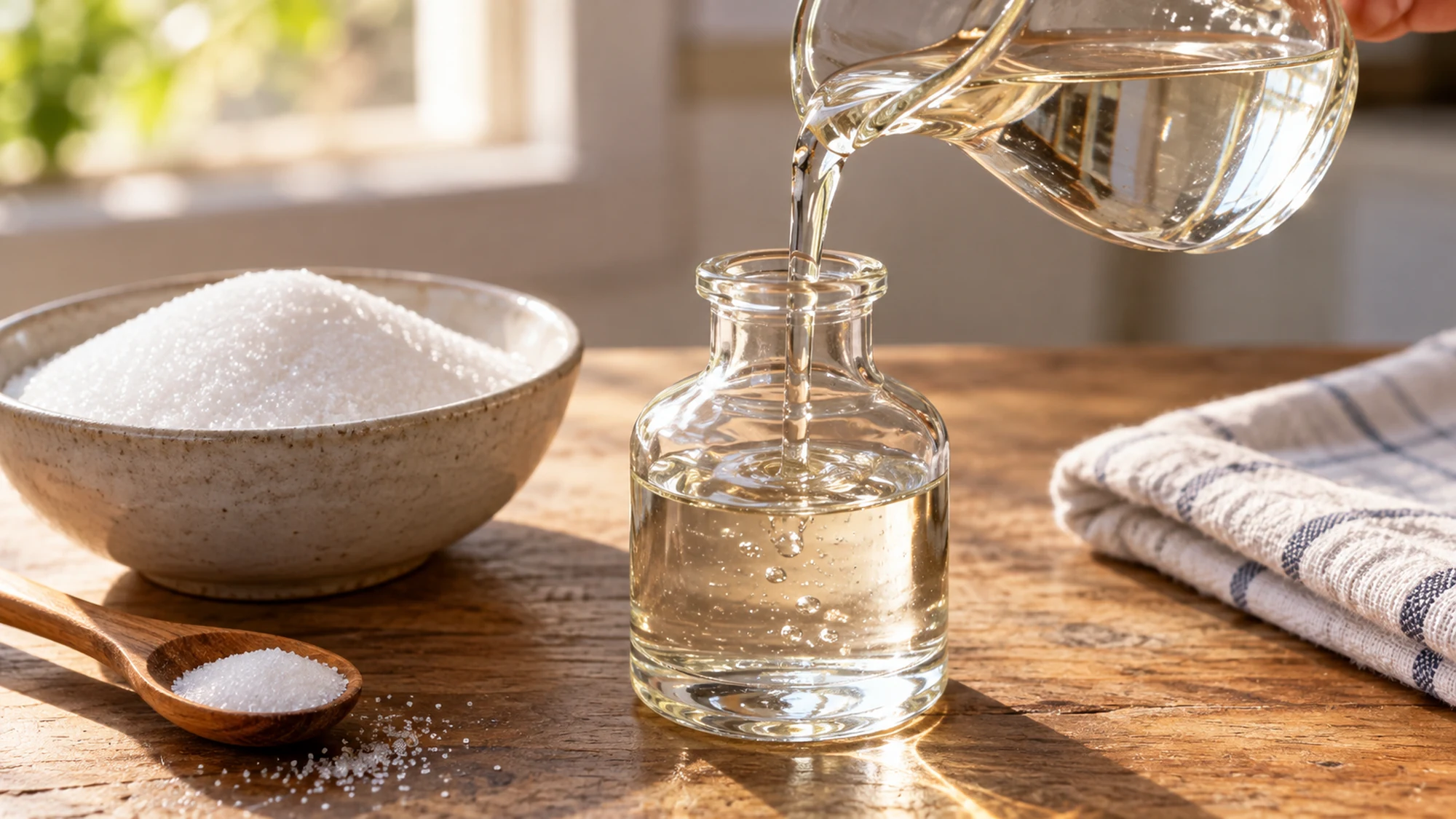
Variations and syrup concentration
The plain formula is a versatile starting point because it brings no added flavor. Rich syrup uses a different sugar-to-water ratio and should be labeled accordingly. I would keep a first bottle plain before building a collection of infusions that all need their own storage plan.
- Understand rich syrup. A two-to-one sugar-to-water syrup by volume is more concentrated than this recipe. Do not substitute the same amount automatically in a drink designed for standard simple syrup.
- Try another sugar for flavor. Brown sugar changes the color and gives a molasses note. It may suit coffee or warm-spice drinks, but it will no longer be the neutral, clear syrup shown here.
- Infuse a small batch. A clean cinnamon stick can steep while the syrup cools, then be removed. Fresh fruit, herbs and other additions change both flavor and storage behavior; do not assume the plain syrup’s keeping time applies.
- Avoid an unplanned thick reduction. Simmering for a long time removes water. You have then changed the concentration, even if the starting measurements were correct.
Label each bottle with its ingredients, ratio and preparation date. A clear label prevents a sweetener made for one purpose from being mistaken for a different concentration.
Health benefits and what syrup actually provides
Simple syrup is dissolved added sugar. Its practical benefit is smooth mixing and measured portions, rather than vitamins, fiber or a special metabolic advantage. Using a homemade bottle does not remove the sugar from the finished drink, and honey or brown sugar would still contribute sweetness and energy.
- Account for the amount used. A tablespoon is the card’s portion, but a drink may contain more or less. Multiply the serving estimate by the quantity actually poured rather than counting the whole bottle or ignoring it.
- Look at the finished drink. Sweetened juice, soda or other mixers already bring sugar. Taste before adding syrup so you can decide whether any extra sweetness is useful.
- Keep handling simple. Refrigerate promptly after cooling, use clean utensils and make a batch you can finish within two weeks. Discard syrup that develops mold, cloudiness or an unusual odor; this is not a shelf-stable canning recipe.
- Choose the ingredient deliberately. White granulated sugar makes a neutral syrup, while different sugar products change its flavor or appearance. None is needed for a health promise.
Think of syrup as a useful kitchen sweetener with a measurable portion. Smooth mixing is the reason to make it; the amount you use still matters in the drink.
Motivation conclusion: make a small, clearly labeled bottle
Find a clean container and a label before heating the saucepan. Stop once the sugar dissolves, then cool and refrigerate. Start the first drink with a small spoonful; you can leave the bottom-of-the-glass crystals behind.
Simple Syrup Recipe

Ingredients
- 1 cup white granulated sugar 200 g
- 1 cup water 240 ml
Equipment
- Small saucepan
- Measuring cup and spoon
- Clean heat-safe covered bottle or jar
Instructions
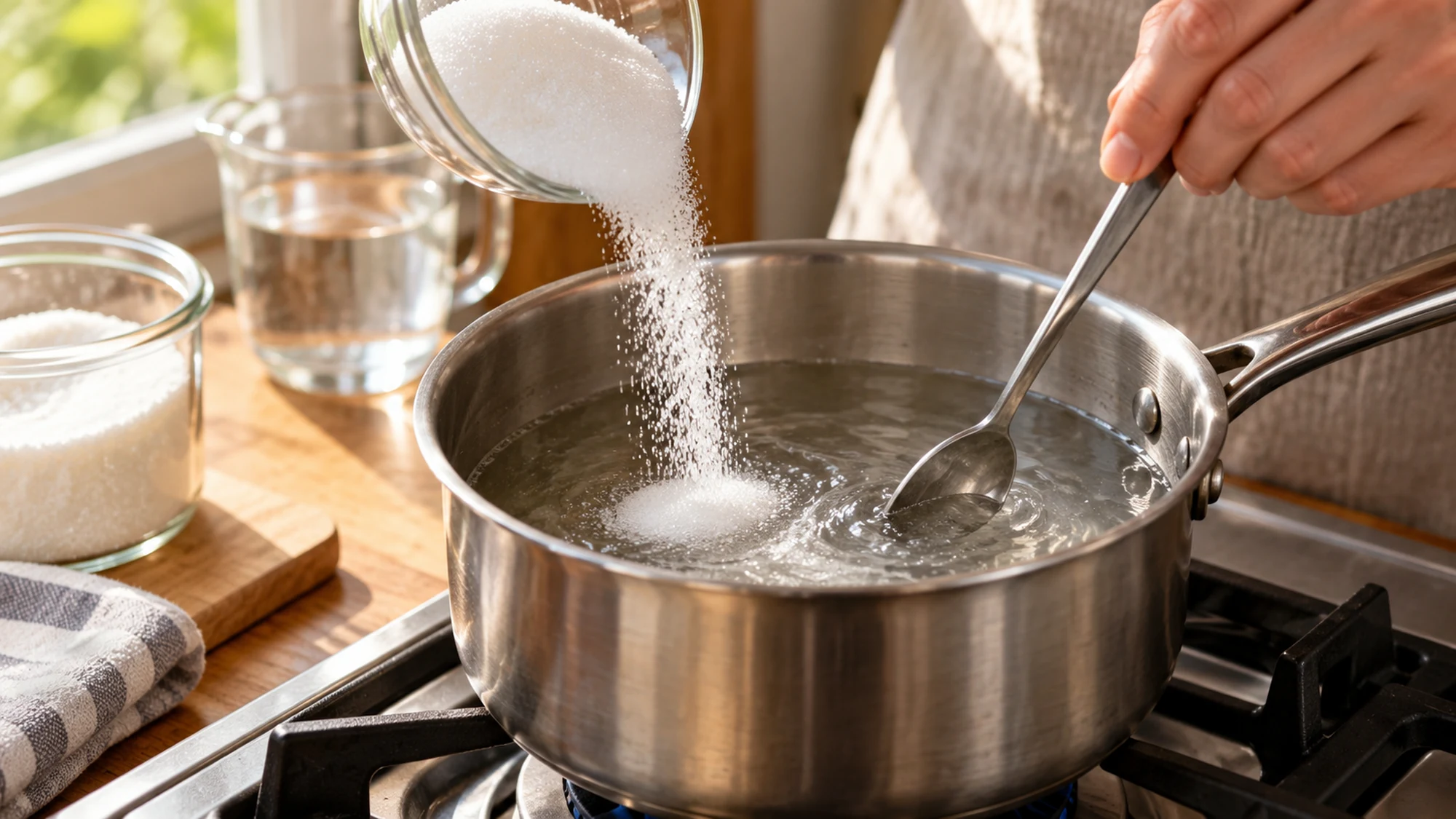
- Put the sugar and water into the saucepan. This is a 1:1 ratio by volume, not weight: 200 g sugar with 240 ml water.
- Heat over medium-low heat and stir until all crystals dissolve, about 2–3 minutes. Avoid a prolonged boil; evaporation changes the concentration. Remove from the heat once the liquid is clear.
- Cool for about 30 minutes, then transfer to a clean heat-safe container, cover, label with the preparation date and refrigerate. The yield is about 1½ cups, or 24 tablespoons, depending on evaporation. Add to drinks in small measured amounts.
Nutrition
Video
Notes
Tried this recipe?
Let us know how it turned out!Emily Parker is DISHORA’s recipe-writing persona, bringing a warm, practical voice to everyday cooking. Her focus is simple ingredients, comforting flavors and clear steps that make a dish feel approachable. From cozy dinners to something sweet, Emily’s recipes invite readers to try something delicious and make it their own.