
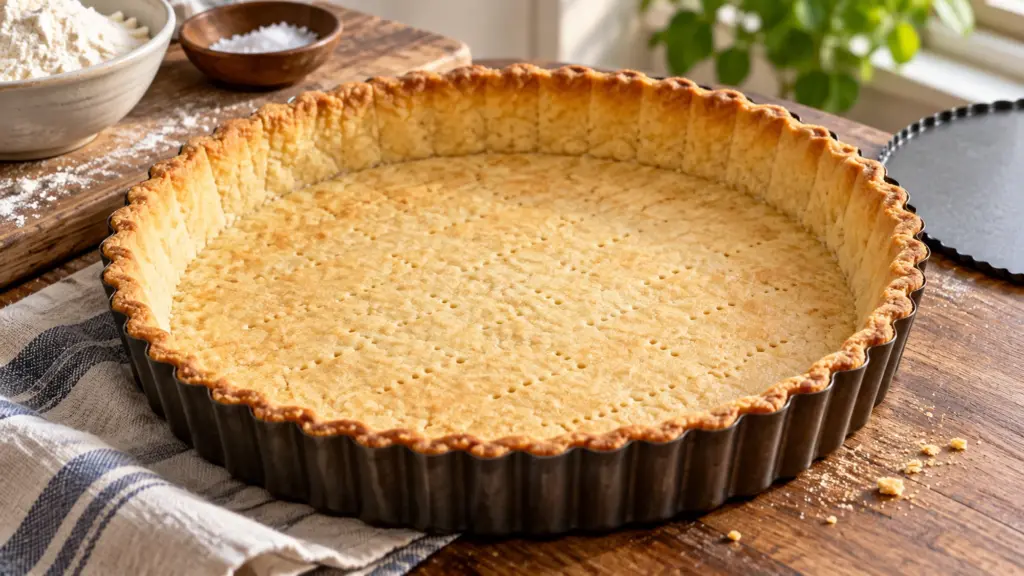
A pastry shell can turn tough long before it reaches the oven. This shortcrust pastry recipe keeps the dough simple: flour, cold butter, salt and just enough water to hold it together. The finished shell should have a tender, crumbly bite and a dry base ready for a sweet or savory filling.
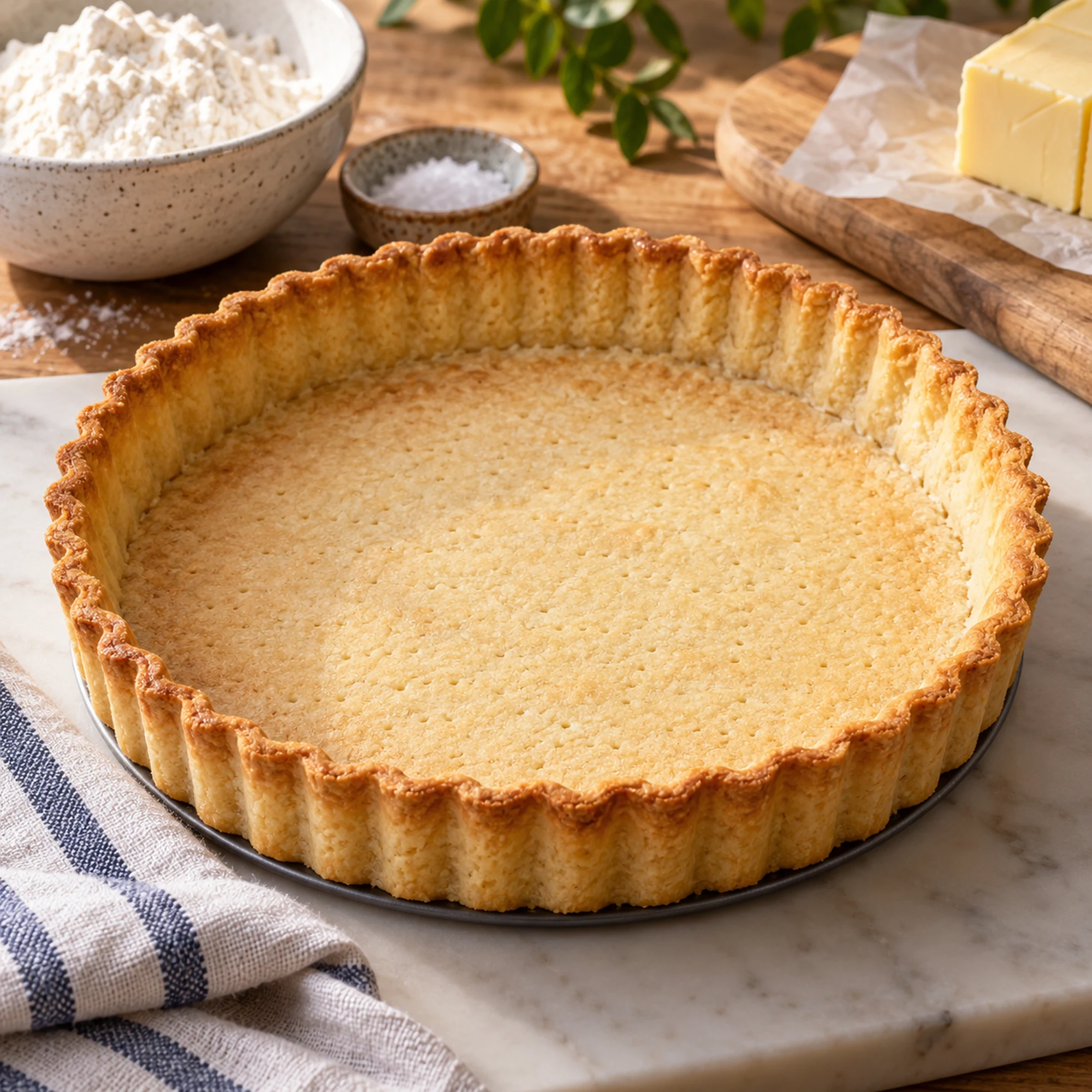
Keep the butter cold, stop adding water when the dough holds together and let the pastry rest before rolling. For a filling that needs a cooked shell, blind-bake it with weights first, then uncover the base so it can dry.
Shortcrust is not puff pastry; you are aiming for a delicate, short crumb rather than a tower of laminated layers. I prefer weighing the flour and butter to keep their balance consistent. The card makes one 9-inch tart shell, with eight portions for the pastry alone.
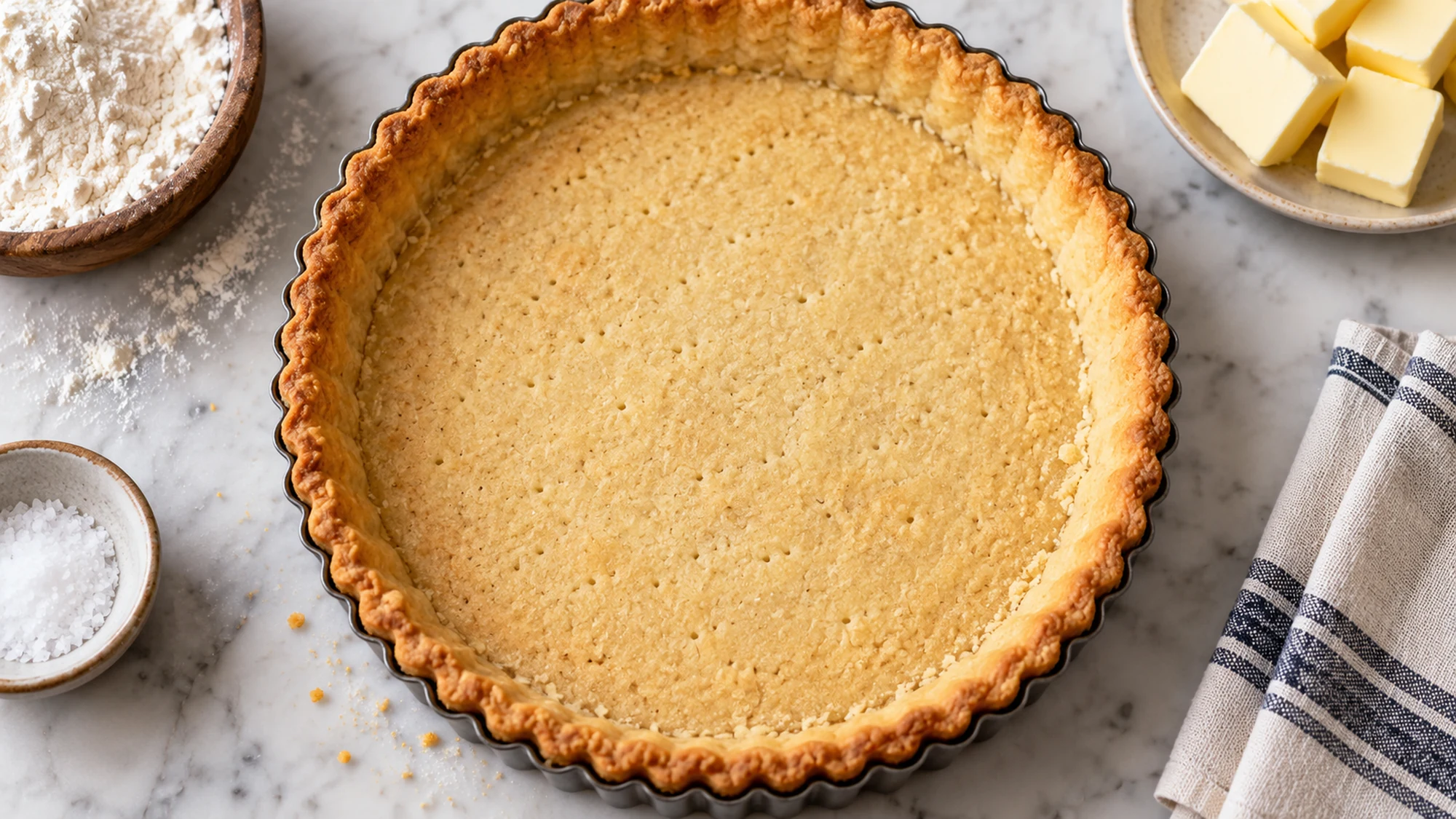
Serving suggestions for a shortcrust pastry recipe
Choose the filling before deciding how far to bake the shell. A filling that will cook in the oven may call for partial blind baking, while a cold filling needs a completely baked, cooled shell. Follow the filling recipe’s final temperature and timing rather than assuming every tart finishes the same way.
- For a chilled dessert. Cool the fully baked shell before adding a properly prepared custard or other cold filling. Warm pastry can soften that filling and make the finished tart harder to handle.
- For a savory tart. Pair a partially baked shell with an egg-and-vegetable filling that has its own reliable baking instructions. Drain cooked vegetables well so their extra moisture does not collect against the base.
- For an almond dessert. Bakewell tart combines shortcrust with a jam layer and almond filling. Use that tart’s complete method rather than adding the filling to this shell without adjusting the baking stages.
- Plan around texture. Plain baked pastry is crispest before it absorbs moisture from a filling. Fill close to serving when the filling allows, and store the completed dish according to its most perishable ingredient.
A pastry shell is one component of the finished dish. Match its baking stage to the filling and let it cool when the next ingredient needs a cold, dry base.
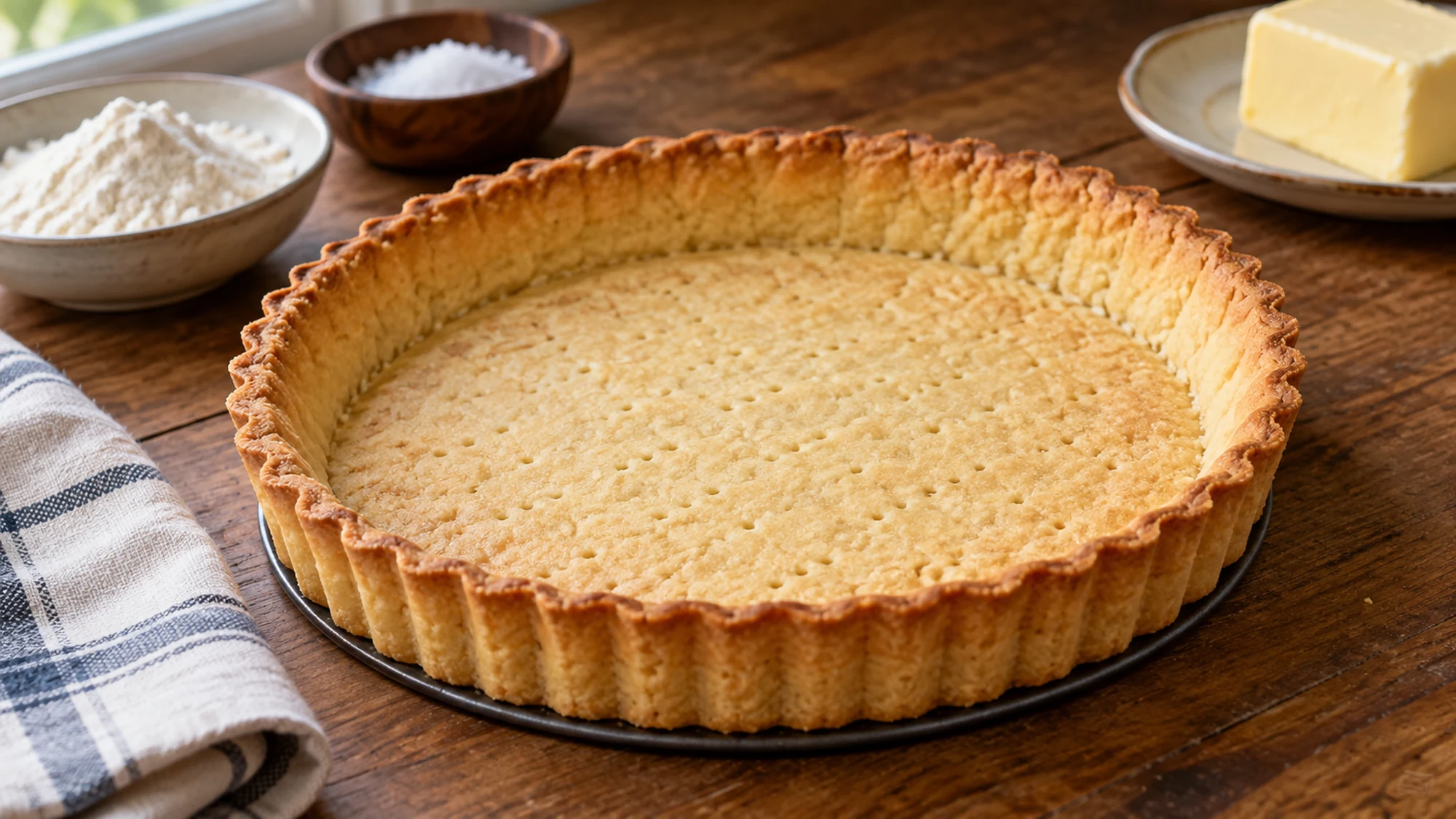
Variations without losing the short crumb
The plain dough is a useful starting point for both sweet and savory baking. Small flavor additions are manageable, but replacing the flour or butter changes the structure. I would choose a separately developed recipe for a major dietary substitution.
- Make a lightly sweet shell. Mix a tablespoon of sugar into the flour for a dessert tart. It adds sweetness and can encourage browning, so pay attention to the edges during baking.
- Add a modest herb note. A small pinch of dried thyme can join the flour for a savory filling. Keep it restrained; the pastry should still support rather than dominate the tart.
- Handle scraps gently. Press them together instead of kneading repeatedly. Re-rolled pastry may be tougher, so reserve it for small decorations or separate little bakes.
- Choose the correct flour. All-purpose flour suits this formula. Self-rising flour, almond flour and a gluten-free blend are different products and are not automatic one-for-one replacements.
Change a small flavor detail while keeping the flour-to-butter balance steady. Too much handling or added water can undo more of the texture than an extra herb can improve.
Health benefits and the role of a pastry portion
Shortcrust pastry provides energy from flour and butter, and it also contains saturated fat. The nutritional character of the finished tart depends heavily on its filling and portion size. A vegetable filling does not erase the pastry, and a plain shell does not need a health claim to be useful.
- Keep the calculation separate. The card’s yield describes the pastry shell divided into eight portions. Custard, cheese, meat, vegetables or cream added later need their own nutrition calculation.
- Check the basic allergens. This dough contains wheat and milk. An egg-free dough is not automatically suitable for someone avoiding dairy or gluten.
- Avoid tasting raw dough. Flour needs cooking before eating. Judge hydration by whether the dough holds together when pressed, not by taking a bite of the uncooked mixture.
- Measure with purpose. Weight-based flour measurements help repeat the texture; they do not make pastry a low-calorie food.
Treat the pastry as the buttery framework of the dish and choose a portion that suits the filling and meal. Clear amounts are more helpful than trying to give the crust a nutritional halo.
Motivation conclusion: let the dough rest
Clear refrigerator space before you start and have the tart pan ready for the rolled dough. The resting periods are part of the recipe, not empty time to skip. Keep the dough cool, roll without stretching and look for a dry baked base. Those small checkpoints give your filling a place to land.
Shortcrust Pastry Recipe

Ingredients
- 250 g all-purpose flour about 2 cups plus 1 tbsp; weighing is more accurate
- 125 g cold unsalted butter about 9 tbsp, diced
- 0.25 tsp fine salt
- 2 tbsp ice-cold water 30 ml initially; add up to 2 tbsp (30 ml) more only if needed
Equipment
- Mixing bowl and pastry cutter
- Rolling Pin
- 9-inch fluted tart pan with a removable bottom
- Parchment and ceramic pie weights or dry beans
- Baking tray
Instructions
- Mix flour and salt in the bowl. Add cold butter and cut or rub it in briefly until the mixture resembles coarse crumbs with a few small butter pieces. If the butter softens, refrigerate the bowl before continuing.
- Sprinkle in 2 tablespoons cold water and toss with a fork. Add further water a teaspoon at a time, only until a squeezed handful holds together; usually 30–60 ml total. Press into a disk without kneading, wrap and refrigerate for 30 minutes.
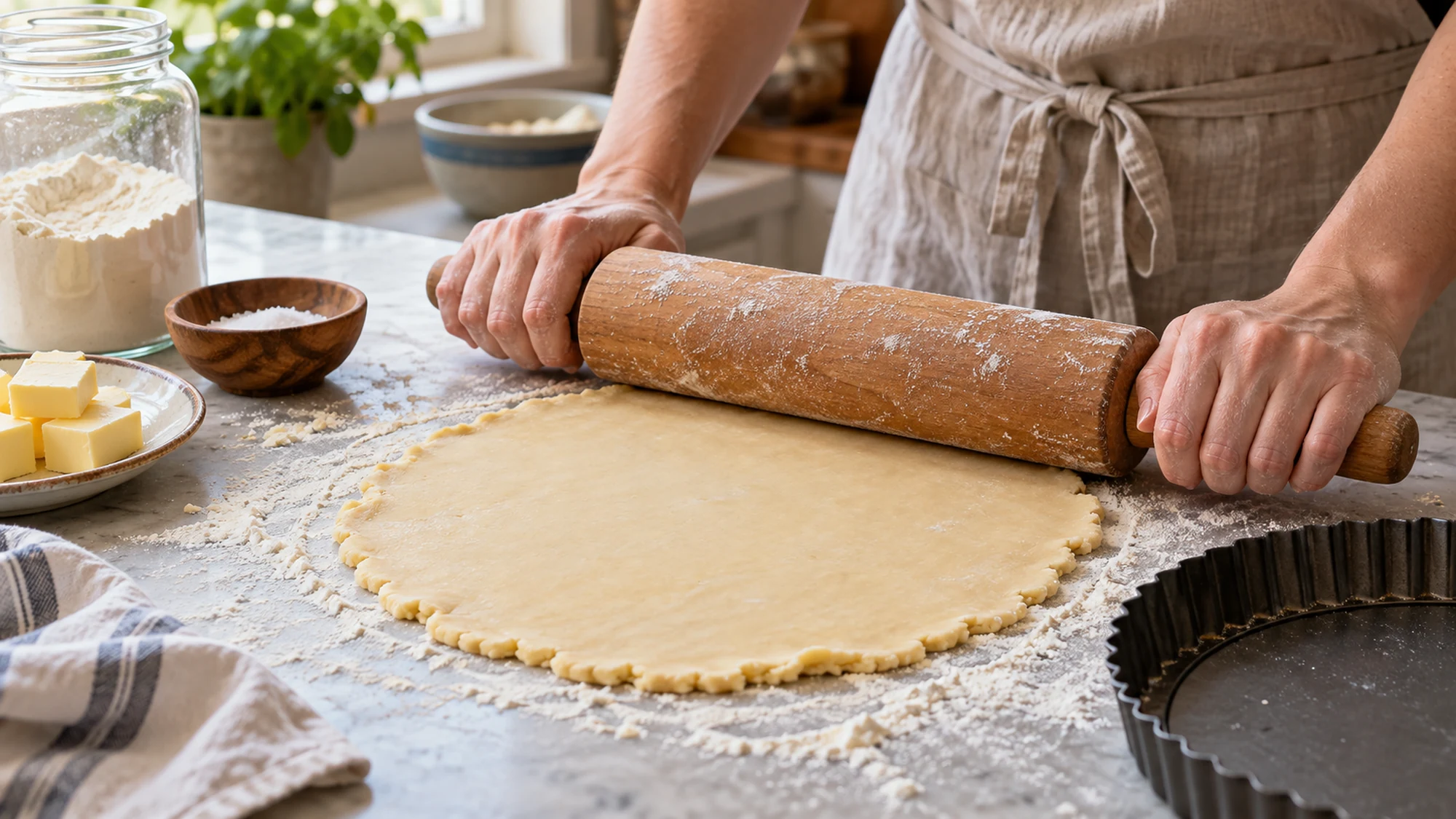
- Roll on a lightly floured surface to about 1/8 inch (3 mm) thick and wide enough to line the pan. Lift the dough in, ease it into the corners without stretching, trim the excess and patch any small gaps with scraps. Prick the base lightly with a fork, then refrigerate the lined pan for another 30 minutes.
- Heat the oven to 375°F (190°C). Place the tart pan on a baking tray. Line the cold shell with crumpled parchment and fill with pie weights up to the sides. Bake for 20 minutes, until the edges begin to set.
- Lift out parchment and weights carefully. Bake for another 10–15 minutes until the base is dry and lightly golden. If edges color too fast, shield them with foil. Cool before removing from the pan or adding a filling. Follow a specific filled-tart recipe if it needs a partially baked rather than fully baked shell.
Nutrition
Video
Notes
Tried this recipe?
Let us know how it turned out!Emily Parker is DISHORA’s recipe-writing persona, bringing a warm, practical voice to everyday cooking. Her focus is simple ingredients, comforting flavors and clear steps that make a dish feel approachable. From cozy dinners to something sweet, Emily’s recipes invite readers to try something delicious and make it their own.