
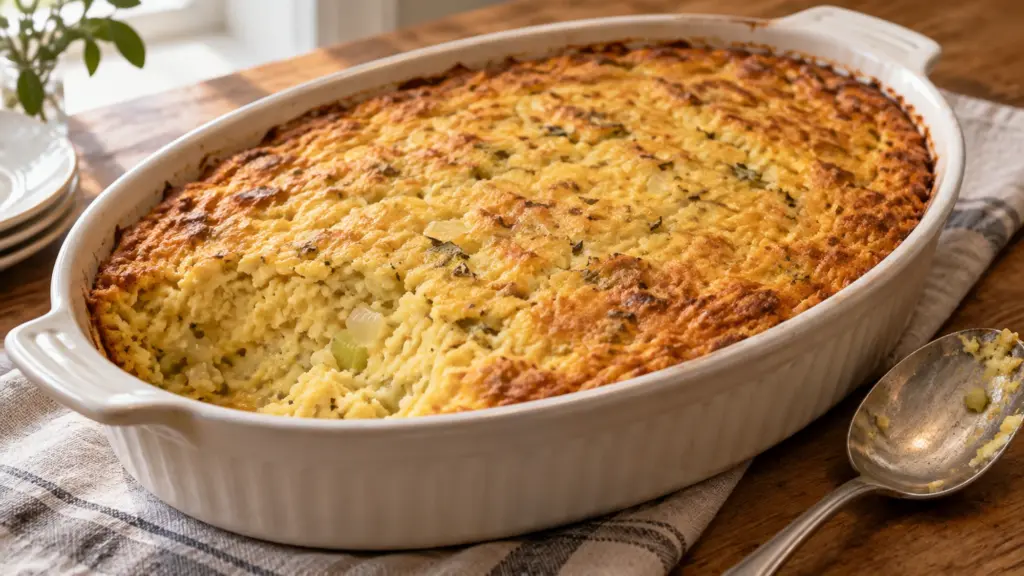
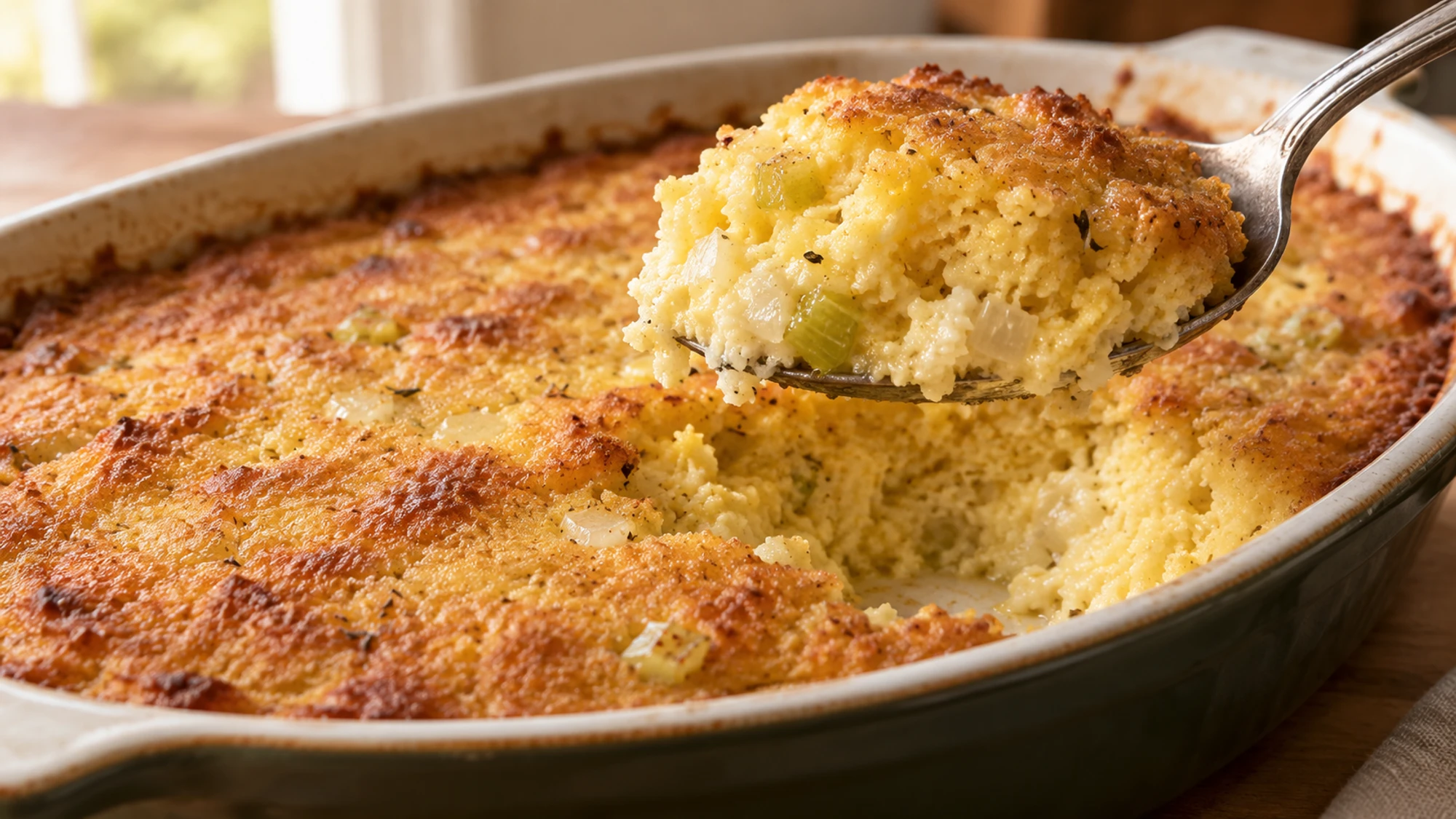
Sometimes a savory side needs to be soft enough for a spoon, with a golden top that still feels like a little reward. Spoonbread dressing brings cornmeal, onion, celery and sage together in a tender, custardy bake. It has the familiar seasoning of dressing, with a smooth cornmeal base instead of cubes of bread.
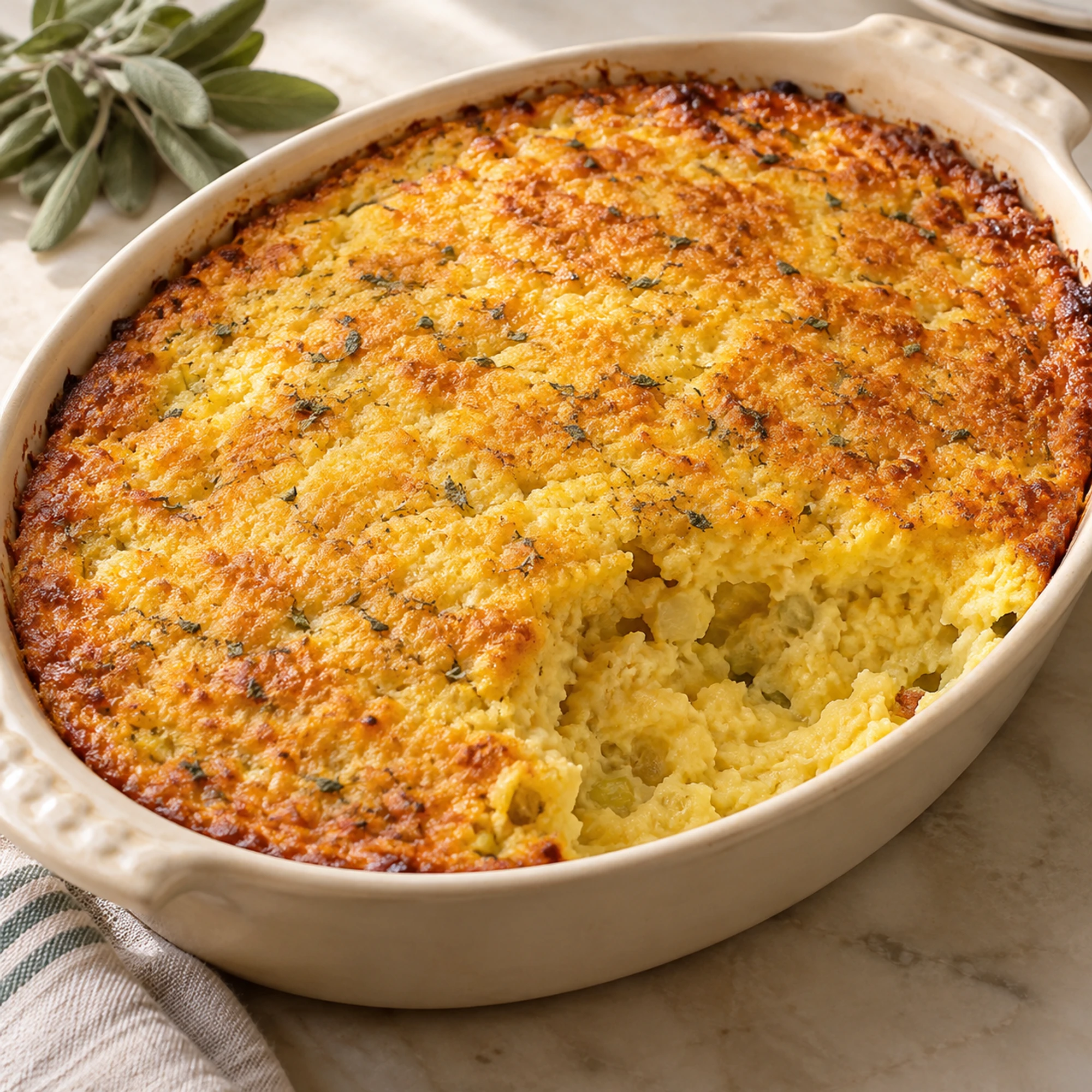
The important pause happens before the eggs go in. Let the cooked cornmeal mixture cool until warm, then temper the beaten eggs with a little of it before combining everything. That gentle transition helps the eggs blend into the dressing instead of cooking into visible bits.
I’d choose fine yellow cornmeal for this version because it gives the center a more even texture than coarse grits. Rubbed sage brings the savory aroma; softened onion and celery add small, tender flecks. The dressing bakes separately in a two-quart dish and serves eight as a side.
Serving suggestions
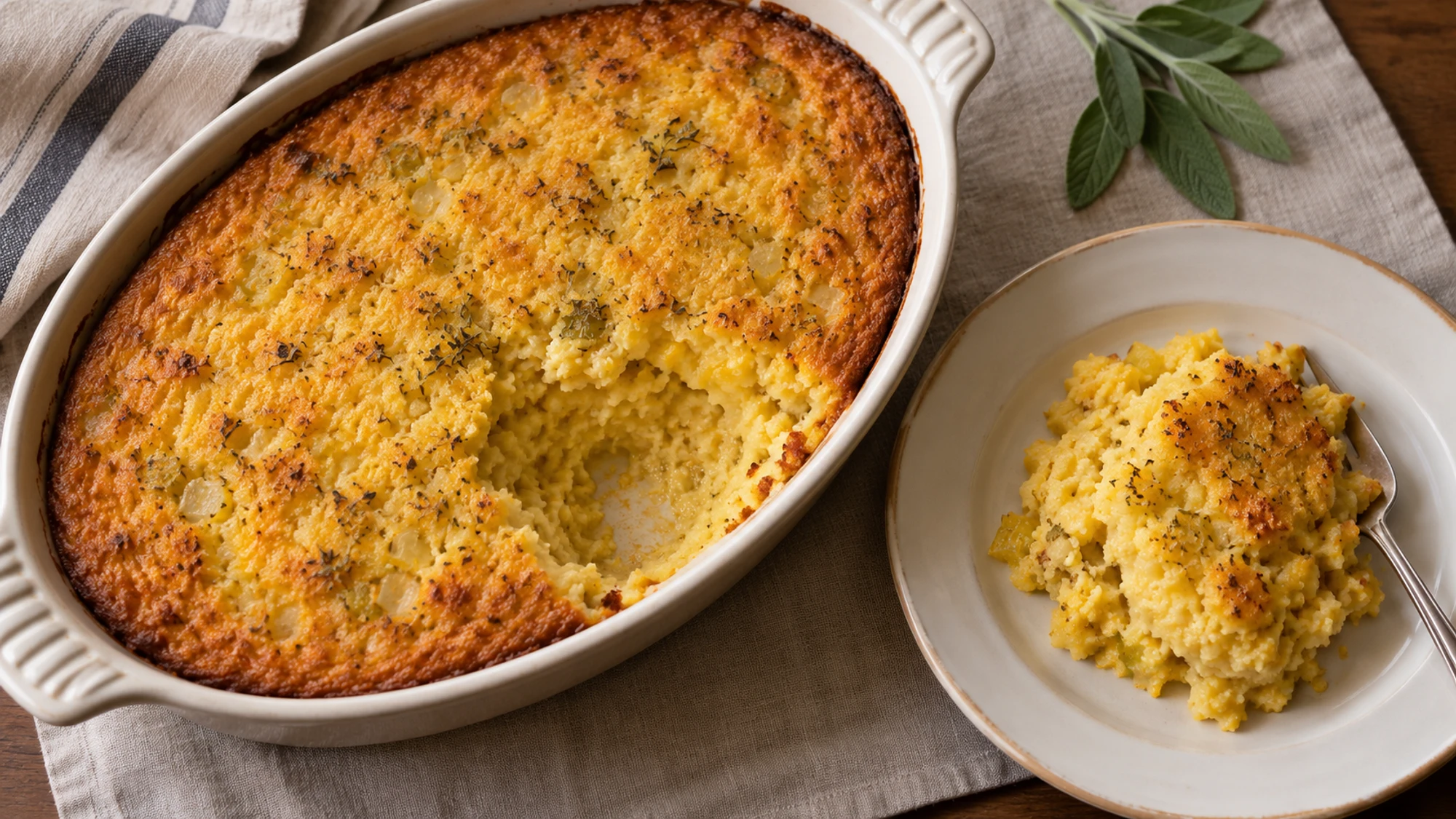
Serve spoonbread dressing warm after its short rest, using a broad spoon to lift generous portions from the dish. Its texture belongs beside foods with contrasting edges: roast vegetables, a crisp salad or tender meat with a little cooking juice. You want the spoonful to hold together softly while still feeling moist in the center.
- Beside a savory main: Try a small portion with our tender chipotle barbacoa. Use a little of the meat’s juices rather than flooding the dressing.
- For a larger gathering: Serve from the baking dish on a heatproof surface. A broad spoon protects the soft center better than trying to cut neat squares.
- For a different fish pairing: Our maple-glazed candied salmon offers a sweet, smoky contrast; add a fresh vegetable side to complete the plate.
Leave room for the dressing’s gentle corn flavor. Heavy gravy, several rich sauces and extra butter can obscure the sage and vegetables. I prefer a small serving of sauce at the plate so each person can choose the balance.
Variations
Use plain fine cornmeal rather than a self-rising cornmeal mix, which brings its own salt and leavening. A package such as fine yellow corn meal helps illustrate the grind to look for. Corn flour, coarse polenta and precooked corn products are different ingredients, so they need their own formulas.
- Change the herbs: Thyme can replace the sage for a gentler herbal flavor. Start modestly, since finely ground herbs and fluffy rubbed herbs measure differently.
- Use vegetable broth: An unsalted vegetable broth can replace the chicken broth. Check its flavor before choosing it; a sweet or strongly seasoned broth changes the dressing.
- Change the color: Fine white cornmeal gives a paler result. Keep the measured cornmeal weight and watch for the same thickened base and set center.
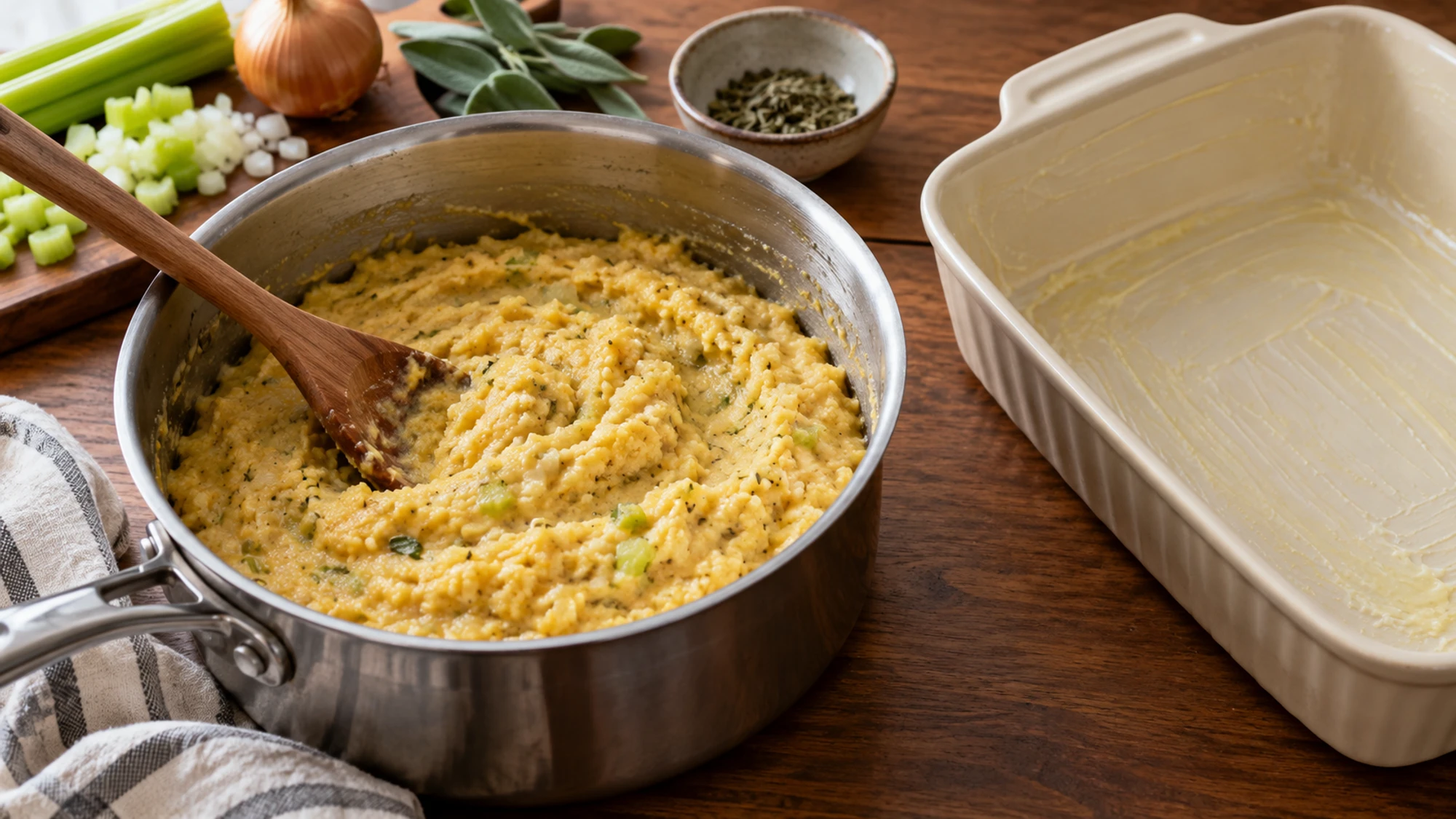
Preserve the liquid balance and the cooling pause when making small changes. Adding handfuls of cheese, sausage or bread cubes would turn this into a different recipe and affect how it sets. Start with the simple version before building a new variation.
Health benefits
Cornmeal supplies carbohydrate, while the milk and eggs contribute protein. The milk also brings calcium, and the onion and celery add vegetable variety. Butter gives the dressing its rich flavor and contributes saturated fat, so the eight-serving yield is a useful reference when deciding how much to put on the plate.
- Portion context: This is a side dish. Pair it with a protein and a substantial serving of vegetables for a varied meal.
- Ingredient context: Fine refined cornmeal generally contains less fiber than whole-grain cornmeal. A whole-grain substitution can change both texture and nutrition.
- Dietary needs: This recipe contains milk and eggs. Cornmeal itself does not supply gluten, but package labeling and the other ingredients matter if avoiding gluten is necessary.
Enjoy the dressing for its soft texture and savory flavor, with a portion that fits the rest of dinner. The nutritional value comes from the actual ingredients and serving size; there is no need to turn a comforting side into a sweeping health promise.
Motivation conclusion
Spoonbread dressing is a useful change of pace when you want the aroma of a savory holiday side with a softer texture. There is no loaf to dry out or tear into cubes, but the cooked cornmeal base does need a little attention. Whisk steadily, let it cool, and give the baked center time to set.
Use the recipe card’s temperature and texture cues together. A golden surface looks inviting, while a properly set center gives you the spoonable result you came for. Rest the dish briefly, bring it to the table and let the first warm scoop do the talking.
Spoonbread Dressing Recipe

Ingredients
- 1 cup fine yellow cornmeal 160 g; plain, not self-rising
- 2 cups whole milk 480 ml
- 1 cup unsalted chicken broth 240 ml
- 4 tbsp unsalted butter 56 g; divided, 1 tablespoon for the dish and 3 for cooking
- 3 large eggs 150 g without shells; lightly beaten
- 150 g yellow onion finely diced
- 70 g celery finely diced
- 1 tsp rubbed sage about 0.7 g
- 1 tsp baking powder about 4 g
- 1/2 tsp fine salt about 3 g
- 1/4 tsp ground black pepper about 0.5 g
Equipment
- 2-quart baking dish
- 3-quart heavy saucepan
- Whisk
- Small mixing bowl
- Knife and cutting board
- Food thermometer
- Oven mitts
Instructions
- Heat the oven to 375°F (190°C). Grease a 2-quart baking dish with 1 tablespoon of the butter. Finely dice the onion and celery, measure the remaining ingredients and lightly beat the eggs in a small bowl.
- Melt the remaining 3 tablespoons butter in a heavy 3-quart saucepan over medium heat. Add the onion and celery and cook for about 8 minutes, stirring, until soft. Stir in the rubbed sage, salt and black pepper.
- Add the milk and unsalted broth and heat until steaming with small bubbles at the edges, about 3–5 minutes. Gradually whisk in the cornmeal. Lower the heat and cook for 5–7 minutes, whisking often and scraping the bottom, until the mixture is thick and the grains have softened.
- Remove the saucepan from the heat and let the cornmeal mixture cool for about 10 minutes, until warm rather than very hot. Whisk a few spoonfuls of the warm mixture into the beaten eggs, then whisk this egg mixture back into the saucepan. Stir in the baking powder until evenly incorporated.
- Spoon the mixture into the greased dish and smooth the top. Bake on the center rack for 35–45 minutes, until the surface is lightly golden, the center is set with no wet batter and a thermometer inserted into the center reads at least 160°F (71°C). If the surface browns before the center sets, tent loosely with foil and continue baking.
- Transfer the hot dish to a heatproof surface with oven mitts. Rest for 10 minutes, then scoop into eight equal side portions. The center should be softly set and spoonable, rather than dry enough to cut into firm bread slices.
Nutrition
Notes
Tried this recipe?
Let us know how it turned out!Emily Parker is DISHORA’s recipe-writing persona, bringing a warm, practical voice to everyday cooking. Her focus is simple ingredients, comforting flavors and clear steps that make a dish feel approachable. From cozy dinners to something sweet, Emily’s recipes invite readers to try something delicious and make it their own.