

The coffee tin can stay closed when you want a dark, roasty cup without caffeine. Chicory coffee gets its color and bittersweet flavor from roasted root, and this version brews it on its own. Expect earthy, toasted notes and a little caramel-like depth, rather than an exact imitation of your usual beans.

Use pure roasted chicory granules, steep them in hot water, then strain thoroughly. The plain drink is naturally caffeine-free; products blended with regular coffee still contain caffeine. Start with a modest brew and adjust the next cup to your taste.
Look for roasted chicory root granules intended for drinks. Raw roots, instant powders and coffee blends need different preparation. I’d choose the ready-roasted ingredient here: it keeps the recipe focused on brewing, with no digging, drying or roasting project before breakfast. The saucepan method also works without a special coffee maker.
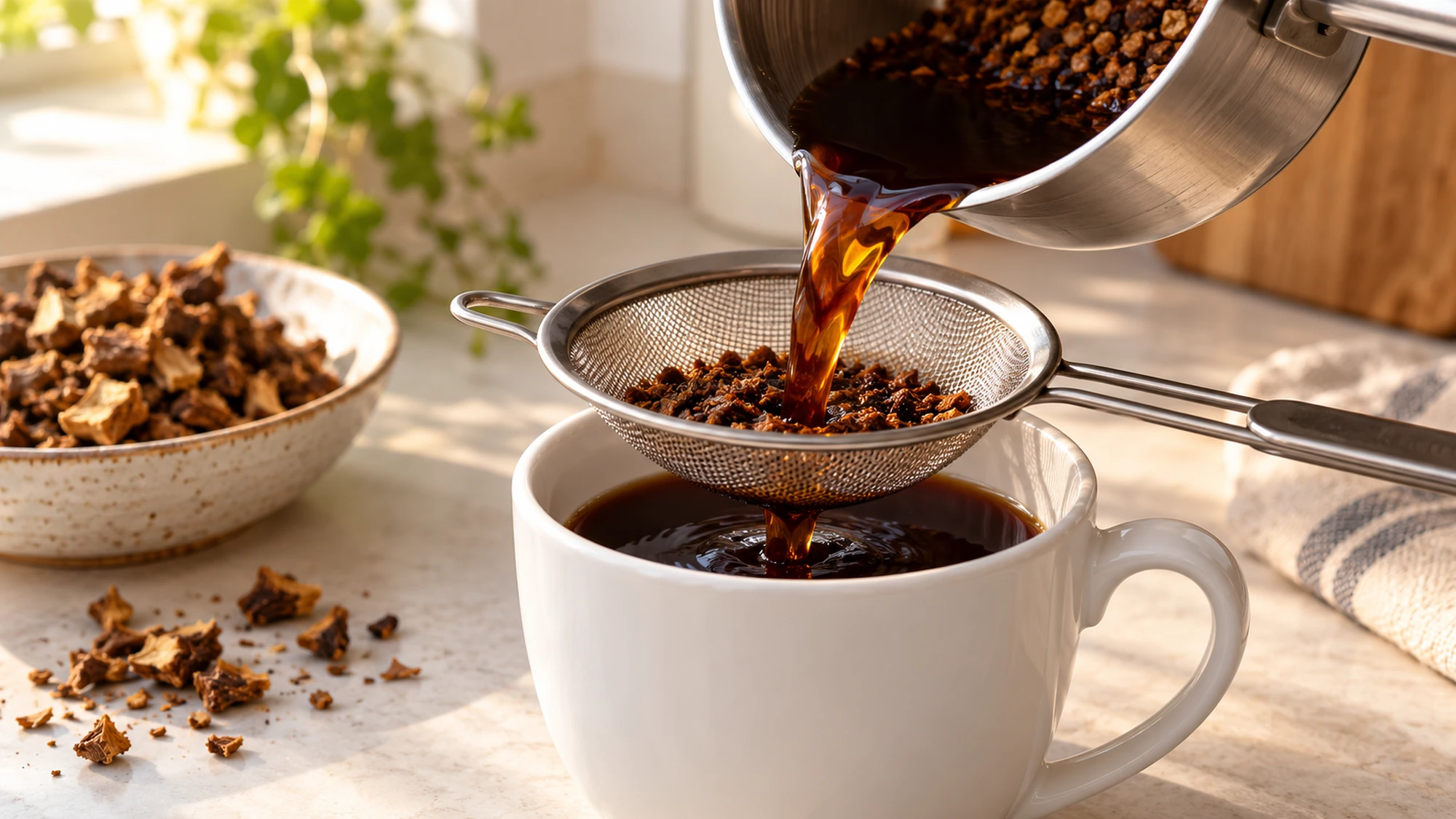
Serving suggestions
Pour the strained drink while it is hot, then give it a moment to cool before sipping. Taste it plain first. Chicory’s bitterness can feel quite assertive at first, and adding a little hot water often makes a better adjustment than covering it with several spoonfuls of sugar.
- For breakfast: Pair a warm mug with buttered toast, oatmeal or eggs. A savory breakfast lets the roasted flavor stand out without needing a sweet accompaniment.
- With something sweet: A small piece of tahini date bark offers a chewy contrast. The chocolate and sesame suit a drink served without additional sweetener.
- With milk: Add a small splash of warm milk after straining. It softens the edges and turns the deep brown drink a gentle tan; vigorous frothing is optional.
Keep the additions beside the mugs rather than sweetening the whole pot. Two people can enjoy the same brew at different strengths, and you can judge its roasted flavor before changing it.

Variations
A strong cup is easy to dilute, but a gritty cup needs better filtering. Use a fine mesh strainer that catches the root pieces; if your particular product leaves fine sediment, pass the brew through a paper coffee filter too. I prefer that small extra step to a muddy final mouthful.
- Gentler flavor: Use less chicory next time or shorten the steep slightly. Brands differ in roast and granule size, so the packet’s brewing advice is a useful starting point.
- Milk choice: Dairy milk adds creaminess; an unsweetened oat or soy drink gives another option. Their sweetness and texture differ, and each changes the nutrition estimate.
- A coffee blend: If you want actual coffee in the cup, choose a labeled blend and follow its brewing directions. Adding chicory does not remove the caffeine already present in coffee.
- Instant convenience: Soluble chicory powder dissolves directly into water. It is a different product, so do not measure it as though it were the granules in this card.
Change one thing at a time: strength, milk or sweetness. That makes it much easier to find the cup you enjoy without confusing a brewing adjustment with a different ingredient.
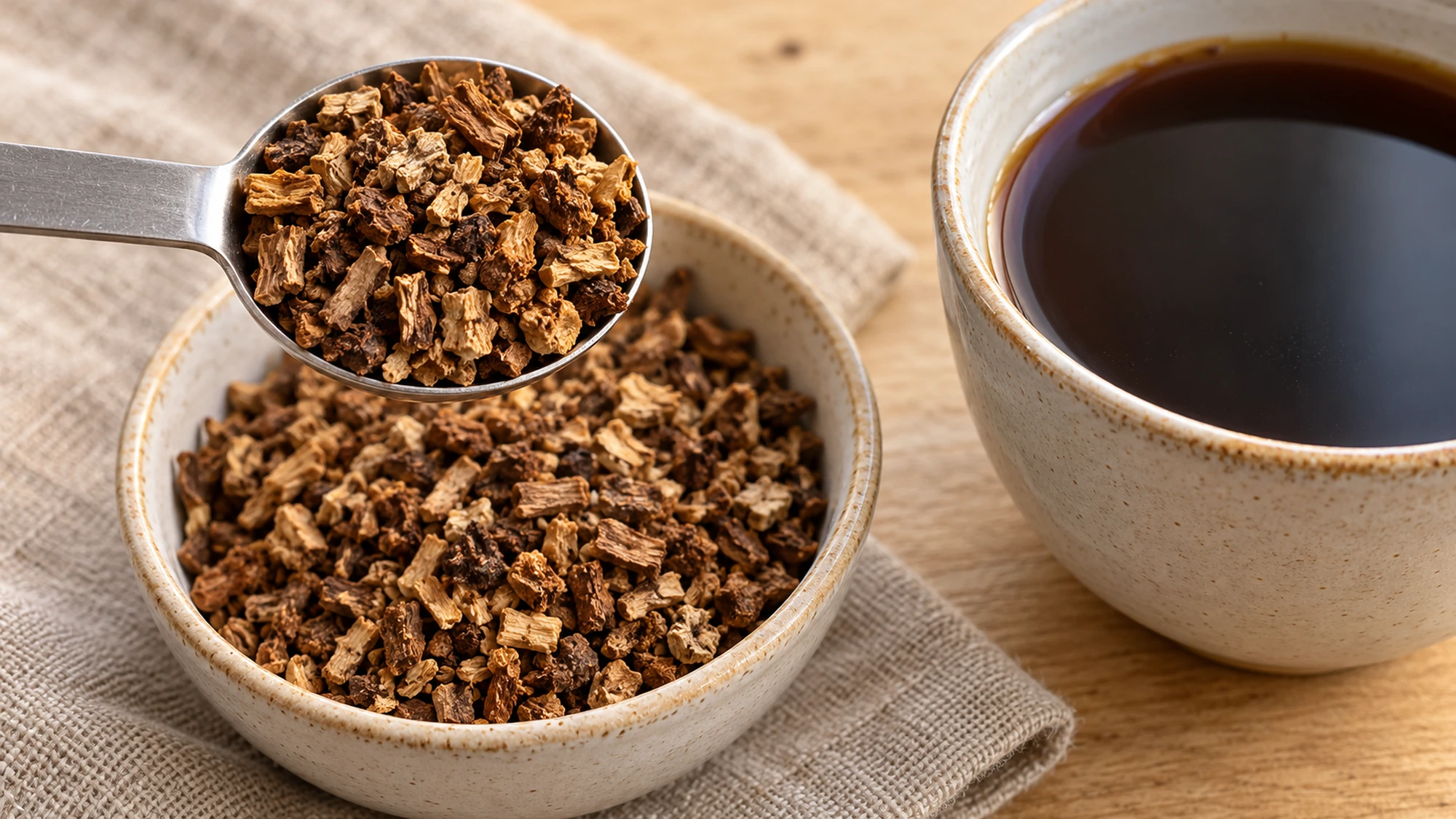
Health benefits
The clearest practical benefit is having another caffeine-free hot drink to choose from. That claim applies to pure chicory brewed with water. It does not automatically apply to every product carrying the words chicory coffee, particularly blends containing coffee or other caffeinated ingredients.
- Keep nutrition in perspective: A strained beverage is different from eating the root. Its nutrient content depends on the product, concentration and how much material is removed.
- Be cautious with fiber claims: Chicory root contains inulin, but research on measured inulin supplements does not establish the same effects for this homemade cup. No digestive or blood-sugar result is promised here.
- Account for additions: Milk and sugar change the drink’s calories and nutrients. The card’s estimate is for the plain brew, so count your preferred extras separately.
Choose chicory because you like its roasted taste or want a caffeine-free option. There is no need to turn a pleasant mug into a treatment, a detox plan or a promise about your health.
Motivation conclusion
This is a small kitchen experiment with a very manageable starting point: a saucepan, a strainer and two mugs. Pay attention to the aroma, the clean pour and the strength you prefer. Once those feel right, a splash of milk or a little sweetness is simply a serving choice.
Brew a modest batch first and enjoy it freshly strained. Chicory has its own character, and giving it room to taste like itself is the most useful expectation to bring to the cup.
Chicory Coffee Recipe

Ingredients
- 2 cups water 480 ml, plus a little hot water to top up after straining if needed
- 2 tablespoons pure roasted chicory root granules not instant powder or a coffee-chicory blend; strength varies by brand
- 1/4 cup milk 60 ml total, warmed; or an unsweetened plant-based drink
- 2 teaspoons granulated sugar total, divided between the mugs; optional
Equipment
- Small saucepan with lid about 1 quart / 1 liter
- Measuring cup and tablespoon
- Spoon
- Fine-mesh strainer optional paper coffee filter if your granules leave fine sediment
- Two mugs at least 10 ounces / 300 ml each
Instructions
- Bring 2 cups (480 ml) water to a boil in a small saucepan, then turn off the heat.
- Stir in the roasted chicory granules. Cover the saucepan and steep for 5 minutes. Keep it off the heat; follow the package instructions instead if your product specifically requires a different brewing method.
- Pour through a fine mesh strainer into a heatproof measuring jug or the mugs, catching the granules. If there is fine sediment, filter again through a paper coffee filter. Discard the strained solids.
- Top up with a little hot water if needed to make about 2 cups (480 ml) of strained brew, then divide between two mugs. Taste and dilute further if stronger than you like. Add up to 2 tablespoons (30 ml) warm milk and 1 teaspoon sugar to each mug if desired. Let cool to a comfortable drinking temperature.
Nutrition
Video
Notes
Tried this recipe?
Let us know how it turned out!Emily Parker is DISHORA’s recipe-writing persona, bringing a warm, practical voice to everyday cooking. Her focus is simple ingredients, comforting flavors and clear steps that make a dish feel approachable. From cozy dinners to something sweet, Emily’s recipes invite readers to try something delicious and make it their own.