
Ingredients
Dough
- 500 g unbleached all-purpose flour about 11–12% protein; plus a little for dusting
- 350 g water 350 mL, at room temperature
- 10 g fine salt
- 1 g instant yeast about ¼ teaspoon; weighing is more accurate
Equipment
- Digital kitchen scale ideally precise to 0.1 g for the yeast
- Large mixing bowl or lidded food container with room for the dough to expand
- Flexible spatula and bench scraper for folding and dividing
- Heavy solid rimmed baking sheet about 18 by 13 inches
- Baking parchment expressly rated to at least 450°F
- Large oven-safe metal roasting pan to invert over all loaves, with clearance for expansion; no glass or plastic components
- Clean cloth, bread lame and dry oven mitts a sharp serrated knife may substitute for the lame
- Wire cooling rack
Instructions
- In a large bowl, stir 500 g flour, 350 g room-temperature water, 10 g fine salt and 1 g instant yeast until no dry flour remains. The dough will be sticky and shaggy. Cover and rest for 30 minutes at about 72–77°F (22–25°C). Do not taste raw dough.
- With damp hands, lift one side of the dough and fold it over the center; repeat from the other three sides. Cover and repeat this set after 30 minutes, then again after another 30 minutes. After the last fold, mark the dough level on the container. Continue resting until about 2 hours have elapsed from mixing. The dough should feel smoother and start showing bubbles, but need not double.
- Cover in a container with room for expansion and refrigerate for 16–24 hours at 40°F (4°C) or below. The next day, let the covered dough stand at room temperature for 60–90 minutes, or longer if still dense. Look for an aerated, bubbly dough roughly 50–75% larger than the marked level. A cold kitchen can require 2 hours or more; if already very puffy, proceed without prolonged warming.
- Lightly flour the work surface. Ease the dough out without punching it down and divide into three pieces of about 287 g each. Gently fold each piece into a short loose log. Cover and rest for 20 minutes. Use only enough extra flour to prevent sticking; do not knead it into the dough.
- Place one log seam-side up and gently flatten to a small rectangle. Fold the top long edge toward the middle and press to seal, then fold the bottom long edge toward the middle. Fold in half lengthwise and seal the seam firmly without crushing the whole piece. Roll gently from the center toward the ends into a 13-inch loaf. If it springs back, cover and rest 5–10 minutes before continuing. Repeat.
- Place the loaves seam-side down, at least 2 inches apart, on parchment expressly rated to 450°F on a solid heavy rimmed baking sheet. Cover loosely with a lightly floured cloth and proof for 45–75 minutes at about 70–75°F (21–24°C), until puffy and a gentle fingertip dent returns slowly and only partway. Meanwhile heat the oven to 450°F (230°C) for at least 30 minutes. Check that your oven-safe inverted metal roasting pan covers all three loaves without touching them and leaves room for expansion.
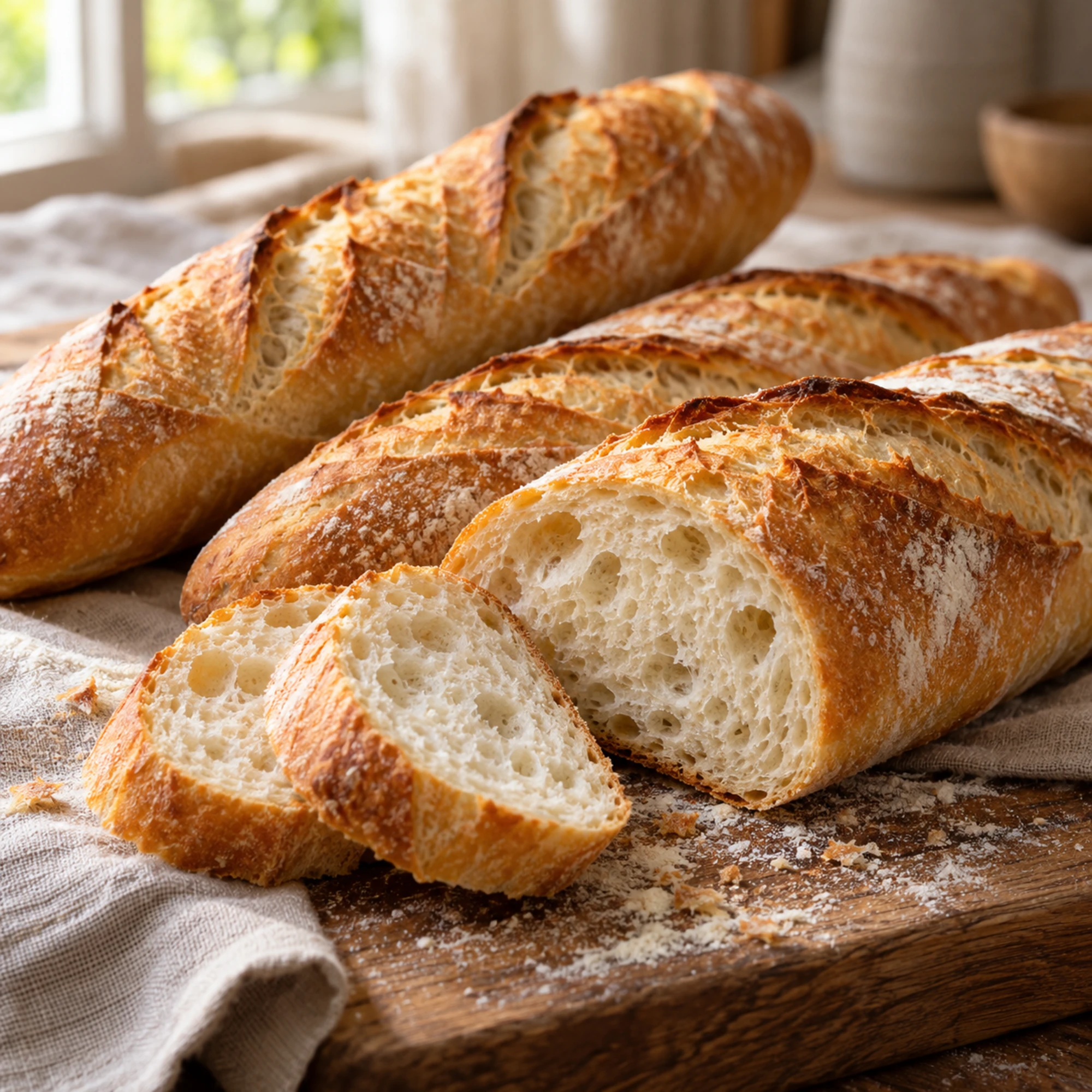
- Remove the cloth. With a sharp bread lame or sharp serrated knife, make three overlapping slashes along each loaf’s length, about 1/4 inch deep, angling the blade about 30–45 degrees to the dough surface. Place the roomy metal cover over the loaves on the solid baking sheet and bake on the middle rack for 15 minutes. Do not add water, ice or a glass steam pan.
- Using dry oven mitts, carefully lift the hot cover away from your face and hands; trapped steam will escape. Bake uncovered for another 12–17 minutes, rotating the sheet if browning unevenly, until deeply golden and crisp. Transfer to a wire rack and cool at least 30 minutes before slicing. Divide each loaf into four portions for 12 servings.
Nutrition
Serving: 1portion (¼ baguette)Calories: 152kcalCarbohydrates: 31.8gProtein: 4.3gFat: 0.4gSaturated Fat: 0.1gSodium: 329mgFiber: 1.1gSugar: 0.1g
Video
Notes
Timing: Allow roughly 22–30 hours from mixing to slicing, depending on the chosen refrigerator rest and the dough’s temperature. The displayed time is approximate. Follow the rise and proofing cues rather than a fixed deadline.
Formula: Flour 100%, water 70%, salt 2%, instant yeast 0.2%. The dough weighs about 861 g before dusting flour, or about 287 g per loaf.
Oven setup: Check your parchment’s stated temperature rating and the cover’s oven safety. The metal cover must rest on a solid pan and allow the loaves to expand. Handle the cover with dry oven mitts and keep clear of escaping steam. Do not pour water into the oven or onto hot glass.
Storage: Enjoy on baking day. Cool completely before wrapping and freezing leftovers. Thaw a portion and briefly warm in a moderate oven to refresh the crust, watching closely to avoid drying it out.
Nutrition: Approximate values for one of 12 equal portions of plain bread. Calculated from representative flour, yeast and salt data; excludes variable dusting flour and toppings. Contains wheat and gluten.
Estimated cost: About US$1.40 for all three loaves, including a small dusting-flour allowance, or about US$0.12 per serving. Prorated retail ingredient prices vary by store; excludes equipment, energy, taxes and delivery.
Video: King Arthur Baking Company’s Martin Philip demonstrates baguette folding, shaping, scoring and baking. His version starts with a poolish and uses poured-water steam; this recipe uses overnight refrigerated dough and a covered metal pan. Follow this card’s quantities, timing and oven method.
