
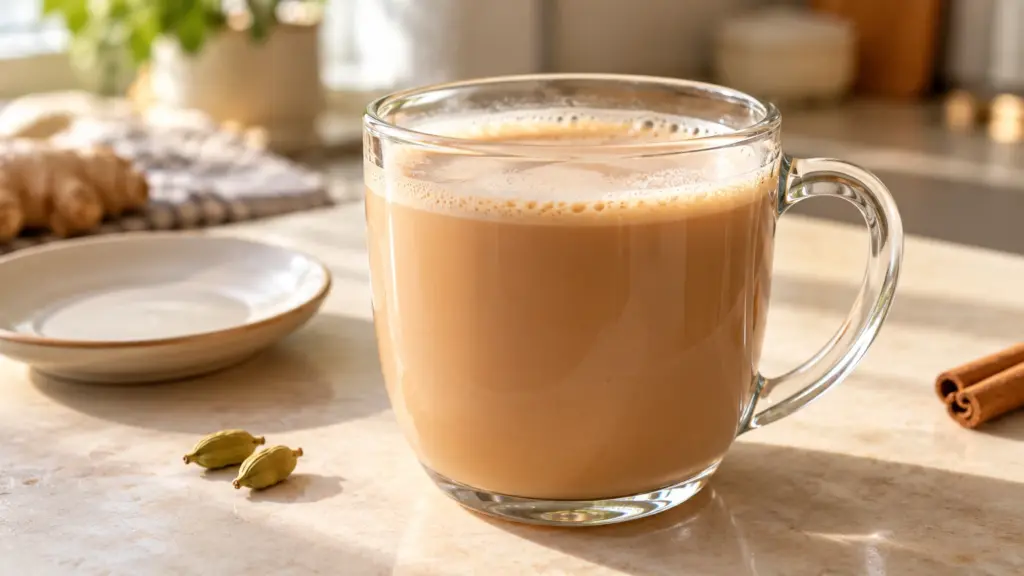
A mug of chai latte should taste like tea, not just warm sweet milk. This version starts with black tea, fresh ginger and whole spices, then adds gently heated milk and a soft layer of foam. The cinnamon brings warmth, cardamom adds a fragrant lift, and a few peppercorns give the finish a quiet little kick.
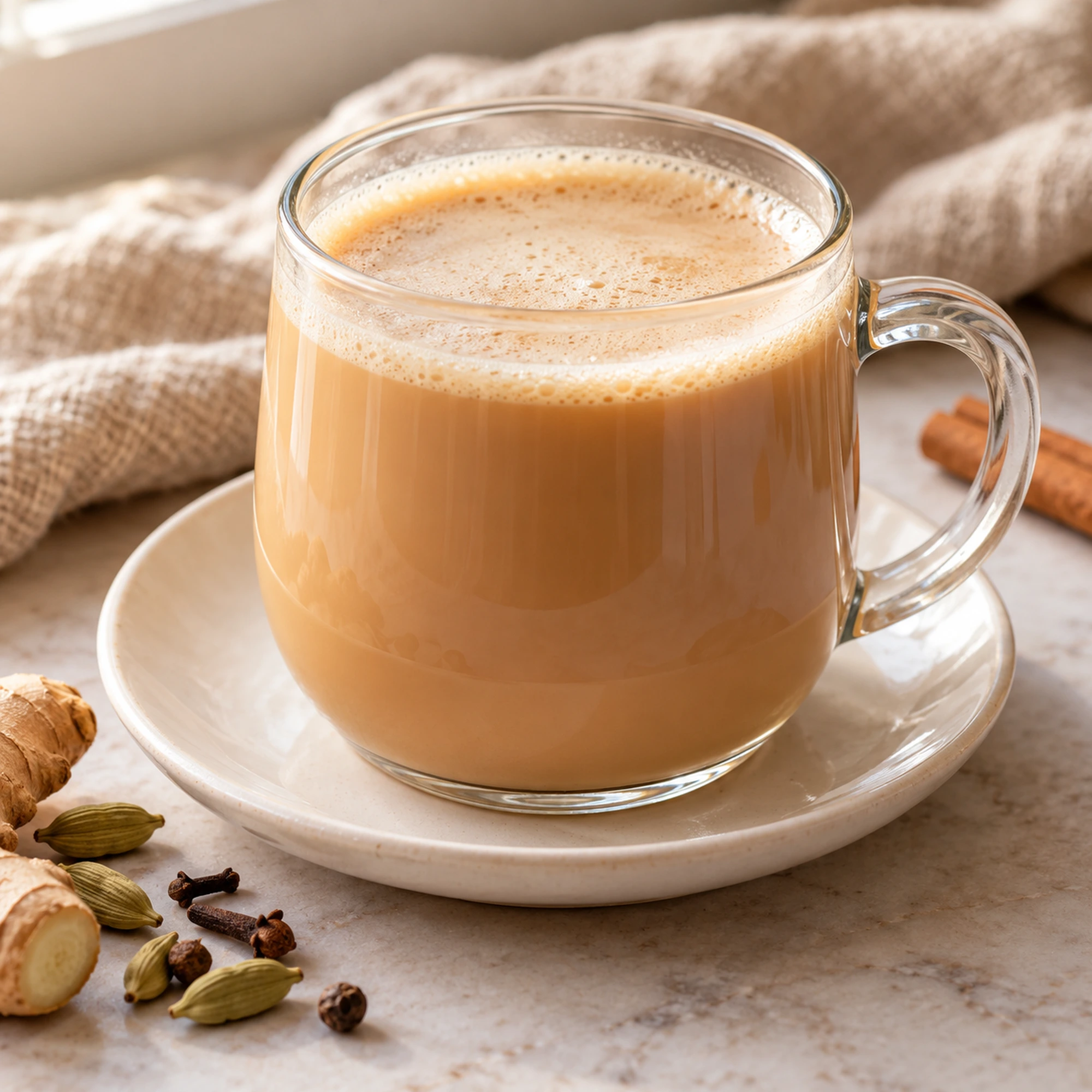
Give the spices their own simmer before adding the tea. That way, you can build an aromatic base without leaving the tea bags in the pan for ages.
I’d choose a sturdy black tea such as English Breakfast here: its flavor needs to stand up to milk. This is a café-style drink inspired by masala chai, the spiced milk tea enjoyed across South Asia. It makes two generous mugs in about 20 minutes, with no espresso machine or bottled concentrate needed.

Serving suggestions for chai latte
Use mugs that hold at least 12 ounces, so there is room for the foam without a balancing act. Divide the strained tea first, add the warm milk evenly, and spoon any remaining froth over both drinks. Serve promptly; that light foam gradually settles, which is perfectly normal.
- For breakfast, pair the latte with buttered toast and a piece of fruit. The drink is creamy, but it does not need to carry the whole meal.
- For an afternoon break, choose a plain shortbread cookie or a small square of apple fritter cake. I prefer a modest portion so the ginger and tea remain easy to taste.
- Skip the ground-spice topping if you dislike a gritty first sip. The strained infusion already carries the spice flavor, and the simple foam is enough of a finish.
Taste the finished drink before adding extra sweetener. Milk softens the tea’s edge, so the small amount of brown sugar in the card is a useful starting point.
Variations that keep the tea in focus
The recipe uses green cardamom pods, which have a fragrant, sweet-spicy character. Black cardamom is noticeably smokier and changes the drink. For a coffee-based spiced drink another day, café de olla uses cinnamon and piloncillo.
Lightly crack the pods rather than grinding everything into powder; whole pieces are much easier to strain cleanly. A fine-mesh strainer catches larger fragments; strain a second time if tiny flecks remain, so the first sip is smooth.
- For a dairy-free version, replace the milk with the same amount of unsweetened soy or oat drink. Frothing depends on the brand; a barista-style product may give a steadier foam.
- For a gentler cup, use two peppercorns instead of four. Keep the ginger and cinnamon so the drink still has a rounded spice profile.
- For less caffeine, use decaffeinated black tea and follow its brewing directions. Decaf still contains some caffeine, so it is not the same as a caffeine-free herbal drink.
- For a stronger tea flavor, choose a robust blend rather than repeatedly extending the steep. Start tasting after three minutes; more time can also bring more bitterness.
Change one thing at a time: milk, sweetness or spice. It is much easier to find the balance you enjoy when every ingredient is not auditioning for a new role.
Health benefits and the milk you choose
Most of this drink’s protein and calcium come from milk. Whole milk provides a creamy texture, along with saturated fat; using low-fat milk changes that balance. The spices contribute plenty of aroma, but this is a comforting beverage, not a treatment or a promise of better health.
- One of the two mugs is estimated at about 130 calories, 6 grams of protein and 210 milligrams of calcium when made with whole milk and the listed sugar.
- The brown sugar adds roughly one teaspoon of added sugar per mug. Milk also contains naturally occurring sugar, so total sugar and added sugar are different numbers.
- Plant-based drinks vary considerably. Check the carton for protein, calcium, fortification and added sugar; this milk-alternative comparison explains what those labels can tell you.
Choose milk and sweetness for your own needs, then enjoy the drink for its flavor. The nutrition figures are estimates, and substitutions will change them.
Make room for a fragrant pause
Set out your mugs and strainer before you start. Once the spices are fragrant and the milk is gently steaming, the last steps move quickly. A small whisk can make a soft froth; there is no need to chase towering café foam. Follow the card below, taste your first sip, and let the next mug reflect what you liked.
Chai Latte Recipe

Ingredients
- 4 green cardamom pods
- 4 whole cloves
- 4 black peppercorns
- 1 cinnamon stick about 3 inches long
- 10 g fresh ginger peeled and thinly sliced, about a 1-inch piece
- 1 cup water 240 ml
- 2 black tea bags plain Assam or English Breakfast
- 1 1/2 cups whole milk 360 ml
- 2 teaspoons light brown sugar about 8 g, loosely filled
Equipment
- Small saucepan with lid, about 1.5 quarts
- Mortar and pestle
- Knife and cutting board
- Measuring cups and spoons
- Fine-mesh strainer and heatproof pitcher
- Small whisk or milk frother
- Two heatproof mugs, at least 12 ounces each
Instructions
- Lightly crush the cardamom pods, cloves and peppercorns in a mortar, just enough to open them. Put them in a small saucepan with the cinnamon stick, sliced ginger and water.
- Bring to a gentle simmer over medium heat. Lower the heat, cover and simmer gently for 5 minutes. Keep the liquid at a quiet bubble rather than a rolling boil.
- Take the pan off the heat, add the tea bags and cover. Steep for 3 minutes, then taste; allow up to 1 more minute for a stronger brew. Lift out the bags without squeezing them.
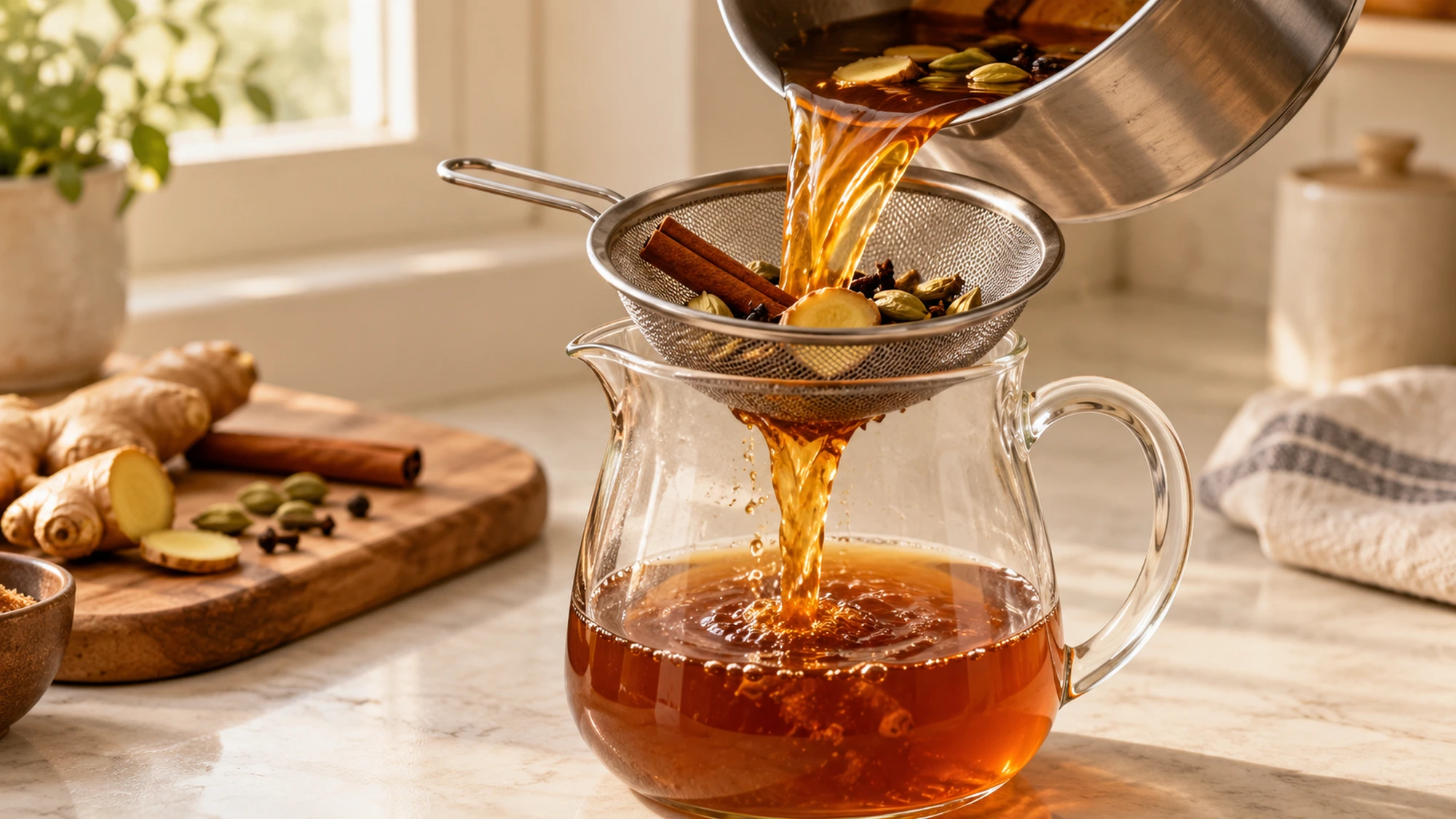
- Pour the spiced tea through a fine-mesh strainer into a heatproof pitcher. Discard the strained spices and ginger. Rinse any loose spice fragments out of the saucepan.
- Add the milk and brown sugar to the saucepan. Warm over medium-low heat for about 3 minutes, stirring, until steaming with small bubbles around the edge; do not boil. Remove from the heat and whisk briskly for 20–30 seconds, or use a milk frother while keeping its head submerged.
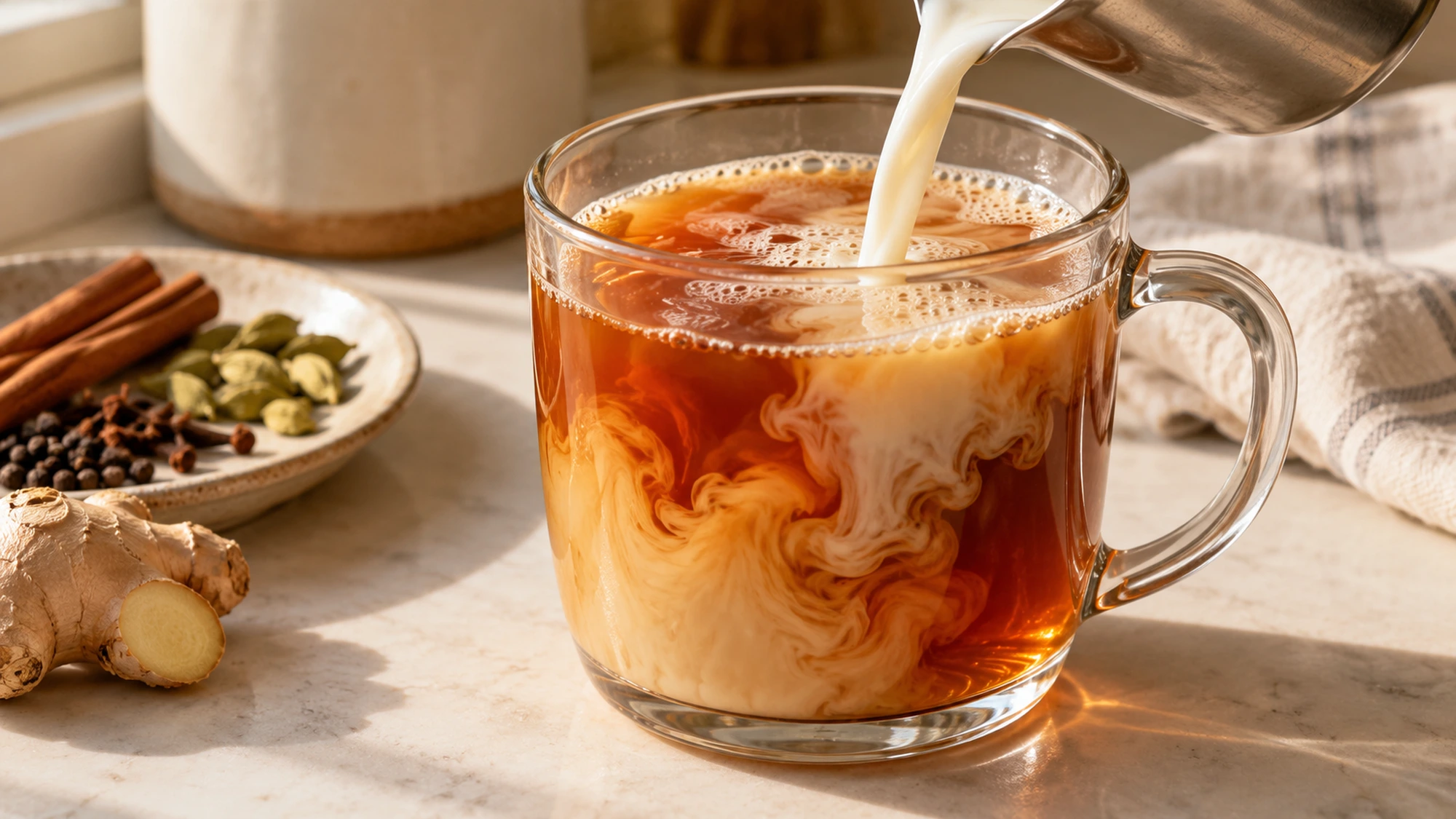
- Divide the strained tea between two heatproof mugs of at least 12-ounce capacity. Pour half the warm milk into each, then spoon over the remaining foam. Serve immediately.
Nutrition
Video
Notes
Tried this recipe?
Let us know how it turned out!Emily Parker is DISHORA’s recipe-writing persona, bringing a warm, practical voice to everyday cooking. Her focus is simple ingredients, comforting flavors and clear steps that make a dish feel approachable. From cozy dinners to something sweet, Emily’s recipes invite readers to try something delicious and make it their own.