
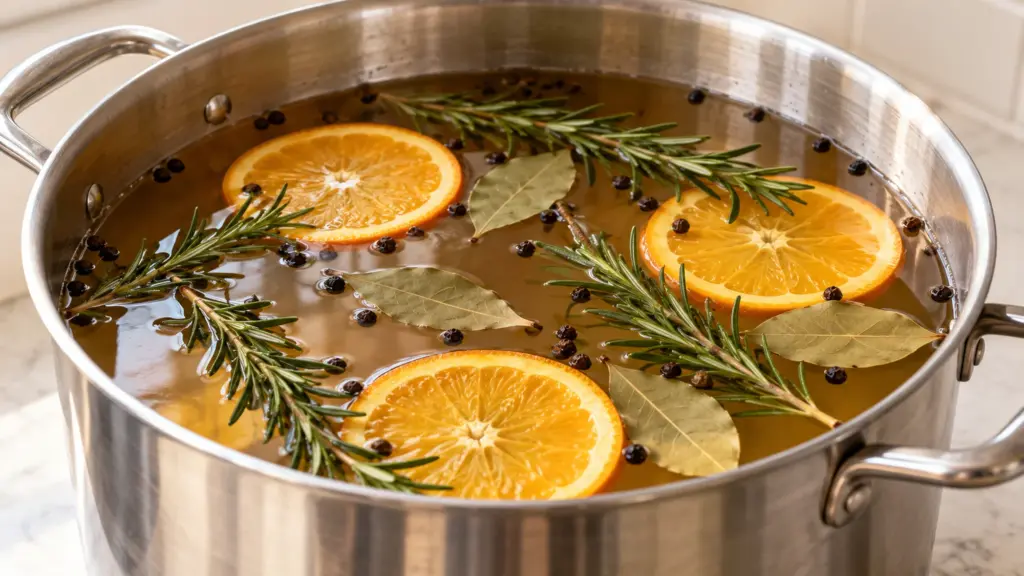
The turkey is thawed, the refrigerator is crowded, and the last thing you need is another guess. This brine for turkey uses weighed salt, brown sugar, orange and rosemary to season an unenhanced bird before roasting. The useful trick is to plan the cold space first: a fragrant pot of brine only helps when it stays properly refrigerated.
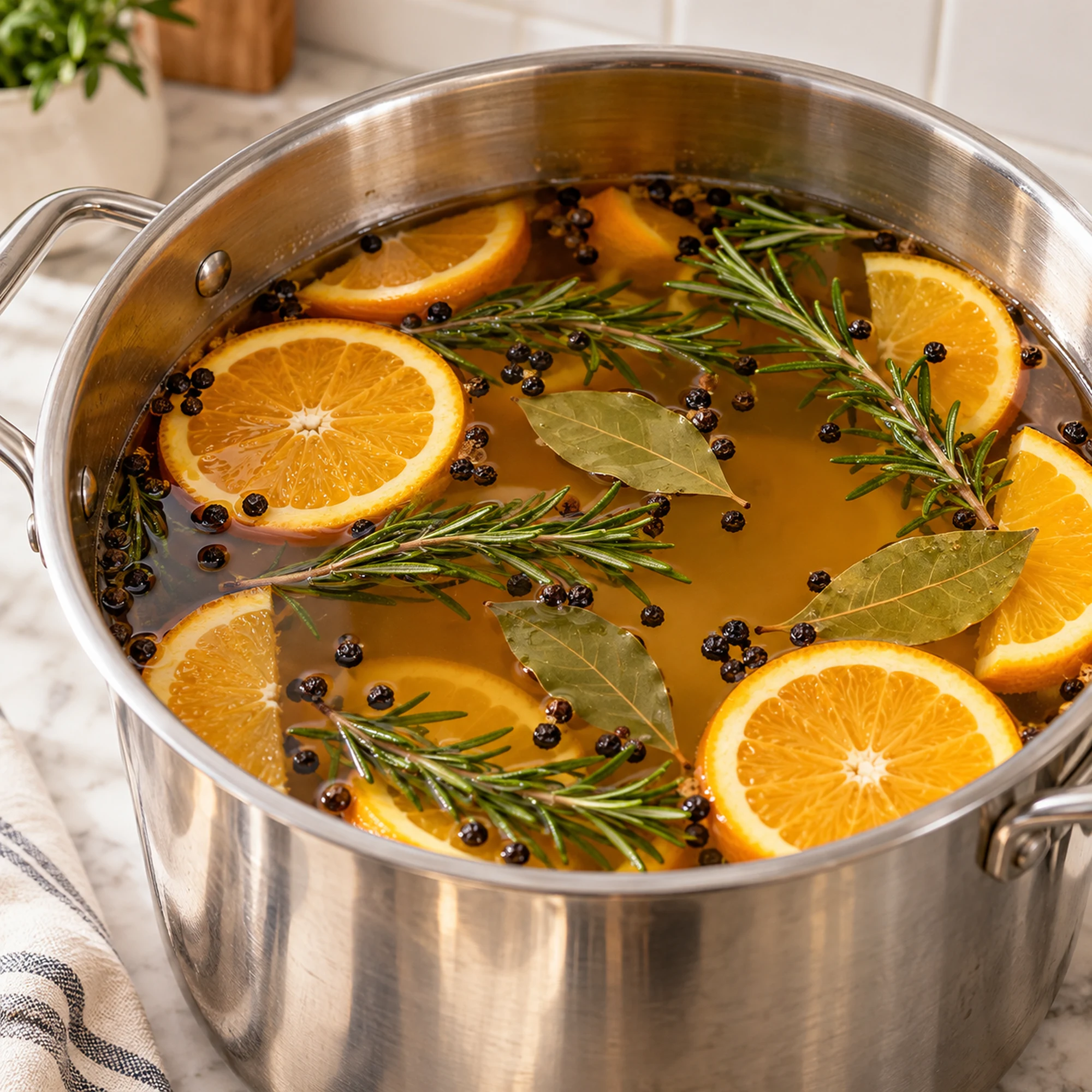
Make the brine ahead, chill it completely, then give a fully thawed 12–14-pound turkey 12 hours in the refrigerator. Weigh the salt rather than swapping cups between brands, and skip this brine if your turkey already contains added salt.
Orange peel brings a bright aroma, rosemary supplies a woodsy edge, and a little brown sugar rounds out the mixture. Salt does the essential seasoning work. I prefer keeping the aromatics familiar here; a holiday turkey already has plenty of company on the plate. This is a recipe for the brining liquid, with guidance for using it, rather than a complete roast-turkey recipe.

Serving suggestions: plan the turkey and its sides
Brine is a preparation ingredient, never a sauce to serve. Once it has touched raw poultry, discard it carefully and clean the container. After brining, pat the turkey dry without rinsing, then follow your chosen roasting recipe. Check 165°F in the thickest breast and innermost thigh and wing with a food thermometer.
- Keep the rest of the seasoning modest. Choose unsalted butter and avoid another heavy salt rub; the meat has already spent time in a salt solution.
- Build the plate around crisp vegetables, a tart cranberry accompaniment and potatoes. These air-fryer jacket potatoes offer fluffy centers while leaving oven space for the turkey.
- Taste cooked pan drippings before using them in gravy. They may be salty, so use unsalted stock and add seasoning only after the gravy has reduced.
Let the brine season the turkey, then let the side dishes bring contrast. Freshness, crunch and a little tartness keep a generous holiday plate interesting.
Variations for your brine for turkey
The orange and rosemary combination is aromatic rather than fruity. You can change those accents without turning the brine into a pantry cleanout. Keep the measured salt and water unchanged, and avoid replacing water with salted broth, which makes the final concentration harder to judge.
- For a different herb note, replace the four rosemary sprigs with four thyme sprigs. Keep the bay leaves and peppercorns for a simple savory base.
- For a sharper citrus aroma, use two washed lemons instead of the oranges. Slice them rather than adding a large quantity of juice; this is still a saltwater brine, not an acidic marinade.
- Different salt crystal sizes occupy different volumes. Use 300 grams regardless of brand, and weigh it before dissolving. A measuring cup cannot make brands interchangeable.
- If the turkey is not submerged, make additional brine in the same proportions and chill it first. Do not top up with plain water and quietly change the recipe.
Change the herbs or citrus for character; keep the salt-to-water balance steady. I’d choose one small variation before adding another handful of ingredients.
Health benefits and the honest sodium trade-off
Brining is about seasoning and moisture retention, not making turkey healthier. Cooked turkey contributes protein, but the brine adds sodium, and the amount absorbed varies with the bird, concentration and soaking time. Counting every gram of salt in the discarded liquid as eaten would be misleading; so would claiming the finished meat is low in sodium.
- Check the label for “enhanced,” “self-basting,” “kosher” or an added solution containing salt. Start with an unenhanced turkey for this recipe.
- Keep the brine and turkey at 40°F or below throughout. Use food-grade plastic, stainless steel or glass, never a trash bag or an unknown bucket.
- Salt does not sanitize poultry. Wash hands and utensils, prevent splashes, and use a thermometer for cooking rather than judging safety by color.
If you need to limit sodium closely, an unbrined turkey with measured seasoning is easier to account for. The herbs smell lovely, but they do not cancel out the salt.
A calmer start to turkey day
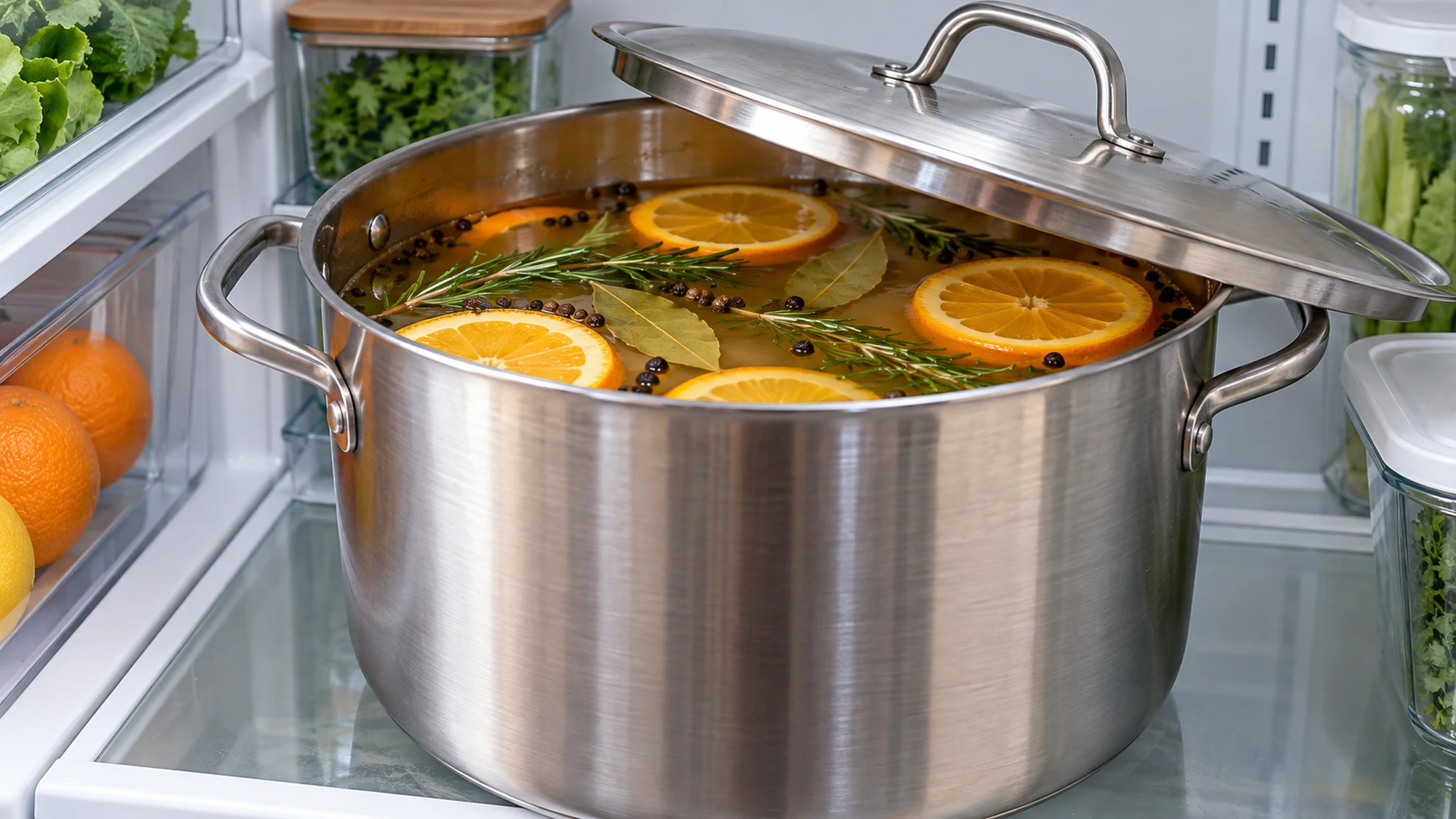
Before mixing anything, check that your container fits the refrigerator with room for the turkey. I’d rather rearrange a shelf today than balance a heavy, sloshing pot tomorrow. Have a clean tray ready for draining, and keep raw poultry below ready-to-eat foods.
Make the liquid the day before brining, cool it promptly, and refrigerate it overnight. Then the main job is simply watching the clock and keeping everything cold. For the next stage, a clear turkey-roasting guide can help you plan the oven, while your thermometer makes the final decision.
Brine for Turkey Recipe

Ingredients
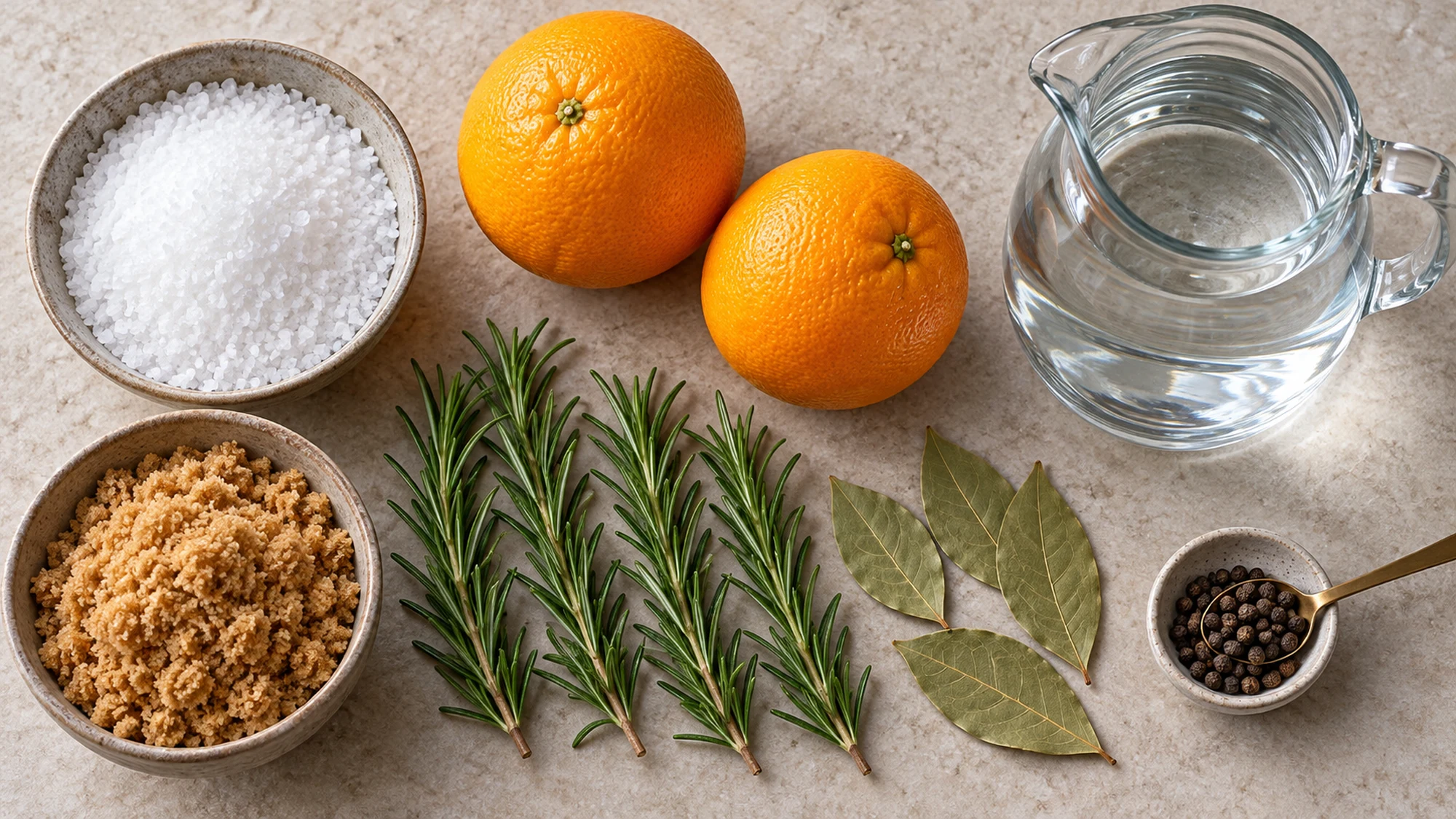
- 2 US gallons water 32 cups / about 7.6 liters, divided; most should be cold
- 300 g kosher salt Weigh it; do not substitute an equal cup measure of another brand
- 200 g light brown sugar about 1 packed cup
- 2 oranges washed and sliced
- 4 sprigs fresh rosemary rinsed
- 4 dried bay leaves
- 1 tbsp whole black peppercorns
Equipment
- 1 Large stainless steel stockpot with lid At least 16 quarts; verify it holds turkey and liquid with headroom and fits in refrigerator. A food-safe brining bag supported in a leakproof container is an alternative.
- 1 Digital kitchen scale
- 1 Measuring jug and tablespoon
- 1 Stirring spoon
- 1 Food thermometer
- 1 Knife and cutting board
Instructions
- Weigh 300 g kosher salt. Measure 2 US gallons (32 cups / about 7.6 liters) water, keeping 4 cups separate for heating and the remaining 28 cups cold. Check that your food-safe container will fit in the refrigerator.
- Put the 4 cups water, weighed salt, brown sugar, sliced oranges, rosemary, bay leaves and peppercorns in the stainless steel pot. Bring to a gentle simmer, stirring until the salt and sugar dissolve, about 5 minutes. Remove from the heat.
- Stir in the remaining 28 cups cold water. Set the pot in an ice-water bath if necessary and stir the brine to cool it promptly; keep bath water out of the pot. Cover and refrigerate overnight, until the entire brine is 40°F (4°C) or below. Never add poultry to warm brine.
- For one fully refrigerator-thawed, unenhanced 12–14-pound turkey, remove the packaging, neck and giblets without rinsing. Submerge it in the cold brine, cover, and refrigerate at 40°F (4°C) or below for 12 hours. Keep the container on a tray on the lowest shelf. If more liquid is needed, make and chill additional brine in the same proportions; never simply add water. Do not use for a pre-brined, kosher or salt-enhanced turkey.
- Lift the turkey onto a clean rimmed tray without splashing. Discard all used brine and aromatics; do not reuse or serve them. Pat turkey dry with paper towels, without rinsing. Wash hands and clean and sanitize surfaces touched by raw poultry. Follow a separate roasting recipe and cook to at least 165°F (74°C) in the thickest breast and innermost thigh and wing. This card does not include roasting time.
Video
Notes
Tried this recipe?
Let us know how it turned out!Emily Parker is DISHORA’s recipe-writing persona, bringing a warm, practical voice to everyday cooking. Her focus is simple ingredients, comforting flavors and clear steps that make a dish feel approachable. From cozy dinners to something sweet, Emily’s recipes invite readers to try something delicious and make it their own.