
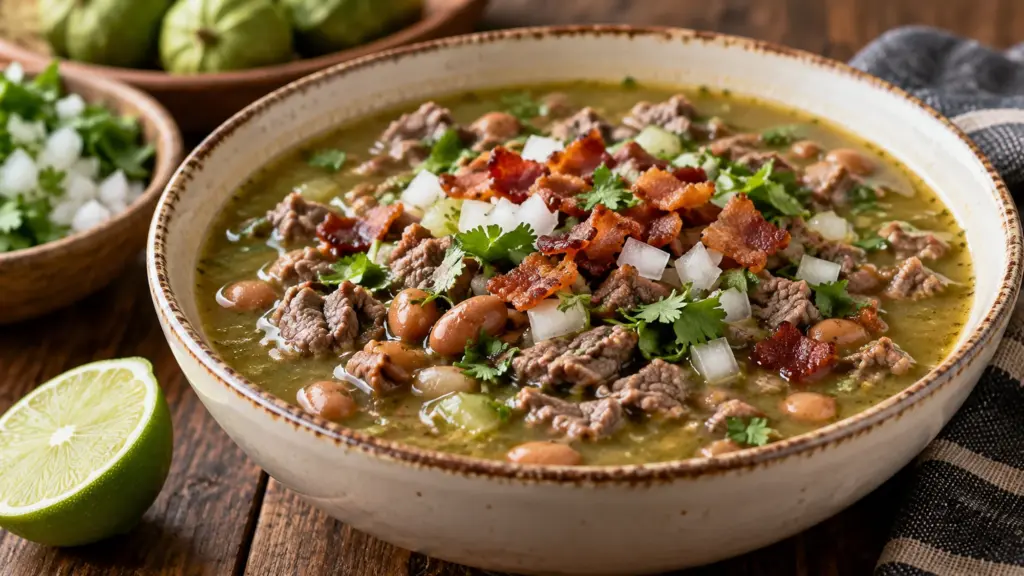
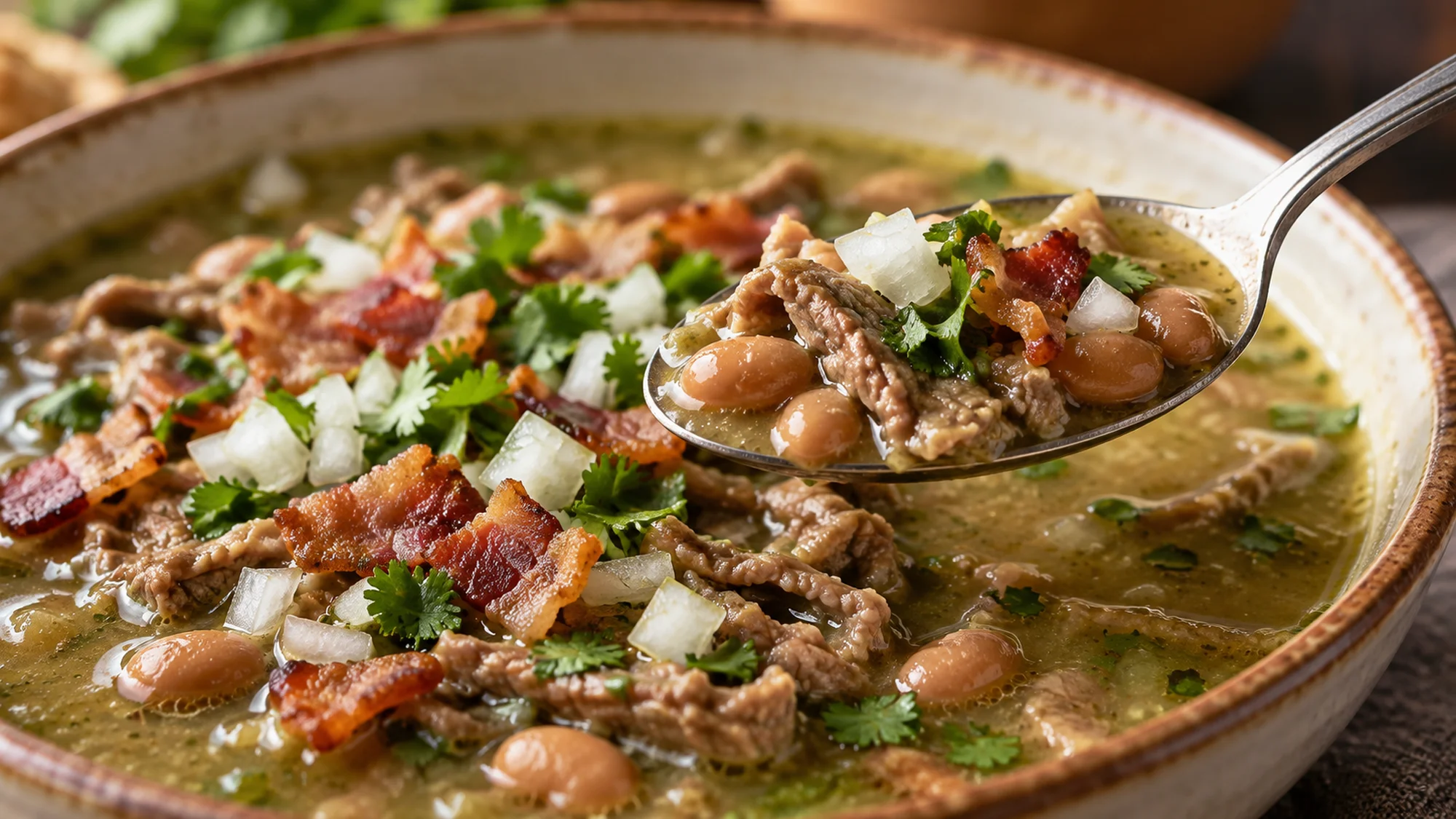
Sometimes the most inviting part of a beef dinner is the broth left in the bowl. Carne en su jugo puts that savory liquid at the center: small, thin pieces of beef simmer with a tangy tomatillo mixture, then join warm pinto beans and crisp bacon. The result sits comfortably between soup and stew, with enough broth for a proper spoonful.
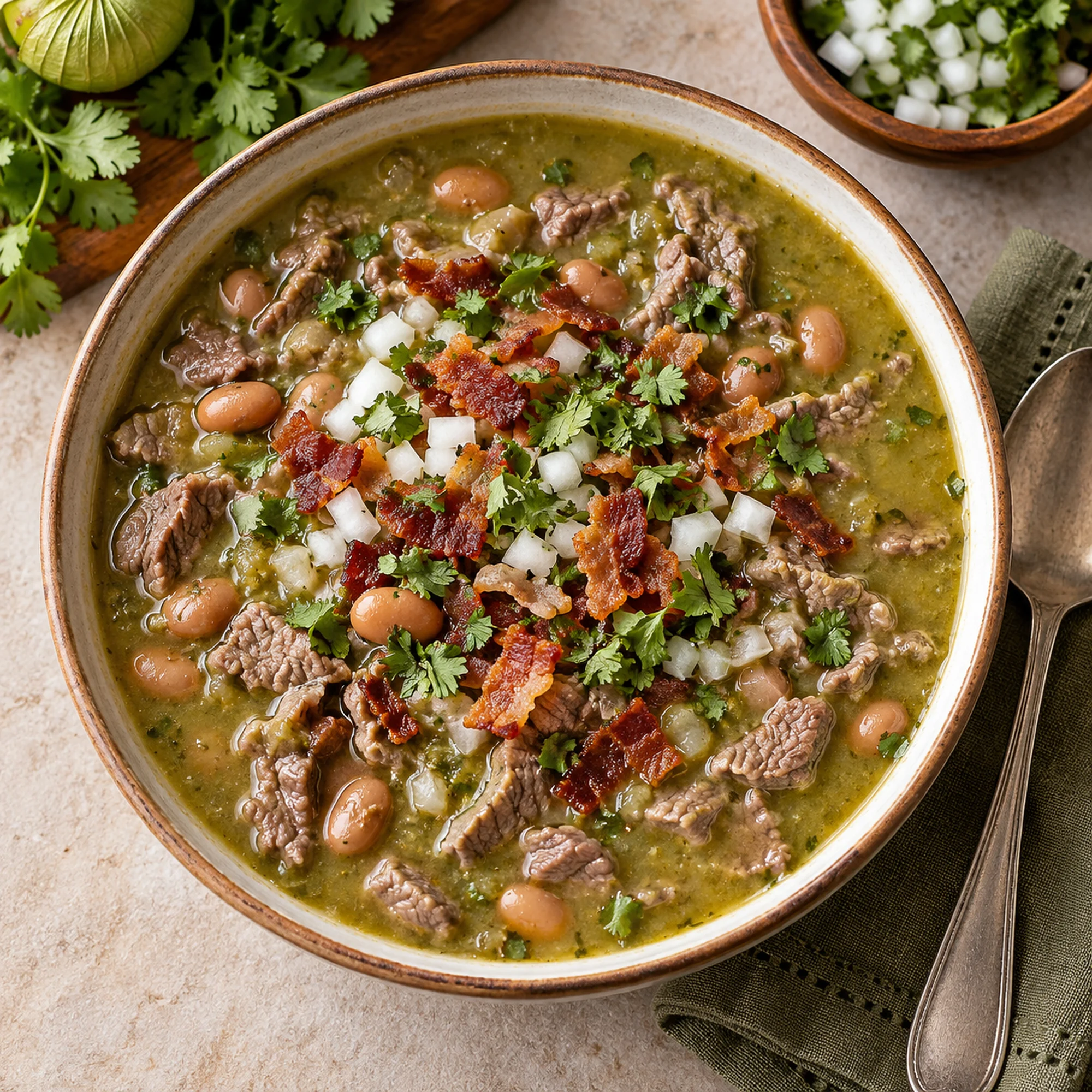
For a tender bowl, slice the sirloin thinly across the grain and let it release its juices in the pot. Keep those juices, add the green sauce and simmer gently; a dark steakhouse crust is not the goal here.
This dish is closely associated with Jalisco, especially Guadalajara. Versions vary, including preparations without tomatillos. This one leans into their tartness and uses a modest amount of bacon for six bowls. I prefer keeping some bacon crisp until serving, because that little crunch makes the soft beans and broth more interesting.
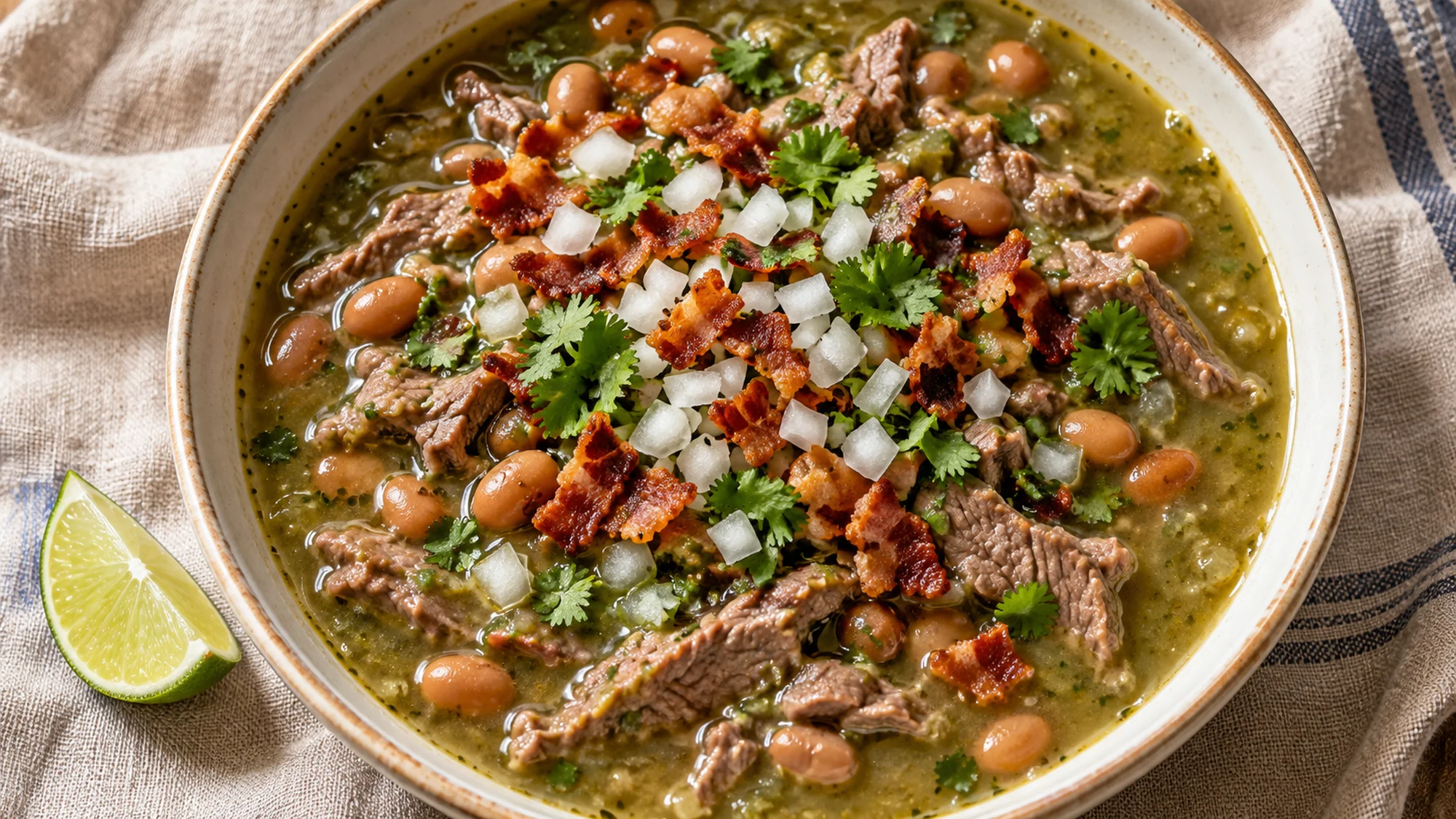
Serving suggestions for carne en su jugo
Start each bowl with warm beans, then ladle over the beef and its broth. This keeps portions fairly even and lets the beans hold their shape. Put the measured onion, cilantro and lime wedges on the table so everyone can finish their own bowl.
- Add the crisp bacon last. It softens quickly once it meets the liquid, so keeping it separate gives you a small but worthwhile texture contrast.
- Warm corn tortillas make a natural companion. Keep them wrapped while you serve, and account for them separately from the recipe’s six portions and nutrition estimate. A simple crunchy cabbage salad also works alongside, especially if you want something cool between spoonfuls.
- For another beef dinner with a different texture, try this slow-braised barbacoa. It is made for pulling into shreds, while this dish uses small slices that stay in the broth.
Keep the toppings fresh and the bowls deep. A squeeze of lime should brighten the broth rather than hide its beefy flavor; taste before squeezing in a whole wedge.
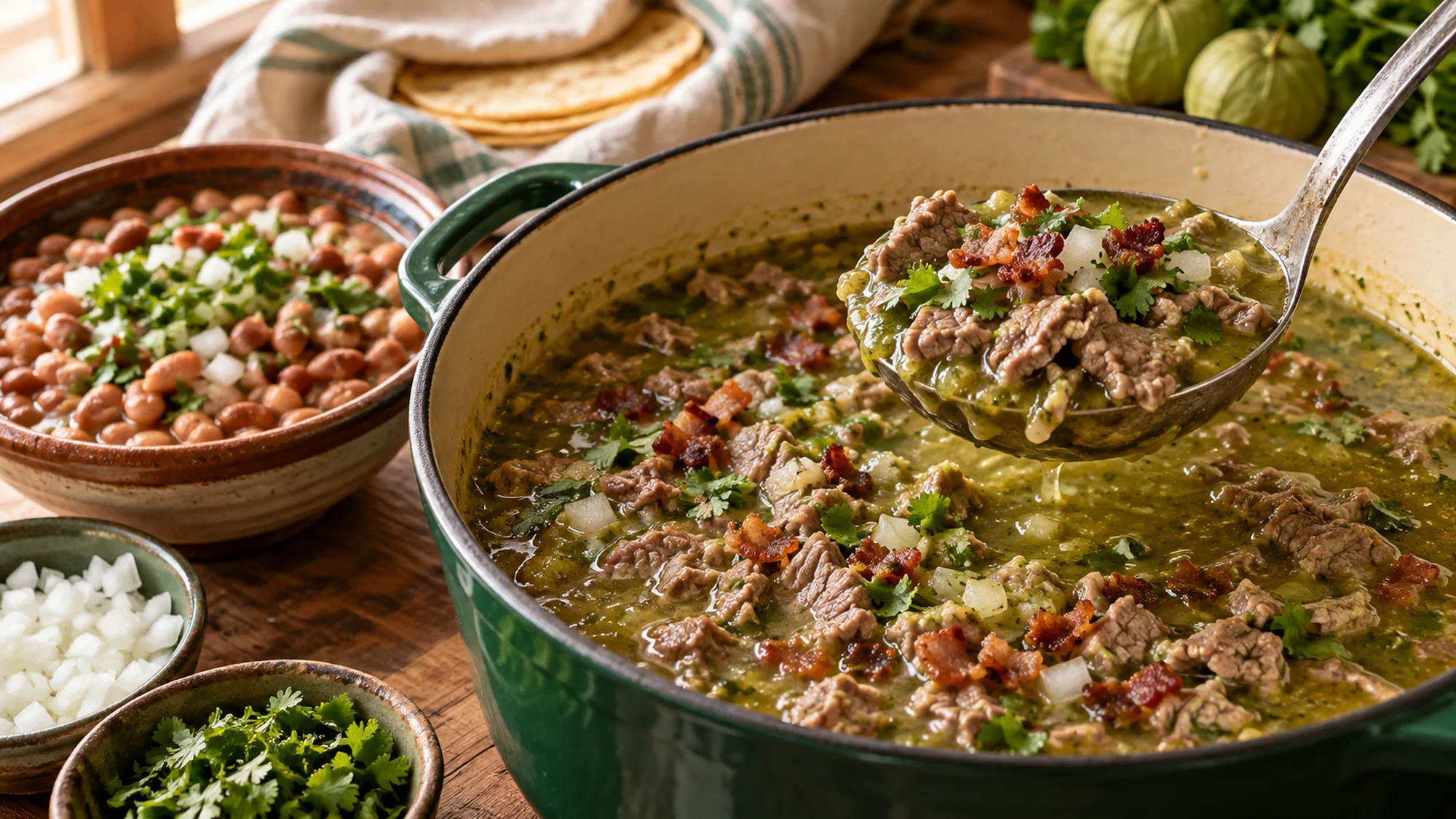
Variations that keep the broth balanced
The green sauce is lively rather than creamy. Fresh tomatillos come inside papery husks; remove those husks and rinse off the sticky coating before cooking. I’d choose fresh fruit over a jar of prepared salsa here, because salsa brings its own salt, chile and seasoning balance.
- For gentler heat, remove the serrano’s seeds and inner ribs before simmering it with the tomatillos. Individual peppers still vary, so even one can be assertive.
- Use home-cooked pintos or drained canned beans. No-salt-added pinto beans leave more room to season the broth yourself; rinse ordinary canned beans if that is what you have. Drain them before measuring so the soup keeps its intended broth balance rather than gaining an unpredictable amount of bean liquid.
- Keep the beef slices thin and cut across the visible muscle fibers. A large cube of chuck is not a direct swap: it needs a different cooking schedule to become tender.
- If the finished pot tastes too concentrated, loosen it with a little hot water. If it seems flat, try a small squeeze of lime before automatically reaching for more salt.
Adjust heat and salt in small steps. Preserve the thin beef, warm beans and spoonable broth, and the bowl will keep its character without needing a crowded topping bar.
Health benefits and useful trade-offs
Beef and beans both contribute protein, while the pintos also provide fiber. Tomatillos, onion and cilantro add plant foods and flavor, but this remains a substantial beef-and-bacon meal. No single bowl needs to carry the whole day’s nutritional responsibilities.
- Use unsalted beef broth and measure the added salt. Bacon still contributes sodium, so the finished recipe is not presented as low-sodium.
- Trim thick exterior fat from the sirloin and leave only the measured amount of bacon fat in the pot. The card’s estimate includes the crisp bacon and retained cooking fat.
- Refrigerate leftovers promptly in shallow containers and keep fresh garnishes separate. Use within three to four days, reheating the stew thoroughly to 165°F.
Look at the whole serving, including tortillas and extras. The ingredient-based nutrition estimate is a useful starting point, and your meat, bacon and bean labels can shift it.
Make room for the broth
Have the beans warm and the toppings ready before the beef finishes. Then dinner is mostly a matter of ladling, scattering and passing the lime. Let the final simmer be gentle, check that the thin beef is tender, and resist boiling away the liquid that gives carne en su jugo its name.
Carne en su Jugo Recipe

Ingredients
- 1 lb fresh tomatillos 454 g; husks removed and rinsed
- 1 serrano chile stemmed; seeds and inner ribs removed for less heat if preferred
- 4 cups water for simmering the tomatillos; add more only if needed to cover
- 1 cup cilantro leaves and tender stems loosely packed; 3/4 cup for sauce and 1/4 cup chopped for serving
- 1/2 teaspoon fine salt
- 6 oz bacon 170 g, chopped
- 2 lb boneless sirloin steak 907 g; thick fat trimmed, sliced 1/8 inch thick across grain, then cut into 1/2-inch pieces
- 1 cup finely chopped white onion about 160 g; 3/4 cup for pot and 1/4 cup for serving
- 3 cups unsalted beef broth 720 ml
- 3 cups cooked pinto beans about 510 g drained; no-salt-added canned or home-cooked
- 1 lime cut into 6 wedges for serving
Equipment
- 5–6-quart Dutch oven or heavy soup pot
- Medium saucepan for tomatillos, then warming beans
- Blender suitable for warm liquids
- Knife and cutting board
- Slotted spoon and ladle
- Measuring cups and spoons
- Instant-read thermometer for reheating
Instructions
- Put the husked, rinsed tomatillos and stemmed serrano in a medium saucepan with 4 cups water, adding a little more only if needed to cover. Bring to a boil, reduce to a simmer and cook for 8–10 minutes until the tomatillos soften and turn olive green.
- Lift the tomatillos and chile out with a slotted spoon. Let them cool slightly, then blend with 3/4 cup cilantro and the salt until smooth. Follow your blender’s hot-liquid guidance; never seal very hot ingredients in a personal blender. Discard the cooking water.
- Meanwhile, cook the chopped bacon in a 5–6-quart Dutch oven over medium heat for 8–10 minutes, stirring until crisp. Transfer to a plate with a slotted spoon. Carefully remove excess fat, leaving 1 tablespoon in the pot.
- Add the thin beef pieces to the pot over medium heat. Stir for 5–7 minutes, until the meat loses its raw surface color and releases liquid. Do not drain these juices or try to cook them away. Stir in 3/4 cup onion and the beef broth, bring to a gentle simmer and cook for 10 minutes.
- Stir in the tomatillo sauce. Simmer gently, partially covered, for 15–20 minutes, stirring occasionally, until the thin beef pieces are fully cooked and tender. Add a small splash of hot water only if needed to keep the mixture brothy. Timing varies with the cut and thickness. Warm the beans separately in the rinsed saucepan with a small splash of water, stirring until hot.
- Divide the hot beans among 6 bowls, about 1/2 cup each. Ladle over the beef and broth, then divide the crisp bacon, remaining 1/4 cup onion and remaining 1/4 cup cilantro among them. Serve each bowl with a lime wedge. Optional tortillas are additional and not included in the nutrition or cost.
Nutrition
Video
Notes
Tried this recipe?
Let us know how it turned out!Emily Parker is DISHORA’s recipe-writing persona, bringing a warm, practical voice to everyday cooking. Her focus is simple ingredients, comforting flavors and clear steps that make a dish feel approachable. From cozy dinners to something sweet, Emily’s recipes invite readers to try something delicious and make it their own.