
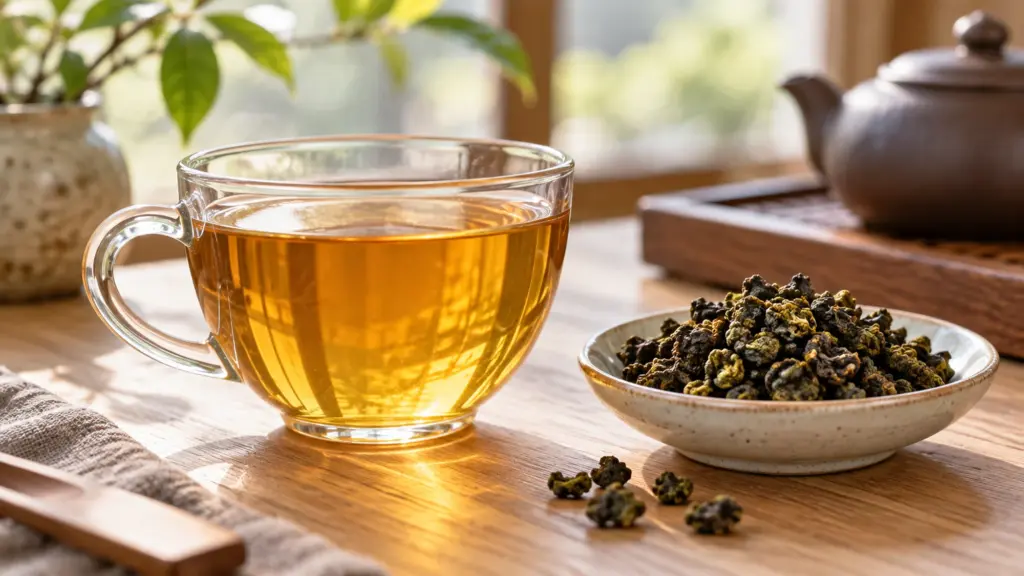
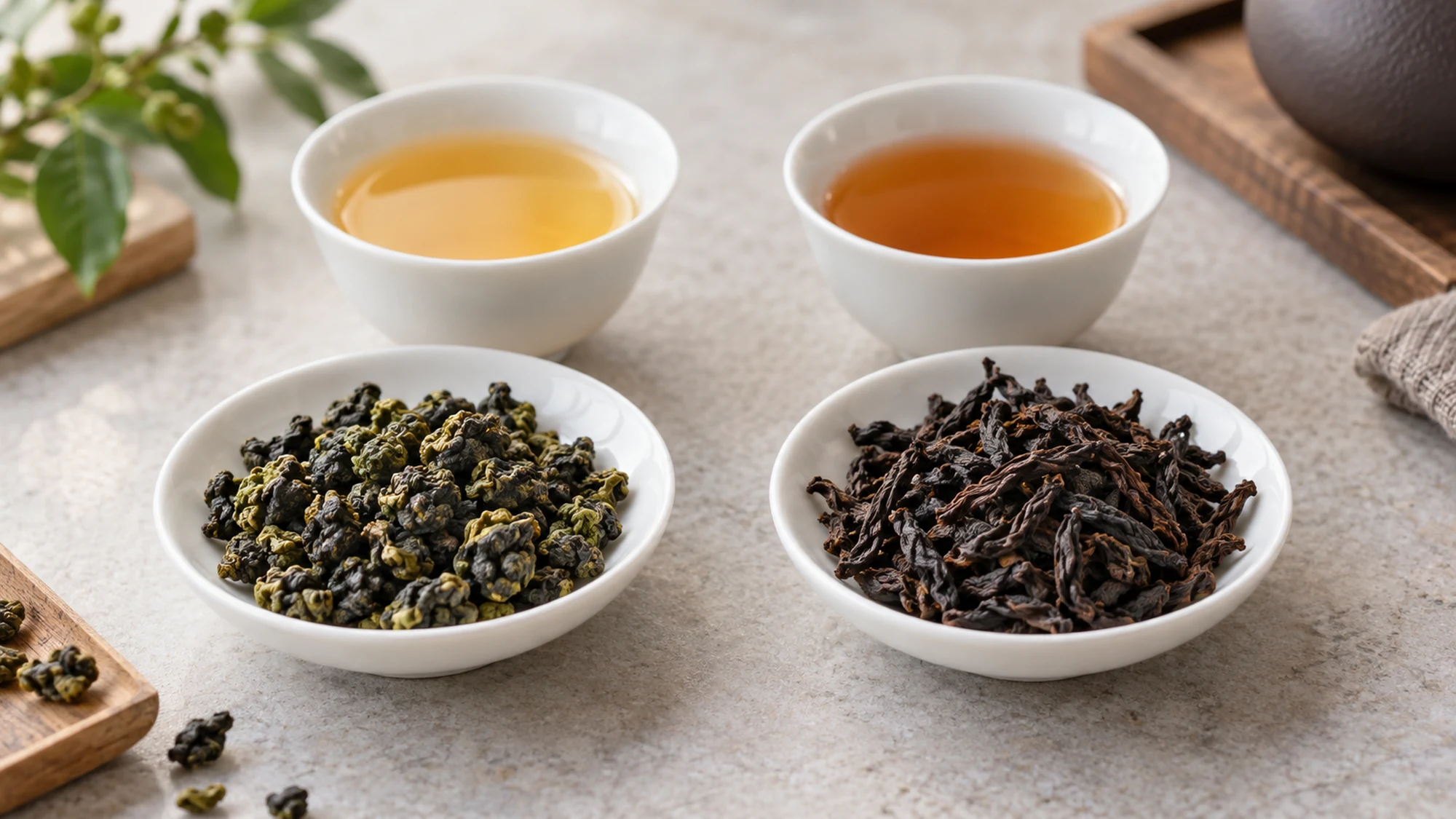
You open a packet of oolong tea expecting one familiar flavor, then find either green rolled leaves or dark, wiry ones. Both can belong to the same broad tea family. The useful question is less “What does oolong taste like?” and more “Which style am I choosing?”
Oolong tea is partially oxidized tea made from Camellia sinensis, the same plant used for green and black tea. Its style can be floral, fruity or roasted. It contains caffeine, and a pleasant cup does not need a weight-loss promise.
I’d start with a small amount and a clear description of the tea rather than a large bag labeled only “premium.” Flavor is a much better guide than an impressive adjective.
What makes oolong tea different?
Japan’s explanation of tea processing places oolong between green and black tea in oxidation. Oxidation is the reaction that changes leaf compounds after harvest; heating halts it at the maker’s chosen stage.
Tea descriptions sometimes call this “fermentation,” but the production category does not tell you that the brewed drink is a probiotic food. Oolong’s character also depends on choices such as shaping and roasting, so it is a broad family rather than one fixed taste.
- Green tea: Oxidation is stopped early in processing.
- Oolong: Leaves undergo partial oxidation before it is stopped.
- Black tea: Leaves undergo a more complete oxidation process.
A pale cup is not automatically weaker in caffeine, and a dark cup is not a reliable measurement of strength. Appearance answers only part of the question.
Use flavor descriptions to narrow the choice
Taiwan’s agricultural tourism guide describes red oolong with floral, fruity, roasted and honey aromas. Those words describe sensory notes; they do not necessarily mean flowers, fruit or honey have been added.
The World Green Tea Association’s processing guide also shows how shaping and heating distinguish oolong styles. Read the actual ingredient list when you want to know whether a product is plain tea or flavored.
| Label clue | What to check next |
|---|---|
| Floral or fragrant | Whether the aroma comes from the tea or added flavoring |
| Roasted | The producer’s roast description and suggested preparation |
| Honey or fruit notes | Tasting language versus an actual added ingredient |
| Milk oolong | Ingredients and allergen information; do not infer from the name |
| Bottled oolong | Serving size, added sugar and caffeine information |
I prefer a specific description of aroma and roast to a ranking that declares one style the best. The best starting point is the flavor you want to drink.
Brew for the particular leaves in your packet
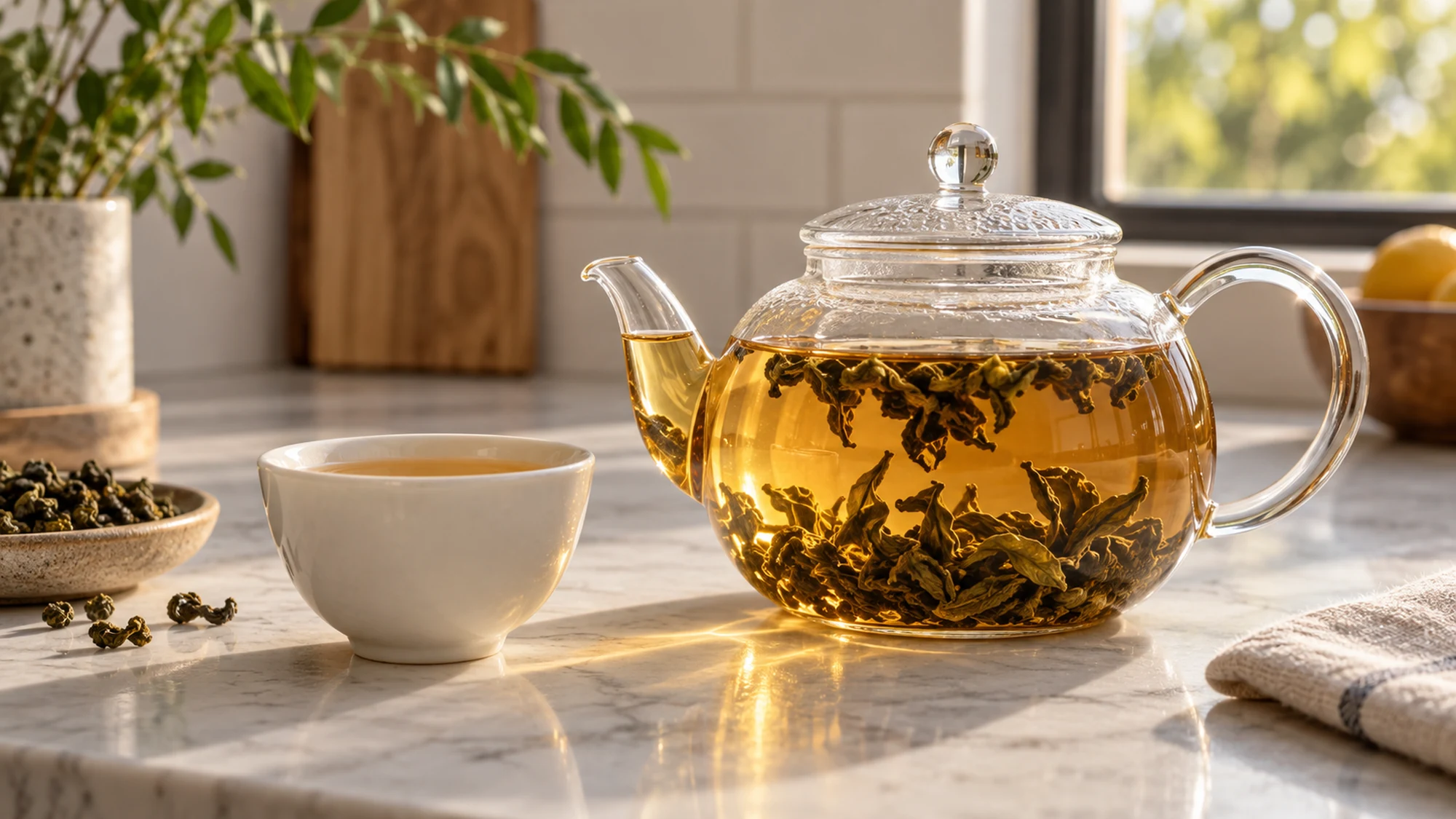
Use the producer’s directions for leaf amount, water temperature and steeping time first. A mug with an infuser and a small teapot with repeated short infusions use different proportions, so borrowing the timing from one method can make the other taste disappointing.
Give rolled leaves space to open, then separate the drink from the leaves when the suggested steep is finished. Taste before adding sweetener. If you want a different result, change one variable at a time so you can tell what helped.
- Too strong or bitter: Try a shorter infusion before assuming the tea needs sugar.
- Too faint: Check the measured leaf amount and the package’s water guidance.
- Trying a second infusion: Follow the tea’s directions and taste; do not assume every product gives the same number.
- Making iced tea: Expect ice to dilute it. DISHORA’s iced-tea guide explains that principle using black tea.
A timer is more useful than trying to rescue an over-steeped cup. Let the first brew give you a baseline.
Caffeine and health claims deserve a closer look
Oolong naturally contains caffeine. The FDA notes that sensitivity varies; its general adult reference is not a personal goal. Product, portion and preparation matter, and sleep disruption is a reason to reconsider timing or amount.
A 2020 crossover trial in 12 healthy men found changes in fat oxidation after 14-day oolong periods, without increased daily energy expenditure. It did not demonstrate body-fat loss; the authors explicitly said the study was too short to establish that.
- Do not turn a metabolic measurement into a promise of weight loss.
- Count other caffeine sources and follow any individual medical limit.
- Check added sugar in bottled products rather than assuming all tea drinks are equivalent.
- Discuss caffeine during pregnancy or breastfeeding, and relevant medicine concerns, with your clinician.
Make the next cup easier to choose
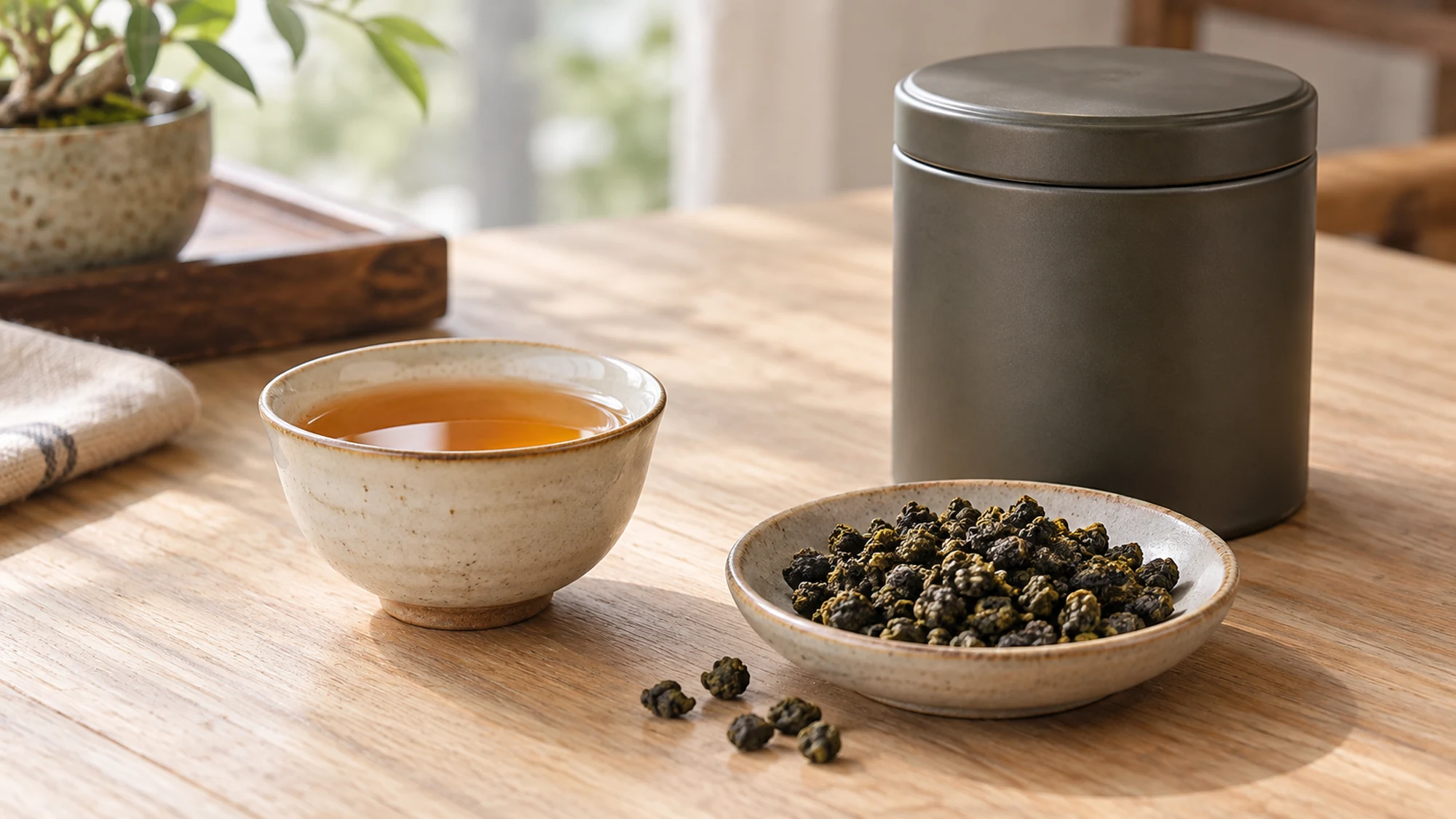
Keep the tea in a well-closed container away from moisture and strong kitchen odors, following any storage directions on the pack. Retain the product name and brewing notes so you can repeat a cup you liked.
When you compare two teas, use the same cup and record the preparation. That is a practical tasting exercise, not a caffeine test or a health experiment. You may simply discover that a lighter aroma suits one moment and a roasted style another.
Choose oolong for its flavor, use directions suited to the leaves, and keep expectations about health modest. There is plenty to enjoy without making the cup work overtime.
Sources
- Japan MLIT: processing different types of tea
- Taiwan Agriculture Tourism: tea styles and aromas
- World Green Tea Association: oolong processing
- FDA: caffeine and sensitivity
- Zhang and colleagues, 2020: oolong crossover trial

Emily Parker is DISHORA’s recipe-writing persona, bringing a warm, practical voice to everyday cooking. Her focus is simple ingredients, comforting flavors and clear steps that make a dish feel approachable. From cozy dinners to something sweet, Emily’s recipes invite readers to try something delicious and make it their own.