
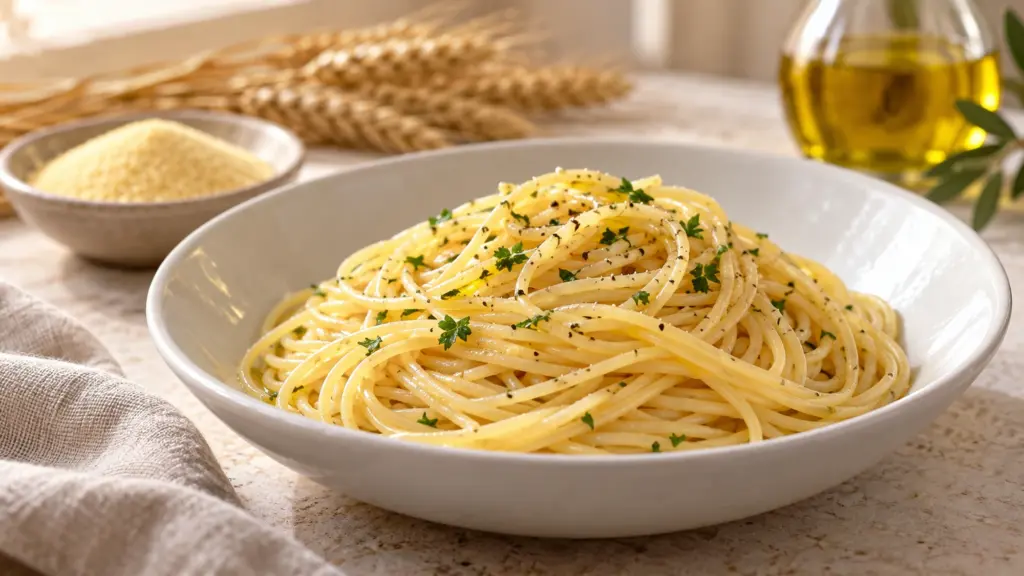
Two boxes of spaghetti can look almost identical until you turn them around. One says semolina, another says durum wheat, and a third adds whole grain. Those words tell you different things about the wheat and how it was milled.
Spaghetti durum wheat means spaghetti made with durum, the hard wheat commonly milled into semolina for pasta. Durum describes the wheat; semolina describes a milled ingredient. Neither word by itself means whole grain or gluten-free.
I would start with the ingredient list rather than the most impressive phrase on the front. It is the quickest way to understand what you are buying, especially when texture, fiber or a wheat restriction matters.
What is spaghetti durum wheat?
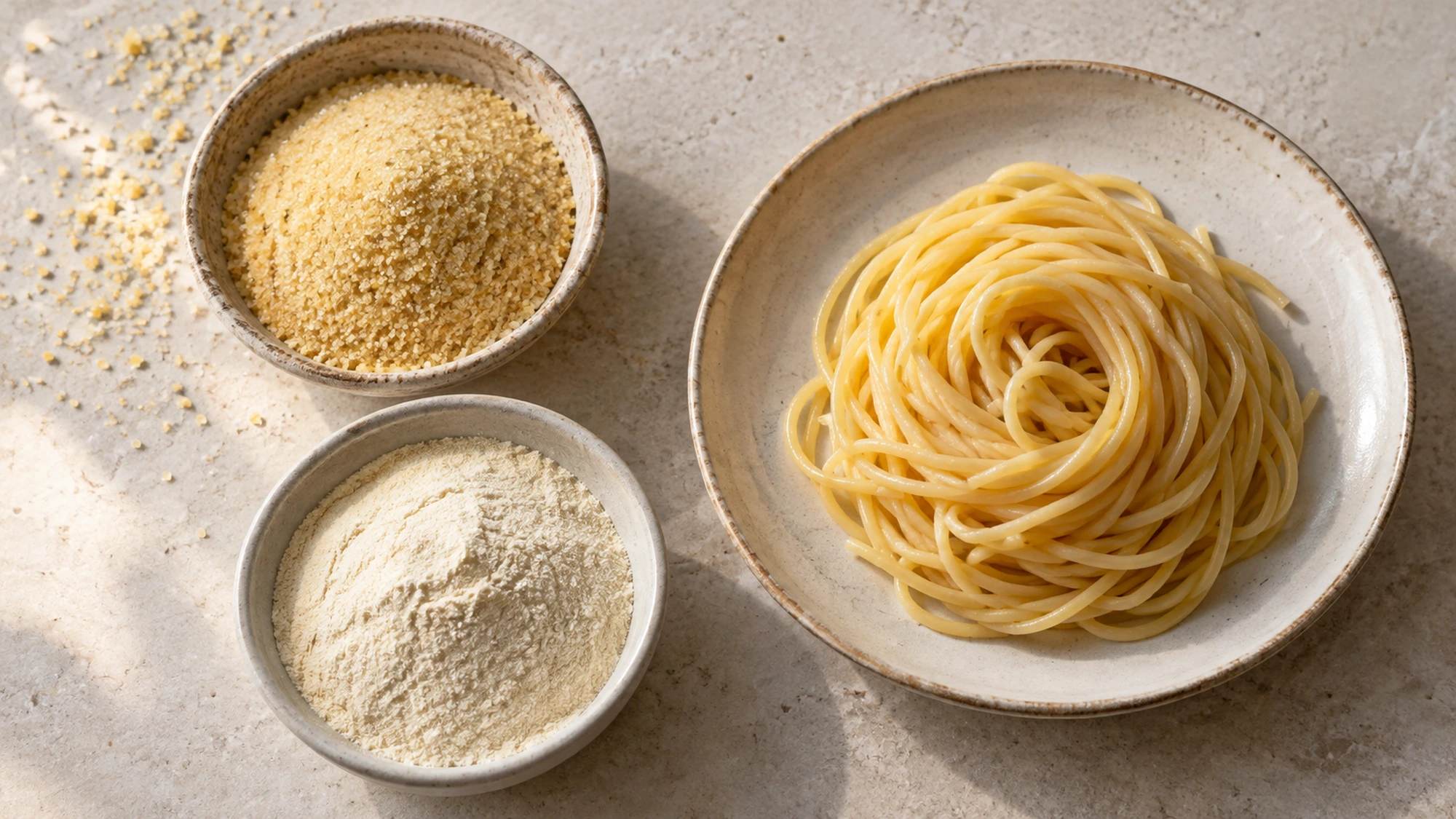
Durum is a hard class of wheat valued for pasta. U.S. Wheat Associates describes its amber color, hard kernels and suitability for semolina. Its characteristics help pasta manufacturers produce strands with an appealing golden color and texture.
Spaghetti is the long, thin shape, while durum identifies the wheat behind it. The same wheat can become other pasta shapes or couscous. A package can therefore mention both spaghetti and durum without describing two separate ingredients.
- Spaghetti: the pasta shape.
- Durum: the wheat class.
- Semolina: the coarse milled wheat ingredient commonly used for dry pasta.
Semolina, whole grains and the label comparison
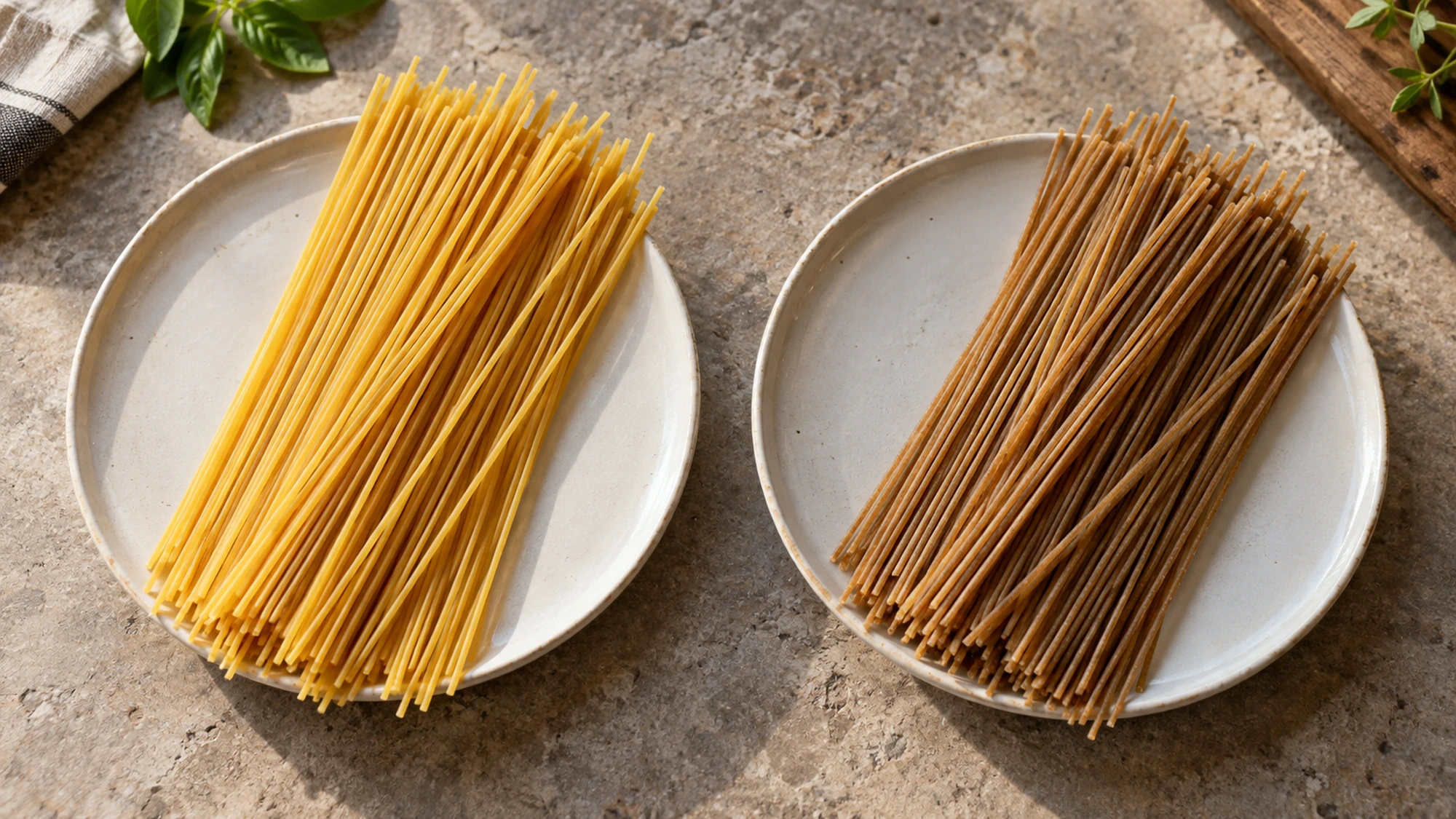
Ordinary semolina pasta is usually refined; for a whole-grain choice, look for whole durum wheat or whole-wheat semolina in the ingredient list. These terms answer different shopping questions, so check the ingredient list and allergen statement rather than assuming the golden color tells the whole story.
New Mexico State University’s grain guide explains that whole grains retain the entire kernel, whereas refining removes bran and germ. Enrichment replaces certain nutrients; it does not turn refined pasta back into a whole grain. I prefer comparing the fiber line on the actual boxes instead of treating one word as a complete nutrition verdict.
Compare nutrition using the same dry weight or the same stated serving, since cooked pasta takes up water and becomes heavier. A number per 100 grams of dry spaghetti cannot be compared directly with one per 100 grams cooked. Also check whether a nutrition panel describes plain pasta or includes a suggested sauce; that small detail can make two similar boxes appear surprisingly different.
| Label term | What it tells you | What to check |
|---|---|---|
| Durum wheat | The wheat used | Whether the ingredient is whole or refined |
| Semolina | A milled wheat ingredient | Whole-grain wording and fiber per serving |
| Enriched | Certain nutrients were added back | The ingredient list; it is not a whole-grain claim |
| Whole durum wheat | Whole-grain wheat ingredient | Other ingredients and the serving size |
| Gluten-free | A separate gluten claim | A suitable product for your dietary needs |
Why cooking time still matters
A good ingredient list cannot rescue spaghetti left boiling until it turns limp. Thickness, brand and processing affect the cooking time, so use the package range as a starting point and taste a strand near the early end.
For a hot sauced dish, stop when the spaghetti is almost as firm as you want, then finish it briefly with the sauce. A splash of cooking water can help the sauce coat the strands. The aim is a pleasant bite with no hard, dry center, rather than a universal number of minutes.
- Stir after adding the strands so they separate.
- Taste instead of relying only on the timer.
- Reserve a little cooking water before draining.
- Combine pasta and sauce while both are hot.
Choose the sauce and serving to suit the pasta
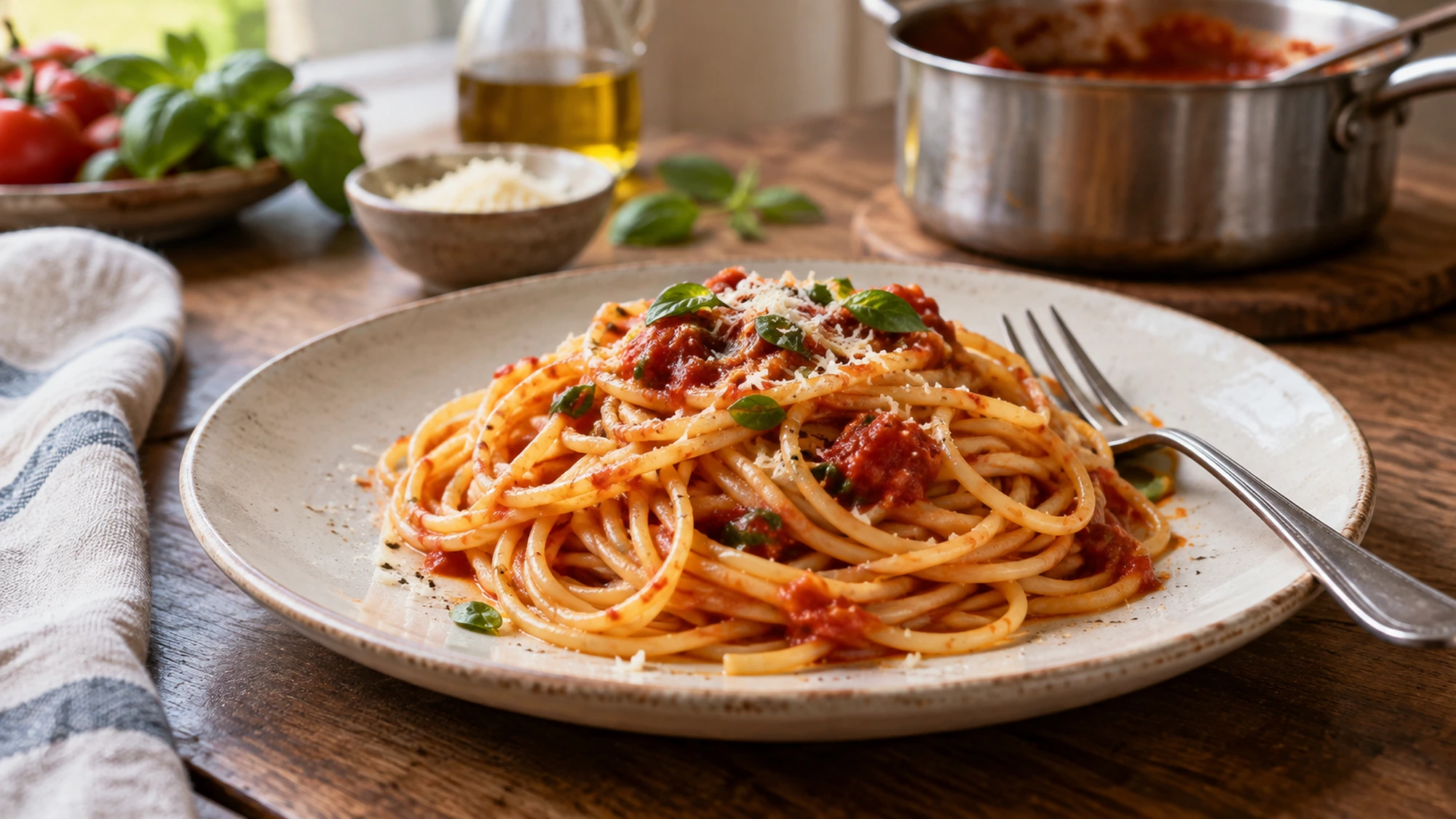
Golden durum spaghetti has a mild wheat flavor that works with tomato, olive oil, seafood or mushroom sauces. Whole-wheat versions often have a more pronounced grain flavor. Neither needs a complicated sauce to be useful.
For a clear starting point, Dishora’s pomodoro sauce with fresh basil explains how to coat hot pasta without drowning it. I would choose a sauce you enjoy, then add vegetables, beans or another protein to build the meal around the portion you actually want.
The useful takeaway before you buy
Durum wheat contains gluten. It is not suitable for a gluten-free diet simply because it is a different wheat class. The FDA explains wheat and gluten labeling; use an appropriately labeled alternative when gluten must be avoided.
Keep dry spaghetti sealed in a cool, dry cupboard and follow the package’s storage advice. Before buying, check the whole-grain wording, fiber per stated serving and ingredients. Once the pot is on, let a tasted strand make the final cooking decision.
Choose durum spaghetti for the texture you enjoy, use the label to identify whole grains, and remember that durum is wheat and contains gluten.
Sources
- U.S. Wheat Associates: durum and semolina
- New Mexico State University: whole and refined grains
- FDA: wheat, gluten and gluten-free labels

Emily Parker is DISHORA’s recipe-writing persona, bringing a warm, practical voice to everyday cooking. Her focus is simple ingredients, comforting flavors and clear steps that make a dish feel approachable. From cozy dinners to something sweet, Emily’s recipes invite readers to try something delicious and make it their own.