
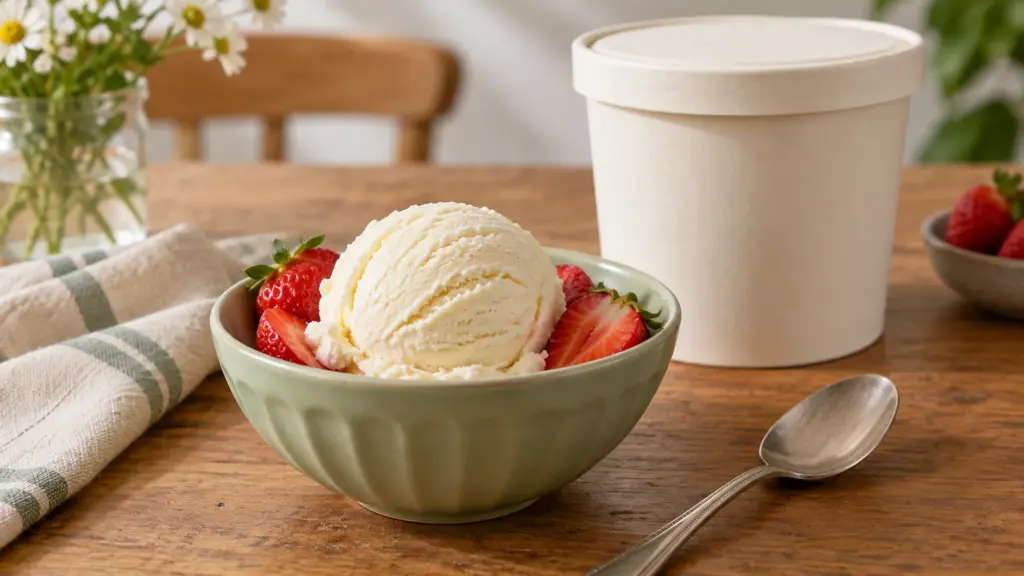
The freezer aisle can make a simple dessert feel like a homework assignment. One carton celebrates protein, another cuts sugar, and a third puts a reassuring leaf on the front. Turn the package around before letting that first impression choose your scoop.
Healthy ice cream is best treated as a personal food choice, not a promise on a carton. Compare the amount you plan to eat, added sugars, saturated fat and ingredients, alongside your dietary needs and whether you enjoy the dessert.
I’d choose a flavor I actually want before comparing its label with similar options. A product that wins on one number but disappoints in the bowl is not automatically the most useful purchase.
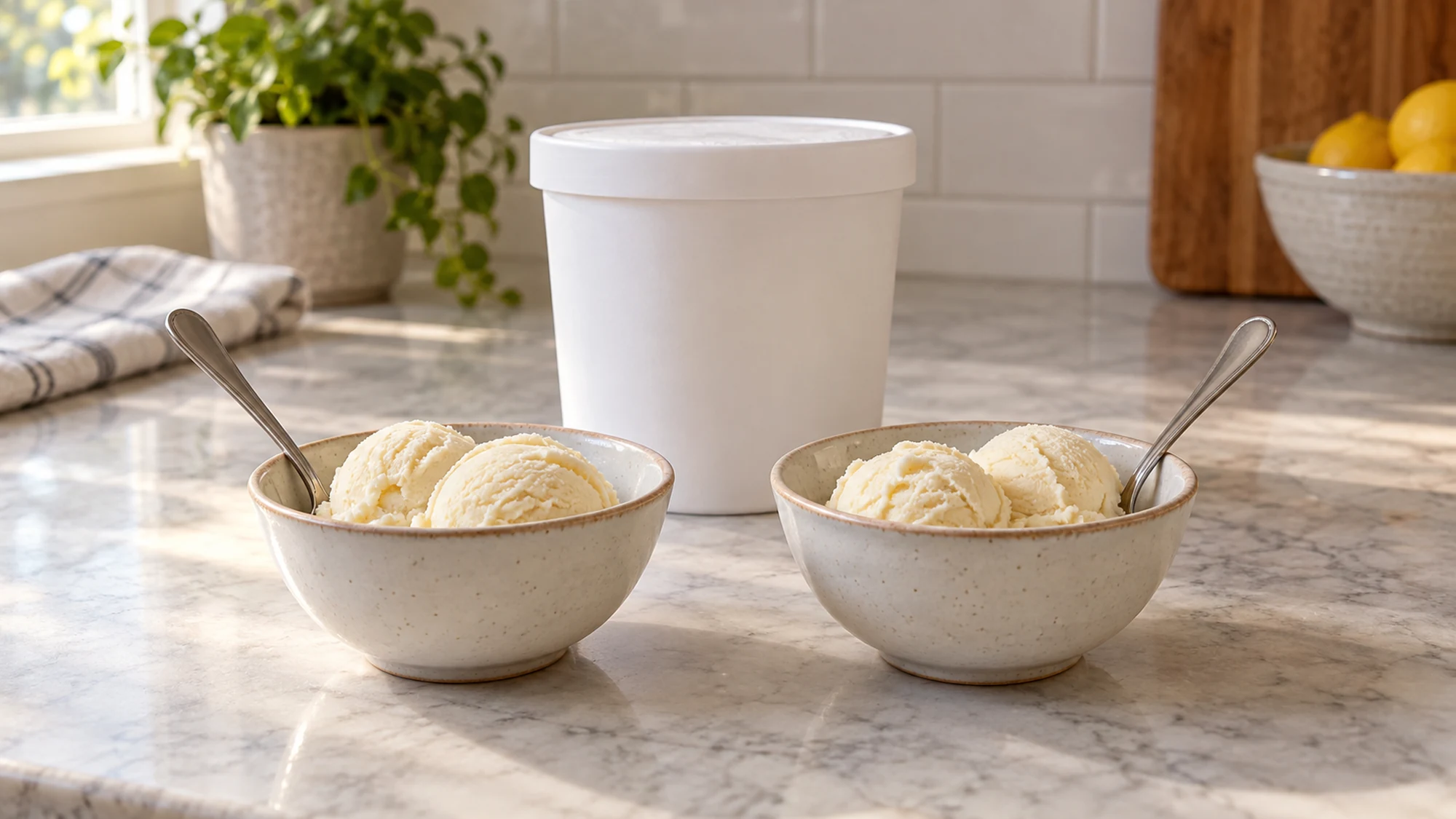
Compare the same amount first
Start with serving size and servings per container. The FDA’s usual ice cream reference serving is two-thirds of a cup, but labeled serving sizes describe customary consumption, not a recommended portion for every person. Check the carton in your hand instead of assuming every frozen dessert uses identical figures.
- Compare equal volumes for the portion you usually serve, and note the gram weights because airy and dense products can differ.
- Keep per-serving numbers separate from per-container numbers.
- Multiply the nutrients when your bowl contains more than the labeled serving.
- Count cones, syrup and other additions if you are comparing the complete dessert.
For example, if a fictional label lists 120 calories per half-cup, one cup supplies 240 calories. That arithmetic illustrates portion comparison; it is not a tested product or a target you need to follow.
A fair comparison starts with the same amount, then asks what that amount provides.
What to check on a healthy ice cream label
Choose the information that answers your actual question. If you are comparing saturated fat, a protein claim cannot do that job. The FDA’s general guide to percent Daily Value treats 5% or less as low and 20% or more as high for an individual nutrient per serving.
| Check | What it helps answer |
|---|---|
| Serving size | Are the portions comparable? |
| Saturated fat | How do equal amounts compare? |
| Added sugars | How much sugar was added? |
| Protein | Does the actual amount suit your purpose? |
| Ingredients | Which sweeteners and allergens are present? |
Added sugars and total sugars are different lines; do not compare one carton’s total with another’s added amount. Read the overall pattern instead of looking for a product that is lowest in everything. Ice cream can remain dessert without being asked to replace a balanced meal.
Use front-of-carton claims as a reason to read the details, rather than as a complete nutrition assessment.
Low sugar can come with a different trade-off
Reduced-sugar frozen desserts may use sweeteners such as sugar alcohols. They help replace sweetness and can contribute bulk or texture, but the experience varies by product and person. The FDA notes that sugar alcohols can cause gas, bloating or diarrhea in some people.
- Look for ingredient names such as sorbitol, maltitol, erythritol or xylitol.
- If you know a particular sweetener bothers you, check for it before buying.
- Remember that sugar-free wording does not establish that a dessert has no carbohydrate, fat or calories.
- A smaller serving of a familiar dessert is another option if you prefer its flavor and texture.
Choose a formulation that fits your preferences and tolerance; a lower sugar number is only one part of the decision.
Dairy-free and lactose-free answer different questions
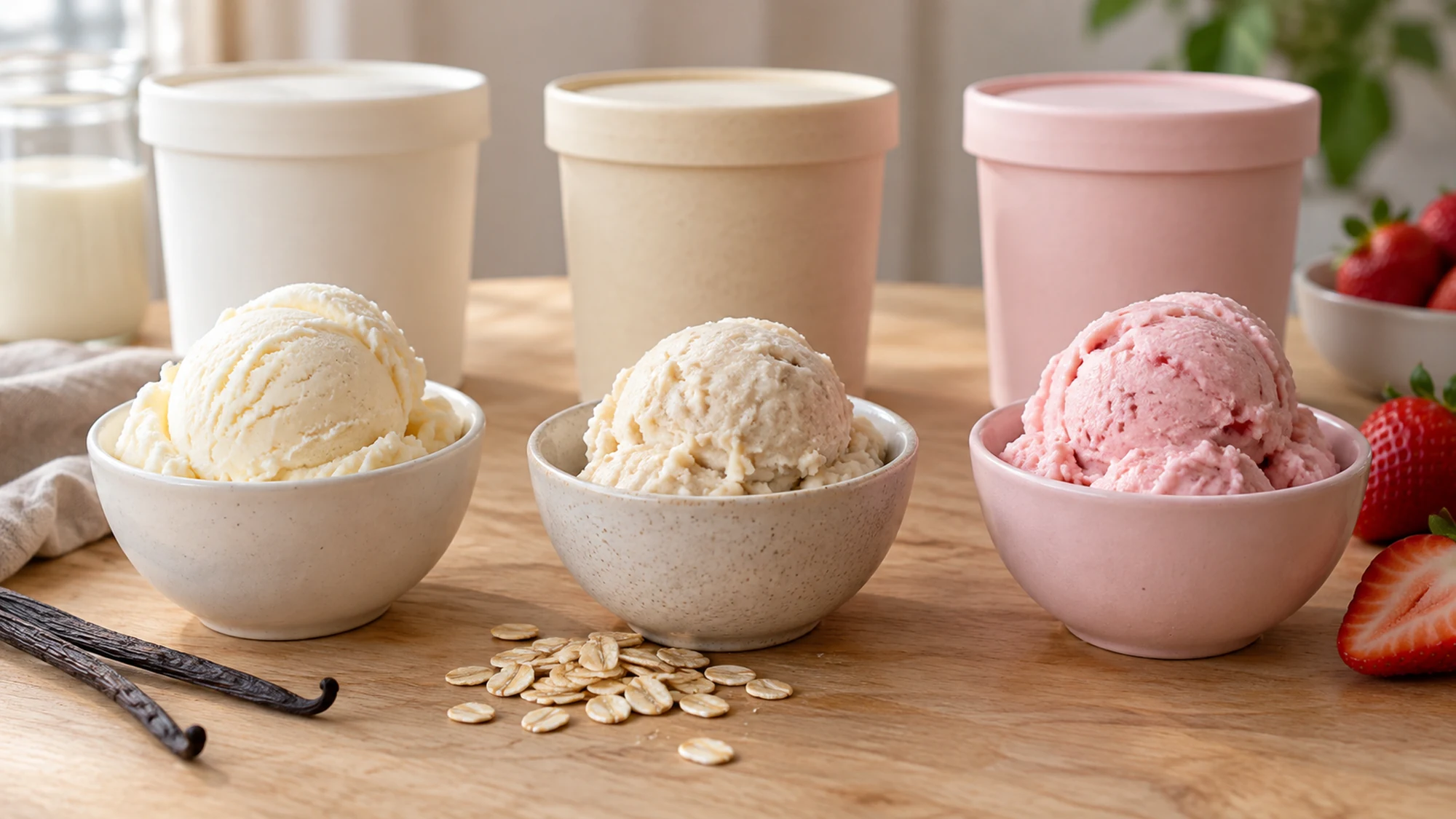
A frozen dessert made with oat, almond, soy or coconut ingredients deserves its own label check. Compare its saturated fat, protein and added sugars with the dairy product rather than assuming plant-based automatically means a particular nutrient profile.
For lactose intolerance, a lactose-free dairy option may be useful; NIDDK explains that individual lactose tolerance varies. Milk allergy involves a response to milk proteins, so removing lactose does not establish suitability for someone avoiding those proteins. Read the ingredients and allergen information for your particular needs.
- Check the base ingredient and any mix-ins separately.
- Do not assume frozen yogurt is dairy-free because it sounds lighter.
- Compare calcium or other nutrients on the specific label if they are part of your buying decision.
Keep the bowl enjoyable
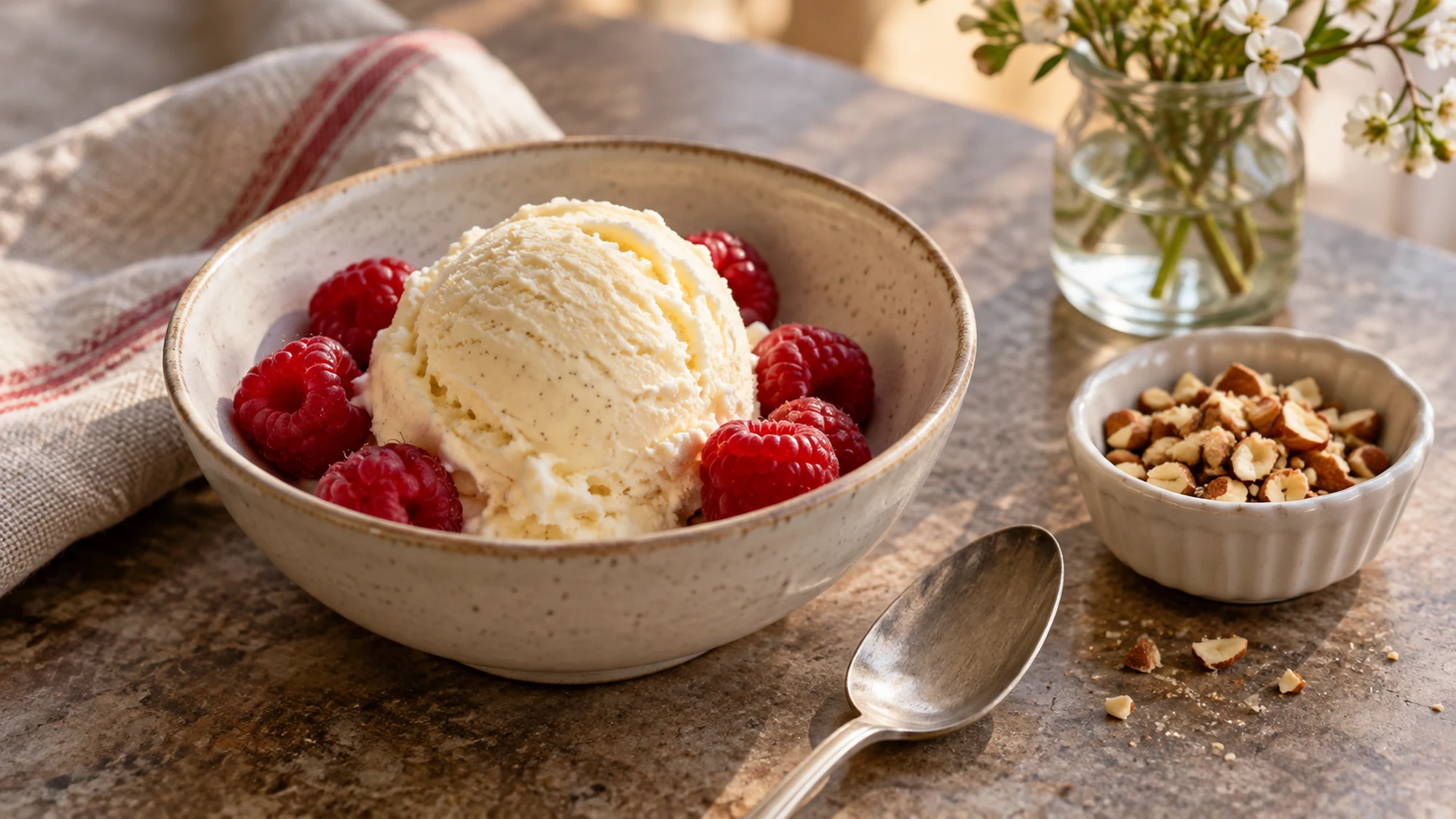
I’d give flavor and texture a place in the decision alongside the numbers. Choose the portion that suits you, serve it in a bowl and decide whether berries, nuts or another topping improves the dessert you want. Toppings can change the nutrition too; they do not need to turn the scoop into a project.
If you prefer making a fruit-and-yogurt dessert at home, our strawberry Greek-yogurt frozen dessert explains its softer texture and ingredients. It is a different option, not a requirement for enjoying something sweet.
A useful choice is one that fits your needs and tastes good to you. Read the label, compare honestly and leave room to enjoy the scoop.
Sources
- FDA: food serving sizes.
- FDA: Daily Value reference.
- FDA: sugar alcohols.
- NIDDK: lactose intolerance and food choices.
- NIDDK: lactose intolerance and milk allergy.

Emily Parker is DISHORA’s recipe-writing persona, bringing a warm, practical voice to everyday cooking. Her focus is simple ingredients, comforting flavors and clear steps that make a dish feel approachable. From cozy dinners to something sweet, Emily’s recipes invite readers to try something delicious and make it their own.