
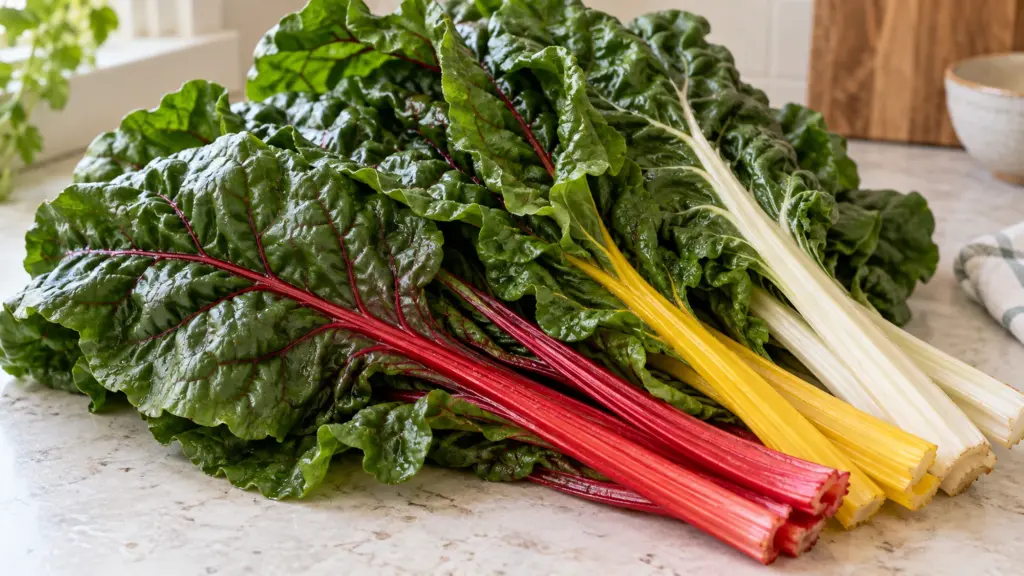
A bunch of Swiss chard can look like two vegetables sharing a rubber band: broad, crinkled leaves above crisp, colorful stalks. That contrast is useful once you know what to do with it. Both parts are edible, but the thicker stems usually need more cooking than the leaves.
Swiss chard is a leafy green with edible stems. Separate the two, give the stems a head start, then add the leaves so everything becomes tender together.
I’d keep the stems unless they are damaged or especially tough. They bring texture as well as color, and treating them separately makes the whole bunch easier to use. Here is how to buy, prepare and store chard without turning a simple vegetable into a project.
What Swiss chard tastes like
Chard has an earthy, green flavor, with a mild bitterness that varies with the leaf’s age and the variety. Young leaves are more delicate; larger leaves and ribs have a firmer bite. Red, yellow and white stalks belong to chard varieties, while “rainbow chard” usually describes a colorful mixture.
UMass Extension’s chard guide describes the edible leaves and stems and several varieties. Color is a useful visual clue, but freshness and tenderness matter more than choosing the prettiest bunch.
| Part | Texture | Useful approach |
|---|---|---|
| Small young leaves | Tender | Use washed leaves in a salad or wilt briefly |
| Large leaves | Firmer, broad | Slice into ribbons for cooked dishes |
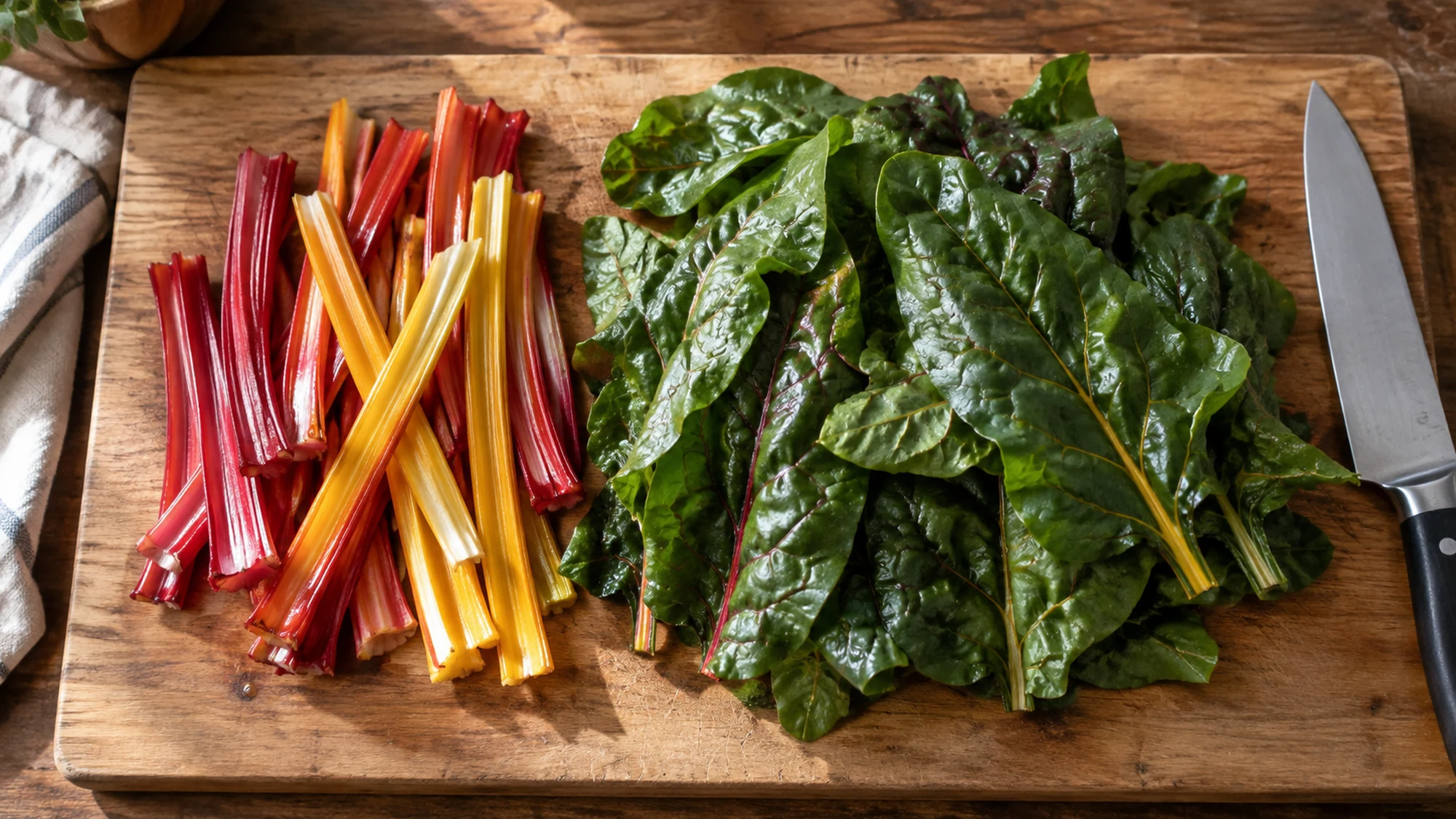
| Thick stems and ribs | Crisp, fibrous | Chop and begin cooking before the leaves |
Prepare the stems and leaves separately
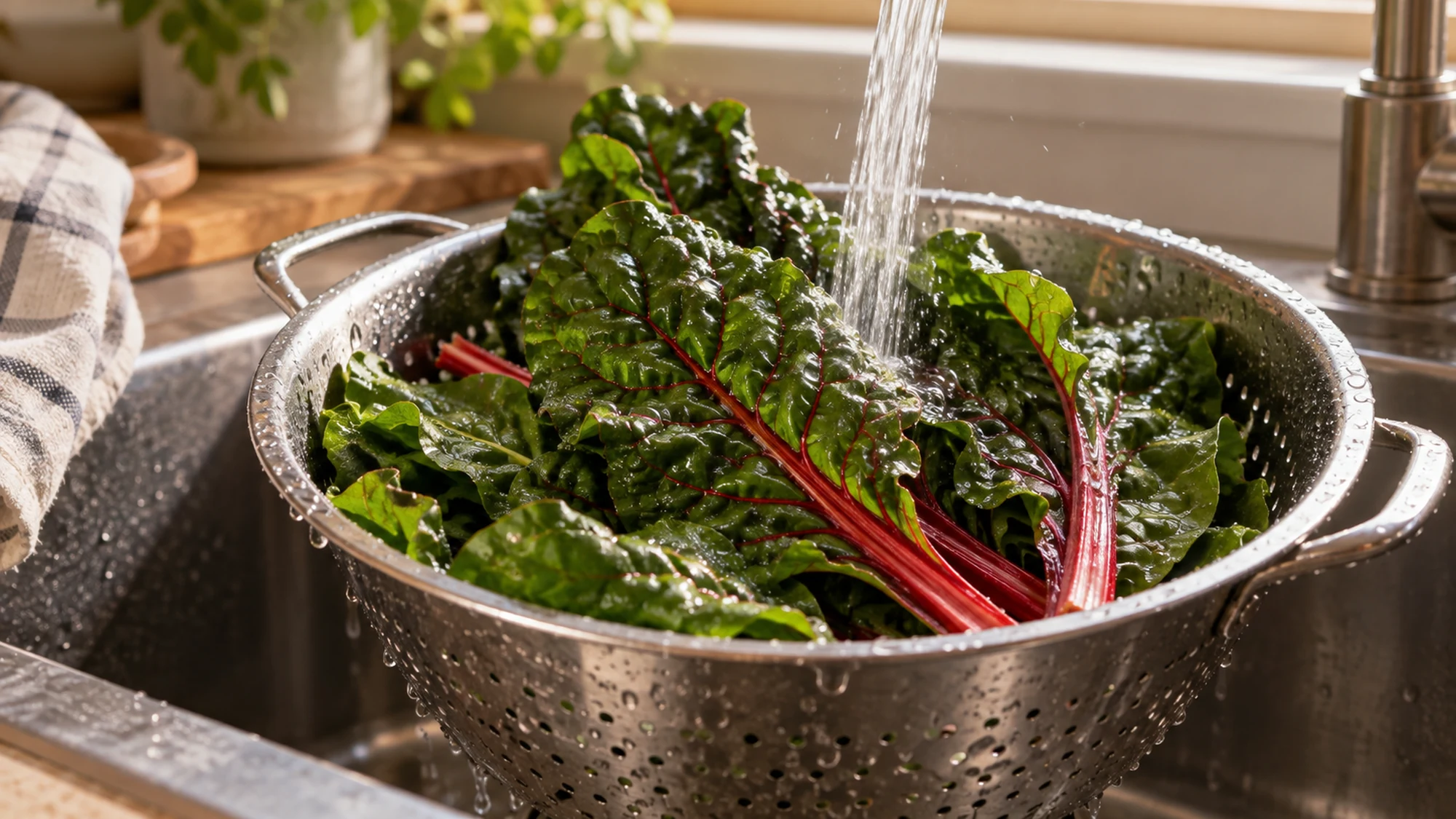
Trim the dry stem ends and remove damaged areas. Wash chard before using it, paying attention to the folds where grit can hide. Iowa State Extension recommends a cold-water rinse; dry the leaves if excess water would dilute your dish.
Run a knife along either side of a thick central rib, then cut the rib and stalk into small pieces. Stack the leaves loosely and slice into ribbons. Similar-size stem pieces soften more evenly, while leaf ribbons are easier to turn in a pan.
- Start with the chopped stems when sautéing a mature bunch.
- Add the leaves after the stems begin to soften.
- Judge doneness by texture: the stems should yield comfortably to a bite, and the leaves should be tender.
- Season after the greens wilt, when their smaller volume is easier to assess.
The useful distinction is thickness, not color. Give a chunky white stalk the same attention as a chunky red one.
Ways to use Swiss chard without a recipe
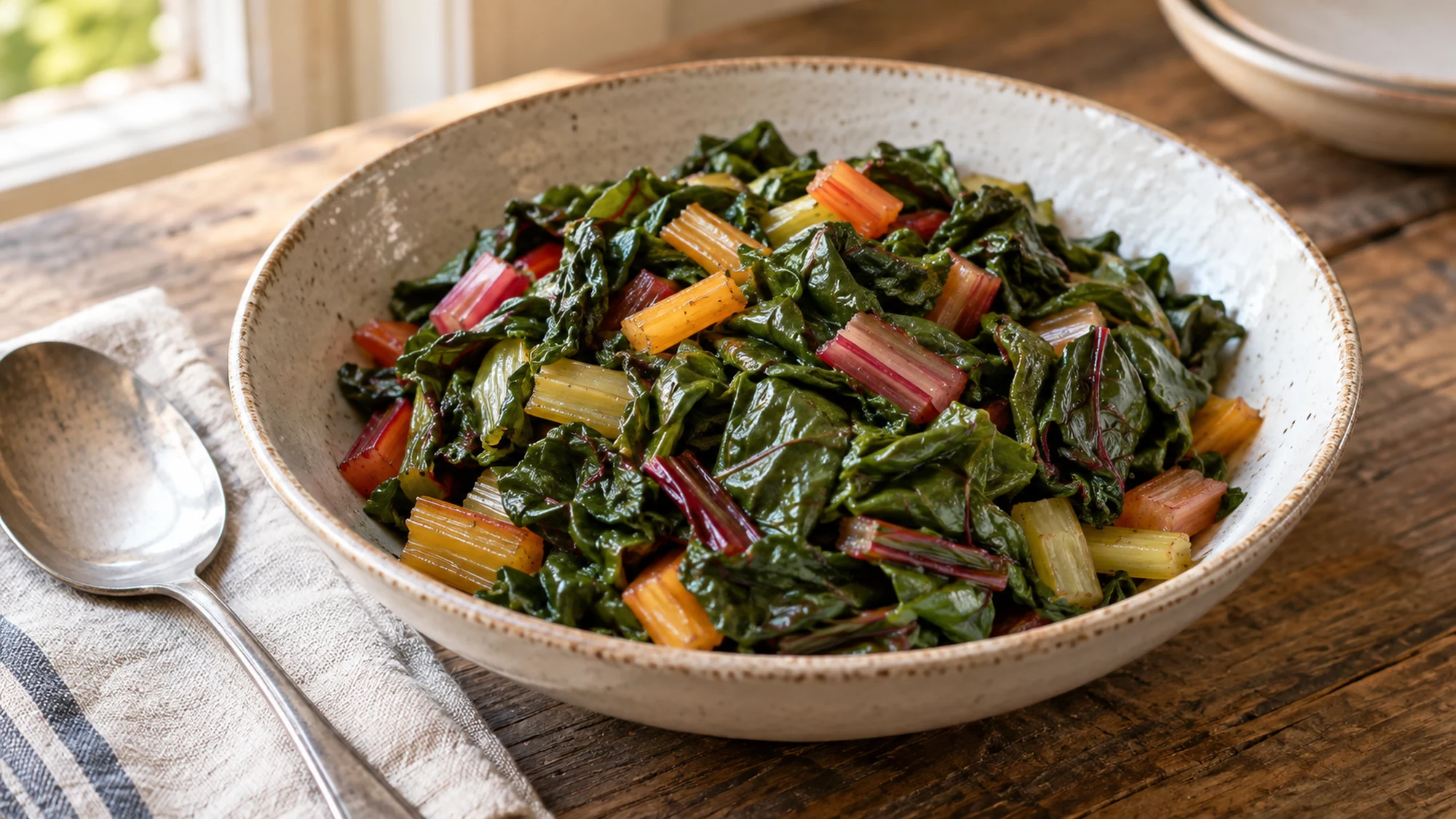
Think of chard as a flexible vegetable component. Add sliced leaves to a soup near the end of cooking, fold wilted greens into cooked grains, or serve a modest bowl beside beans or fish. University of Alaska Extension notes that older chard stems take longer than the leaves and that tender young leaves can be eaten raw.
I prefer a simple finish before a long list of additions. A little acidity can make earthy greens taste brighter; something creamy or starchy gives the leaves a gentler backdrop. The vegetable does not need to disappear under a dressing.
- Use stems and leaves in a warm bean bowl.
- Fold cooked, well-drained greens into eggs or pasta.
- Build a varied plate with a crisp chickpea cucumber salad alongside the warm greens.
What to know about nutrition
Chard contributes vitamins A, C and K, as described in Iowa State’s produce information. Those are nutrient facts, not evidence that one vegetable prevents illness or “detoxes” a meal.
Raw and cooked cup measures also tell different stories: a panful of leaves shrinks as it wilts, so a cup of cooked greens represents more leaves than a loosely filled raw cup. For an exact nutrition comparison, match the amount, preparation and any added oil or salt. Enjoying chard alongside other foods is a more useful goal than asking it to do everything.
Choose a fresh bunch and store it well
Look for firm stems and fresh green leaves, avoiding yellowing, soggy patches or a heavily wilted bunch. Buy an amount you can use soon. Alaska Extension recommends refrigerating unwashed leaves in a perforated plastic bag and using them within two to three days.
That is a practical planning window, not a promise that every bunch stays fresh for the same time. Inspect it before preparation and discard spoiled leaves. Keep it loosely protected rather than crushed under heavier groceries.
- Leave washing until you are ready to use the bunch.
- Keep the chard refrigerated and protected from drying out.
- Plan the most delicate leaves for an early meal; do not wait for them to become limp.
Make the whole bunch work for you
Swiss chard becomes much less mysterious when you separate its two textures. Choose fresh leaves, wash carefully and let the stems begin first. I’d start with one simple use you already enjoy—soup, beans or a vegetable side—then let the colorful bunch earn its place in the next meal.
Keep the stems, respect their extra cooking time and add the tender leaves later. That small decision makes the whole bunch more useful.

Emily Parker is DISHORA’s recipe-writing persona, bringing a warm, practical voice to everyday cooking. Her focus is simple ingredients, comforting flavors and clear steps that make a dish feel approachable. From cozy dinners to something sweet, Emily’s recipes invite readers to try something delicious and make it their own.