
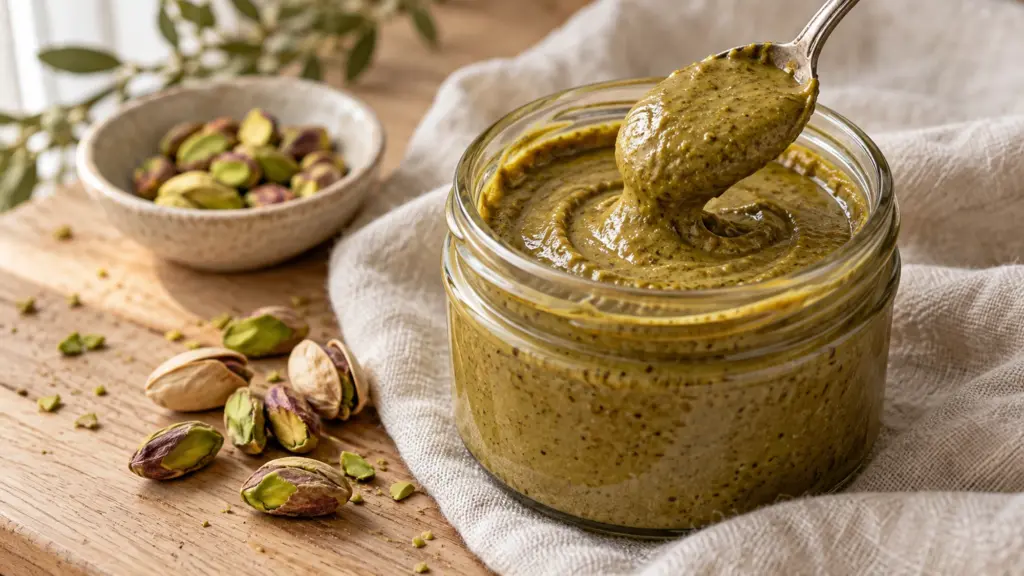
A green spread can promise pistachio flavor while delivering very different things. One jar may contain ground nuts; another may be a sweet confectionery filling. Before spooning it into breakfast or swapping it into a dessert, turn the jar around.
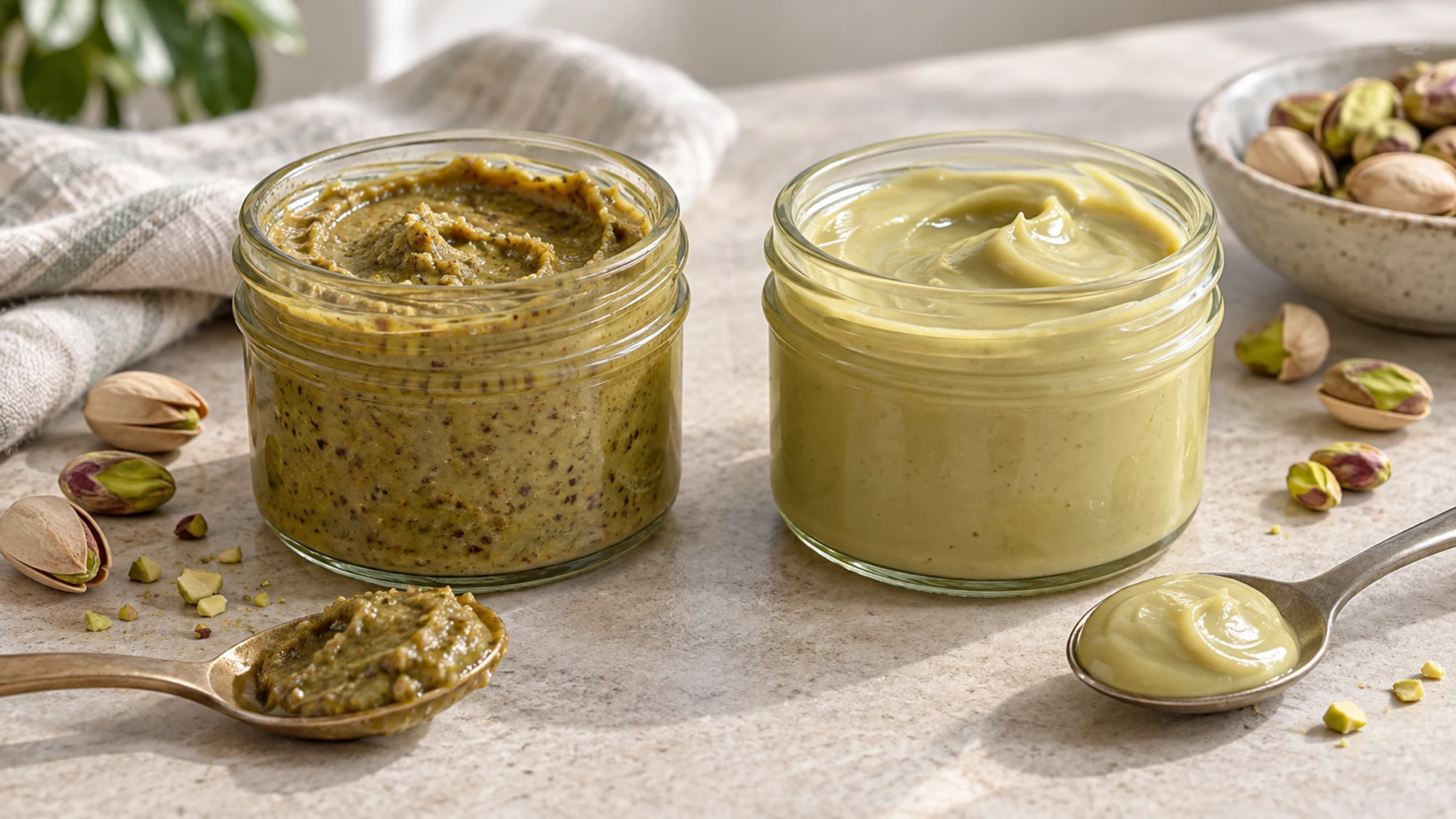
Pistachio butter is made from finely ground pistachios, often with no sweetener. Pistachio cream is commonly a sweetened spread, while “paste” varies by producer. Read the ingredient list: the name and shade of green cannot tell you the whole story.
What is pistachio butter?
Grinding shelled pistachios releases their oils and turns the nuts into a spreadable paste. The American Pistachio Growers’ ingredient guide describes this basic distinction between unsweetened butter and products with added sweetener. Commercial names are less tidy, so the back label remains essential.
Expect a nutty, sometimes lightly roasted flavor and a texture that varies with the grind. Color can range from brighter green to muted olive or green-brown, depending on the nuts, their skins and processing. I would judge a jar by its ingredients and intended use before judging its color; an electric-green shade is not a quality certificate.
- For an unsweetened option, look for pistachios alone or pistachios with salt.
- For a dessert filling, check whether the recipe expects sweetened cream.
- For a smooth sauce, check texture as well as sweetness.
Butter, paste and cream are not automatic substitutes
The growers’ guide to pistachio forms explains that butter is typically unsweetened, while commercial paste may contain sweetener. A cream may also contain oils, milk ingredients or other additions. These examples describe possible products, not rules you can apply to every jar.
| Jar description | Check before using | Useful direction |
|---|---|---|
| Pure pistachio butter | Nuts; optional salt | Unsweetened flavor base. |
| Pistachio paste | Nut percentage and sugar | Match the recipe’s specification. |
| Sweet pistachio cream | Sugar, oils and milk ingredients | Sweet spread or filling as directed. |
This matters in Dishora’s Dubai chocolate bar, which calls for sweetened pistachio cream. Replacing it with unsweetened butter changes the sweetness and filling texture. I would match the product specified there instead of making a straight swap and hoping chocolate will sort everything out.
How to choose a jar with useful information
Start with the ingredient list, then compare the nutrition panels using the same weight. The FDA explains that ingredients are listed in descending order by weight. If sugar appears first, that is useful context for a product sold with pistachio in its name.
- Check the pistachio percentage when the manufacturer provides one.
- Compare equal gram amounts; two brands’ spoon servings may differ.
- Look at added sugars and sodium rather than assuming every nut spread is alike.
- Check allergens and storage instructions before buying.
A short ingredient list is helpful when you want a plain nut base, but it is not proof of superior nutrition or safety. Nor should whole-pistachio nutrition figures be assigned to a sweetened spread. Use the actual product’s panel for its actual serving.
Small spoonfuls can do several kitchen jobs
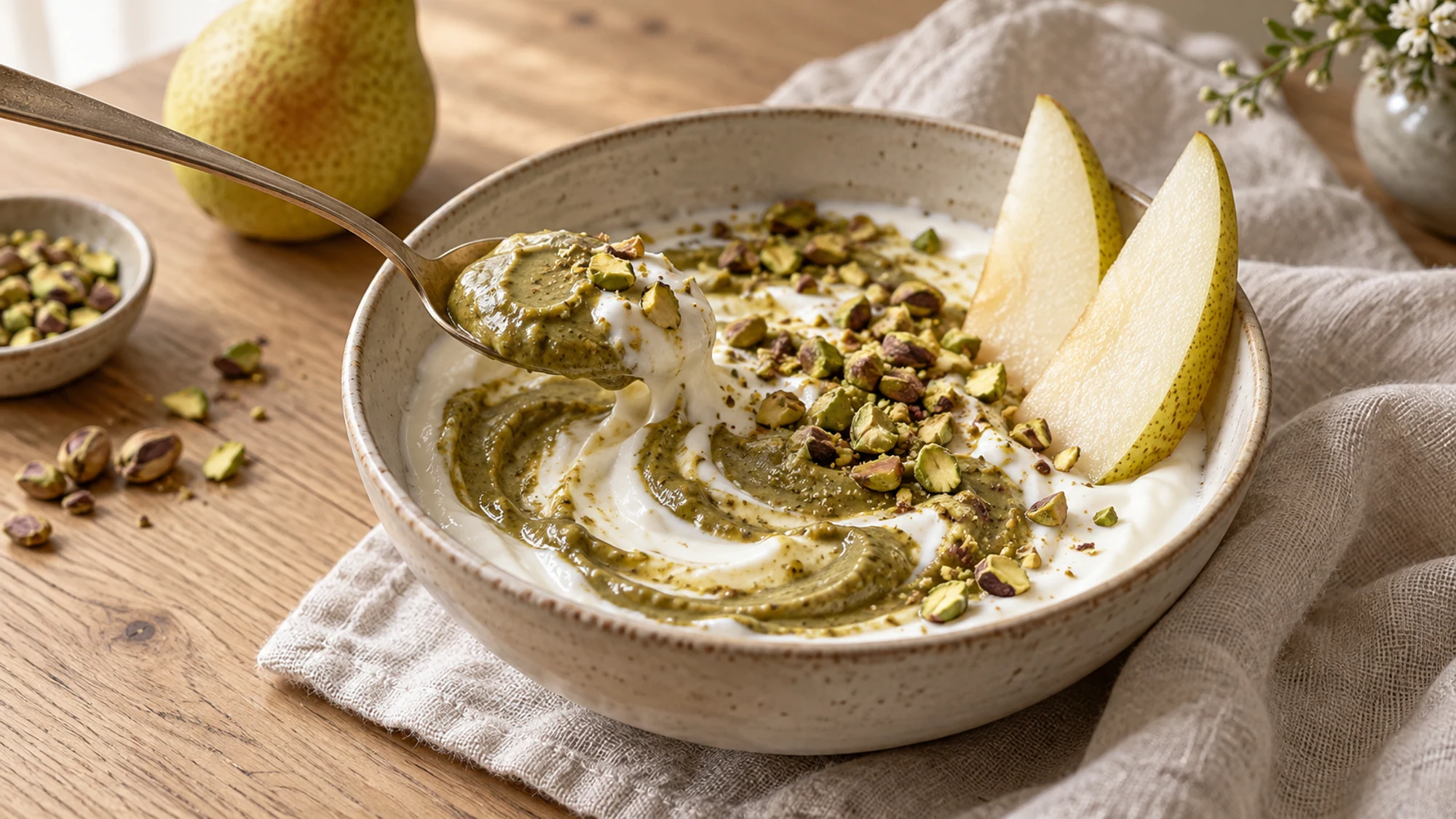
Unsweetened pistachio butter can bring nut flavor to both sweet and savory food. Treat it as a flavoring ingredient, then adjust the surrounding food to suit its thickness and seasoning. The ideas below are serving directions rather than a tested formula.
- Swirl a little into plain yogurt, then add fruit for contrast.
- Spread a thin layer on toast and pair it with pear slices.
- Stir into a dressing gradually, balancing with an appropriate liquid and acidity.
- Use the specific butter, paste or cream requested by a baking recipe.
Cold butter can be firmer than a room-temperature spoonful, and coarse grinds will stay noticeable in a smooth filling. If texture matters, choose a finely ground product from the beginning. Do not thin the storage jar with water; mix only the portion you are using.
Let the jar’s sweetness, salt and texture guide the dish. A small adjustment in a serving is easier to control than changing an entire batch.
Store it according to its own label
Storage advice varies with formulation and packaging. Follow the manufacturer’s directions for refrigeration and the after-opening period; do not borrow a shelf life from another brand or from whole nuts. For example, The Pistachio Factory’s storage guidance applies to its own nut products, not every sweet pistachio cream.
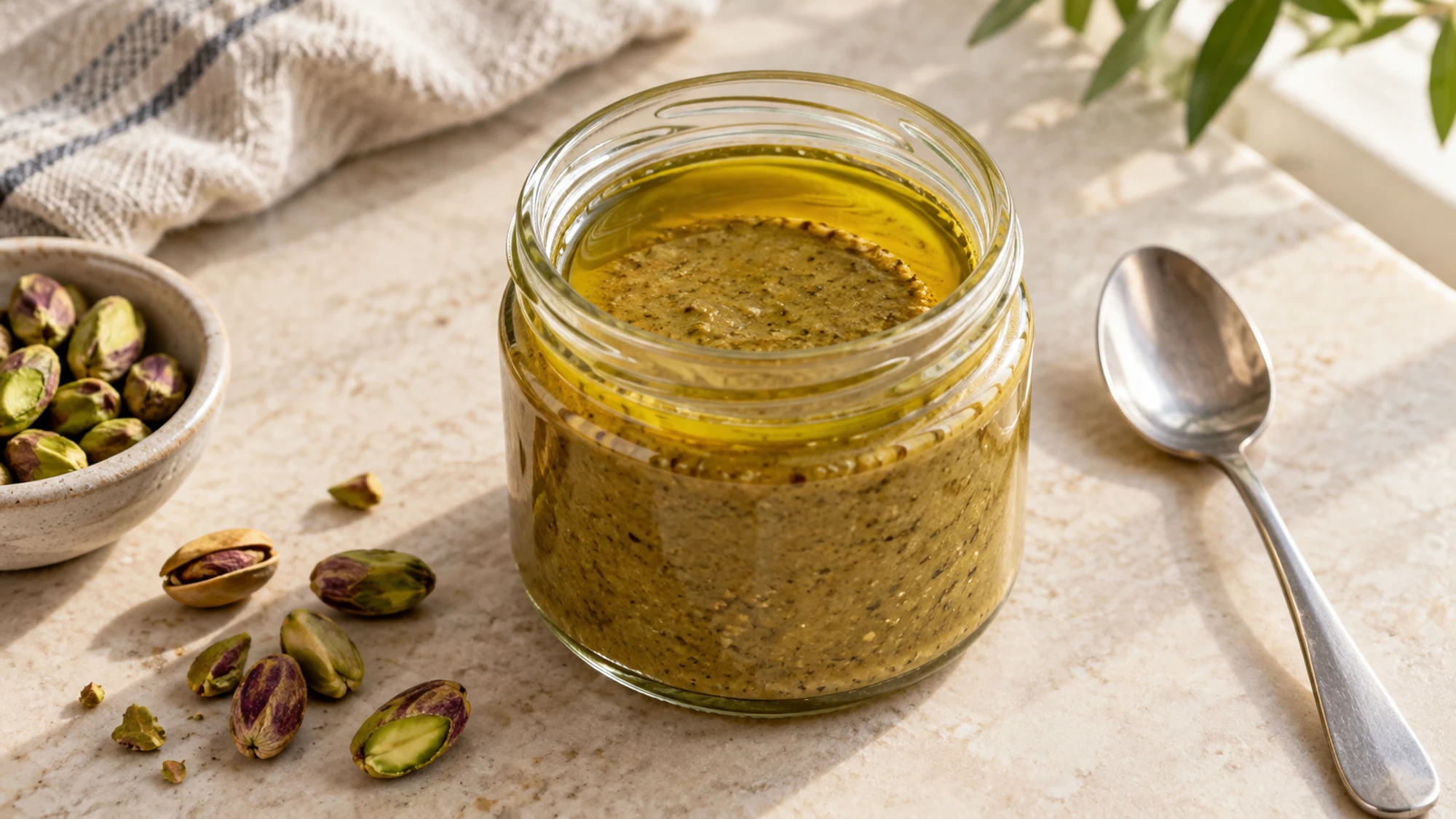
Use a clean, dry utensil and close the lid. Oil separation can occur in natural nut butter; stir it back in if the product’s directions allow. Discard a product with mold or an unusual rancid odor, and do not taste a questionable jar to decide whether it is safe.
- Pistachio is a tree nut and a major food allergen.
- A cream can contain additional allergens such as milk; read the full label.
- Follow your allergy plan and avoid cross-contact; “pure” does not mean safe for a pistachio allergy.
My buying rule is simple: match the ingredients to the job, then follow that jar’s handling instructions. Pistachio butter is useful because of its flavor and flexibility, without needing a miracle-food story.
Sources
- American Pistachio Growers: pistachio paste and butter
- American Pistachio Growers: forms of pistachios
- FDA: types of food ingredients
- The Pistachio Factory: product and storage FAQ
- FDA: food allergies

Emily Parker is DISHORA’s recipe-writing persona, bringing a warm, practical voice to everyday cooking. Her focus is simple ingredients, comforting flavors and clear steps that make a dish feel approachable. From cozy dinners to something sweet, Emily’s recipes invite readers to try something delicious and make it their own.