
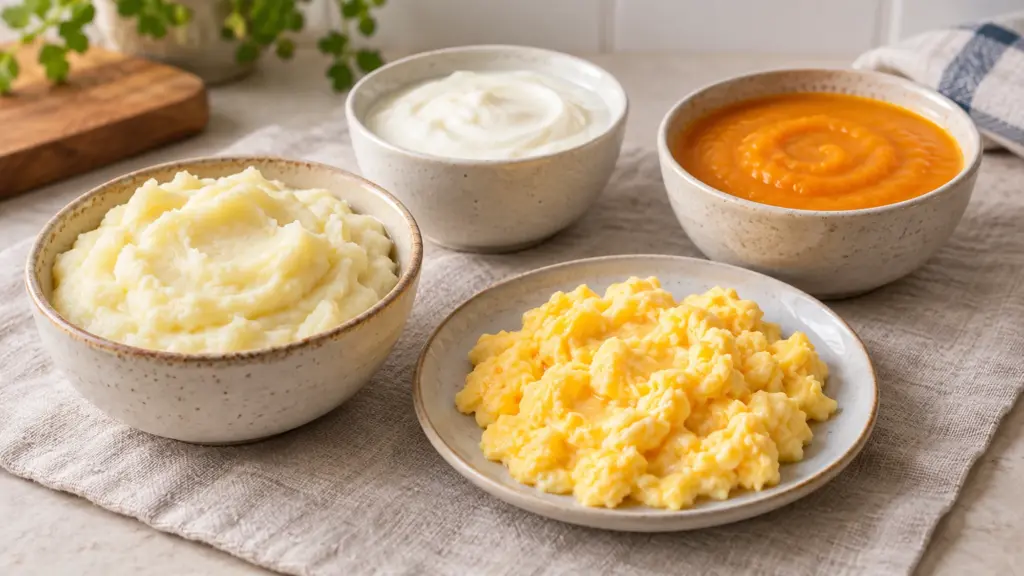
When toast feels scratchy or a chewy dinner looks like too much work, a bowl of something soft can be a welcome change. The useful question is what makes a meal easy to eat while still giving you variety, flavor and enough substance to feel like a meal.
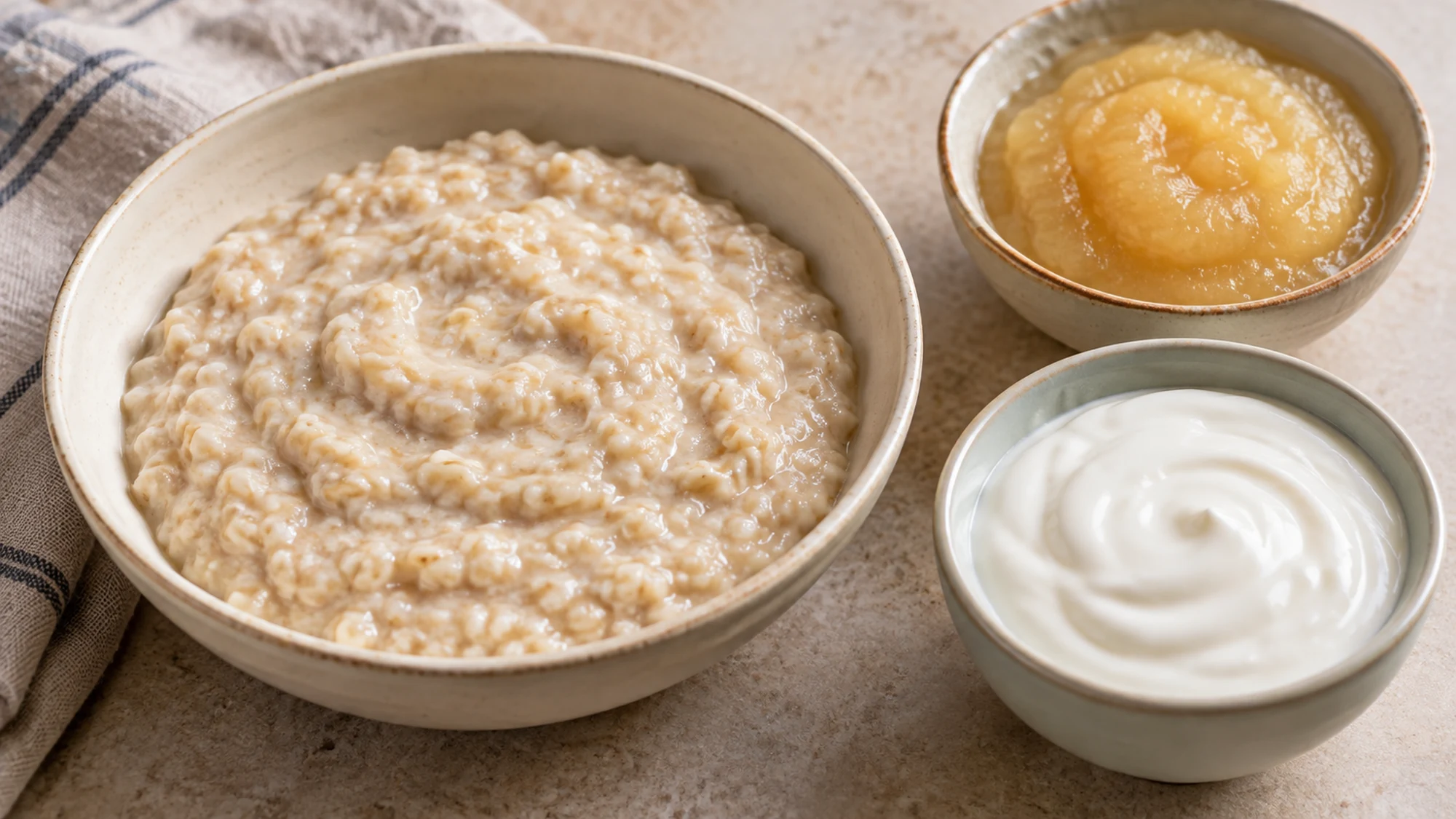
Soft foods are moist, tender foods that need less chewing, such as oatmeal, mashed potatoes, smooth yogurt and soft eggs. If you have swallowing trouble or a prescribed texture plan, follow your clinician’s instructions instead of a general food list.
I’d start with familiar foods and adjust their texture before buying a whole new cupboard of products. A softer menu can still include savory meals, fruit and vegetables; it does not have to become a parade of pudding.
What counts as soft foods?
Soft describes texture, but it does not name one medical diet. A tender fish flake still needs some chewing. A smooth puree is different again, and liquids have their own thickness requirements when swallowing is affected.
- Easy to chew: foods that are naturally tender or softened through cooking, mashing or a suitable sauce.
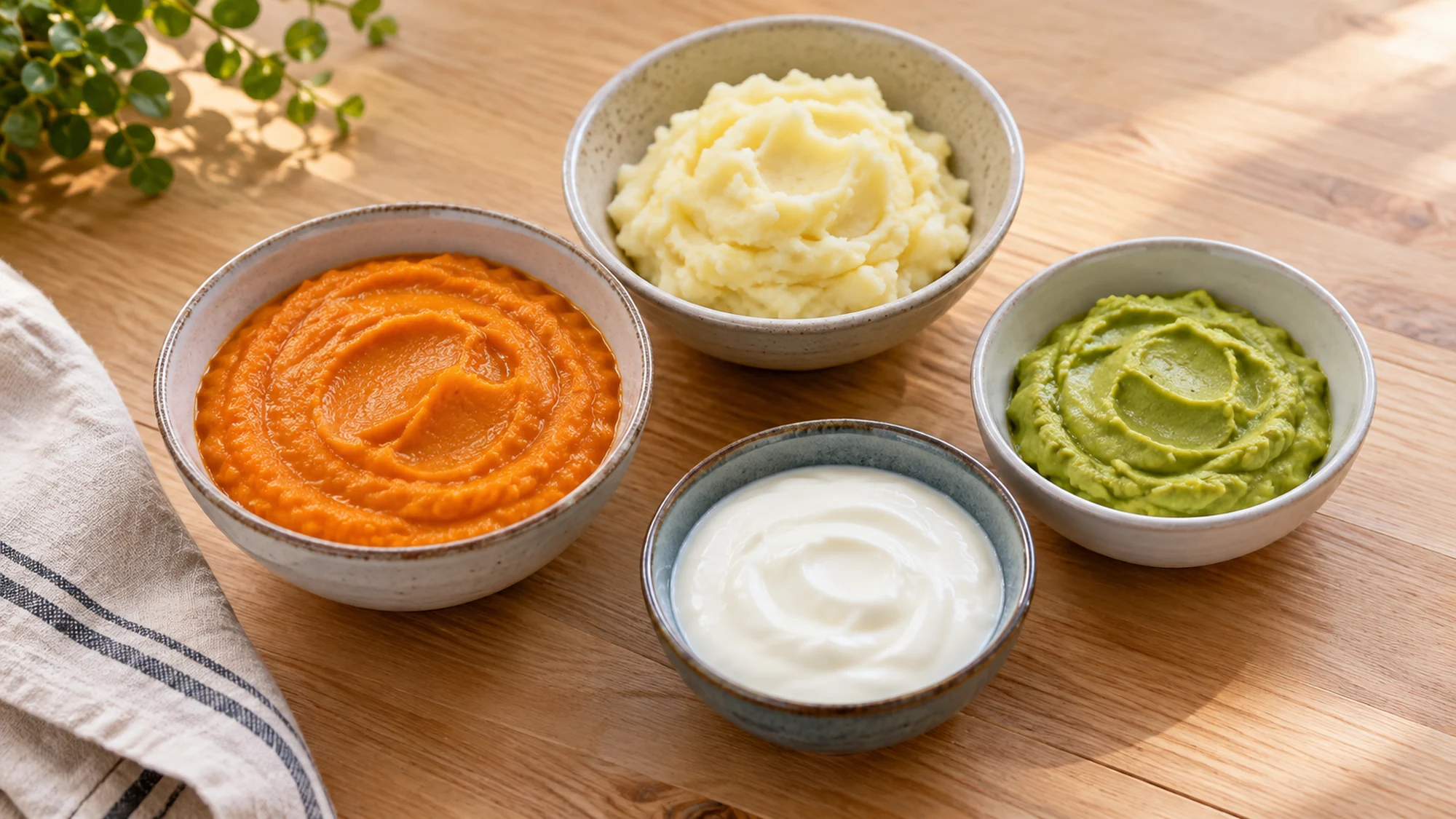
- Pureed: food prepared to a smooth, uniform consistency, with specific testing when a clinical plan requires it.
- Prescribed textures: follow the exact level, food sizes and drink advice your swallowing specialist gives you.
These distinctions matter: a Level 4 pureed diet has defined texture checks. Calling food “soft” does not show that it passes them. Do not thin a prescribed texture simply because it seems easier to spoon.
Soft foods to build meals around
For general chewing comfort, the options below are a starting point. Suitability depends on your own instructions and how the food is prepared; a food name alone cannot guarantee a comfortable texture.
| Food group | Possible choice | Check the texture |
|---|---|---|
| Starchy foods | Oatmeal or mashed potato | Moist and soft; avoid dry crusts |
| Protein foods | Soft egg, boneless fish, tofu or mashed beans | No bones, tough skins or hard pieces |
| Fruit | Applesauce or ripe mashed banana | Remove seeds, skins and stringy pieces |
| Vegetables | Well-cooked mashed carrots or squash | Cook until easy to mash |
| Dairy or alternatives | Smooth yogurt or a suitable fortified alternative | No crunchy mix-ins; compare labels |
I prefer a short shopping list with a few foods that work in different meals: eggs, yogurt, potatoes, soft fruit and a vegetable you enjoy cooked. Check chilled and frozen options too, especially when peeling and chopping feel like extra work.
Keep softer meals varied and satisfying
Try to keep several food groups in the day instead of relying on soup or sweets alone. Include a protein food alongside a soft starch, then add a suitable fruit or vegetable. Portions and extra energy needs are individual, especially during recovery.
- Breakfast idea: soft oatmeal with yogurt served separately, if both suit your needs.
- Lunch idea: smooth lentil soup with a suitable soft side, rather than assuming every soup is a complete meal.
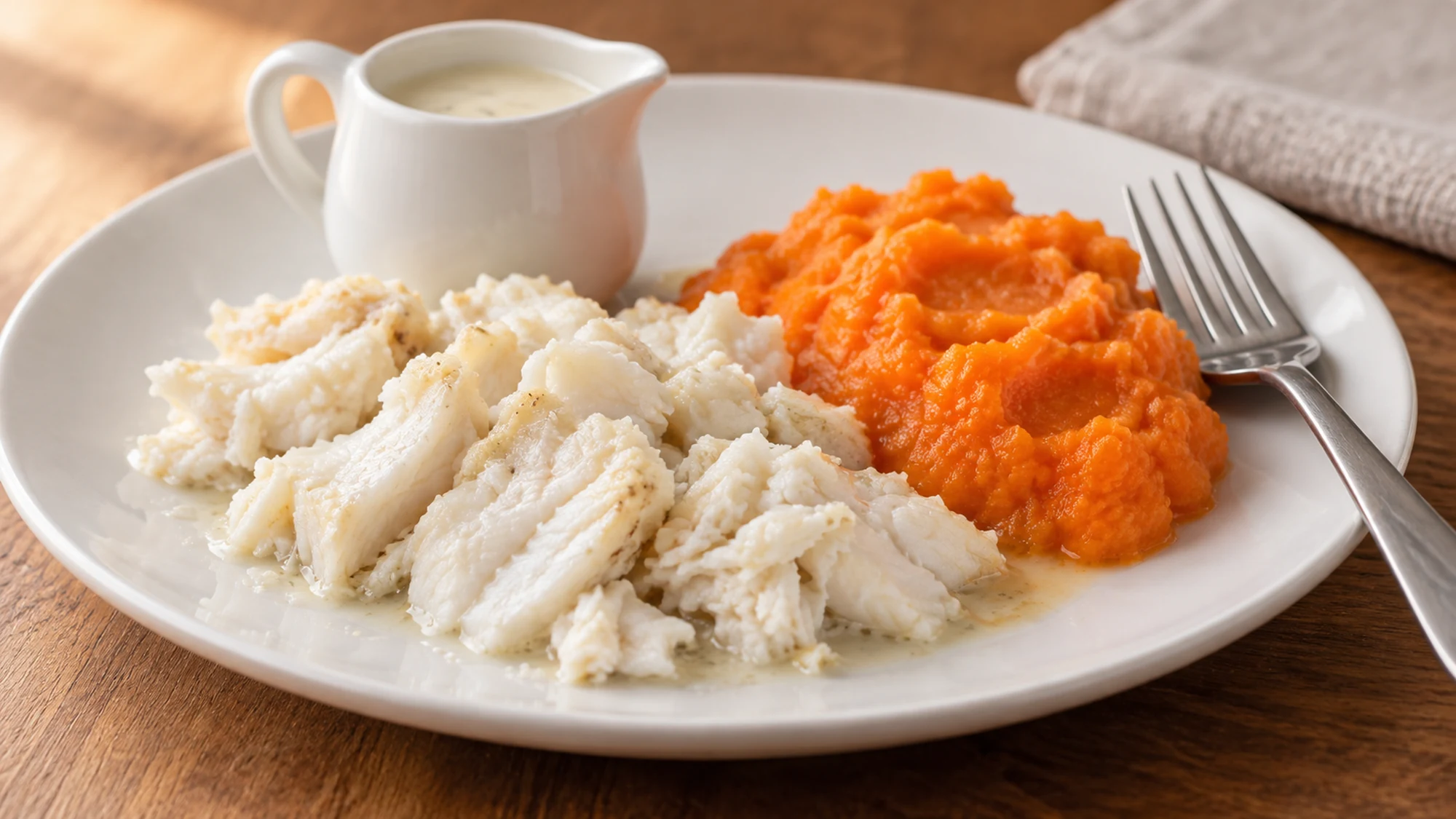
- Dinner idea: moist boneless fish or soft tofu with mashed potato and well-cooked vegetables.
- Snack idea: smooth yogurt, applesauce or another option that matches your dietary needs.
The Leeds soft, moist food guide offers further food-group ideas and explains when individualized advice takes priority. If eating enough is difficult, a dietitian can help adapt meals to your needs and preferences.
Make texture work in your kitchen
Pay attention to dryness as well as tenderness. A dish can look creamy on top but hide a tough skin, firm vegetable piece or dry edge underneath. Check the food you are actually serving, including after reheating.
- Cook vegetables until they mash easily, then remove tough skins or stringy parts as needed.
- Keep suitable sauces or gravy alongside savory food, while respecting any prescribed thickness.
- Leave crunchy toppings, crusty sides and whole nuts off a meal intended to be easy to chew.
- Serve a manageable portion first so you can adjust the texture before preparing more.
Our carrot red lentil soup is one savory starting point to discuss or adapt for ordinary chewing comfort. It is not a tested swallowing-diet recipe. I’d plan one savory option for every sweet one so the day has some welcome contrast.
When a soft-food list is not enough
Coughing or choking with food, a wet-sounding voice after eating, or food feeling stuck needs prompt medical assessment. The NHS swallowing guidance explains these signs. Avoid choosing textures or thickening drinks by trial and error when swallowing is the problem.
- After dental or mouth treatment, follow your treating team’s instructions about textures, temperature and when to progress.
- If your intake drops or you lose weight unintentionally, ask your care team for support.
- Refrigerate perishable prepared food promptly in shallow containers. Most cooked leftovers keep 3–4 days at 40°F (4°C) or below; follow food-specific guidance.
Choose familiar foods, keep them moist and varied, and let your own care instructions guide the texture. Easier chewing should still leave room for meals you look forward to.
Sources
- Leeds Teaching Hospitals: soft, moist food choices
- Memorial Sloan Kettering: Level 4 pureed diet
- NHS: swallowing problems
- FoodSafety.gov: cold food storage times

Emily Parker is DISHORA’s recipe-writing persona, bringing a warm, practical voice to everyday cooking. Her focus is simple ingredients, comforting flavors and clear steps that make a dish feel approachable. From cozy dinners to something sweet, Emily’s recipes invite readers to try something delicious and make it their own.