
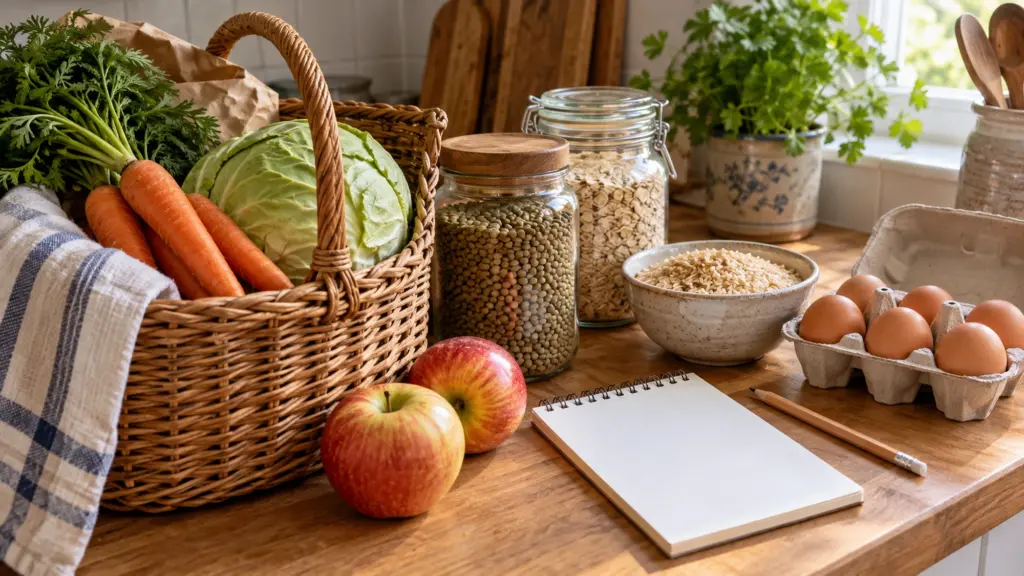
The grocery receipt gets longer, yet dinner still seems to require another trip. That is a useful place to begin thinking about how to reduce food spending: look at what your shopping actually turns into on the plate, including food that never gets eaten.
Start with the food you already have, plan the meals you will realistically eat, and compare prices for the amount you can use. A smaller bill comes from workable choices, not an elaborate menu or a guaranteed savings percentage.
I’d start with one ordinary shopping cycle before attempting a complete pantry makeover. The aim is to make dinner easier to afford without buying a cupboard full of unfamiliar bargains.
How to reduce food spending before you shop
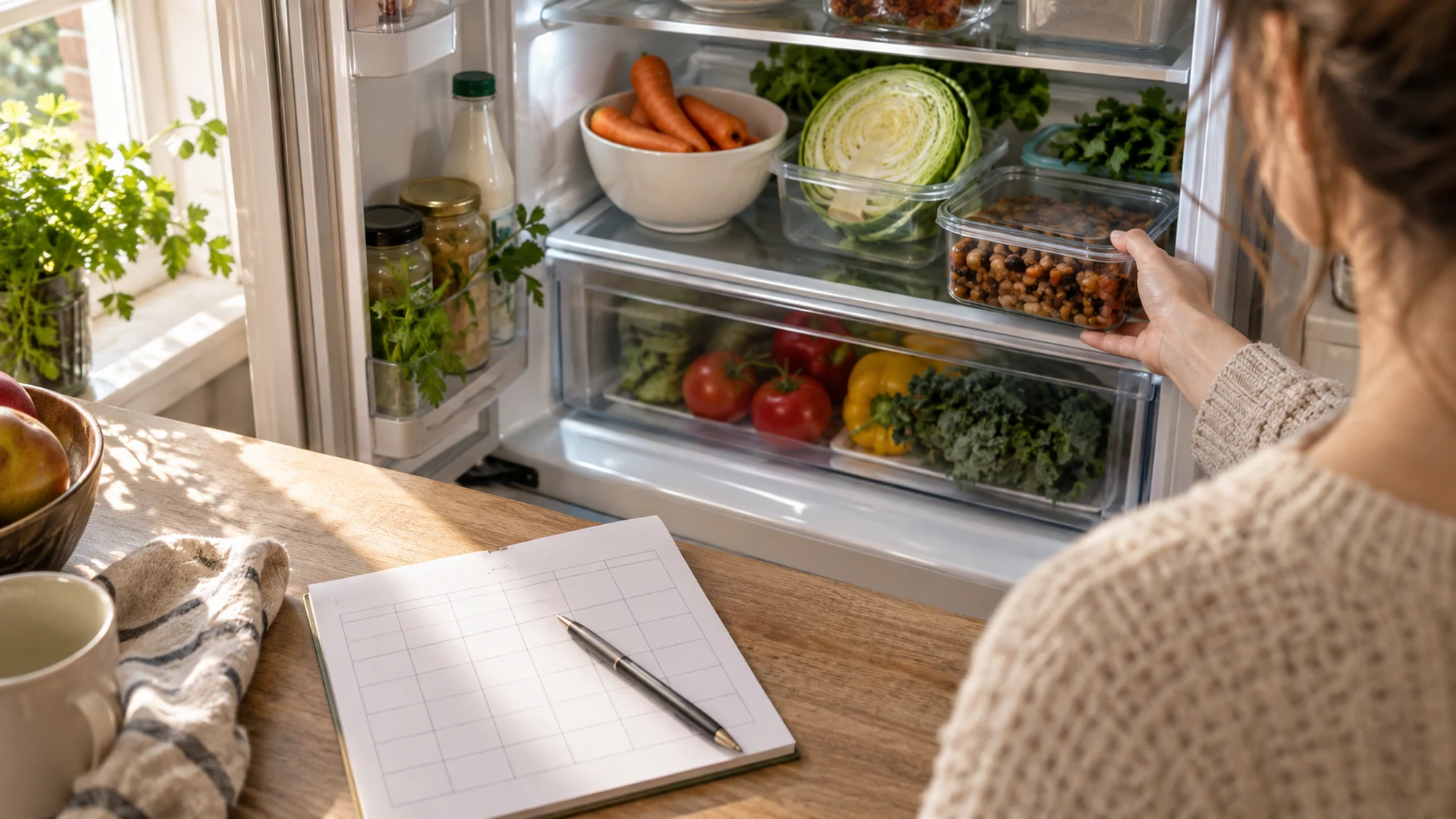
Check the refrigerator, freezer and pantry before writing a list. The EPA’s household food-waste guidance recommends planning around food already on hand and counting the meals you will actually eat at home. A busy evening deserves a realistic plan, too.
- Choose a starting ingredient: A half cabbage, opened beans or frozen vegetables can anchor a meal.
- Count portions: Note lunches, dinners out and people eating elsewhere before choosing quantities.
- Give ingredients a second job: Carrots can accompany one dinner and go into soup later.
- Keep one fallback: A familiar shelf-stable or freezer meal helps when plans change.
Keep the list specific: “vegetables for two lunches” is more useful than “produce.” Leave room for a sensible substitution when an intended ingredient is expensive or unavailable.
Compare unit prices and the cost you can afford
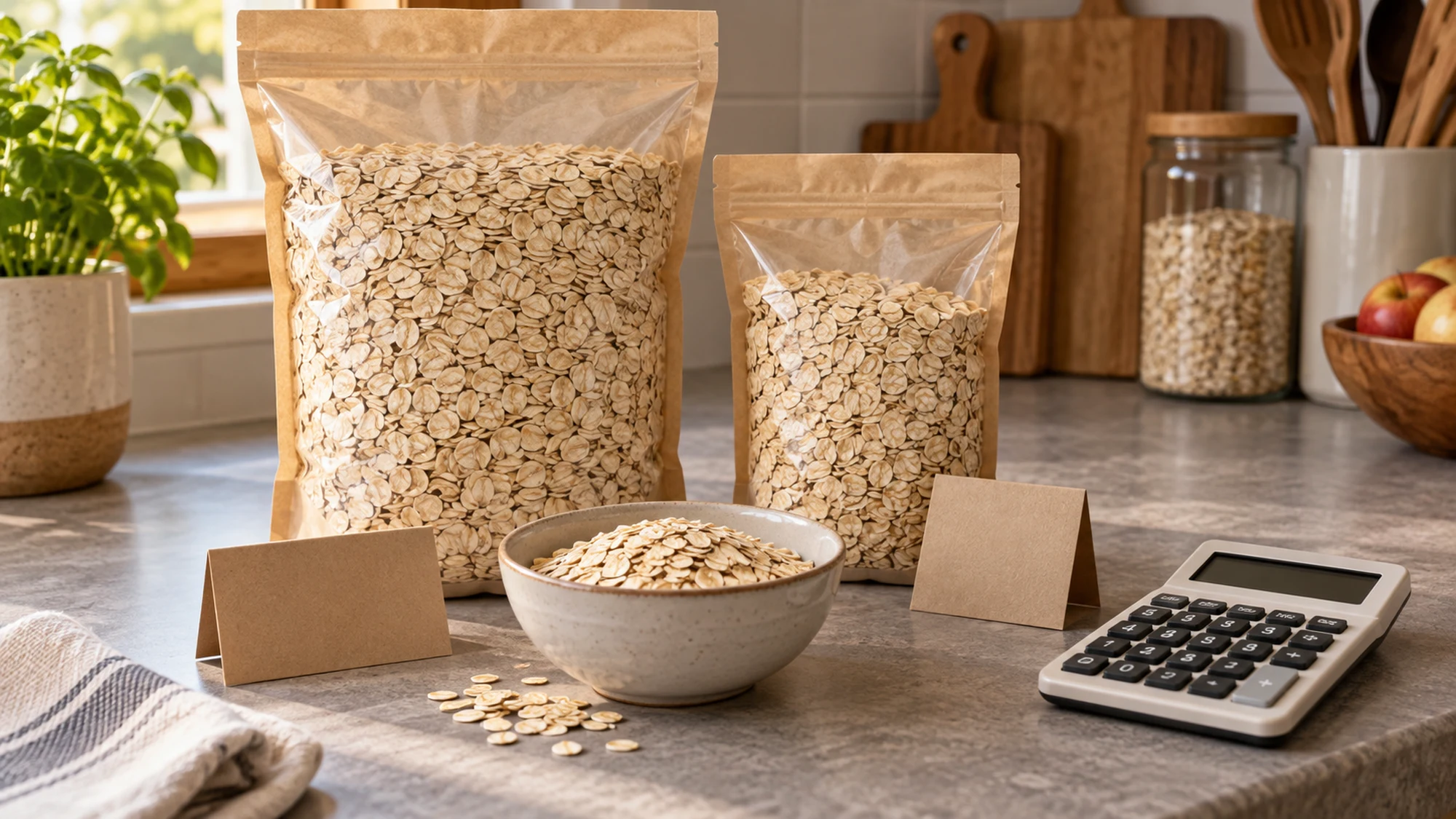
University of Illinois Extension explains unit pricing as the cost per measure, such as an ounce or pound. Compare matching units, including any sale or coupon adjustment. A larger package can offer better value while still requiring more money at checkout.
| Illustrative purchase | Unit price | Decision |
|---|---|---|
| 16 oz oats for $2.40 | $0.15 per oz | Smaller upfront cost |
| 32 oz oats for $4.00 | $0.125 per oz | Better unit value if used |
| Extra perishable food | Depends on usable amount | Buy only what you can use |
I’d choose the smaller pack when the larger one would squeeze the rest of the food budget or sit unfinished. The lowest unit price is useful information, but storage space, appetite and the cash available also belong in the decision.
Build meals around flexible foods
The University of Minnesota’s pre-shopping guide suggests buying foods with their use date in mind and keeping frozen or canned options for later. That can mean choosing fresh vegetables for early meals and freezer vegetables for a less predictable evening.
- Compare forms: Check fresh, frozen and canned versions against the meal you are making, rather than assuming one is always cheapest.
- Choose familiar staples: Beans, lentils, oats, rice, eggs or other foods your household enjoys can work across different meals.
- Price convenience honestly: Ready-cooked beans or chopped vegetables may help a meal happen; compare the whole choice, including your available time.
For a concrete dinner idea, Dishora’s cabbage and white bean skillet brings a vegetable and pantry beans together. Check local ingredient prices and portions rather than treating any recipe as a universal low-cost meal.
Make leftovers useful while keeping them safe
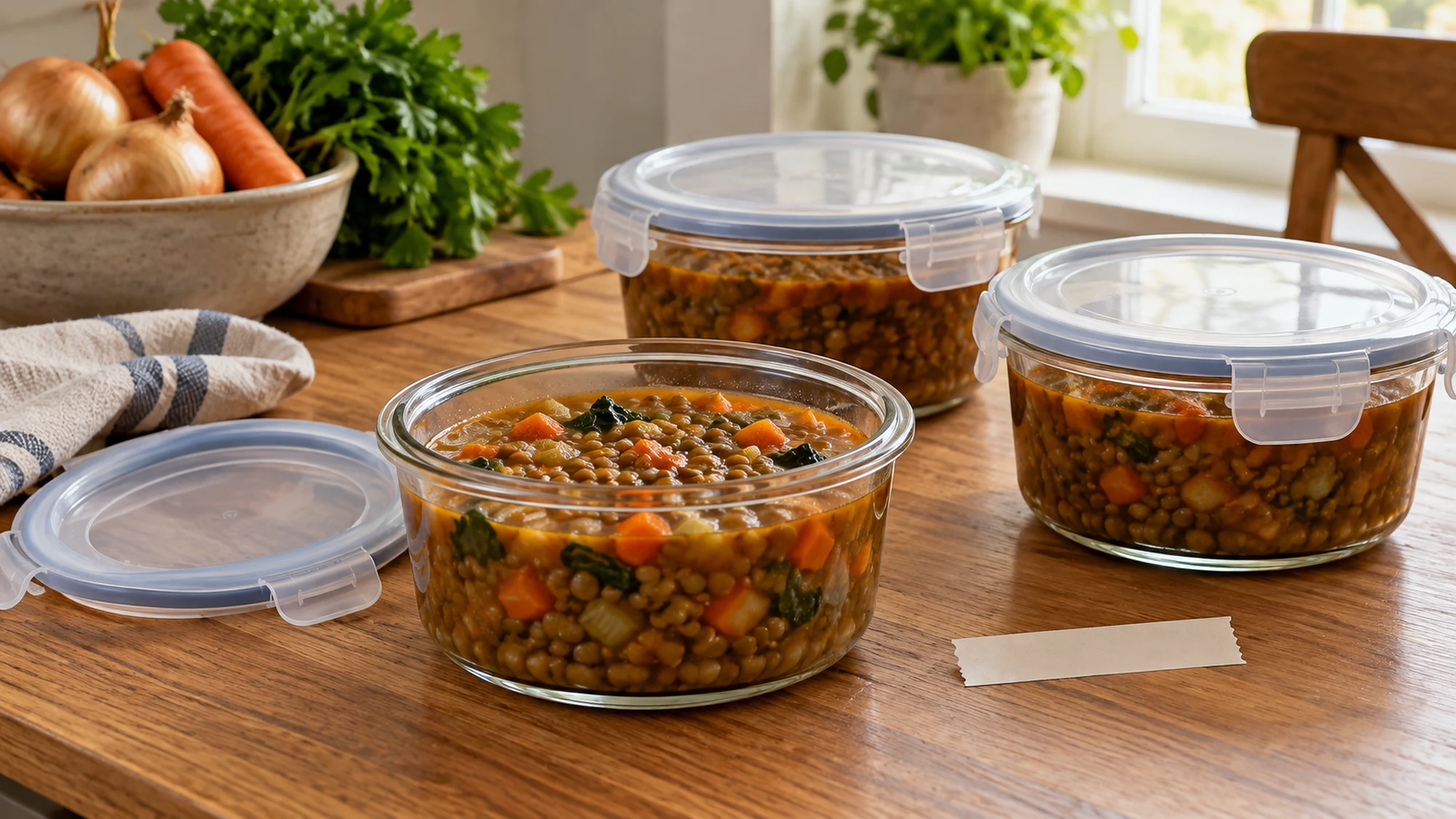
A planned lunch only helps if the food is stored safely. USDA’s leftovers guidance says to refrigerate perishable leftovers within two hours, or one hour above 90°F (32°C). Keep the refrigerator at 40°F (4°C) or below.
- Cool in shallow containers: Divide a large batch so it chills promptly; do not leave the pot out to cool for hours.
- Mark the date: Most cooked leftovers keep three to four days refrigerated. Freeze portions you will not use within that window.
- Reheat thoroughly: Leftovers should reach 165°F (74°C), checked with a food thermometer.
- Respect limits: Saving money is not a reason to eat food stored unsafely.
A small leftover portion can become part of another meal rather than a complete dinner. Keep its original storage timeline in mind when combining it with freshly prepared food.
Choose one change for your next grocery trip
Look back at receipts and separate groceries from cleaning products, delivery charges and restaurant spending. Choose a food amount that fits your circumstances, then notice which purchases get eaten and which repeatedly remain. There is no single grocery budget that suits every household.
For the next shop, use one ingredient you already own, compare one familiar staple, and give one leftover portion a definite plan. Keep the changes that make your week work; adjust the ones that do not.
Sources
- EPA: preventing wasted food at home
- University of Illinois Extension: grocery shopping and unit prices
- University of Minnesota: before you shop
- USDA: leftovers and food safety

Emily Parker is DISHORA’s recipe-writing persona, bringing a warm, practical voice to everyday cooking. Her focus is simple ingredients, comforting flavors and clear steps that make a dish feel approachable. From cozy dinners to something sweet, Emily’s recipes invite readers to try something delicious and make it their own.