
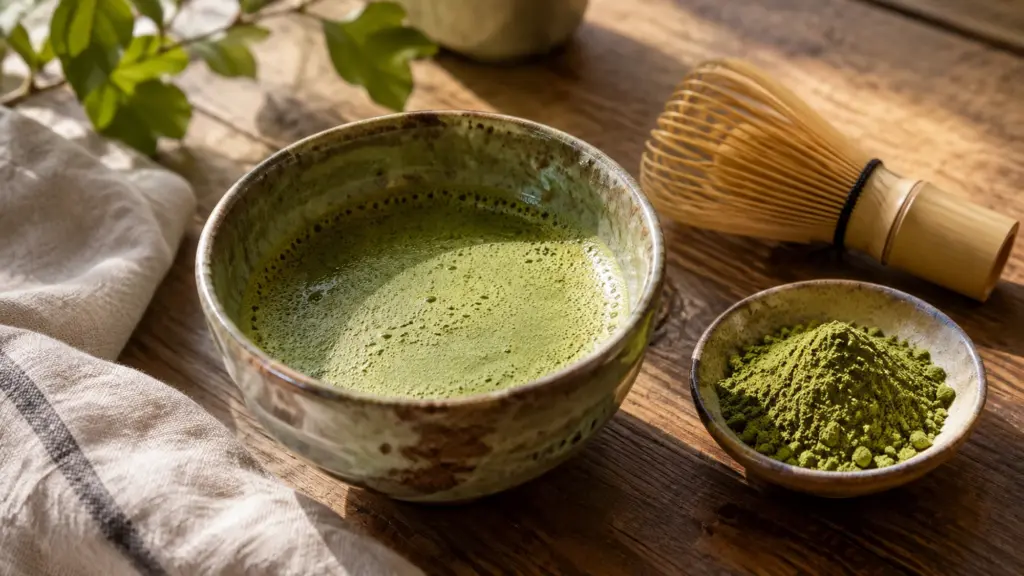
The pale green latte looks gentler than a dark coffee, but color is not a caffeine measurement. Does matcha have caffeine? Yes—and a useful estimate begins with how much matcha powder goes into your drink, rather than how tall the glass happens to be.
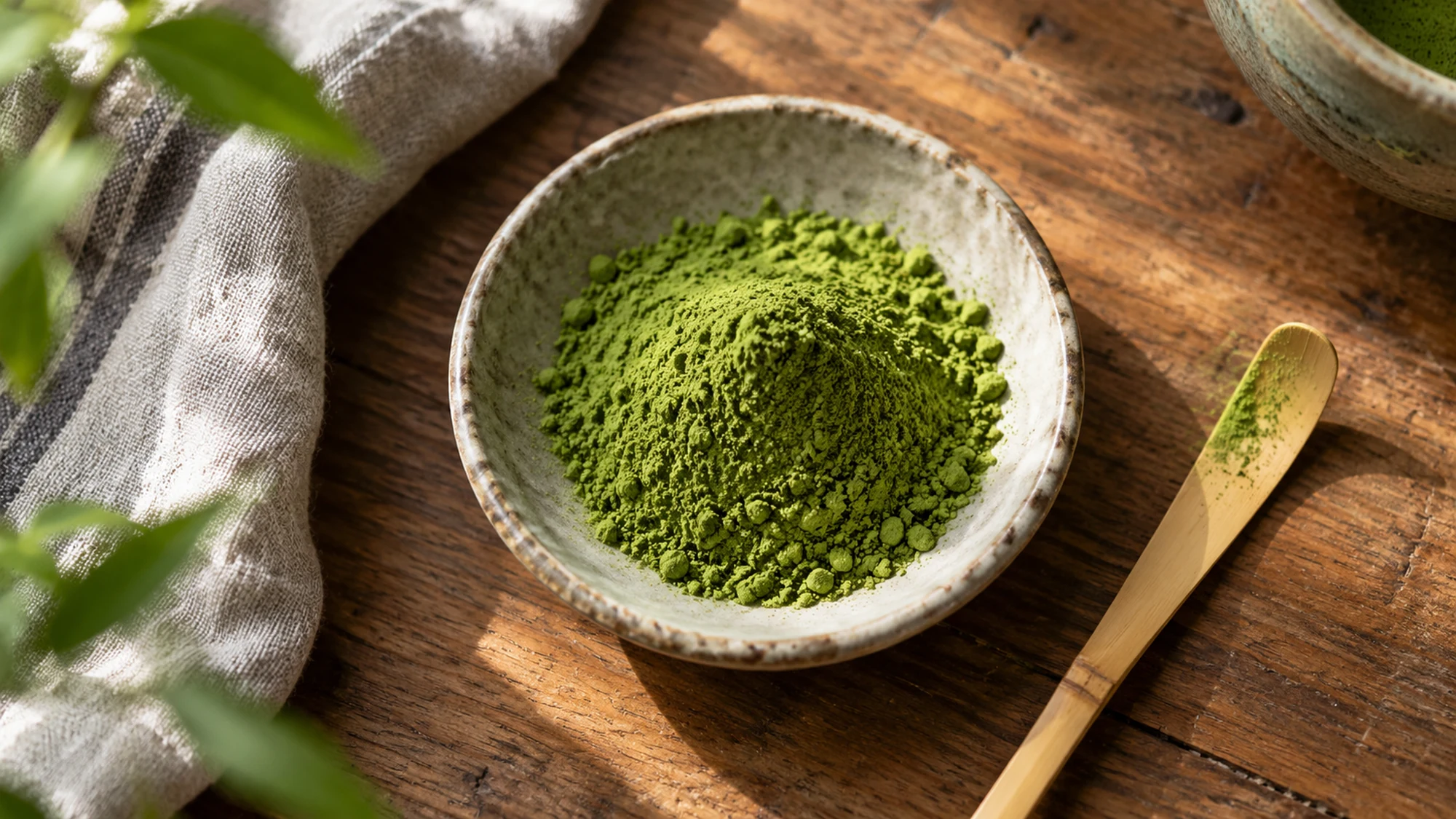
Matcha naturally contains caffeine. One published review reports about 18.9–44.4 milligrams per gram of powder in analyzed samples, giving roughly 38–89 milligrams for 2 grams. These are estimates from a reported range, not guaranteed amounts for every brand or café serving.
The powder portion changes the answer
The range comes from a review of matcha’s chemical composition, published online in December 2020. Multiplying that range by powder weight gives the rounded illustrations below; it does not replace product-specific testing or a manufacturer’s caffeine information.
| Matcha powder | Estimated caffeine |
|---|---|
| 1 g | About 19–44 mg |
| 2 g | About 38–89 mg |
| 3 g | About 57–133 mg |
Doubling the powder doubles the calculated amount for the same product. A heaped scoop and a level scoop may hold different weights, so grams give a clearer basis than an undefined spoonful. Check whether a premixed powder contains plain matcha or a blend.
Milk makes a latte, not a caffeine-free drink
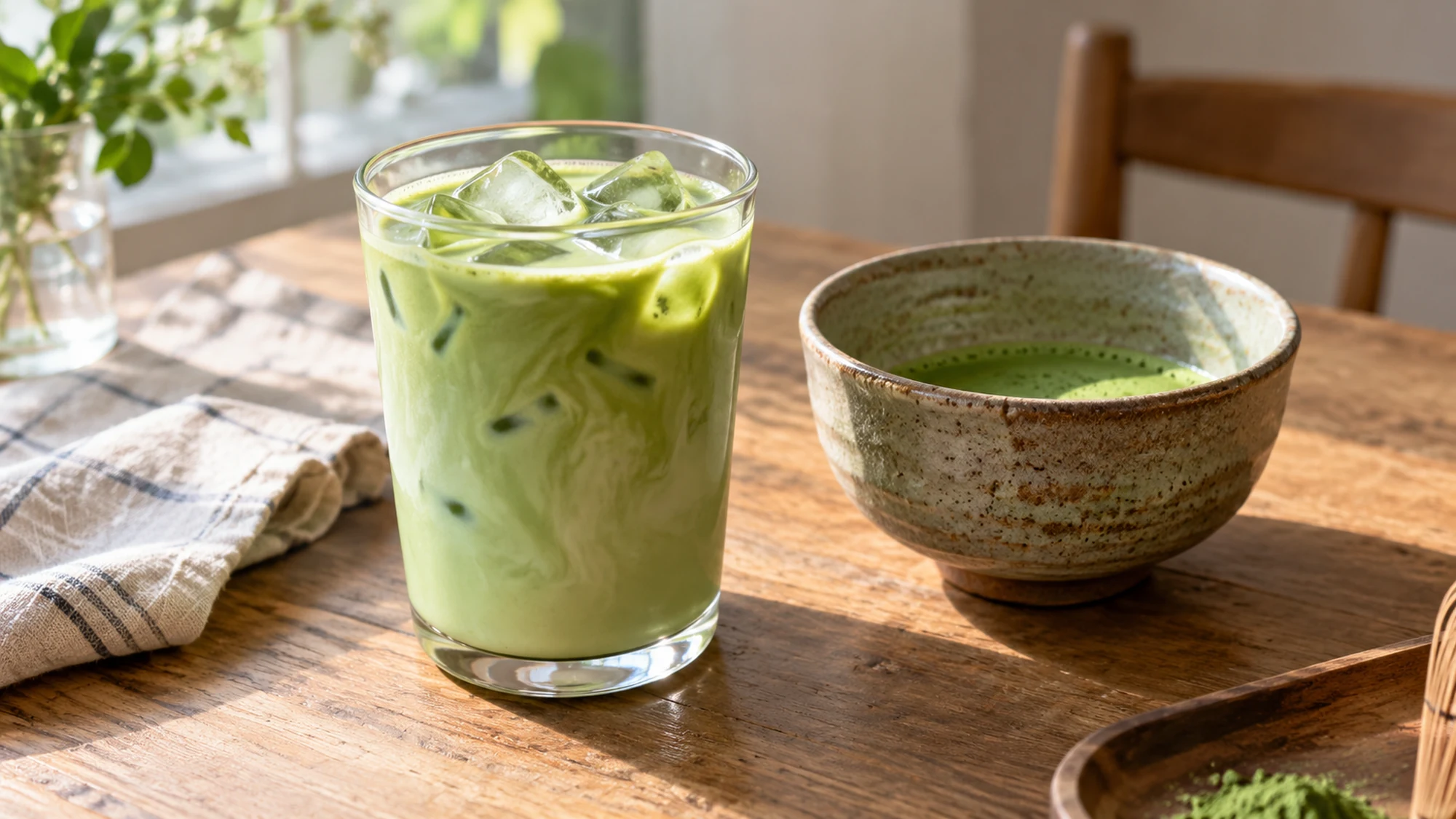
Adding milk, water or ice changes the drink’s volume and flavor, but it does not remove the caffeine supplied by the matcha. If the same powder amount is used and you drink the whole serving, a larger glass is not automatically a lower-caffeine choice.
- At a café: Ask about powder quantity and published caffeine information for the specific size.
- For a premix: Check the serving directions and ingredient list rather than treating every gram of mixture as pure matcha.
- With espresso: An added coffee shot contributes extra caffeine and needs to be counted separately.
- When a number is unavailable: Ask whether the café uses the same powder portion in every size or adds more for larger drinks. Record the uncertainty rather than borrowing a number from a different shop’s menu. That also makes comparisons clearer if you change your usual order.
DISHORA’s strawberry matcha latte shows how milk and fruit change the drink’s flavor and texture. Its creamy layers do not make the tea component caffeine-free.
I’d ask what goes into the cup before choosing by size. A modest glass with extra powder can be a different proposition from a taller, milkier drink made with less.
Compare the actual drink, not dry tea and beans
The FDA’s beverage examples list 113–247 milligrams for 12 fluid ounces of regular brewed, non-specialty coffee and 37 milligrams for the same volume of green tea. Those are category references; neither is a measurement of your particular matcha.
A comparison between dry coffee beans and dry matcha powder misses the preparation step. Coffee grounds are normally removed, while matcha powder is consumed in the drink. Compare milligrams in the amount you actually drink, with the serving size stated.
A 2024 laboratory study of eleven green-tea powders also found differences in composition related to factors including origin, harvest and cultivation. Laboratory extracts are not interchangeable with café drinks, so their concentrations should not be copied into a per-cup claim.
Timing and sensitivity still matter
The European Food Safety Authority’s caffeine assessment notes that even 100 milligrams may affect sleep in some adults when consumed close to bedtime. There is no universal clock time that makes every person’s evening matcha sleep-neutral.
- If sleep suffers, consider an earlier serving or less powder.
- Count coffee, tea, energy drinks and other caffeine sources across the day.
- Do not assume a calm taste or a “no crash” claim means you cannot feel jittery.
I prefer a drink that fits the evening to a caffeine calculation that ignores bedtime. Enjoying matcha does not require using the strongest possible serving.
Make the amount work for your circumstances
For most adults, the FDA cites 400 milligrams daily as an amount not generally associated with negative effects. That is not a target, and individual sensitivity, medicines and medical conditions can change what is appropriate.
During pregnancy, ACOG advises keeping caffeine below 200 milligrams per day, including tea and other sources. Ask your health professional about individual limits, especially when managing a condition or considering caffeine for a child.
Yes, matcha has caffeine. Use the powder amount and reliable product information, keep the whole day in view, and choose a portion and timing that suit you. A green drink still deserves an honest caffeine count.
Sources
- Kochman and colleagues: matcha review
- Jakubczyk and colleagues: laboratory comparison
- FDA: caffeine amounts and sensitivity
- EFSA: caffeine and sleep
- ACOG: caffeine during pregnancy

Emily Parker is DISHORA’s recipe-writing persona, bringing a warm, practical voice to everyday cooking. Her focus is simple ingredients, comforting flavors and clear steps that make a dish feel approachable. From cozy dinners to something sweet, Emily’s recipes invite readers to try something delicious and make it their own.