
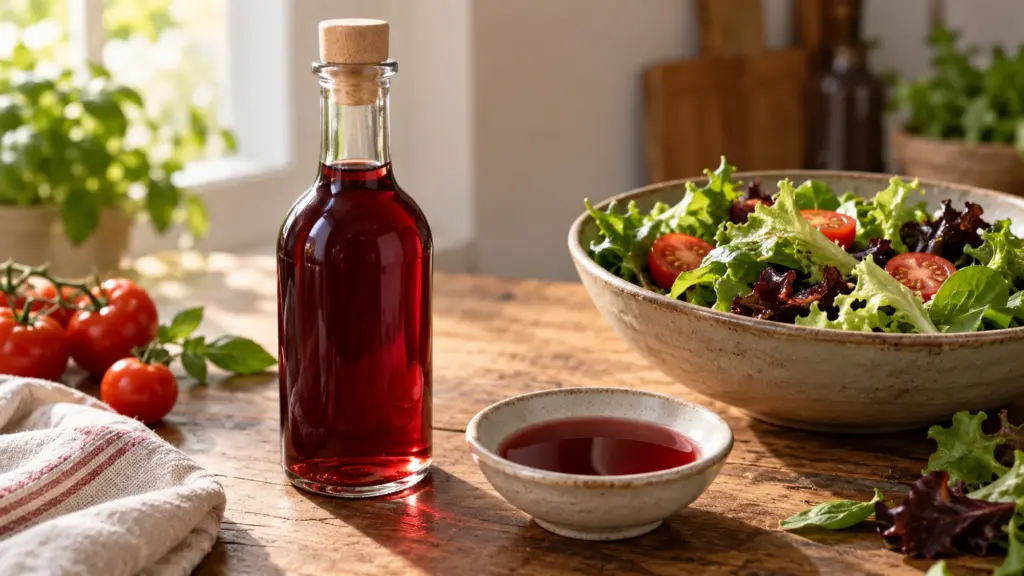
Red wine vinegar is one of those pantry ingredients that can wake up a bowl of beans or a leafy salad without adding much volume. Its sharpness is the point, but the way you use it determines whether a dish tastes lively or simply sour.
Red wine vinegar is made when acetic acid bacteria transform alcohol in red wine into acetic acid. Use it for tangy dressings and finishing touches; check the bottle’s acidity and follow tested instructions whenever preservation is involved.
I like thinking of it as a seasoning to balance the food already on the plate. You don’t need a long ingredient list to notice the difference a small, well-judged addition can make.
What makes it different from red wine
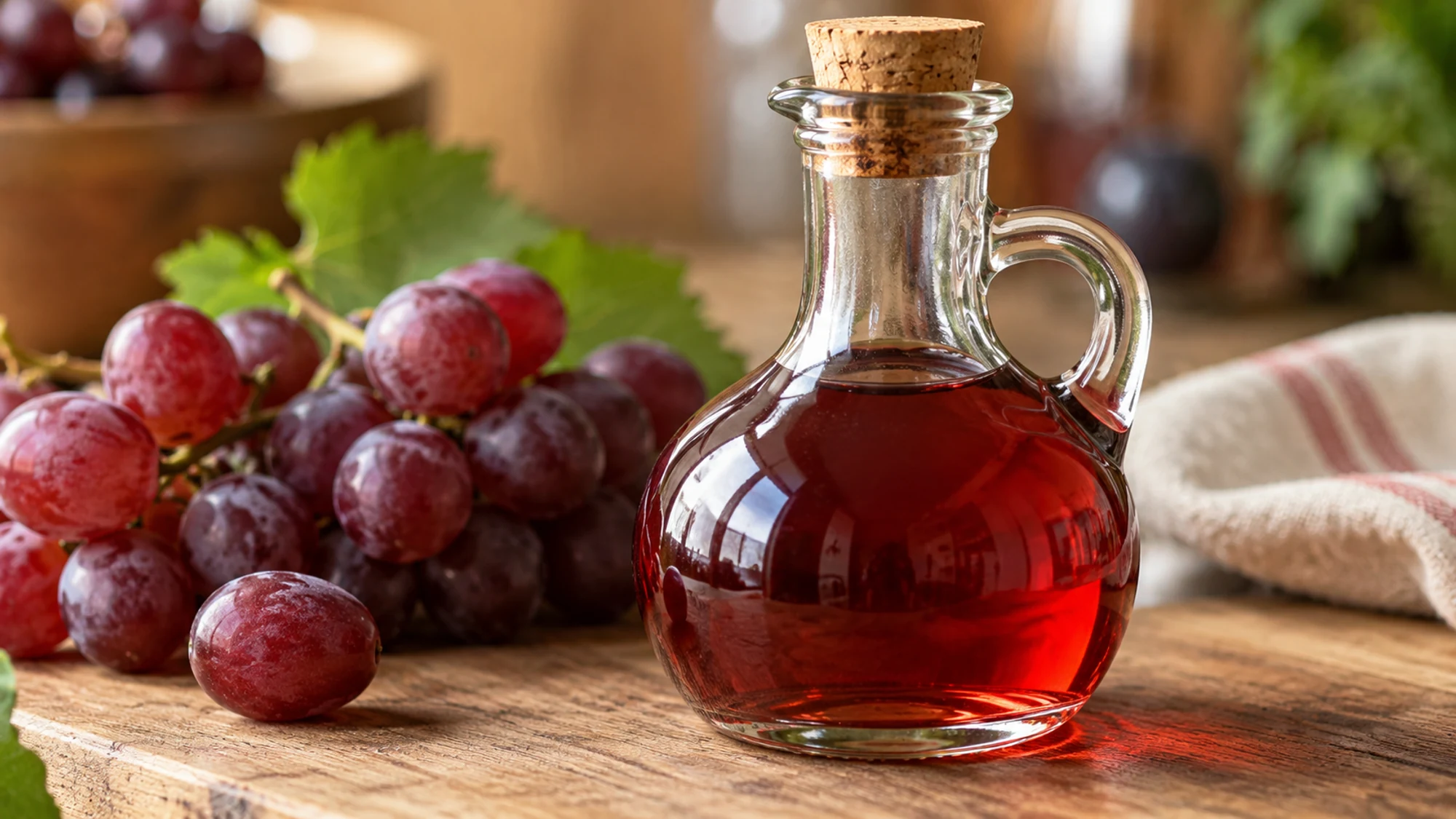
Wine is the starting material, but vinegar is a different finished product. A scientific review of wine-vinegar production explains how acetic acid bacteria use oxygen while converting ethanol to acetic acid, the source of vinegar’s characteristic sourness.
The wine, production method, wood contact and aging can affect its aroma and flavor. Two bottles can therefore have different personalities even when both say red wine vinegar.
Do not swap drinking wine for vinegar and expect the same acidity or result. Conversion also does not establish that every finished vinegar contains absolutely no residual alcohol; ask the producer if that detail matters to your choice.
Where red wine vinegar earns its place
Think about foods that welcome a bright edge: beans, tomatoes, cooked lentils, greens, roasted vegetables and savory pan sauces. The Vinegar Institute’s uses guide identifies wine vinegars as useful partners for salad dressings and cooking.
For ordinary seasoning, add a little, mix it through and taste the actual food rather than the vinegar alone. A spoonful of dressing tastes different on a leaf or a forkful of beans, and you can add more more easily than you can remove it.
- Use it in a dressing when you want a distinct tang that can stand beside olive oil, herbs or mustard.
- Try a small finishing addition to cooked beans or vegetables after tasting their existing seasoning.
- Check other acidic ingredients already present, such as tomatoes or lemon, before adding another sharp note.
I’d taste before reaching automatically for extra salt when a finished dish seems dull. For another use, DISHORA’s quick pickled red onions discusses red wine vinegar as a flavor option in refrigerator pickles; it is not a shelf-stable canning method.
Choose substitutes by the dish
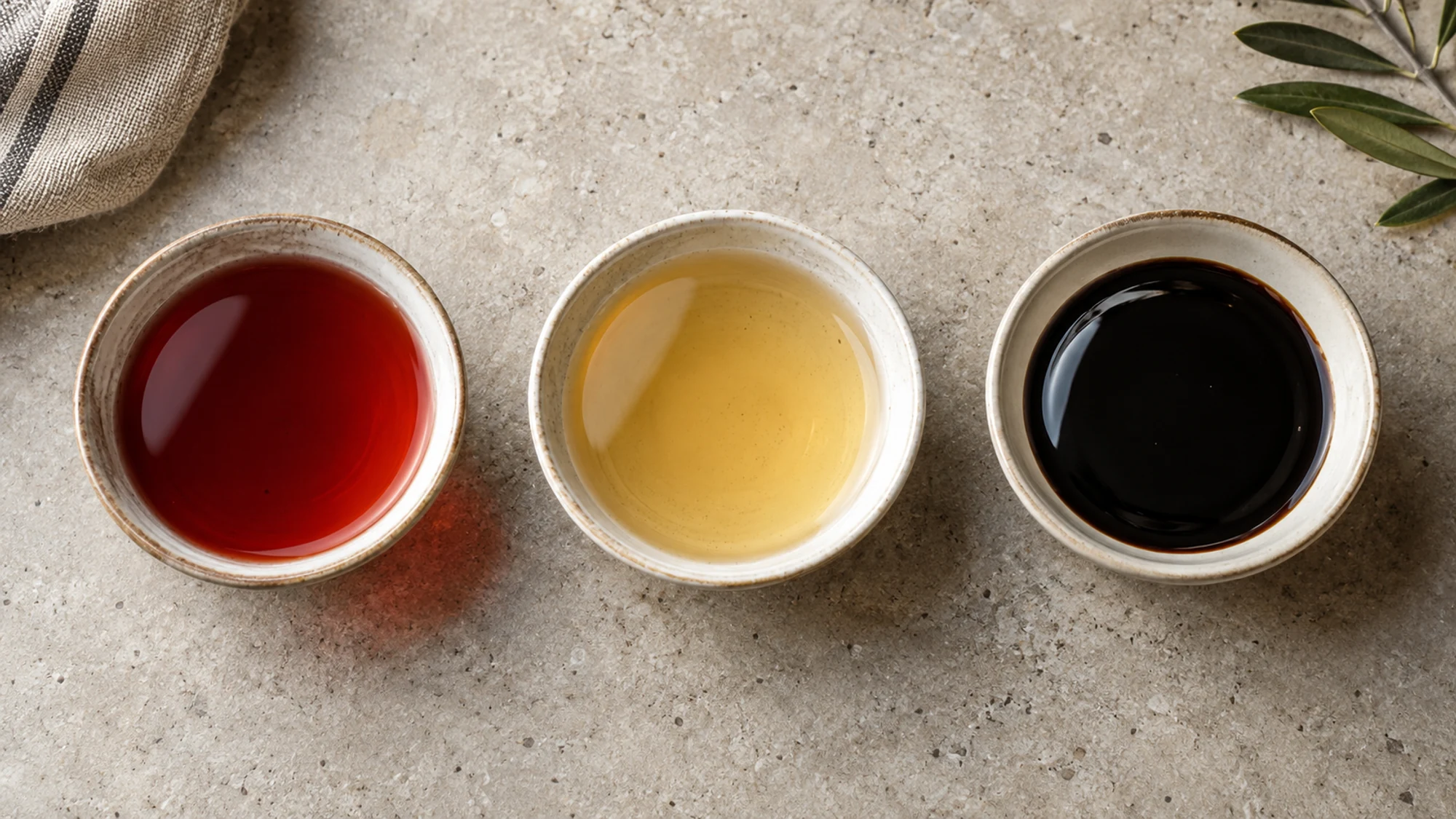
For a fresh dressing or an immediately served dish, another food-grade vinegar can be a practical alternative. Expect the aroma, color and sweetness to change; the table is about flavor choices, not interchangeable canning ingredients.
| Alternative | Likely change | Useful approach |
|---|---|---|
| White wine vinegar | Lighter color; wine-vinegar character | Consider when red color is unwelcome |
| Apple cider vinegar | Apple aroma and a different fruit note | Taste with the actual food |
| Distilled white vinegar | Sharper, plainer flavor | Add cautiously and balance seasoning |
| Balsamic vinegar | Often darker and sweeter | Expect a different dressing profile |
The Penn State vinegar guide describes cider vinegar’s fruity flavor and distilled white vinegar’s sharper character. Balsamic products vary widely, so look at the ingredients rather than assuming every bottle has the same sweetness or thickness.
Store the plain bottle for good quality
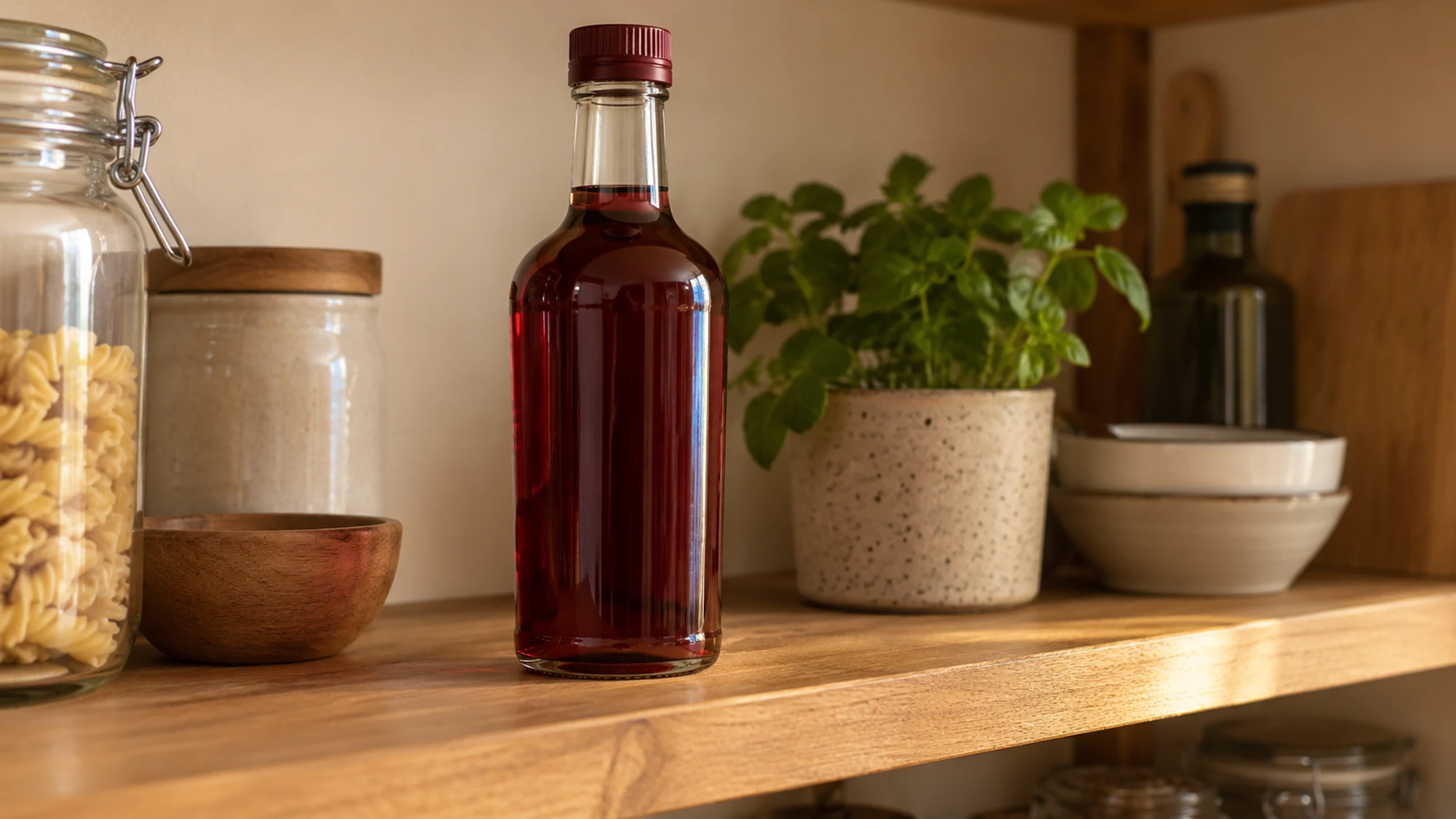
Keep the cap tight and follow the producer’s storage directions. A cool cupboard away from heat and direct light is a sensible place for a plain commercial bottle; Penn State recommends cool, dark storage and attention to the manufacturer’s best-quality guidance.
The Vinegar Institute explains that vinegar’s acidity makes it self-preserving and that plain vinegar generally does not need refrigeration. Haze, sediment or a cellulose “mother” can develop without meaning that a plain vinegar has spoiled.
That does not make every unexpected growth identifiable at home. If something looks moldy, the container is compromised or you are unsure what changed, replace the bottle; added herbs, fruit or other ingredients also mean different storage rules.
Acidity matters more when preserving
A percentage on the bottle describes acid strength, not how sweet or smooth the vinegar tastes. Do not use taste to decide whether a vinegar is suitable for preserving.
The National Center for Home Food Preservation says to use tested proportions and avoid vinegar of unknown acidity. Penn State advises using specialty wine vinegars only when specified in a research-tested preservation recipe.
Let flavor guide a small seasoning adjustment, and let tested instructions guide preservation. A good pantry bottle is useful because its role is clear, not because every vinegar can do every job.
Sources
- Wine vinegar: acetic acid bacteria and production science
- Vinegar Institute: uses for different vinegars
- Vinegar Institute: storage, sediment and mother
- Penn State Extension: vinegar acidity and storage
- National Center for Home Food Preservation: pickling principles

Emily Parker is DISHORA’s recipe-writing persona, bringing a warm, practical voice to everyday cooking. Her focus is simple ingredients, comforting flavors and clear steps that make a dish feel approachable. From cozy dinners to something sweet, Emily’s recipes invite readers to try something delicious and make it their own.