
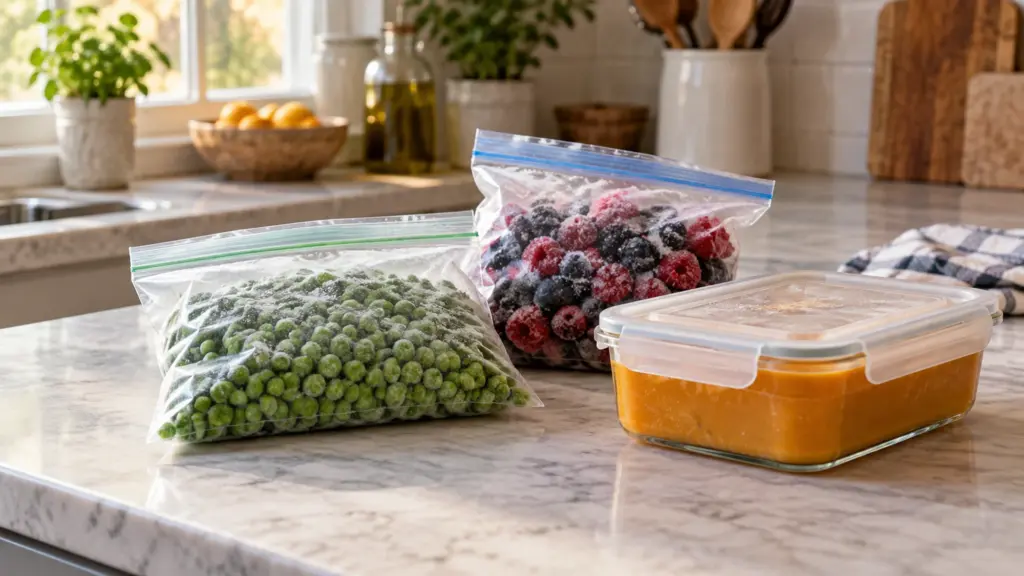
That bag of peas looked fine when it went into the freezer. Months later, the food has pale, dry patches and dinner feels less promising. Knowing how to prevent freezer burn starts with keeping moisture in the food and excess air away from its surface.
Use packaging made for freezing, remove excess air before sealing, and store food at 0°F (−18°C) or below. Pack useful portions, leave the expansion space liquids need, and use older packages first. Freezer burn itself damages quality; it does not by itself make food unsafe.
Start with packaging that protects the food
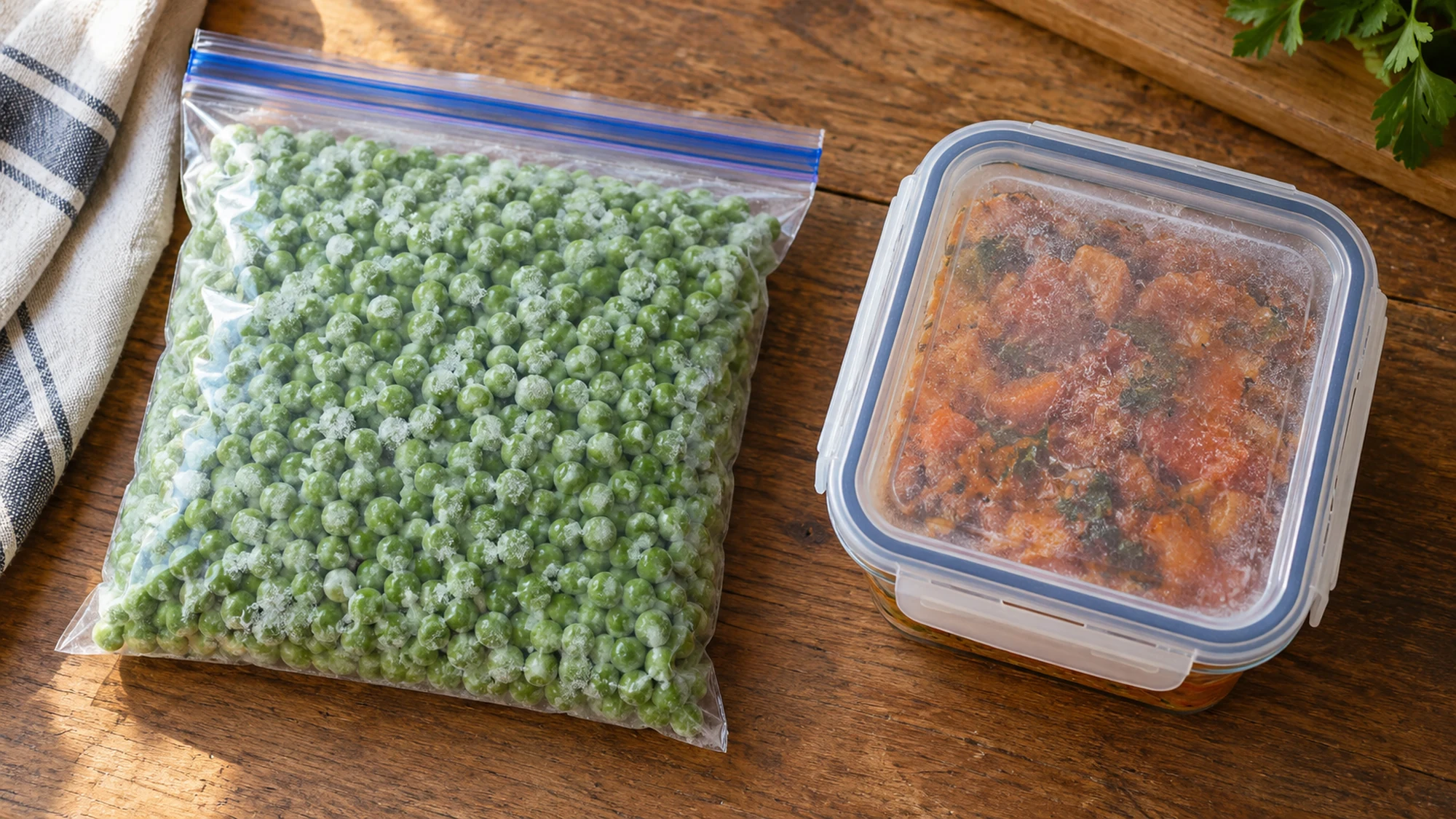
The National Center for Home Food Preservation’s container guide recommends moisture-vapor-resistant packaging. An ordinary leftover carton is not automatically suitable for long freezer storage, and a lid that barely fits is a poor starting point.
| Packaging | Useful for | Check before freezing |
|---|---|---|
| Freezer bag | Portioned dry foods or suitable liquids | Remove excess air; seal fully |
| Rigid freezer container | Soup and other liquid foods | Tight lid; required headspace |
| Freezer wrap or heavy foil | Dry foods and irregular shapes | Close wrapping; secure seams |
Inspect bags for holes and container rims for cracks. If using glass, choose a container specifically suitable for freezing rather than assuming every jar can handle it. The package should protect the food without becoming brittle or leaking.
After taking out a portion, close the package carefully again. Press excess air from a flexible bag and check the full seal rather than folding the top loosely. If a nearly empty bag leaves a lot of exposed space, move the remaining food into a smaller suitable package and keep its original date.
Cool, portion and leave the right space
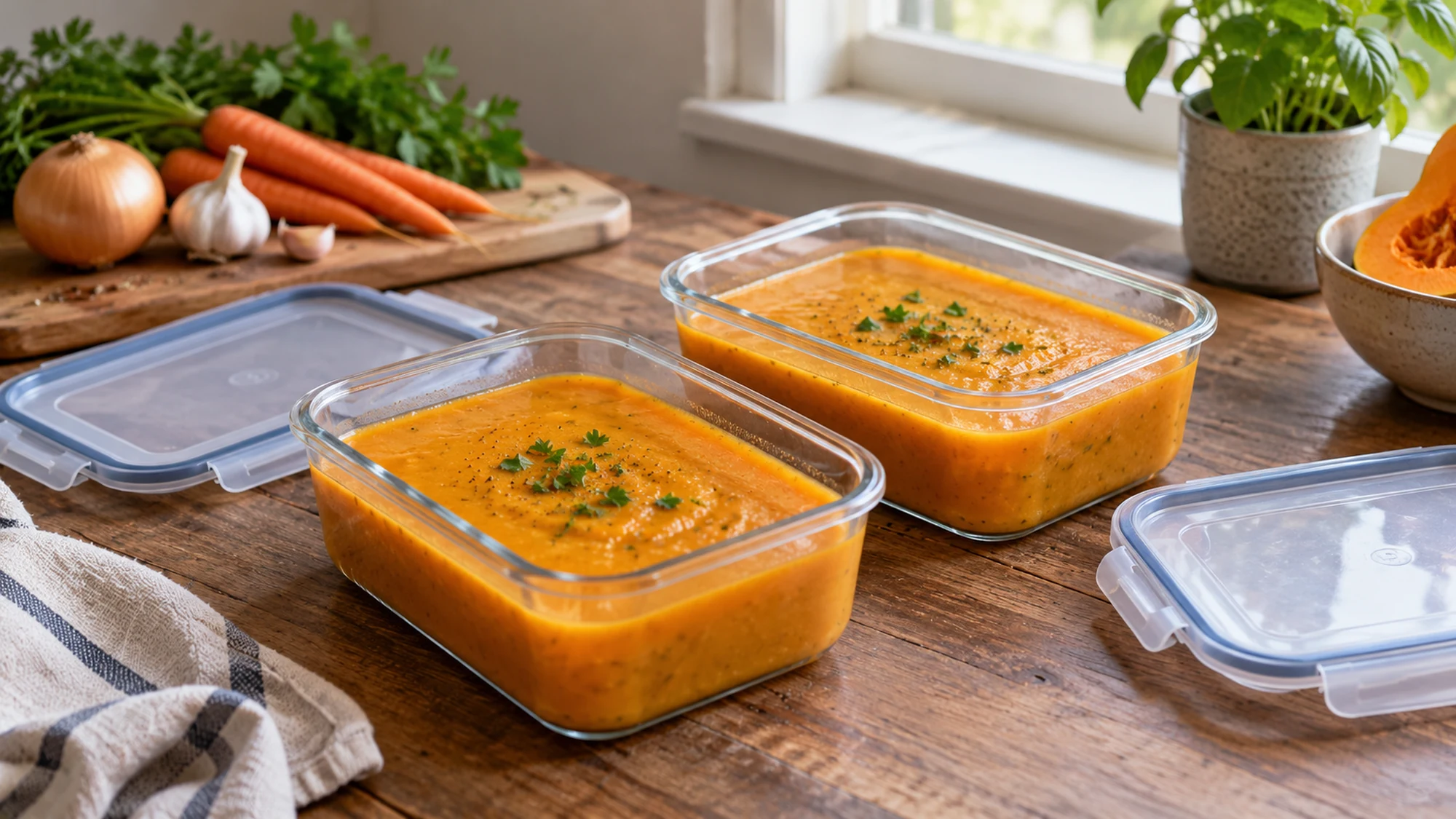
For cooked leftovers, USDA guidance calls for shallow containers and prompt chilling. Refrigerate within two hours, or one hour when the surrounding temperature is above 90°F (32°C). Do not leave a large pot on the counter waiting to become completely cold.
- Portion food into amounts you will use for one meal.
- Cool safely, then package for the freezer rather than repeatedly handling a large batch.
- Leave the food-specific headspace needed for liquid expansion; use container and preservation instructions rather than one universal fill line.
The NCHFP packaging guidance recommends limiting trapped air while allowing necessary expansion. Those ideas work together: reducing air does not mean filling a soup container to the brim.
I prefer two modest soup portions to one enormous frozen block. It makes the next meal easier to choose and saves wrestling a container that holds three dinners when you only want one.
Keep the temperature steady
University of Minnesota Extension explains that moisture loss from poorly protected frozen food causes dry, tough areas. Temperature fluctuations can also encourage thawing and refreezing, with larger ice crystals and poorer texture.
- Use an appliance thermometer to check that the freezer stays at 0°F (−18°C) or below.
- Follow the appliance’s loading guidance; do not overwhelm it with a large amount of unfrozen food.
- Arrange new packages so they freeze efficiently before stacking them tightly.
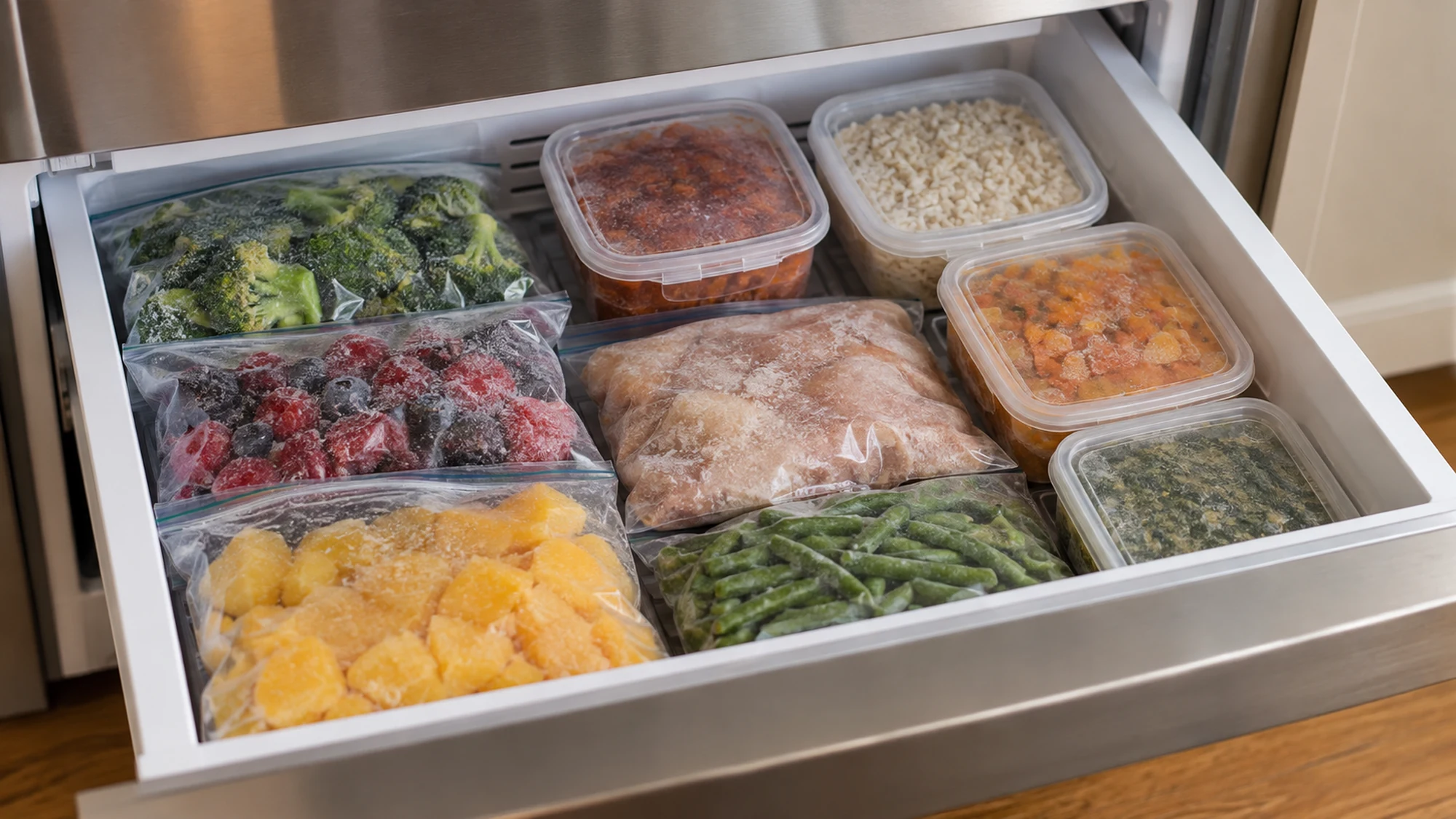
Keep packages easy to find so the door can close promptly. If one drawer becomes a jumble, group similar foods together rather than moving the temperature control and hoping it solves an organization problem.
Label portions and plan to use them
The NCHFP recommends labeling food with its name, packaging date and amount or servings. Include useful details such as an added ingredient or whether a vegetable is sliced; an unidentified orange block is surprisingly unhelpful at dinnertime.
- Keep older packages toward the front and add new ones behind them.
- Check the relevant food’s recommended storage period for best quality.
- If freezing soup such as DISHORA’s carrot red lentil soup, label the actual portion rather than only the batch name.
I’d write a date before putting the lid away. It is a small habit that turns a freezer from a food archive into somewhere you can actually find dinner.
What if freezer burn has already happened?
The USDA freezer-safety guide says affected portions can be cut away before or after cooking. Heavily damaged food may be worth discarding for quality because its texture and flavor can be unpleasant.
That advice assumes safe food and handling. Freezing does not repair earlier temperature abuse. If food warmed during an outage, assess it using time-and-temperature guidance rather than judging its appearance or tasting it to check.
Prevent freezer burn with a sound seal, suitable portions and steady cold storage. Keep quality decisions separate from safety decisions, and thaw perishable food safely—planning ahead for refrigerator thawing is a useful default.
Sources
- NCHFP: freezer containers
- NCHFP: packaging and labels
- Minnesota Extension: freezing science
- USDA: safe leftovers
- USDA: freezing and food safety

Emily Parker is DISHORA’s recipe-writing persona, bringing a warm, practical voice to everyday cooking. Her focus is simple ingredients, comforting flavors and clear steps that make a dish feel approachable. From cozy dinners to something sweet, Emily’s recipes invite readers to try something delicious and make it their own.