

A milk carton mentions vitamin D, a supplement promises a bigger dose, and a tired afternoon sends you searching for answers. Vitamin D deficiency deserves a clearer explanation than a shopping list or a checklist of vague symptoms.
Vitamin D deficiency means the body has too little vitamin D for its needs. It can harm bone health, but symptoms alone cannot confirm it. A health professional can decide whether a blood test is appropriate and, if deficiency is found, guide treatment.

What a vitamin D blood test can tell you
The usual measure is blood 25-hydroxyvitamin D, written as 25(OH)D. The NIH professional fact sheet summarizes these National Academies reference ranges; they are useful context rather than a personalized treatment plan.
| ng/mL | nmol/L | General interpretation |
|---|---|---|
| Below 12 | Below 30 | Risk of deficiency |
| 12 to below 20 | 30 to below 50 | Potential inadequacy |
| 20 or above | 50 or above | Adequate for most people; higher is not always better |
Thresholds and test methods have limitations. There is no universally established ideal concentration for every health outcome, and a clinician should interpret a result alongside your circumstances. Do not confuse a blood concentration with the IU printed on a supplement bottle.

Food helps, but check what the label actually says
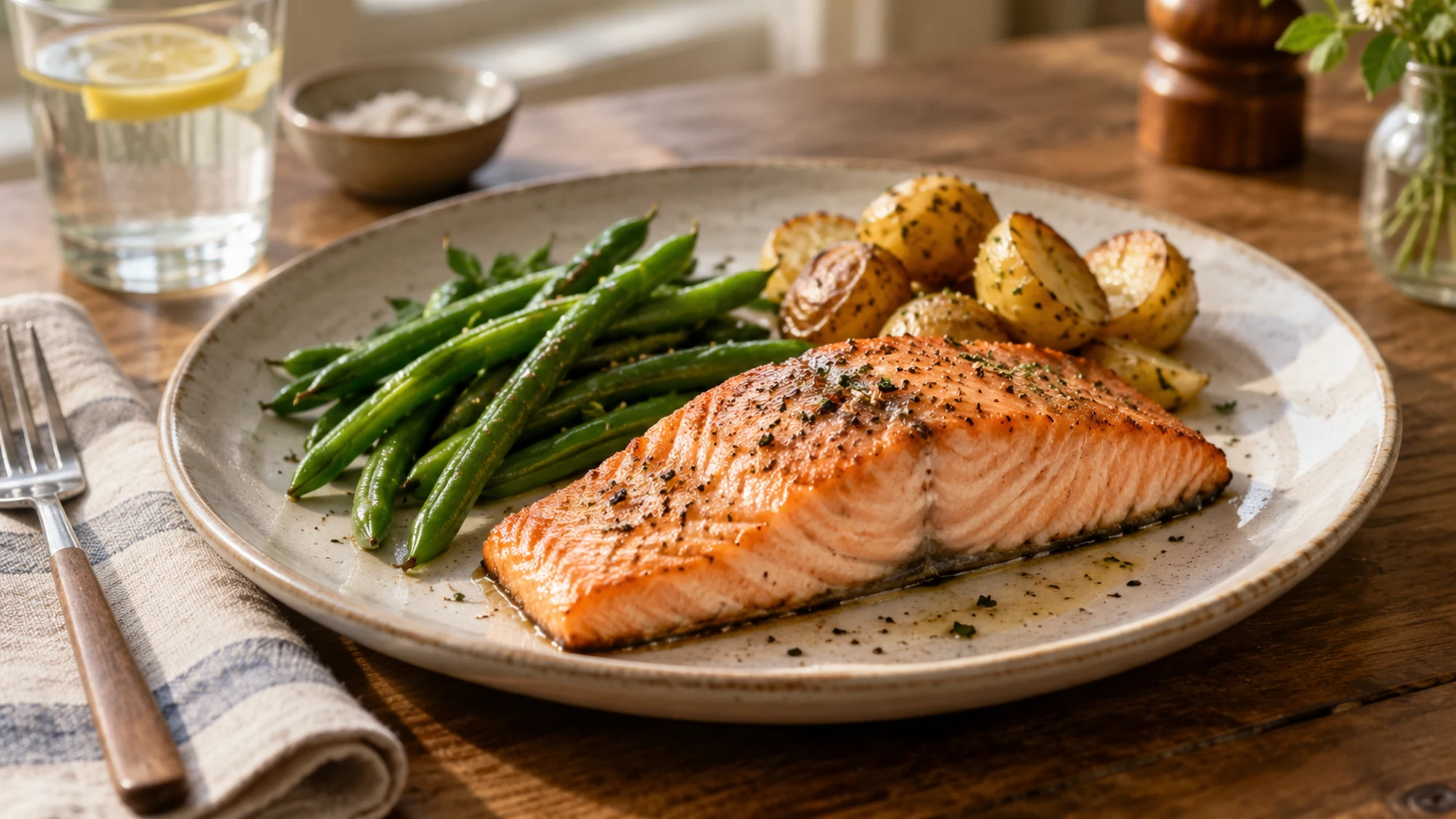
The NIH consumer guide identifies fatty fish such as salmon and trout as useful natural sources. Egg yolks supply smaller amounts, while mushrooms vary, especially when ultraviolet exposure has increased their vitamin D content.
- Milk and plant drinks: Check for added vitamin D and compare the amount per serving; fortification varies.
- Cereals and yogurt: Some products are fortified, others are not.
- Fish: Choose a preparation you enjoy rather than assuming all portions contain identical amounts.
- Compare equal portions: A full cup and a small splash are different servings. Use the stated amount on the label, then consider how much you actually drink or eat; the front-of-package wording is not a substitute for that comparison.
For a meal idea, DISHORA’s guide to cooking salmon explains a straightforward skillet method. It is a food option, not a promise that one dinner corrects a deficiency.
I’d read the vitamin D line on the carton before relying on the word milk. Similar-looking drinks can make quite different contributions, and a quick label check is more useful than guessing.
Symptoms and risk factors need context
MedlinePlus explains that severe deficiency can cause rickets in children and osteomalacia in adults, which may involve bone pain and muscle weakness. Those findings do not turn every ache or low-energy day into proof of vitamin D deficiency.
- Older age and limited sunlight exposure can affect vitamin D availability.
- Conditions that impair absorption, some medicines, and kidney or liver disease can change the picture.
- A clinician can consider your diet, symptoms, medical history and existing supplements together.
The Endocrine Society’s 2024 guideline suggests against routine screening in generally healthy adults without an established reason for testing. That is different from evaluating someone with relevant symptoms or a clinical indication.
Daily intake is different from deficiency treatment
The recommended daily amounts are 15 micrograms (600 IU) for adults ages 19–70 and 20 micrograms (800 IU) from age 71. These are total intake recommendations for generally healthy people, not instructions for correcting an abnormal test.
Treatment of diagnosed deficiency may involve supplements with an individually chosen dose and duration. Ask how much to take, how often, and whether follow-up testing is needed rather than borrowing someone else’s regimen. Write down whether the instructions refer to each day or another schedule, and ask about anything unclear before taking it.
I prefer a clear plan with an amount and an end point to the assumption that a bigger bottle means better care. Keep the label or a photo of it available when discussing what you already take.
Choose a sensible next step
Too much supplemental vitamin D can be harmful. The NIH safety review describes toxicity involving excessive blood calcium; high-dose treatment belongs under professional supervision.
- Check the combined vitamin D in multivitamins and separate products.
- Bring medicine and supplement details to your clinician or pharmacist.
- Do not use tanning or intentional sunburn as a correction strategy; excess ultraviolet exposure damages skin.
A food record can make that conversation concrete: note the drink you buy, its serving size, and how often fish or fortified foods appear. It helps describe intake without pretending to diagnose the cause of a symptom.
Use food labels to support everyday intake and seek individual advice when deficiency is a concern. A sensible meal and a properly interpreted test answer different questions; both deserve their place.
Sources
- NIH: vitamin D consumer guide
- NIH: blood ranges and safety
- MedlinePlus: vitamin D deficiency
- Endocrine Society: 2024 guideline

Emily Parker is DISHORA’s recipe-writing persona, bringing a warm, practical voice to everyday cooking. Her focus is simple ingredients, comforting flavors and clear steps that make a dish feel approachable. From cozy dinners to something sweet, Emily’s recipes invite readers to try something delicious and make it their own.