
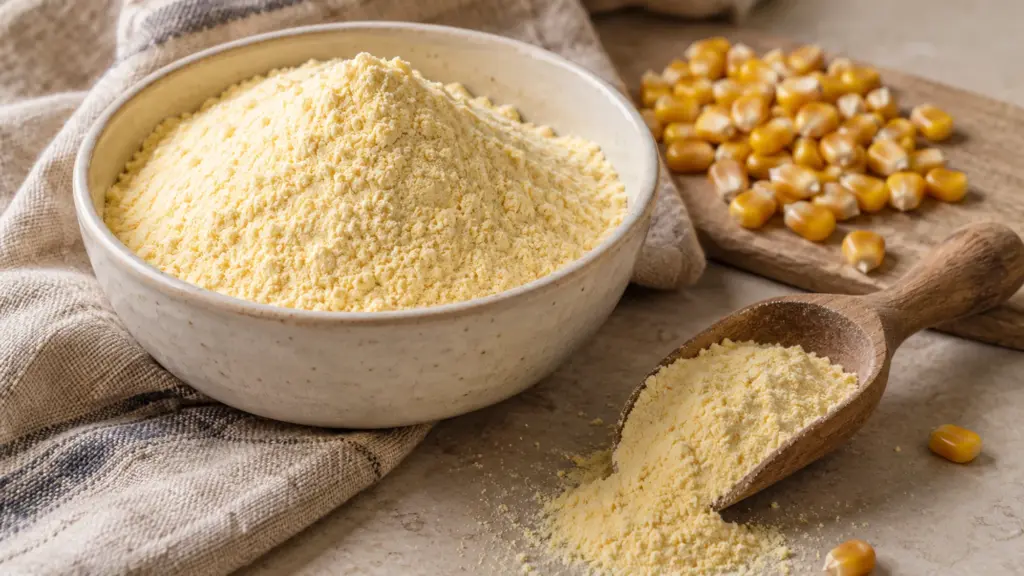
A recipe says corn flour, but the bag in your hand looks nothing like the powder in the picture. Before changing dinner plans, check the ingredient list and where the recipe was written. The name can point to different products, and those products do different jobs.
In American cooking, corn flour generally means finely milled corn. A product labeled cornflour in the UK may be corn starch. Cornmeal and masa harina are different again, so match the actual ingredient to the recipe before substituting.
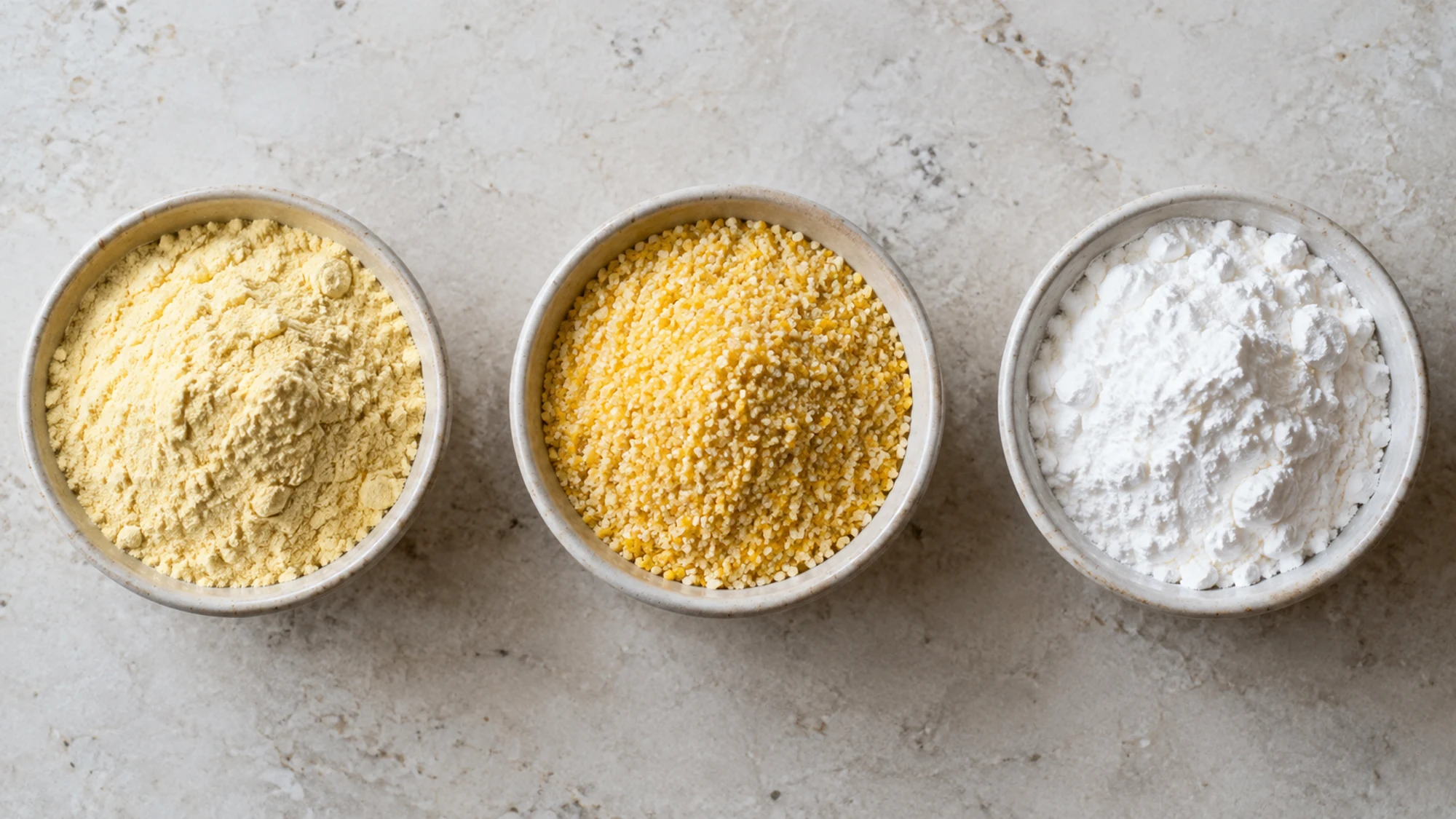
I prefer settling the label question before measuring. A fine yellow flour, gritty meal and white starch can all start with corn without acting like pantry twins.
What corn flour means on the package
A useful American example is Bob’s Red Mill whole-grain corn flour, made from finely ground yellow corn kernels. By contrast, Doves Farm’s UK cornflour lists corn starch. These manufacturer descriptions show why the ingredient list matters more than a familiar-looking name.
| Product | What it is | Useful label clue |
|---|---|---|
| Corn flour | Finely milled corn | Look for ground corn; whole-grain status varies |
| Cornmeal | A coarser grind | Fine, medium or coarse grind |
| Corn starch | Separated starch | Corn starch or maize starch |
| Masa harina | Dried nixtamalized corn flour | Masa harina; intended for tortillas or tamales |
Use this comparison to identify the product, not as a substitution chart. A shared starting grain does not guarantee the same texture or water needs.
Why masa harina needs its own place
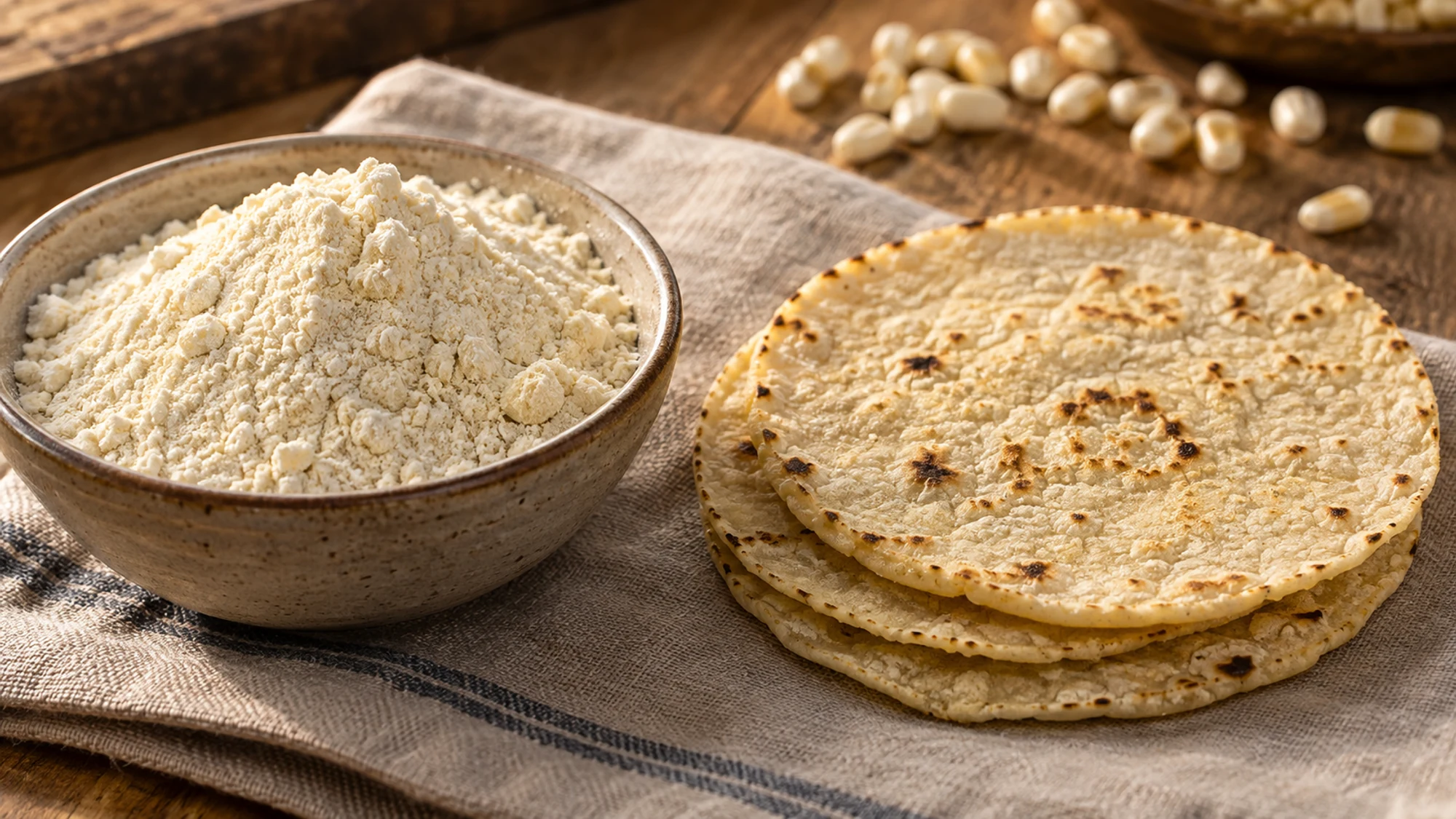
Masa harina is made from corn that has undergone nixtamalization, an alkaline treatment before milling and drying. In King Arthur’s tortilla guide with Pati Jinich, that treatment is the reason plain corn flour and cornmeal are unsuitable substitutes for tortilla masa.
- For tortillas: Choose the masa harina specified by the recipe rather than the finest corn product on the shelf.
- For tamales: Follow the recipe’s flour and hydration guidance. Our chipilín tamales use masa harina, with water adjusted to a soft, spreadable dough.
- For an unfamiliar bag: Read its intended uses. Not every corn flour has received the same treatment.
I’d choose a formula written for the corn product I actually have. That is a much friendlier starting point than asking an unfamiliar flour to improvise.
Using corn flour without guessing a swap
Fine corn flour can contribute corn flavor and a finer texture in baking or coatings. Bob’s Red Mill describes using its flour with wheat flour and notes a different cornbread texture from cornmeal. Those are product-specific suggestions, not proof that every flour can replace another cup for cup.
- For a smooth thickened sauce: If the recipe calls for corn starch, use that starch. Bob’s Red Mill’s starch guide explains its thickening role and the use of a cool-liquid slurry.
- For a cornmeal bake: Respect the requested grind. Our spoonbread dressing specifies fine cornmeal and treats corn flour as a different ingredient.
- For a wheat-flour recipe: Find a tested adaptation. A one-for-one change can alter the result, and a universal replacement ratio would be misleading.
Use a supplied recipe weight and keep its mixing and cooking cues together. Changing both the product and measurement method makes a substitution harder to judge.
What the label can tell you
“Corn flour” alone does not establish that a product is whole grain or suitable for every dietary need. Read the ingredients and Nutrition Facts for the bag you are buying. The FDA’s gluten-free labeling guidance also explains why a naturally gluten-free grain and a finished product’s gluten-free claim are separate considerations.
- Whole grain: Look for an explicit whole-grain description rather than inferring it from yellow color or a rustic package.
- Gluten avoidance: Check the finished product’s labeling and the other ingredients in the recipe; shared handling can introduce gluten cross-contact.
- Nutrition: Compare the same measured quantity. Nutrient values on one flour’s package do not describe a different starch or an entire finished dish.
Choose for the cooking job and your dietary needs. A whole-grain statement, a gluten-free claim and a corn ingredient describe different things; none replaces reading the rest of the label.
Store it carefully and cook it thoroughly
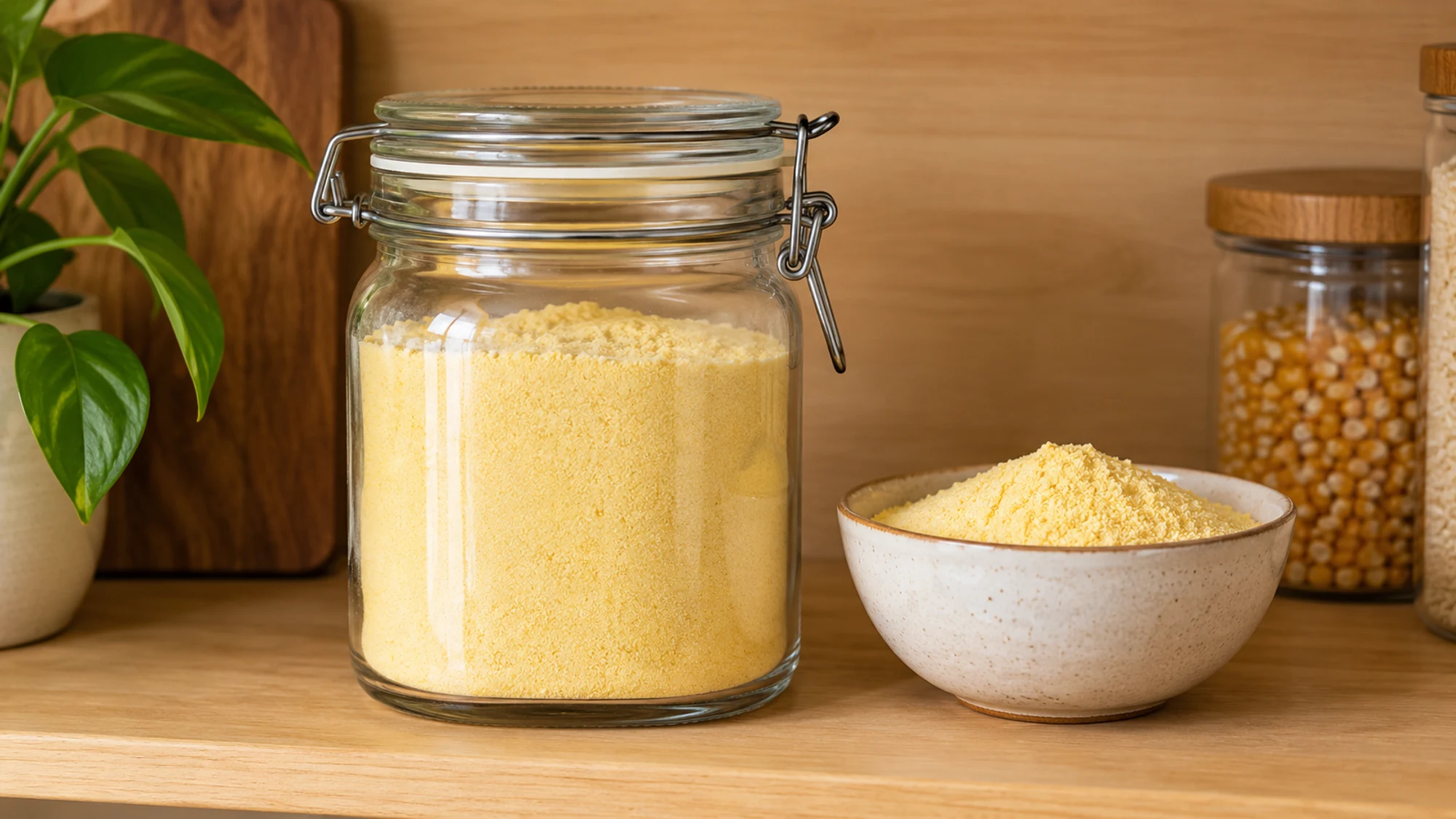
Follow the manufacturer’s storage directions and keep the product well sealed and dry. Retain its name, lot details and date if you transfer it to a container. To me, a useful pantry jar is one you can still identify without a guessing game.
- Keep raw flour out of ready-to-eat food. The FDA’s flour-safety guidance explains that milling does not reliably kill harmful bacteria.
- Skip raw tastes. Do not taste uncooked flour, dough or batter; follow the recipe or package’s cooking directions.
- Clean the work area. Wash hands, utensils and surfaces after handling raw flour, and keep the powder away from foods that will not be cooked.
Start with the right product, preserve the label and cook it as directed. Those simple checks are more useful than treating every bag made from corn as the same ingredient.
Sources
- Bob’s Red Mill: whole-grain corn flour
- Doves Farm: cornflour ingredients
- King Arthur Baking: masa harina and tortillas
- Bob’s Red Mill: starch functions
- FDA: gluten-free labeling
- FDA: handling flour safely

Emily Parker is DISHORA’s recipe-writing persona, bringing a warm, practical voice to everyday cooking. Her focus is simple ingredients, comforting flavors and clear steps that make a dish feel approachable. From cozy dinners to something sweet, Emily’s recipes invite readers to try something delicious and make it their own.