
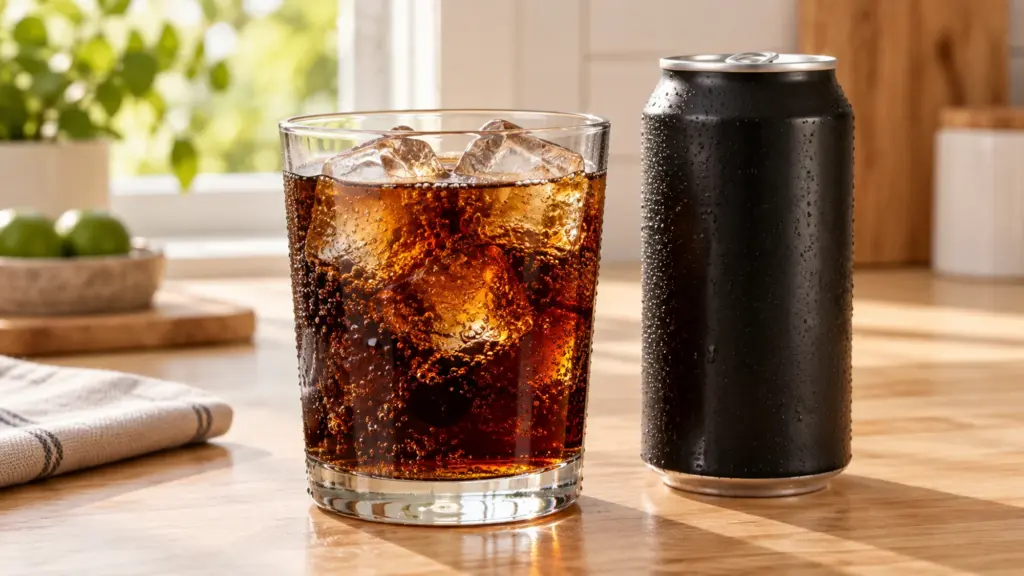
A black can on the lunch table can look like a simple swap: cola flavor, no sugar, done. But the word “zero” answers one question while leaving another open. If you are watching caffeine, the product name needs a second look.
Yes, regular U.S. Coca-Cola Zero Sugar contains about 34 mg of caffeine per 12 fl oz can. Zero sugar does not mean caffeine-free; choose a product explicitly labeled caffeine-free if that is what you need.
I’d check the exact can before making an evening-drink decision. The useful comparison includes the formulation, serving size and everything else you have had that day, rather than the biggest word on the packaging.
Does Coke Zero have caffeine in every version?
The U.S. Coca-Cola Zero Sugar product information gives approximately 34 mg per 12 fl oz serving and identifies a separate caffeine-free option. This guide uses U.S. products; packaging, names and formulations in another country should be checked locally. Check again when buying a flavored edition or a product brought in from another market; similar names do not establish identical caffeine amounts.
The table compares the same volume. Coca-Cola’s ingredient and caffeine FAQ supplies the Original and Diet Coke figures and identifies its caffeine-free range.
| Product | Caffeine | Label distinction |
|---|---|---|
| Coca-Cola Zero Sugar | About 34 mg | Zero sugar; contains caffeine |
| Coca-Cola Original | 34 mg | Contains sugar and caffeine |
| Diet Coke | 46 mg | A different formulation |
| Caffeine-Free Coca-Cola Zero Sugar | Caffeine-free | Both claims stated explicitly |
Why zero sugar is a separate question
Sugar and caffeine are different ingredients. Coca-Cola describes Coke Zero Sugar as sweetened with aspartame and acesulfame potassium in its sweetener information. Replacing sugar does not automatically remove caffeine from the formula.
That distinction is useful beyond cola. “Diet,” “zero” and “sugar-free” are not reliable shortcuts for a caffeine decision. I prefer treating the sugar claim and the caffeine statement as two separate checks, even when the front of the can makes one much more prominent.
- For sugar: Read the product’s sugar information.
- For caffeine: Find the caffeine statement or manufacturer’s product details.
- For avoidance: Look for an explicit caffeine-free designation rather than infer it from color or branding.
Serving size changes the amount you drink
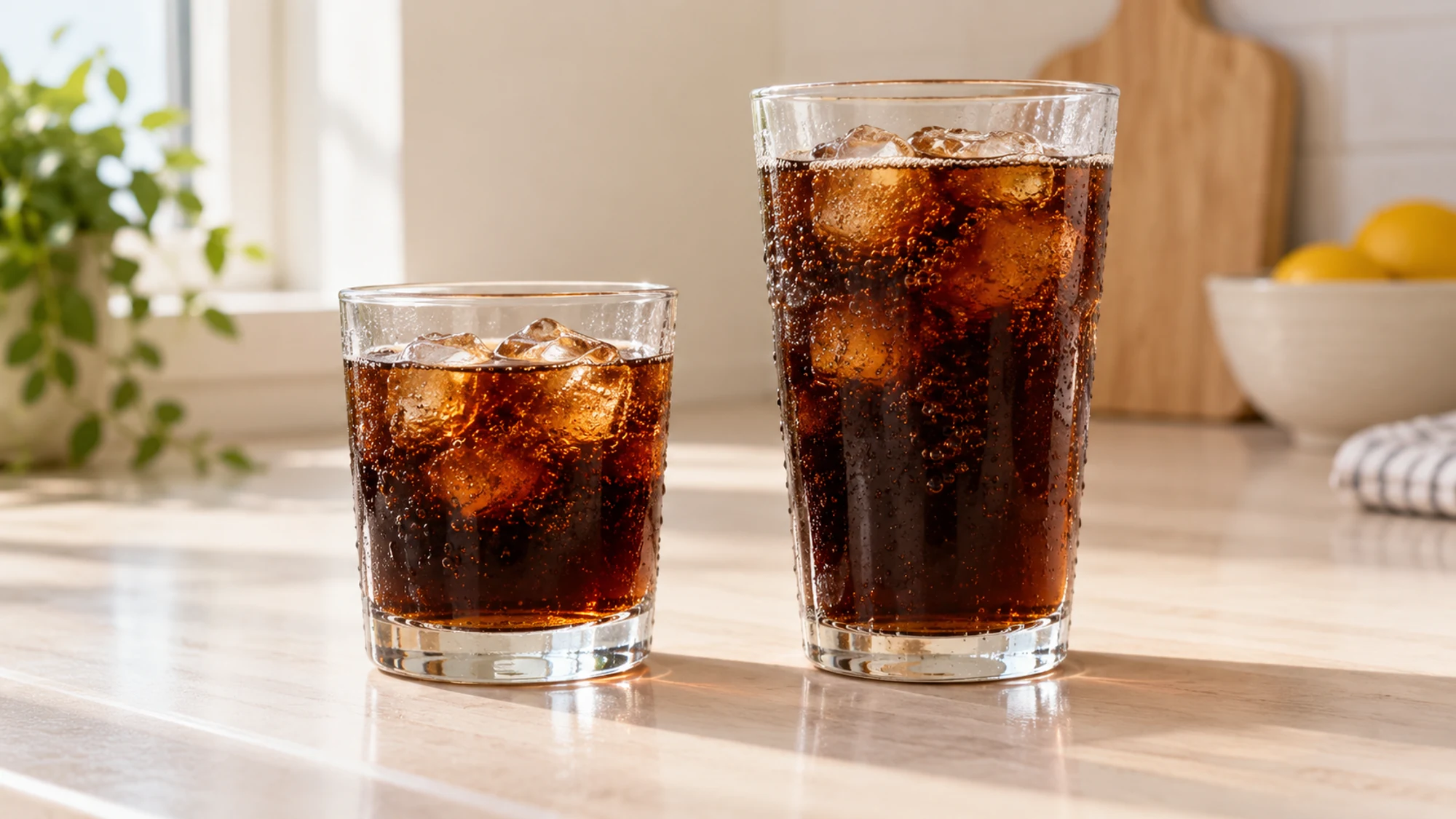
A 12 fl oz can is about 355 mL. Two such cans provide about 68 mg of caffeine, calculated from the manufacturer’s 34 mg figure. A large bottle is not automatically one standard-can serving, even when the product name is identical.
For a clearly labeled product using that same caffeine concentration, 24 fl oz would supply about twice the caffeine of 12 fl oz. That is arithmetic, not a replacement for the bottle’s own information; check the current label instead of assuming every package or regional version matches. For a fountain drink, the cup’s nominal size and the amount of liquid around the ice are not necessarily the same measurement.
Compare milligrams and the amount you actually drink. A smaller number per serving can become a larger total when the container holds more than one serving.
Your whole day and the timing matter
The FDA’s caffeine guidance cites 400 mg a day as an amount not generally associated with negative effects for most adults. It is not a personal target or a guarantee: sensitivity, medicines and health conditions can change the picture.
A 2013 controlled sleep study found that 400 mg of caffeine could disrupt sleep even when taken six hours before bed. That dose was much higher than one can’s 34 mg, so the study cannot tell you exactly how a single cola will affect your night.
- Add other sources: Coffee, tea, chocolate and some medicines or supplements can contribute caffeine.
- Notice your response: Sleep trouble or feeling jittery may be a reason to reconsider amount or timing.
- Ask for individual guidance: Pregnancy, breastfeeding, medicines or a health condition can justify a different limit; do not apply the adult figure to children.
Choosing the right drink for your goal
If the goal is no caffeine, the explicitly caffeine-free version answers the question most directly. If you simply want less, compare the amount in your actual serving rather than assume Diet Coke and Coke Zero are nutritionally identical.
For a different flavor altogether, our pure chicory coffee guide and recipe describes a roasted drink made without coffee beans. Check that product too: chicory blended with regular coffee is a different choice.
Regular Coke Zero Sugar contains caffeine. Match the exact product and serving to your goal, and let the caffeine-free label do the work when you want to avoid it.
Sources
- Coca-Cola: U.S. Zero Sugar product information
- Coca-Cola: ingredients and caffeine FAQ
- FDA: caffeine guidance
- Drake and colleagues: caffeine and sleep, 2013

Emily Parker is DISHORA’s recipe-writing persona, bringing a warm, practical voice to everyday cooking. Her focus is simple ingredients, comforting flavors and clear steps that make a dish feel approachable. From cozy dinners to something sweet, Emily’s recipes invite readers to try something delicious and make it their own.