
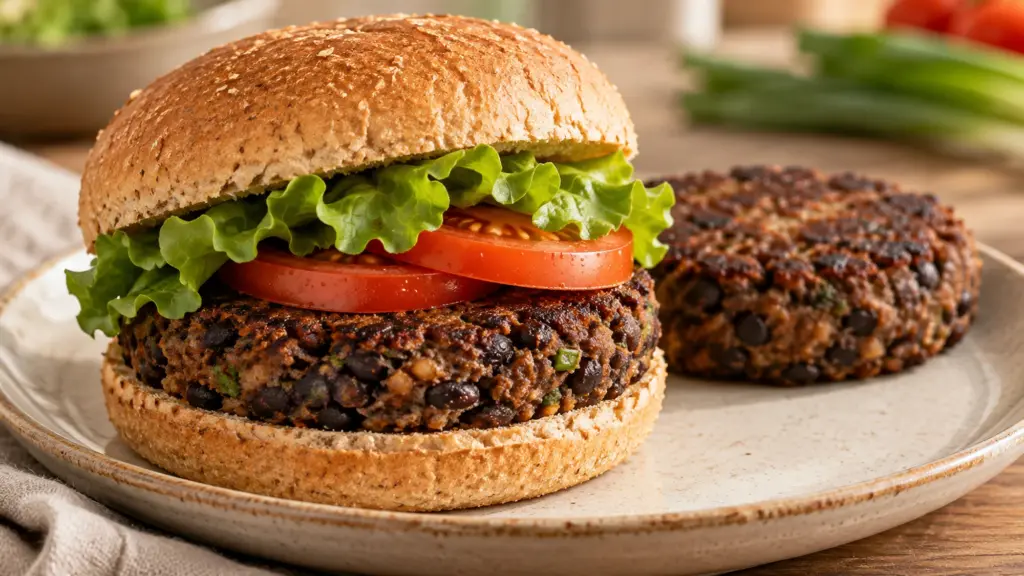
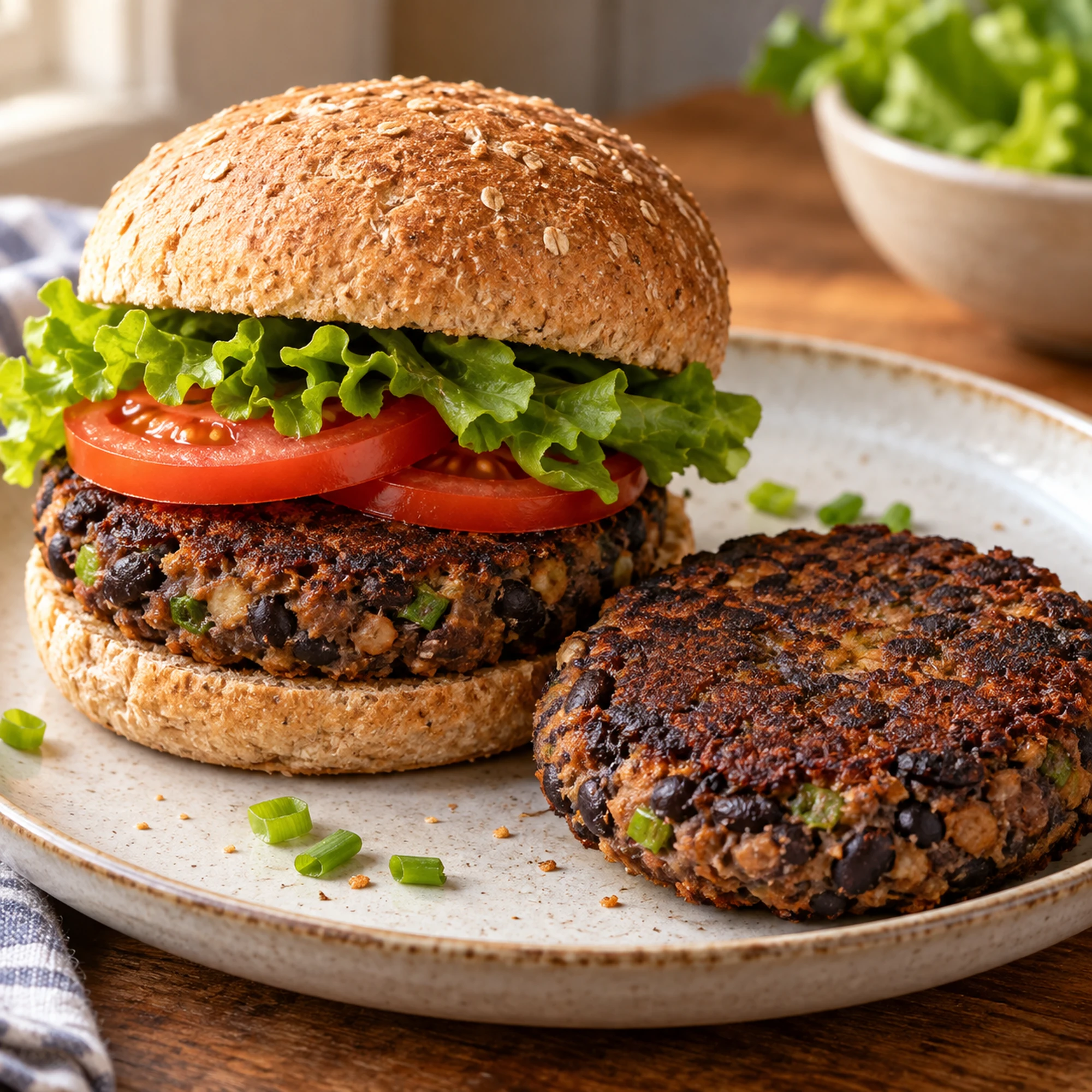
A burger can taste wonderfully smoky and still collapse before the first bite. These black bean burgers start with well-dried beans, a coarse mash and a short rest, giving the crumbs time to absorb moisture. A skillet then adds the browned edges that make a soft bean center especially satisfying.
Dry the rinsed beans thoroughly, leave a little texture when mashing and let the mixture rest for 10 minutes. Shape six modest patties, then cook them gently until browned and the centers reach 160°F. The whole batch takes about 50 minutes when cooked in two rounds.
I prefer a bean burger that tastes like beans rather than trying to imitate beef. Scallions, cumin and smoked paprika give this version a savory character, while a little tomato paste adds depth without turning the mixture into something wet and saucy. The spatula should do the lifting; there is no prize for flipping dramatically.
Serving suggestions for a better burger bite
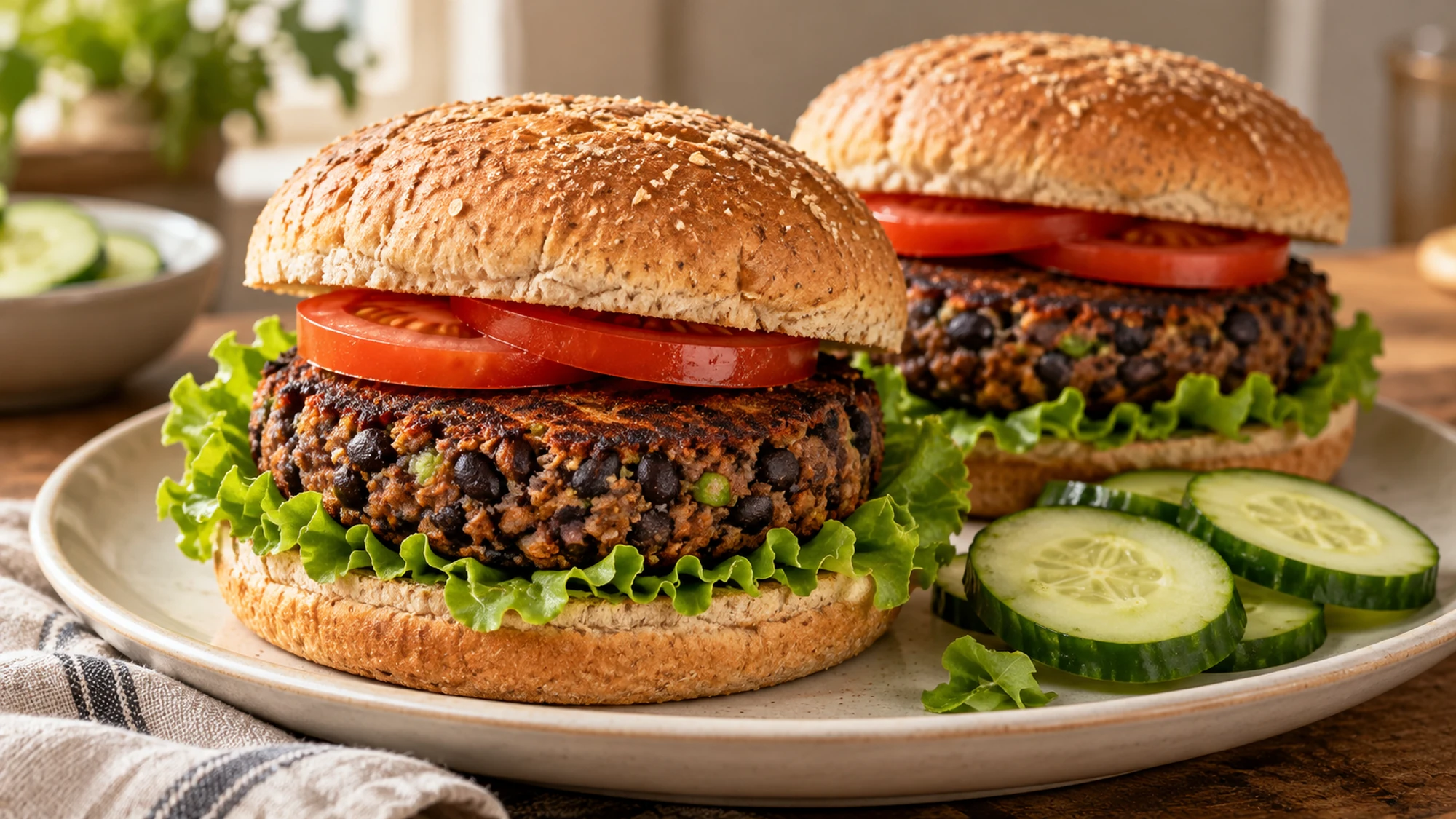
Choose a soft bun that yields easily when you bite through it. A very thick, chewy roll can squeeze the patty out the sides, especially when you pile on toppings. Lightly toasted cut surfaces help keep tomato juices from soaking straight into the bread.
- Keep the classic combination simple: lettuce, sliced tomato and a thin swipe of your favorite sauce. Blot very juicy tomato slices before building the burger.
- For a plate without bread, set a warm patty beside cucumber, leafy greens and a spoonful of salsa. Add rice if you want a more substantial meal.
- Share a crisp-skinned air-fryer jacket potato as a side. Start the potato first so both parts of dinner arrive warm.
Bring the toppings to the table separately and assemble just before eating. These patties have a tender interior, so a broad spatula and a little breathing room on the plate are more useful than building a towering stack.
A soft bun, restrained toppings and last-minute assembly let the browned patty stay at the center of the meal. Keep extra sauce alongside rather than pouring it over everything.
Variations that respect the mixture
The smoked paprika supplies a gentle smoky note. I’d add heat at the table rather than making every patty fiery; that keeps one batch useful for people with different tastes.
- Regular sweet paprika works if you do not enjoy smoke. Use the same amount; the result will taste warmer and milder.
- Cooked-from-dry black beans can replace canned beans by drained weight. They should be tender enough to mash, cooled and thoroughly drained before mixing.
- For a gluten-free version, use labeled gluten-free plain breadcrumbs and an appropriate bun. Check other packaged ingredients too; the standard recipe contains wheat and egg.
- Avoid stirring raw grated vegetables or a generous spoonful of salsa into the mixture. Their extra moisture changes how the patties bind and may require a separately adjusted recipe.
Keep the bean-to-binder balance steady and change the seasonings or toppings first. This is a vegetarian recipe, but its egg means it is not vegan.
Health benefits with realistic portions
Black beans contribute fiber and plant protein. One plain patty provides an estimated 8 grams of protein and about 7 grams of fiber, with roughly 190 calories. Those figures include the measured cooking oil but exclude buns, sauces and toppings, which can change the finished meal considerably.
- Low-sodium beans help control the starting salt level. Drain and rinse them, then measure the added salt instead of seasoning freely before the other ingredients go in.
- Beans count among the foods discussed in the protein foods guidance. Enjoy them as part of varied meals rather than expecting one ingredient to deliver a special health effect.
- Refrigerate cooked patties within two hours, or one hour above 90°F. Keep them covered at 40°F or below, use within three to four days and reheat to 165°F.
Use the nutrition panel as an ingredient-based estimate, then consider the whole plate. A bean patty, vegetables and a bun can be a practical meal without needing a bigger promise.
Give the crust time to form
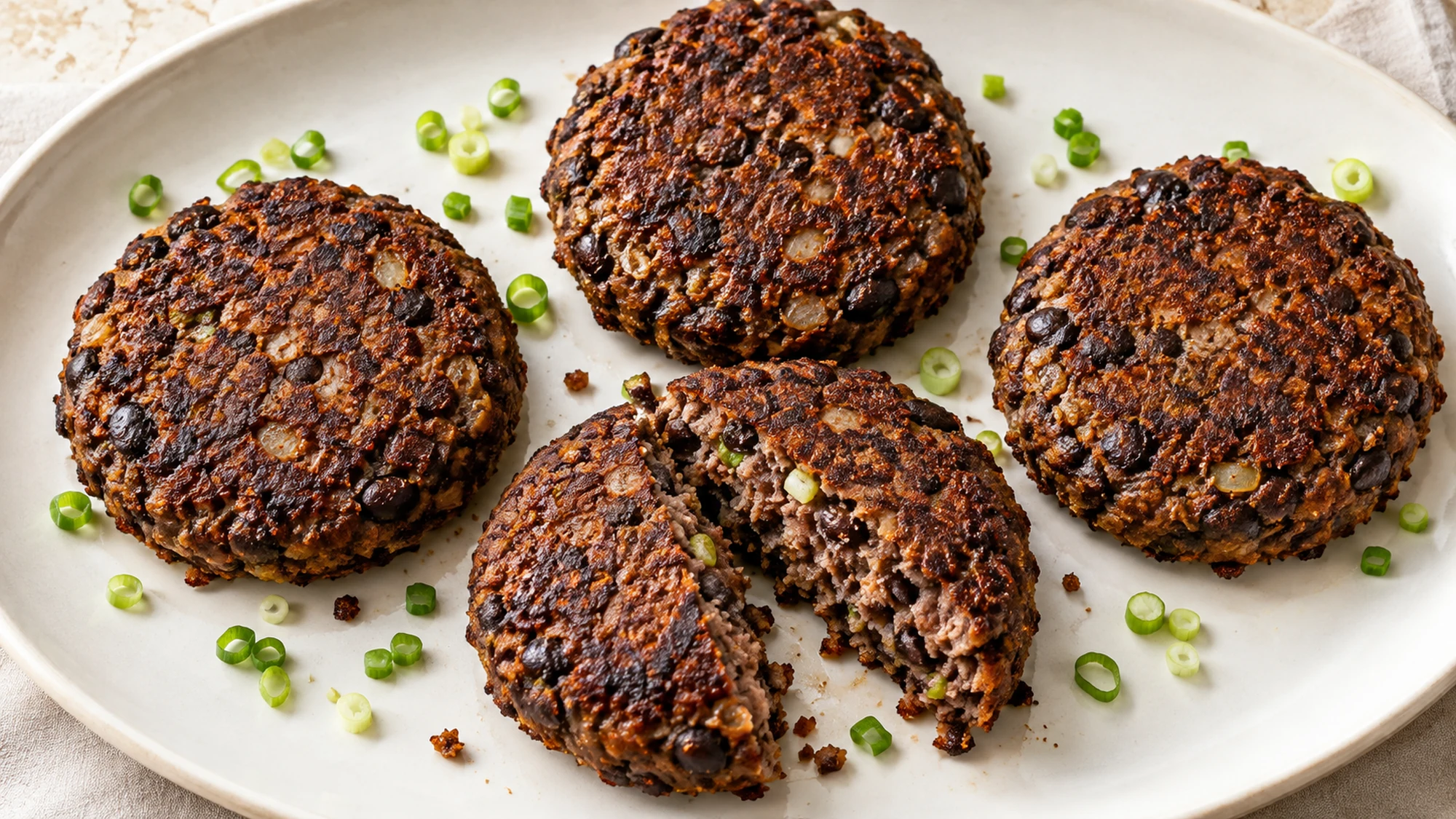
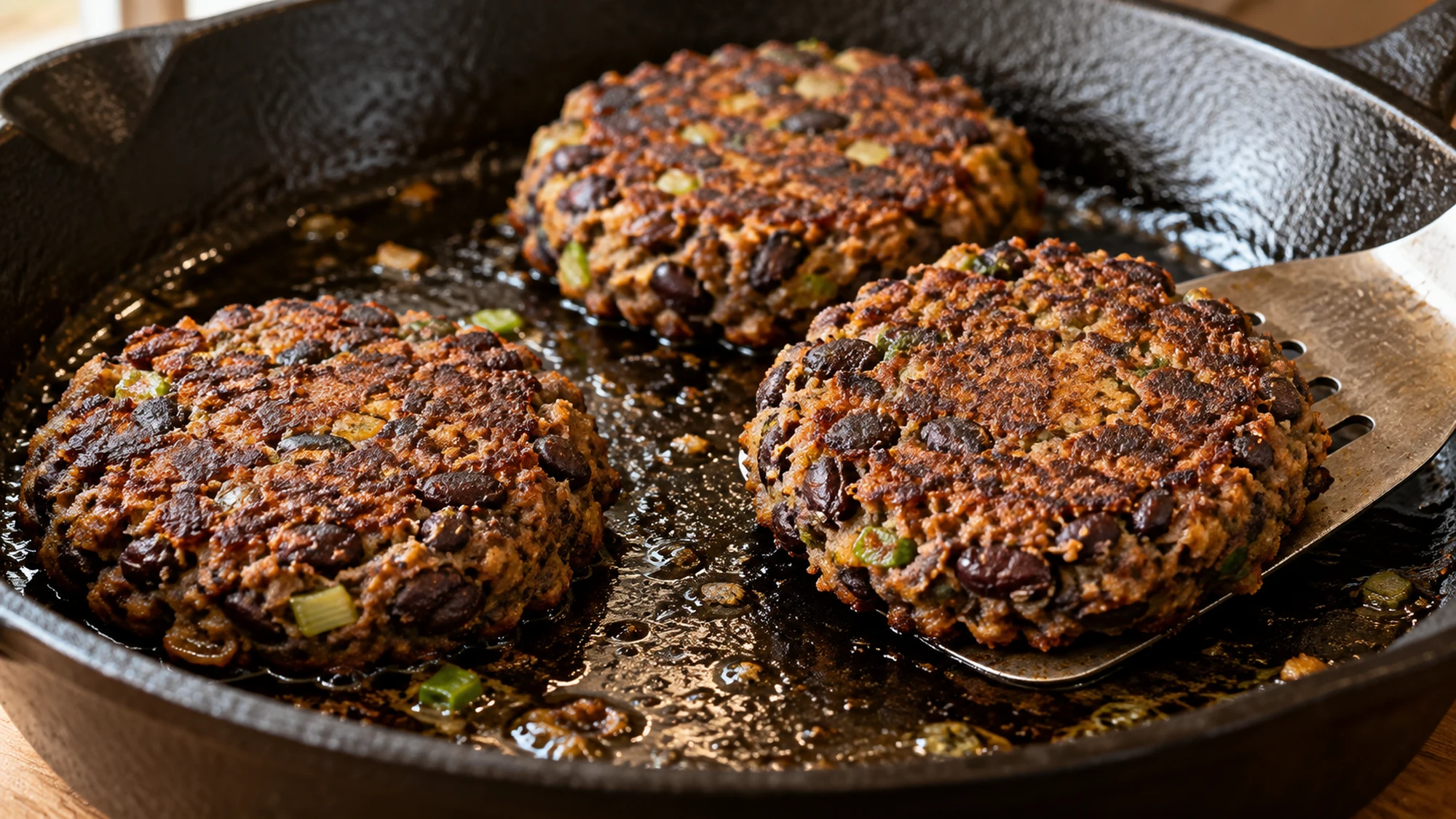
Once the patties enter the pan, leave them alone long enough to brown. Sliding the spatula underneath a set crust is easier than nudging a soft edge every minute. Turn gently, and lower the heat if the surface darkens before the center cooks.
Dinner does not need a perfect restaurant-style tower. A warm black bean burger with a crisp edge, a tender middle and the toppings you actually enjoy is plenty of reason to put those cans in the cupboard to work.
Black Bean Burgers Recipe

Ingredients
- 2 15-oz cans low-sodium black beans drained, rinsed and thoroughly dried; about 480 g drained total
- 1 large egg lightly beaten
- 3/4 cup plain dry breadcrumbs 90 g
- 1/3 cup finely chopped scallions 30 g, white and green parts
- 1 tablespoon tomato paste 16 g
- 1 teaspoon ground cumin 2.1 g
- 1 teaspoon smoked paprika 2.3 g
- 1/4 teaspoon fine salt 1.5 g
- 2 tablespoons olive oil 27 g; divided, for cooking
- 6 whole-wheat buns optional
- 6 lettuce leaves optional
- 1 large tomato sliced; optional
Equipment
- 1 Colander and clean kitchen towel
- 1 Large mixing bowl and fork or potato masher
- 1 Knife and cutting board
- 1 Measuring cups and spoons
- 1 12-inch skillet
- 1 Wide thin spatula
- 1 Instant-read thermometer
- 1 Plate or tray
Instructions
- Drain and rinse the black beans in a colander. Spread them on a clean kitchen towel and pat thoroughly dry. Measure about 480 g drained beans; excess surface water makes the mixture loose.
- Place the beans in a large bowl and mash with a fork or potato masher until most are broken down but small pieces remain. Stir in the egg, breadcrumbs, finely chopped scallions, tomato paste, cumin, smoked paprika and salt until evenly combined. Wash hands and utensils after handling raw egg.
- Let the mixture rest for 10 minutes so the breadcrumbs absorb moisture. Divide into 6 equal portions and press firmly into patties about 3 1/2 inches wide and 1/2 inch thick. If a patty cracks at the edges, press it together; avoid adding unmeasured liquid.
- Heat 1 tablespoon olive oil in a 12-inch skillet over medium heat. Add 3 patties without crowding. Cook about 5–6 minutes per side, turning gently once with a wide spatula, until browned and the centers reach 160°F (71°C). Lower the heat if browning is too fast. Transfer to a clean plate and repeat with the remaining tablespoon oil and patties. Allow about 24 minutes total cooking time.
- Serve the patties warm. If using the optional toppings, place each patty in a whole-wheat bun with a lettuce leaf and tomato slices. Nutrition and cost below cover the patties only.
Nutrition
Video
Notes
Tried this recipe?
Let us know how it turned out!Emily Parker is DISHORA’s recipe-writing persona, bringing a warm, practical voice to everyday cooking. Her focus is simple ingredients, comforting flavors and clear steps that make a dish feel approachable. From cozy dinners to something sweet, Emily’s recipes invite readers to try something delicious and make it their own.