
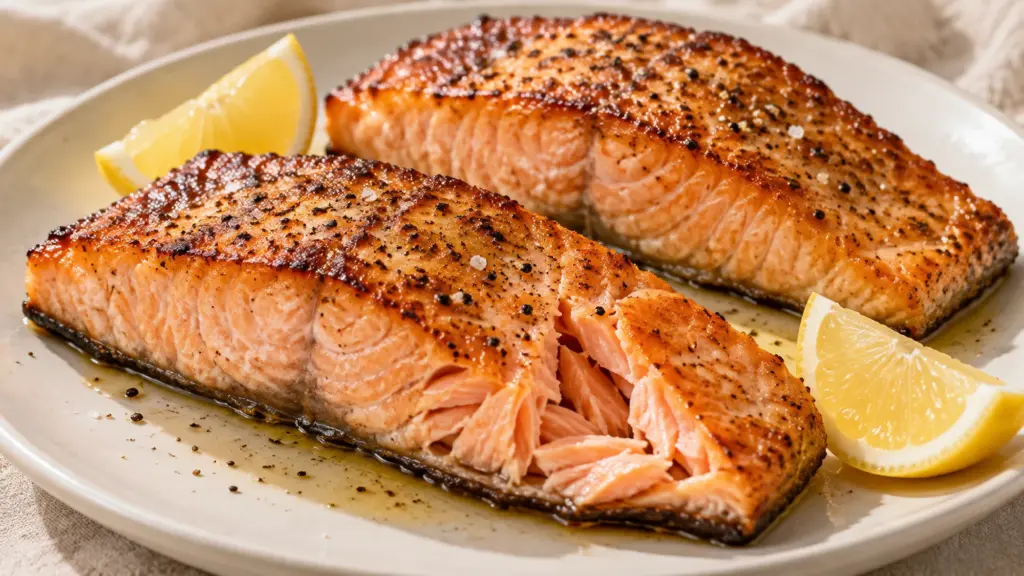
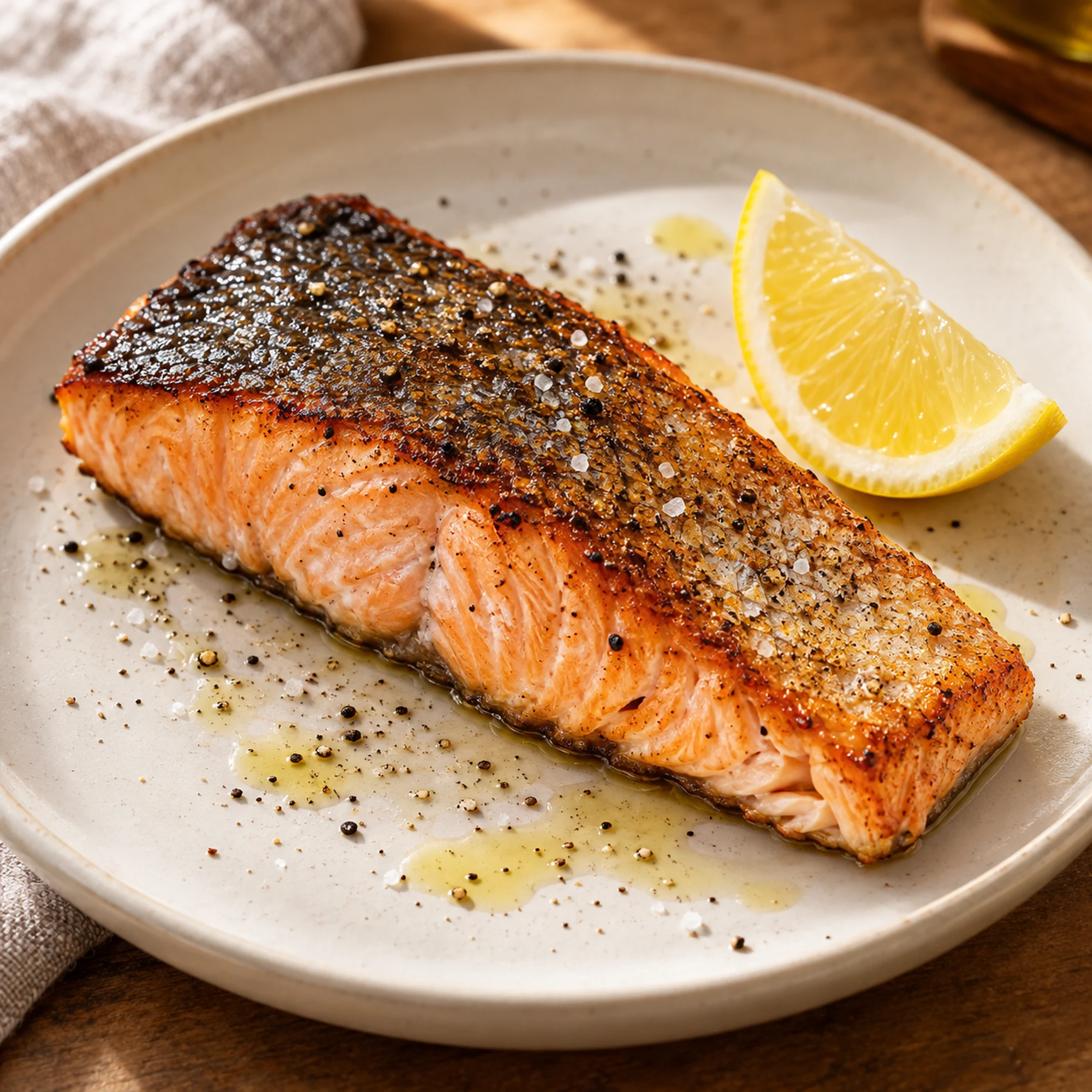
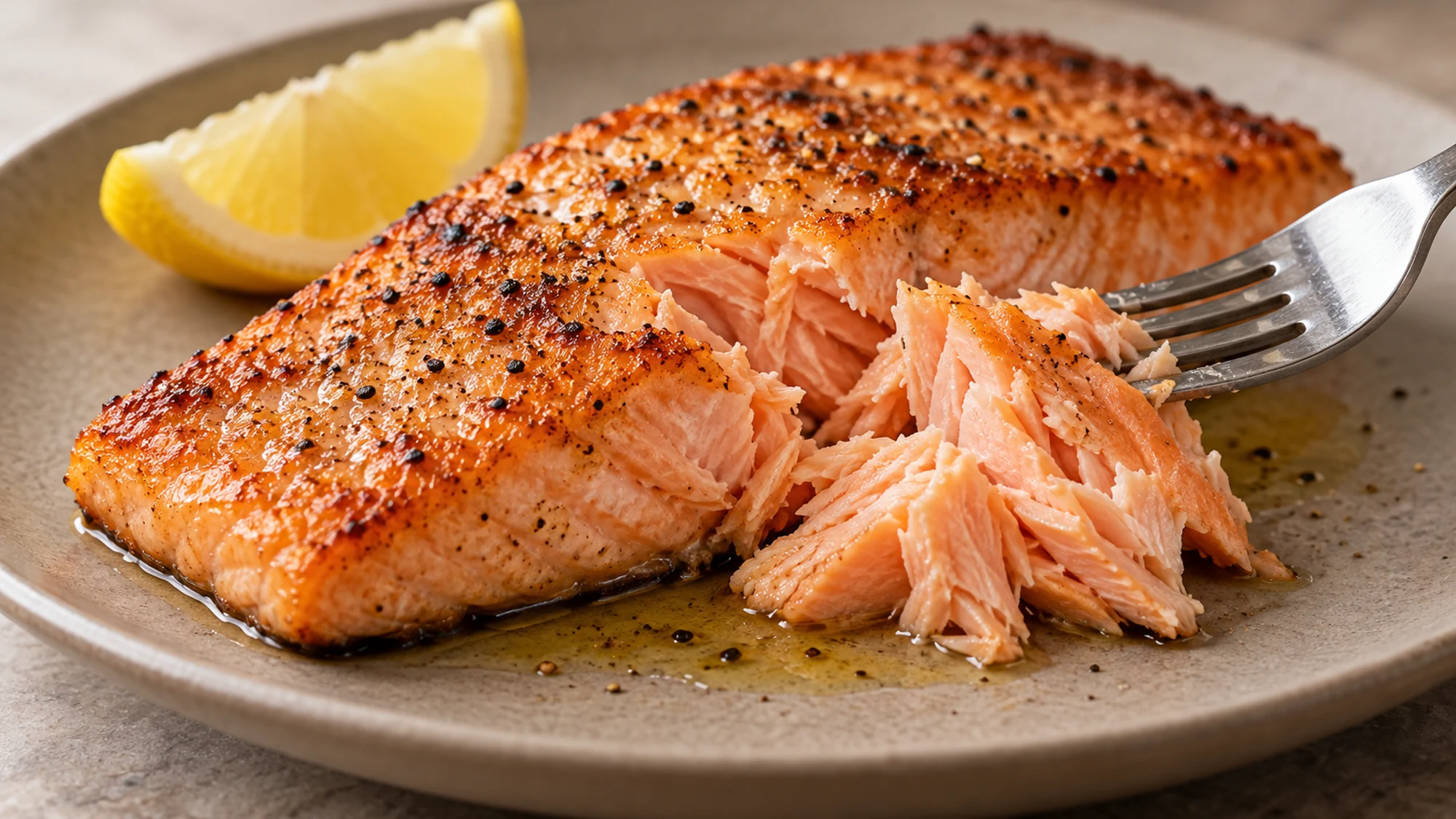
A beautiful salmon fillet can make dinner feel almost finished, right up until you wonder which pan to use. For crisp skin and a lightly golden surface, the best way to cook salmon is a simple pan sear. Keep the seasoning restrained, start with dry fish, and give the skin time against the hot pan.
Cook similarly thick, skin-on fillets mostly skin-side down, then turn them once to finish. A thermometer reading of 145°F (63°C) in the thickest part is the final check; the clock is only a guide. Lemon goes on at the table, after the skin has crisped.
There is no single winner for every dinner. Roasting is convenient for a larger batch, while gentle poaching gives a softer result. I prefer the skillet when texture is the priority: you get a crisp underside without heating the oven. The recipe below makes four portions in about 20 minutes, starting with thawed fish.
Serving suggestions that protect the crisp skin
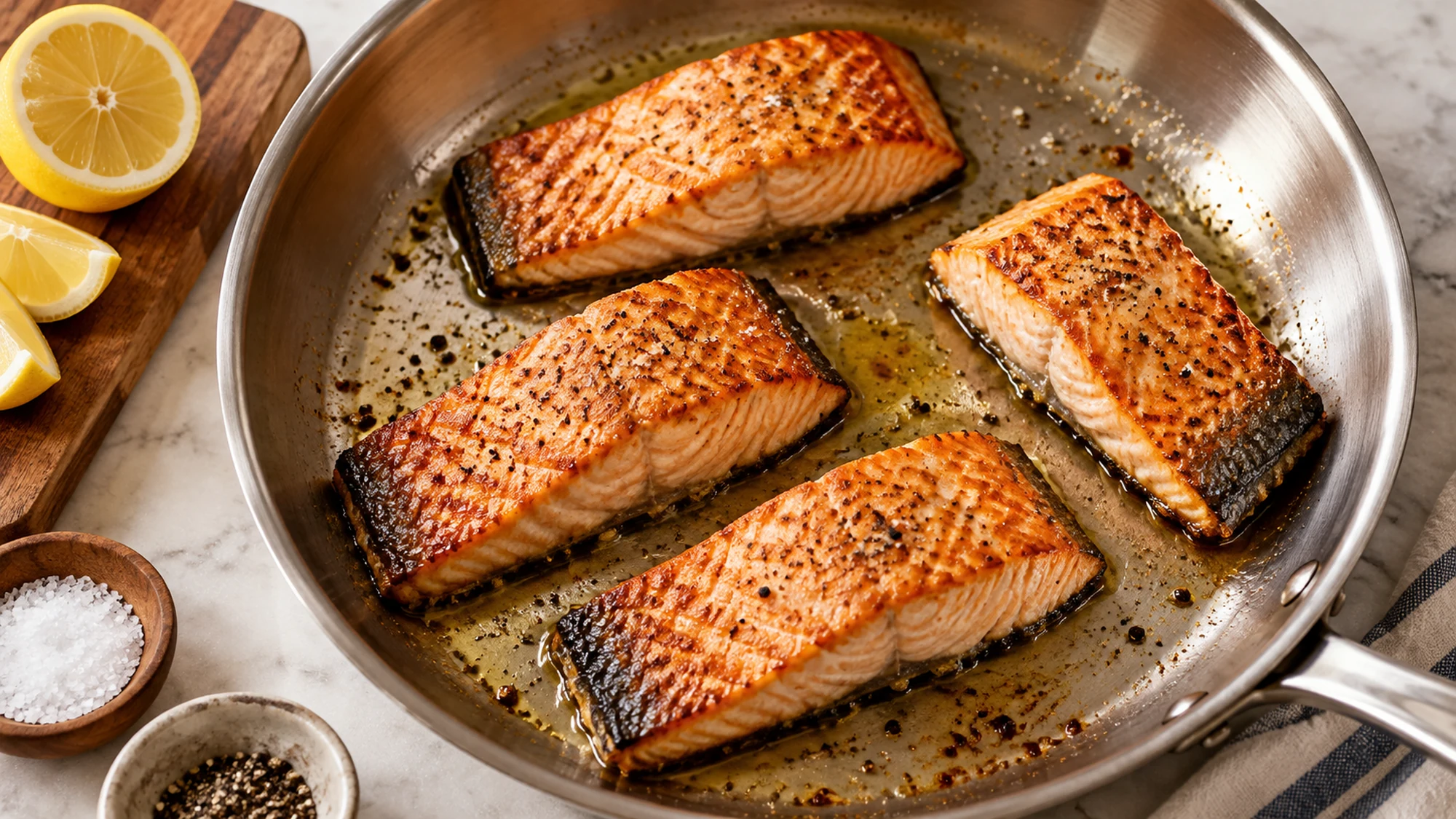
Have the sides ready before the salmon leaves the skillet. Crisp skin softens as it sits against wet vegetables or sauce, so plate the fish with a little space around it. A lemon wedge gives everyone control over the brightness without flooding the plate.
- Serve with rice and steamed green beans for an uncomplicated dinner. Start the rice first, then cook the salmon while the vegetables finish.
- Pair it with a fluffy air-fryer jacket potato and cucumber salad. The potato needs a head start; fish is the quick part of this meal.
- For a lighter-feeling plate, try a crunchy cabbage salad with dressing on the side. Add bread or another starchy side according to your appetite.
I’d put any creamy sauce beside the fish rather than across the top. That way you can drag a forkful through it while keeping some of the crisp texture you worked for.
Serve promptly, keep wet sides separate, and squeeze lemon over each bite as you eat. Simple plating makes the contrast between crisp skin and soft flakes more noticeable.
Variations and small adjustments that matter
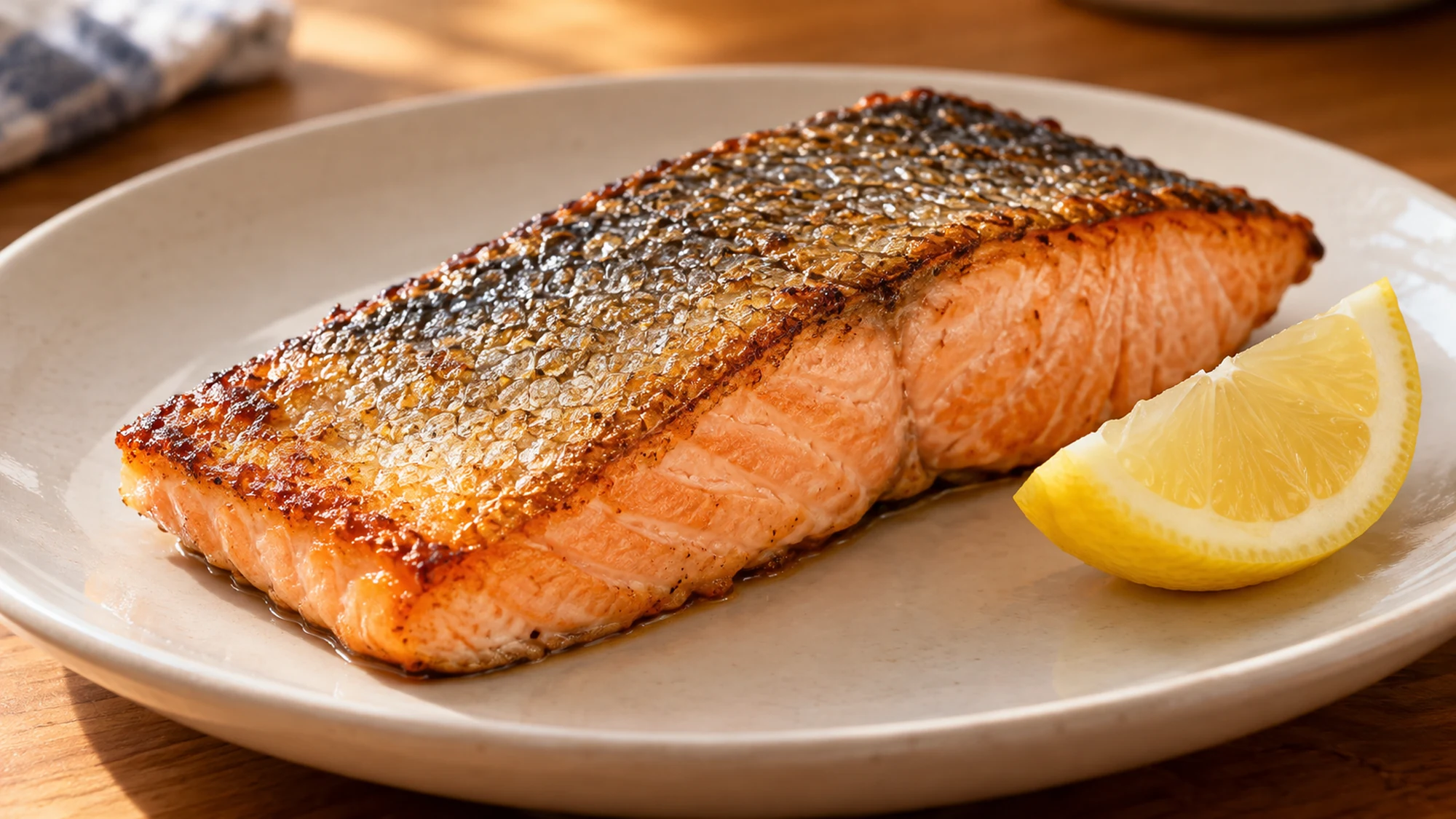
The short ingredient list leaves room for different finishing flavors. A mild olive oil lets the salmon stay central; a more assertive one adds its own character. Avoid a sugary glaze during the initial sear because it can darken before the fish is cooked.
- Skinless fillets: you can still brown the surface, but you will lose the crisp-skin contrast. Handle them gently and check temperature rather than assuming identical cooking time.
- Frozen salmon: thaw safely in the refrigerator first, following package instructions, then dry thoroughly. A wet surface needs to shed moisture before it can brown.
- Herby finish: add a little chopped dill or parsley after cooking. Keep it a variation rather than cooking delicate leaves in the hot oil.
- Different thicknesses: check thinner pieces early and remove each when ready. A thick center-cut portion may need extra time over reduced heat.
Change the finish before changing the technique. Dry fish, enough space and steady heat matter more than a long seasoning list, especially when crisp skin is the goal.
Health benefits without the sales pitch
Salmon contributes protein, vitamin B12 and vitamin D, along with omega-3 fats. The exact amounts vary with the fish. This meal does not need a special health promise: its appeal is a satisfying portion of fish that leaves room for vegetables and other foods you enjoy.
- The card estimates about 385 calories and 35 grams of protein per fillet with its share of oil, salt and lemon. Sides are separate.
- All measured oil is included in the estimate, even though some may remain in the pan. Species, portion size and cooking losses affect the final numbers.
- Use an instant-read food thermometer to check the thickest part from the side. Color alone is not a dependable safety check.
Think in terms of the whole plate. Salmon supplies protein and useful nutrients; vegetables, beans or grains can add variety and fiber alongside it.
Let the skillet do the useful work
The hardest part may be resisting the urge to move the fish every few seconds. Give the skin its uninterrupted time, ease a thin spatula underneath, and turn gently. If the pan smokes heavily, lower the heat rather than pushing through.
Keep the first round simple: salmon, olive oil, salt, pepper and lemon. Once you can recognize the crisp edge and check the center confidently, you have a practical dinner method that welcomes plenty of different sides.
Best Way to Cook Salmon Recipe

Ingredients
- 4 skin-on boneless salmon fillets 6 oz (170 g) each; thawed, scaled, about 1 inch thick
- 1 tbsp olive oil 13.5 g
- 1/2 tsp fine salt 3 g
- 1/4 tsp ground black pepper
- 1 lemon cut into wedges; about 2 tbsp juice for serving
Equipment
- 1 12-inch stainless steel skillet cook in batches if fillets cannot fit with space
- 1 Thin fish spatula
- 1 Instant-read food thermometer
- Paper towels
- Measuring spoons
- 1 Small knife and cutting board
Instructions
- Pat the thawed salmon fillets thoroughly dry on both sides with paper towels. Check that the skin is scaled and the fish is boneless.
- Heat a 12-inch stainless steel skillet over medium-high heat. Add the olive oil and swirl. When the oil shimmers but is not smoking heavily, season both sides of the salmon with the salt and pepper. Wash your hands after handling raw fish.
- Lay the fillets in the pan skin-side down, away from you to avoid splashes. Press each gently with a fish spatula for about 15 seconds so the skin lies flat. Reduce to medium and cook without moving for about 5–7 minutes, until the skin is crisp and releases with gentle pressure. Leave space between fillets; cook in batches if necessary.
- Turn each fillet carefully and cook the flesh side for about 2–4 minutes. Insert an instant-read thermometer from the side into the thickest center. Cook until each piece reaches 145°F (63°C); thick pieces may need a few more minutes over reduced heat. Timing varies with thickness and stove heat. Remove each portion as it reaches temperature.
- Transfer to plates with the crisp skin facing up if you like. Cut the washed lemon into wedges using a clean knife and board. Serve promptly with lemon to squeeze over the fish at the table.
Nutrition
Video
Notes
Tried this recipe?
Let us know how it turned out!Emily Parker is DISHORA’s recipe-writing persona, bringing a warm, practical voice to everyday cooking. Her focus is simple ingredients, comforting flavors and clear steps that make a dish feel approachable. From cozy dinners to something sweet, Emily’s recipes invite readers to try something delicious and make it their own.