
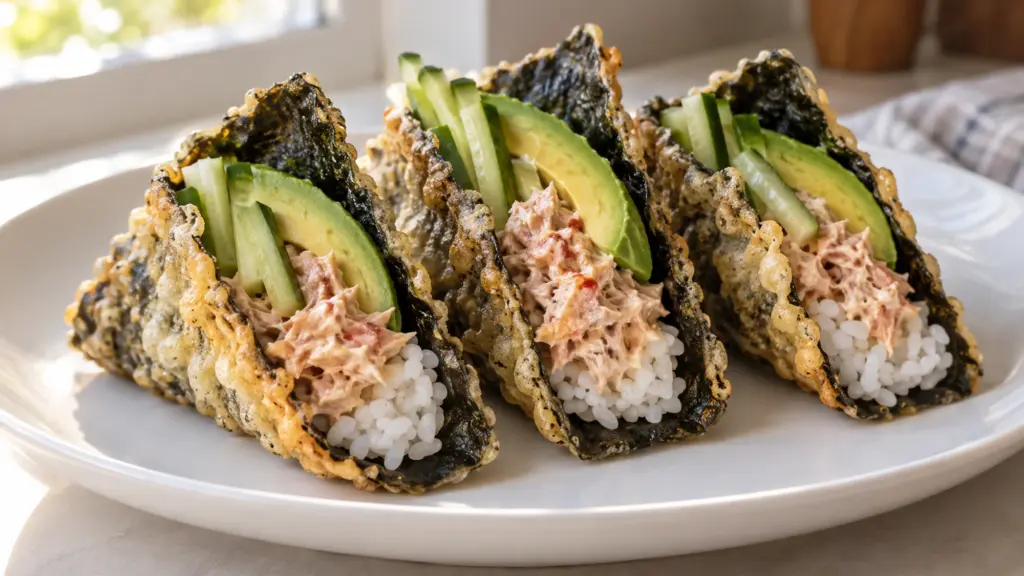
A crisp shell, creamy tuna, cool cucumber, and a little avocado make a very good handheld bite. These crispy nori sushi tacos use seaweed squares with a light tempura coating outside, then fill them with cooked rice and a simple spicy canned-tuna mixture. Think of them as a playful sushi-inspired dinner project.
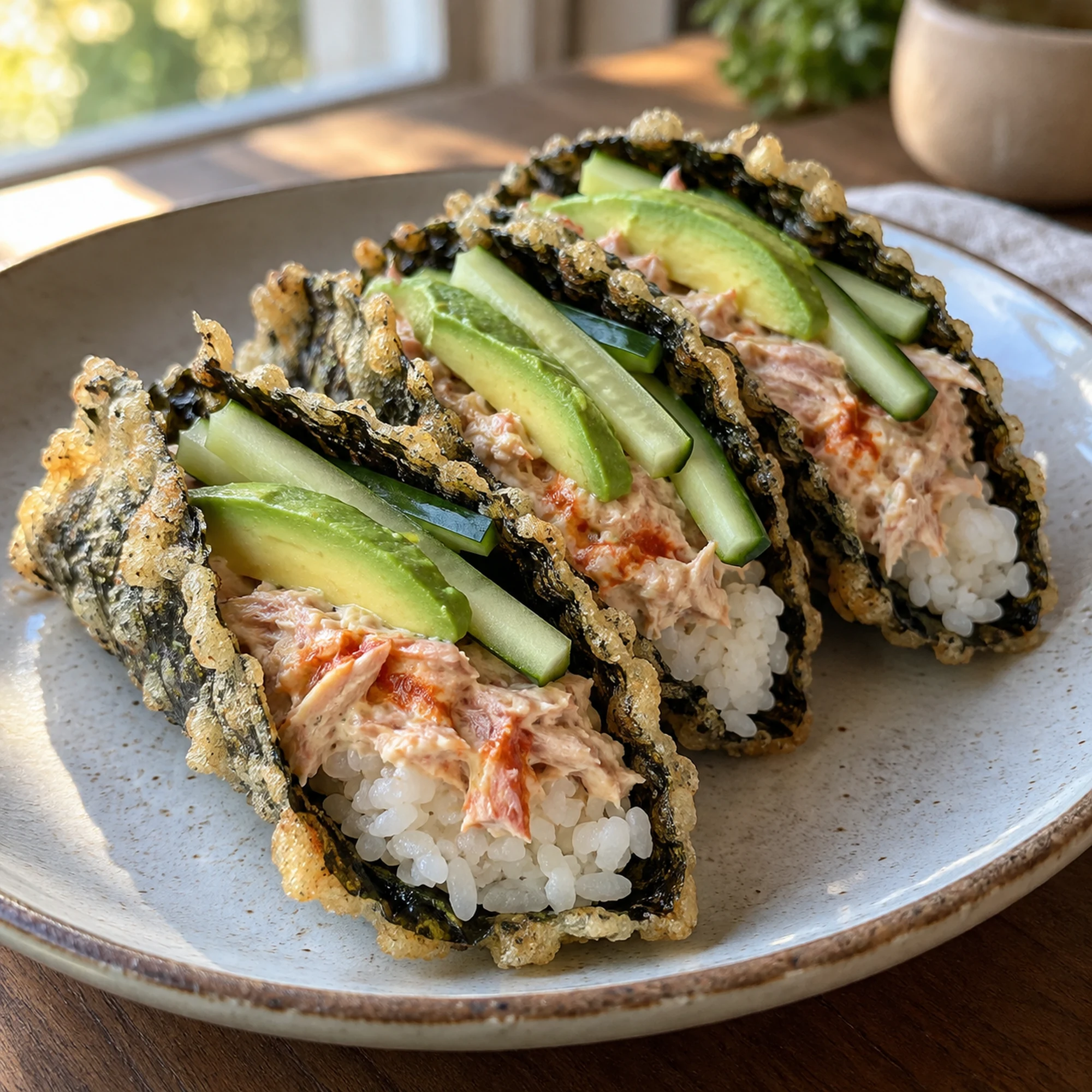
Prepare the filling before frying the shells, keep the batter cold, and fill each taco shortly before eating. The contrast between the crisp nori and cool filling is the reason to make them.
I prefer canned tuna for this home version because it is ready to use and easy to keep on hand. This is a fusion recipe with its own casual style. The card makes eight small tacos, enough for four light servings alongside vegetables or another side. The shells ask for a little attention, so clear a space before you begin.
Serving suggestions
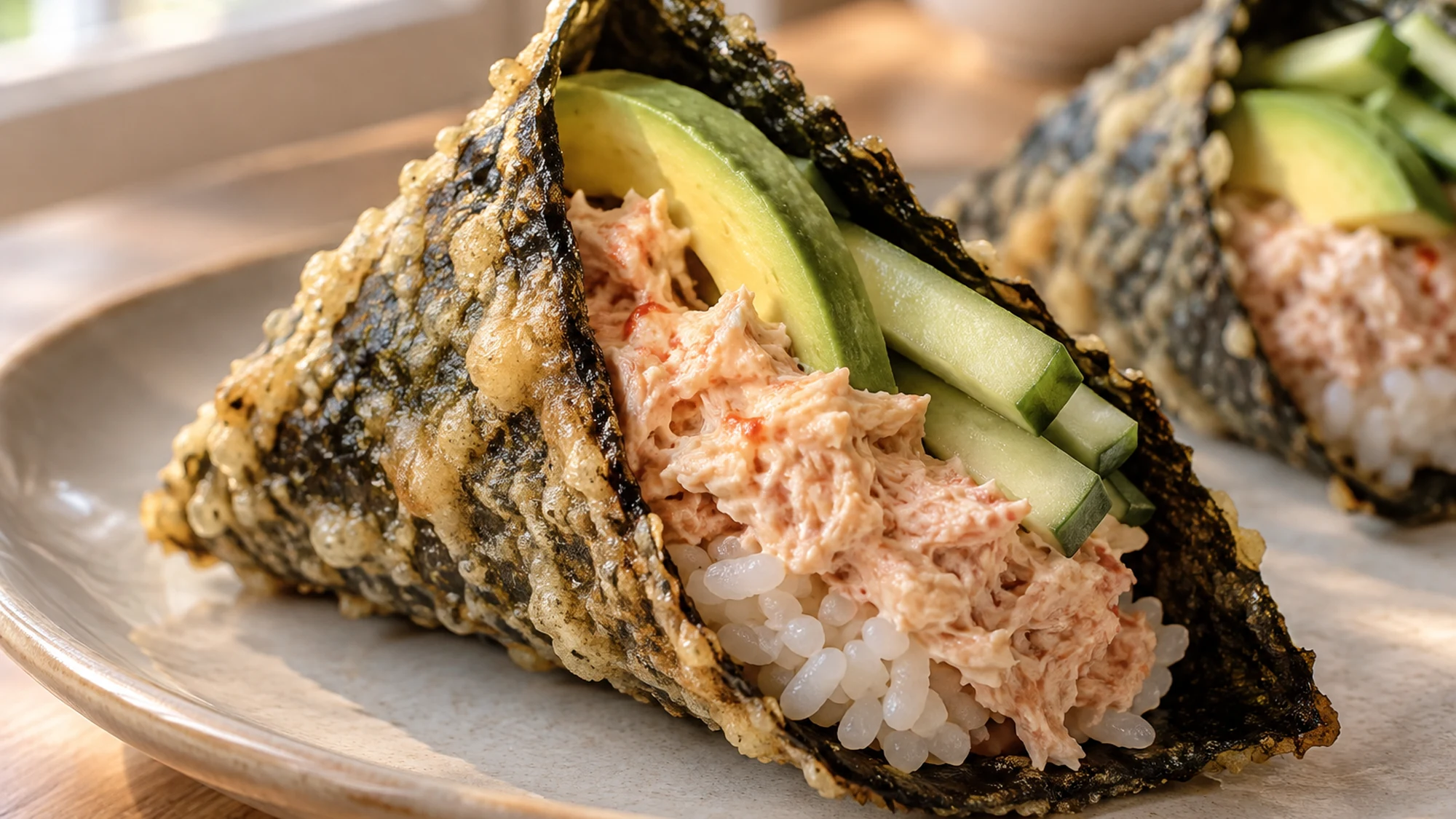
Set out the prepared tuna, sliced avocado, cucumber, and cooked rice before frying. Keep the tuna chilled until you are close to assembling. Once the shells have drained, add modest spoonfuls of filling so you can pick them up without the sides breaking or the rice escaping onto the plate.
A cucumber salad, warm edamame, or a small bowl of miso soup makes a useful companion. The tacos already have rice, so a mountain of extra rice is not essential. A little soy sauce or additional chili sauce can go on the table for anyone who wants more seasoning.
I would serve these in small rounds rather than fill every shell at once. Moist filling softens the coating as it sits. If you like the same general rice-and-nori combination in a casserole format, salmon sushi bake is another way to bring those flavors to dinner.
Fill lightly and serve promptly. A few freshly assembled tacos at a time keep the shells easier to handle and preserve their crunch.
Variations
Use full-size sushi nori sheets rather than tiny snack pieces. Cut each sheet into quarters for the small shells in the card. The thin seaweed becomes a useful wrapper when one side has the light coating; a thick blanket of batter hides its flavor and makes a heavier taco.
Cooked flaked salmon or chopped cooked shrimp can replace the tuna in another batch. Keep the mayonnaise and chili sauce modest so the filling holds together. For a milder version, reduce the sriracha. If you use Japanese-style mayonnaise, expect a richer, slightly tangier filling.
The batter here is an egg-free mixture of flour, cornstarch, and cold club soda, but the mayonnaise usually contains egg. For a plant-based variation, try chopped baked tofu with vegan mayonnaise and check every sauce label. That changes the filling while keeping the crisp-shell idea.
Choose one filling and keep it fairly dry. Small changes in heat or protein are easier to manage than overloading each delicate shell with extras.
Health benefits
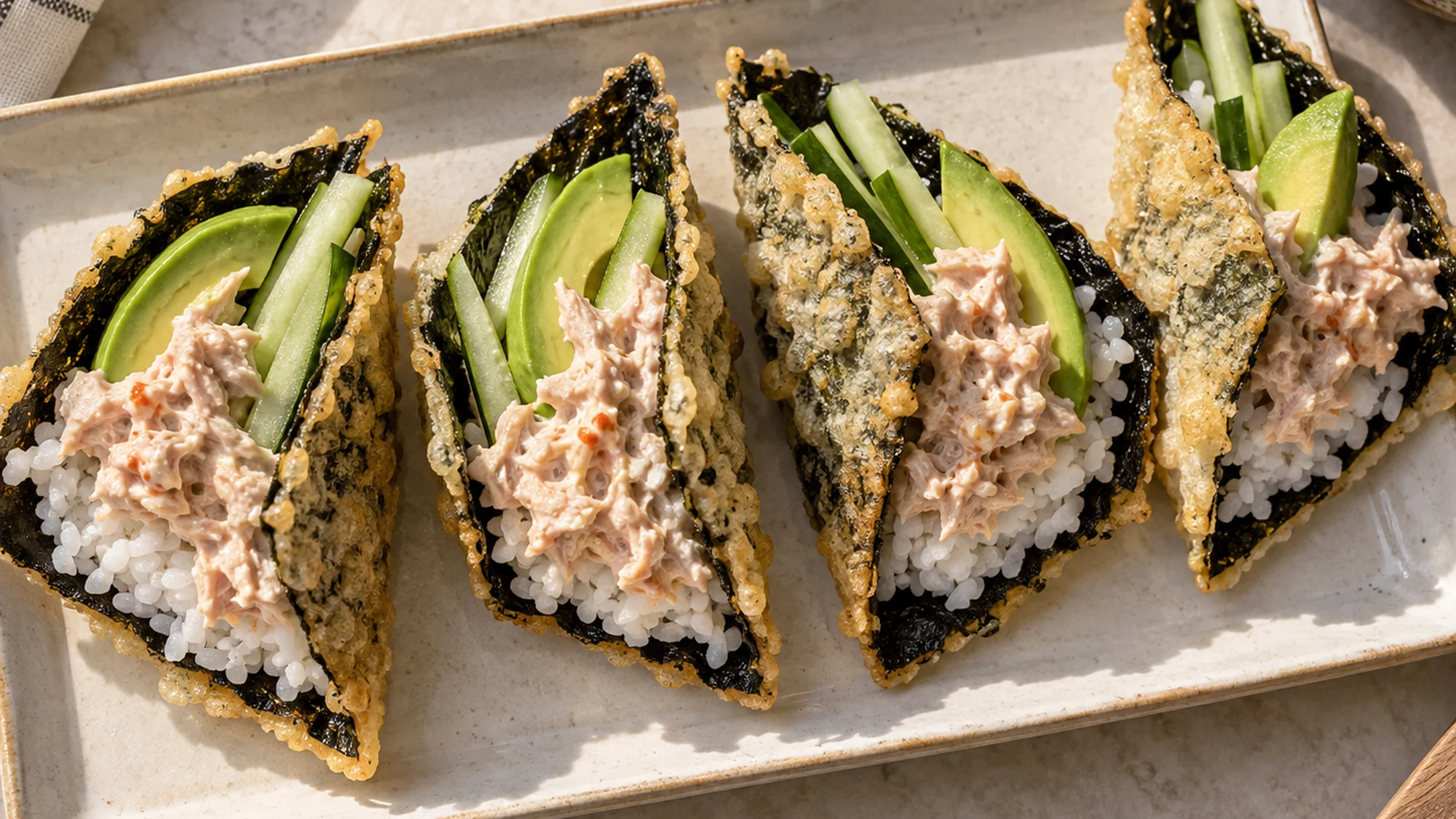
Tuna contributes protein, avocado adds unsaturated fat, and cucumber brings a cool vegetable element. Rice provides carbohydrate. The shells are fried, and mayonnaise is part of the filling, so consider the complete plate and your portion rather than assigning the tacos a broad health label.
Choose tuna and mayonnaise that suit your preferences, and compare sodium labels if that matters to you. This recipe contains fish, wheat, and usually egg. Check sauces for additional allergens. The seaweed adds flavor and texture; the small amount used here is not a reason to make strong nutrient claims.
Enjoy the tacos as one part of a varied meal, with vegetables alongside and enough filling to satisfy without crowding the shell.
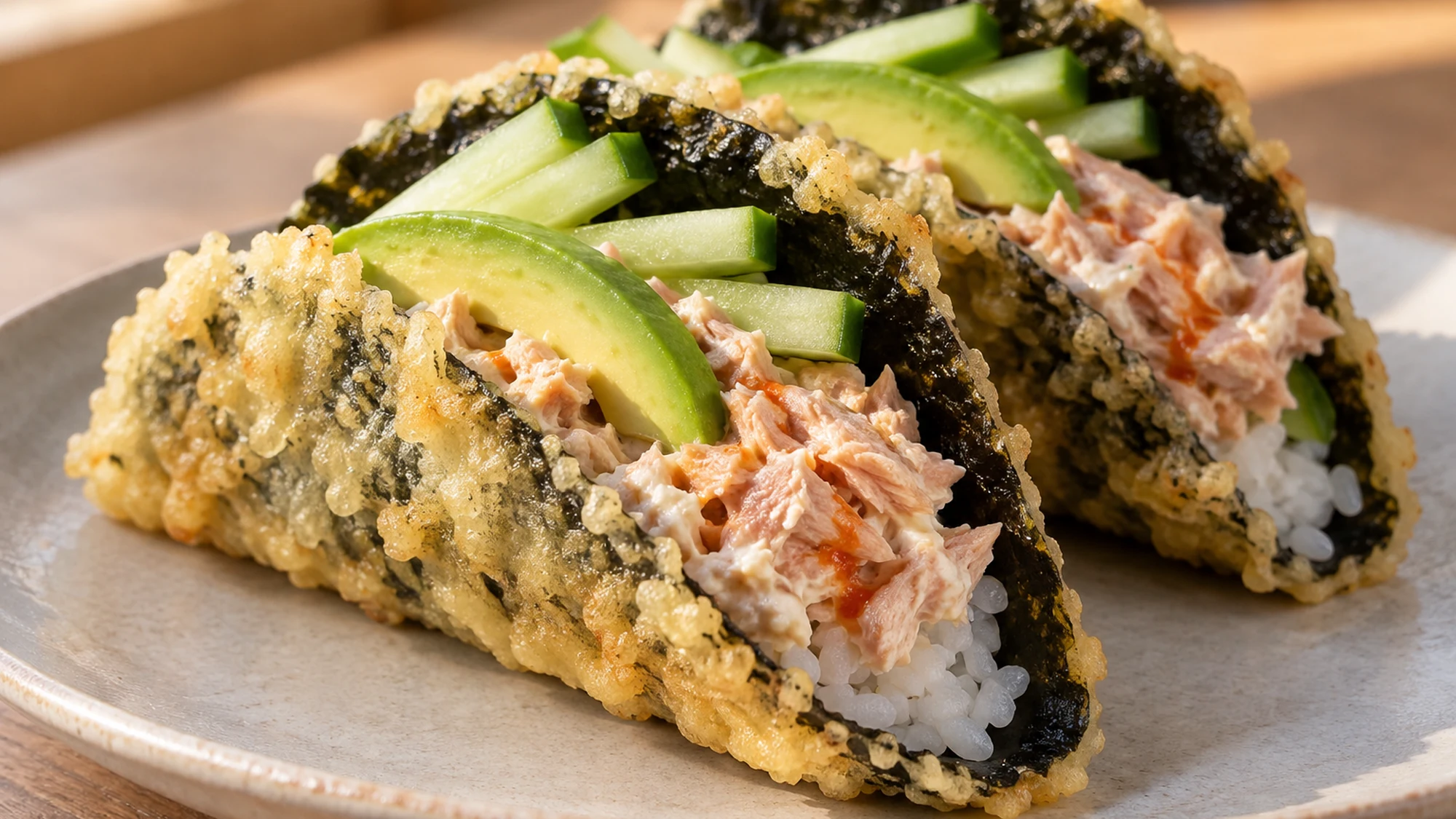
Make the shells the small event
Give yourself a clear frying area with the rack and tongs within reach. Shape each hot shell with the tongs while it is flexible, keeping your fingers away from the oil. A shell that settles into an imperfect triangle still has room for a delicious filling.
These are best eaten freshly assembled. Keep leftover tuna filling covered in the refrigerator and use within two days; store it separately from the shells. Refrigerate perishable ingredients within two hours, and keep unused cooked rice chilled until needed.
Bring the ingredients together, fry a few crisp shells, and assemble your crispy nori sushi tacos at the table. The small bit of preparation pays off in every crunchy bite.
Crispy Nori Sushi Tacos Recipe

Ingredients
- 2 full sheets sushi nori Cut each into 4 squares, 8 total
- ¼ cup all-purpose flour
- ¼ cup cornstarch
- ½ cup cold club soda
- ¼ tsp fine salt
- 2 cups neutral frying oil Use enough for at least ½-inch depth, never fill the pan more than halfway
- 2 5-oz cans tuna in water Well drained
- 2 tbsp mayonnaise
- 1 tsp sriracha
- 1 avocado Thinly sliced
- ½ cucumber Cut into thin sticks
- 1 cup cooked short-grain rice Freshly cooked and cooled until no longer steaming, or safely refrigerated rice
Equipment
- 1 Deep heavy saucepan About 8 inches wide, with room above the oil
- 1 Cooking thermometer
- 1 Tongs
- 1 Wire rack over a tray
- 2 Mixing bowls
- 1 Whisk
- 1 Kitchen scissors
- 1 Knife and cutting board
- 1 set Measuring cups and spoons
Instructions
- Mix the drained tuna with the mayonnaise and sriracha in a bowl. Cover and refrigerate while preparing the shells.
- Cut each nori sheet into four squares. Whisk the flour, cornstarch and salt in a second bowl. Add the cold club soda and stir just until combined; a few small lumps are fine.
- Heat the frying oil in a deep heavy saucepan to 350°F, checking with a cooking thermometer. Keep the pan no more than halfway full and the oil at least ½ inch deep. Set a wire rack over a tray beside the stove.
- Coat one side of one nori square lightly with batter. Lower it into the oil batter-side down, away from you, and fry for about 1–2 minutes until crisp and pale golden. Use tongs to lift it out, then gently fold it diagonally into an open taco shape while still flexible. Let drain on the rack. Keep fingers away from the hot oil and shell. Repeat, adjusting the heat to maintain 350°F.
- Divide the cooked rice, chilled tuna mixture, avocado and cucumber among the eight shells. Use modest amounts so the shells close slightly without breaking. Serve immediately after filling. Keep unused perishable ingredients refrigerated.
Video
Notes
Tried this recipe?
Let us know how it turned out!Emily Parker is DISHORA’s recipe-writing persona, bringing a warm, practical voice to everyday cooking. Her focus is simple ingredients, comforting flavors and clear steps that make a dish feel approachable. From cozy dinners to something sweet, Emily’s recipes invite readers to try something delicious and make it their own.