
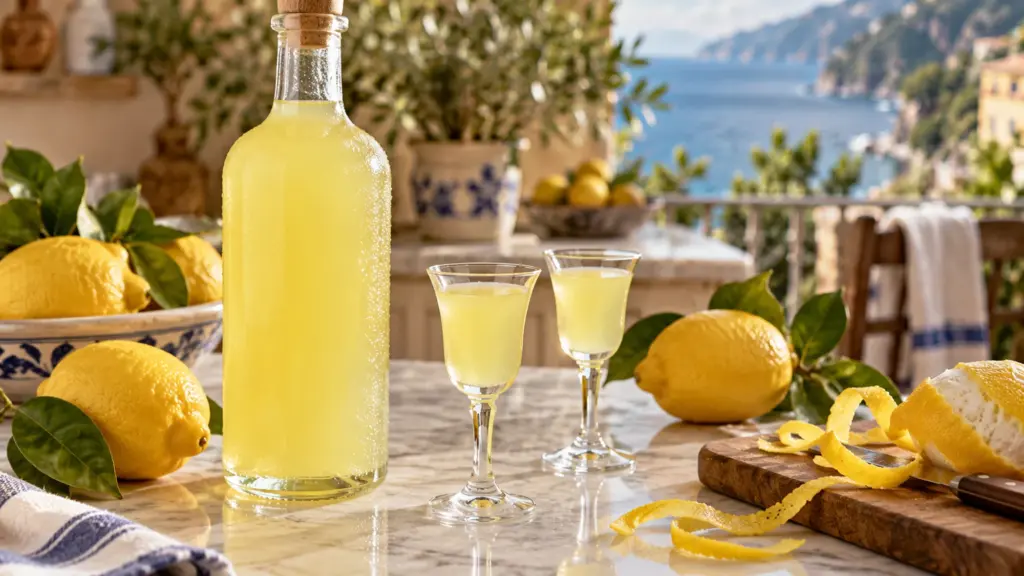
A bottle of limoncello begins with the aroma released when a lemon is peeled. This version captures that yellow-peel fragrance in food-grade vodka, then blends the strained infusion with completely cooled sugar syrup. It takes a little active work and a longer wait, so plan ahead rather than expecting a same-day liqueur.
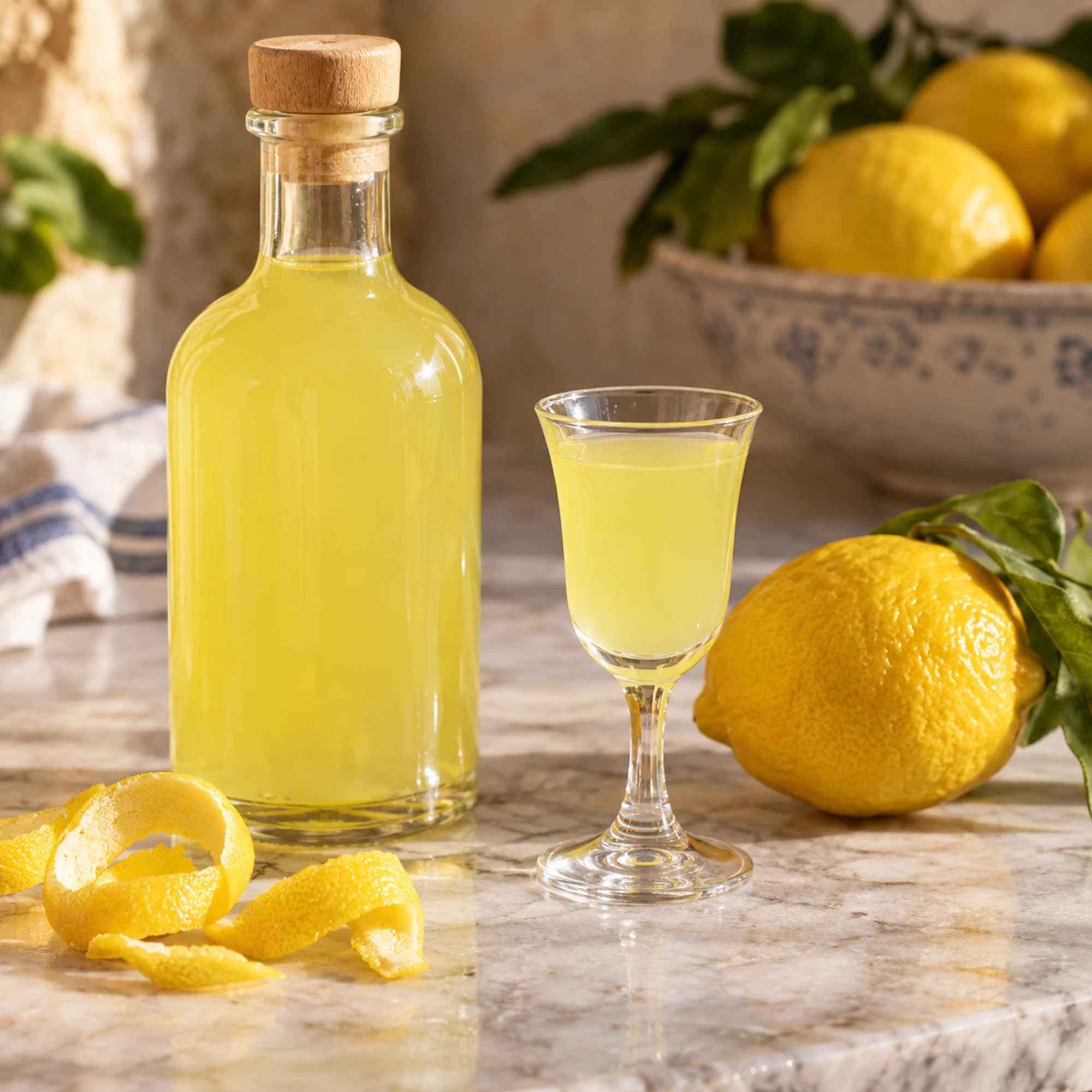
Peel only the yellow layer, keep the infusion covered, and cool the sugar syrup completely before combining. The white pith is the part most likely to bring unwanted bitterness.
I prefer a measured small batch with a clear start date on the jar. That makes the waiting easy to follow and keeps the method repeatable. The finished liqueur is sweet and lemon scented, intended for small chilled pours rather than a large glass.
Serving suggestions for limoncello
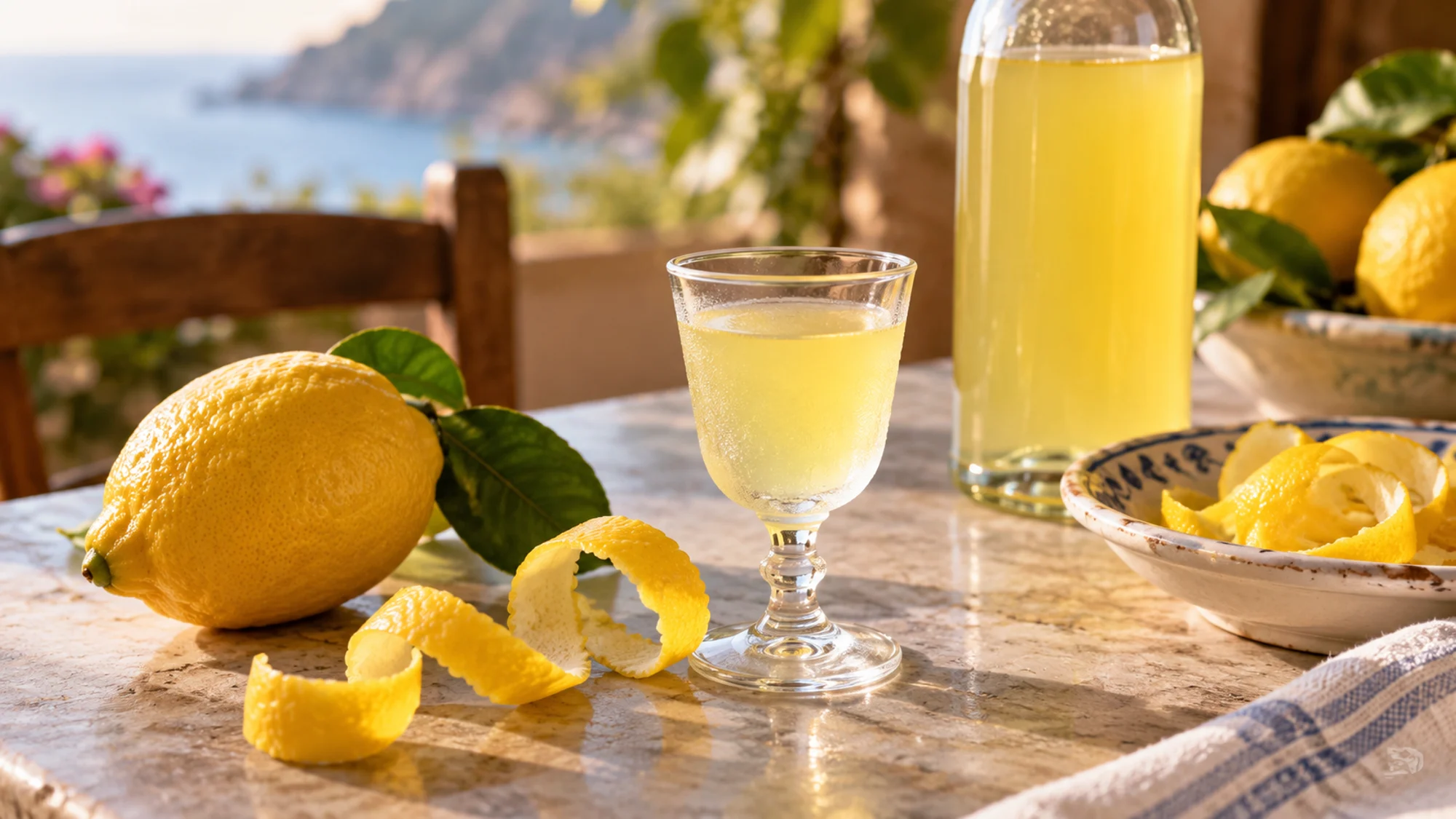
Serve limoncello cold in small liqueur glasses after a meal if the adults at the table choose to drink alcohol. A small pour is enough to appreciate the lemon aroma. Chilling the glass can make the serving feel more refreshing without needing a large amount.
A little limoncello can be spooned over vanilla ice cream for an adult dessert, but label that dessert clearly because the alcohol remains. I would keep an alcohol-free dessert available alongside it so everyone can choose comfortably. The same care applies when adding it to a mixed drink.
Store this vodka-based batch in the refrigerator. A household freezer may freeze a diluted homemade liqueur, and a glass bottle needs room for any expansion. The refrigerator gives a cold serving without relying on an unverified final alcohol strength or assuming it will behave like a commercial bottle.
Pour a small chilled serving, and make the presence of alcohol clear wherever you use the liqueur.
Limoncello variations
The lemon variety changes the aroma, but the peeling method stays the same. Choose firm, fragrant fruit with healthy skin. Wash it thoroughly, then work gently with a peeler so the yellow strips stay thin. Any visible white pith can be trimmed away with a small knife.
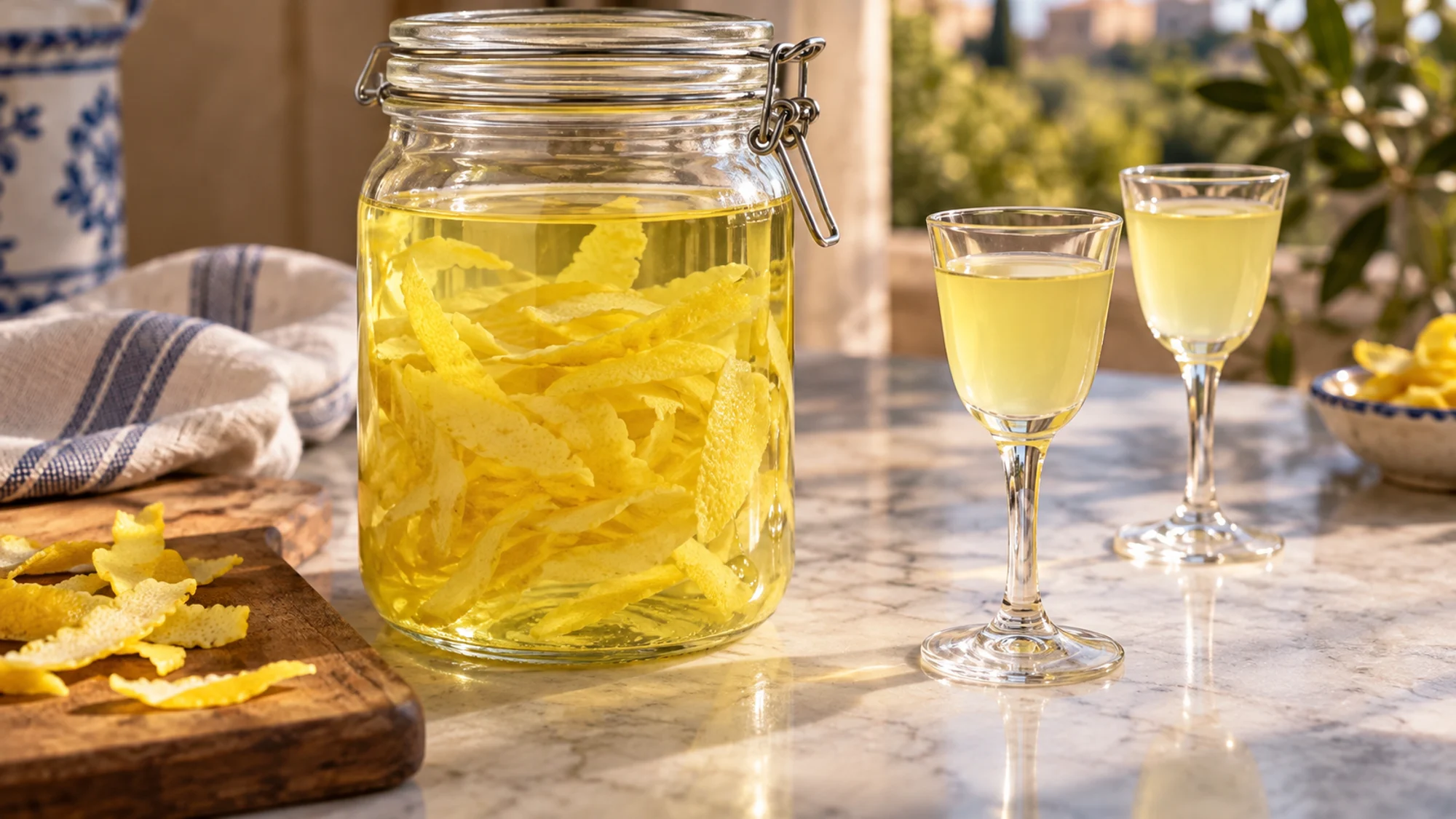
Use the measured 80-proof vodka for this version. A higher-proof spirit extracts differently and needs a different dilution calculation, so it is not a direct swap. I like keeping the spirit plain and neutral so the peel’s fragrance remains the point of the recipe.
If you want a less sweet serving, mix a small measured pour with chilled sparkling water rather than changing the whole batch’s syrup. That preserves the written recipe while letting you find a balance you enjoy. It also makes it easier to keep track of the alcoholic portion.
Reserve the peeled lemons for juice in everyday cooking. Dishora’s white bean dip is one useful direction. Juice can be refrigerated promptly for short use or frozen in small portions, so the rest of the fruit has a purpose.
Let the lemon variety bring its own aroma while keeping the spirit strength and syrup measurements consistent.
Health benefits and balance
Limoncello is an alcoholic, sweetened liqueur. The lemon peel contributes aroma, but it does not turn the drink into a source of health benefits or make alcohol risk-free. Enjoying its flavor is a personal choice for adults who drink.
A recipe pour is not automatically a standard drink. Alcohol strength and serving size both matter, as this drink-size explanation shows. The final strength of a home infusion is not laboratory verified, so avoid making a precise alcohol claim on a gift label.
Because the peel is the ingredient being infused, start with clean fruit and clean equipment. This produce handling guide covers washing under running water. Keep the jar sealed during infusion, and use clean bottles for the finished liqueur.
Treat limoncello as an optional adult liqueur, with a measured pour and clear labeling.
Motivation conclusion
Set aside time for careful peeling at the start. Trim the pith as you go, place the yellow strips in the jar, add vodka, and write the date. After that, the infusion can sit quietly while you wait for its lemon fragrance to develop.
When the waiting is over, make the syrup separately and let it cool fully before mixing. Strain patiently, bottle cleanly, and give the finished liqueur its final chill. I like this kind of project for its simple sequence: a little attention at each stage, then time to let the ingredients settle together.
Careful peeling and an unhurried infusion are the useful work behind a bright bottle of homemade limoncello.
Limoncello

Ingredients
- 8 large lemons yellow peel only; reserve juice for other cooking
- 750 ml 80-proof vodka food-grade, 40% alcohol by volume
- 1 1/2 cups water
- 1 1/2 cups granulated sugar 300 g
Equipment
- Clean 2-quart lidded glass jar
- Vegetable peeler
- paring knife
- Small saucepan
- Measuring cups
- Fine-mesh strainer
- Coffee filter
- Funnel
- Clean glass bottles
Instructions
- Scrub the lemons under running water and dry them thoroughly with a clean towel.
- Use a vegetable peeler to remove thin strips of yellow peel. Trim away any white pith with a paring knife. Put the yellow peel into a clean 2-quart glass jar.
- Pour the vodka over the peels, close the lid, and keep in a cool, dark place for 14 days. Gently turn the jar every couple of days.
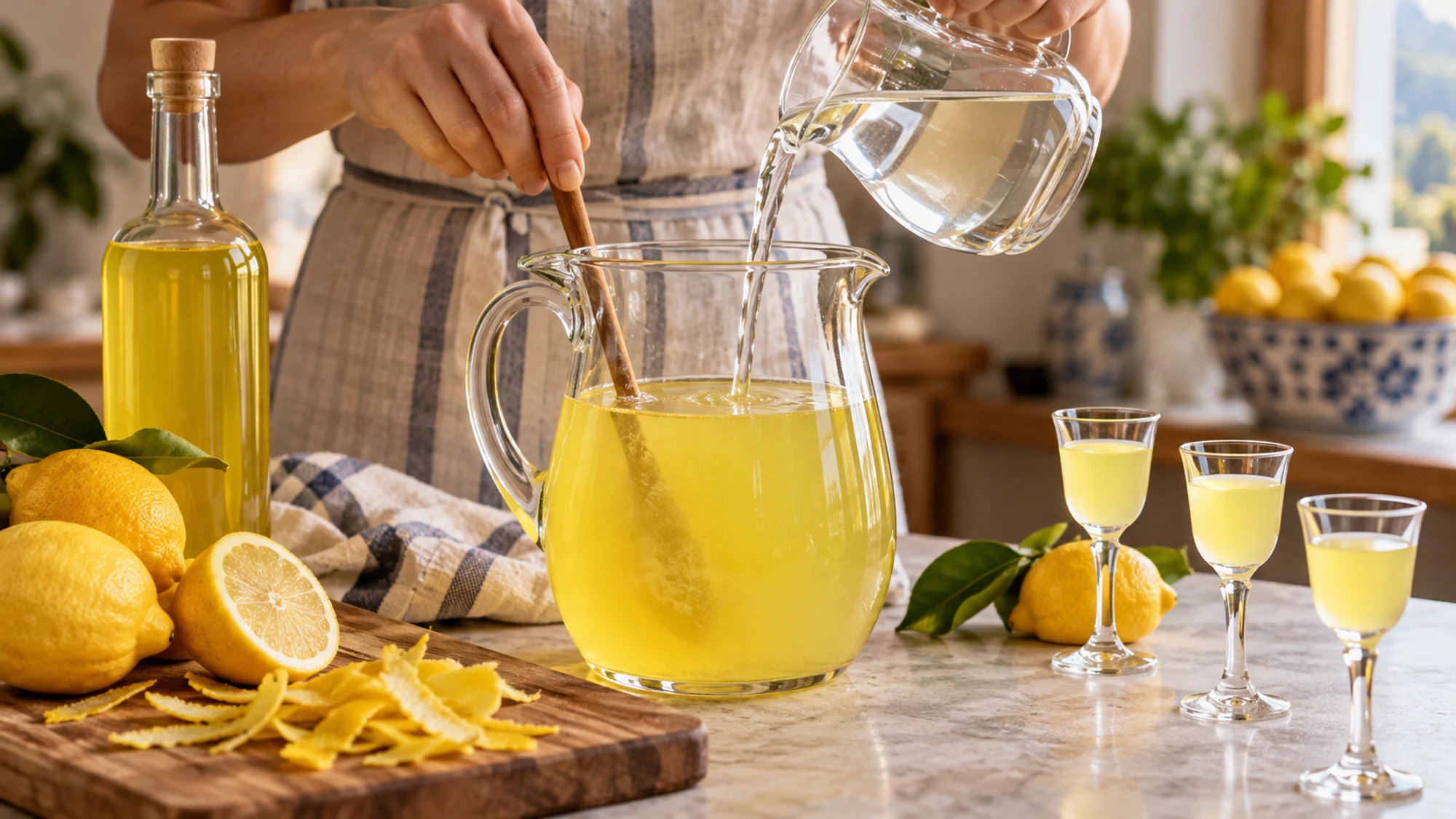
- After the infusion, combine water and sugar in a small saucepan. Heat, stirring, until the sugar dissolves; simmer 1 minute. Remove from heat and cool completely. Never heat the vodka.
- Strain the lemon vodka through a fine-mesh strainer lined with a coffee filter. Discard the peels. Stir the cooled syrup into the strained infusion.
- Use a clean funnel to fill clean bottles. Label as alcoholic limoncello and refrigerate for 2 days before serving. Keep refrigerated and use within 1 month after mixing. Serve small chilled pours to adults who choose to drink alcohol.
Video
Notes
Tried this recipe?
Let us know how it turned out!Emily Parker is DISHORA’s recipe-writing persona, bringing a warm, practical voice to everyday cooking. Her focus is simple ingredients, comforting flavors and clear steps that make a dish feel approachable. From cozy dinners to something sweet, Emily’s recipes invite readers to try something delicious and make it their own.