
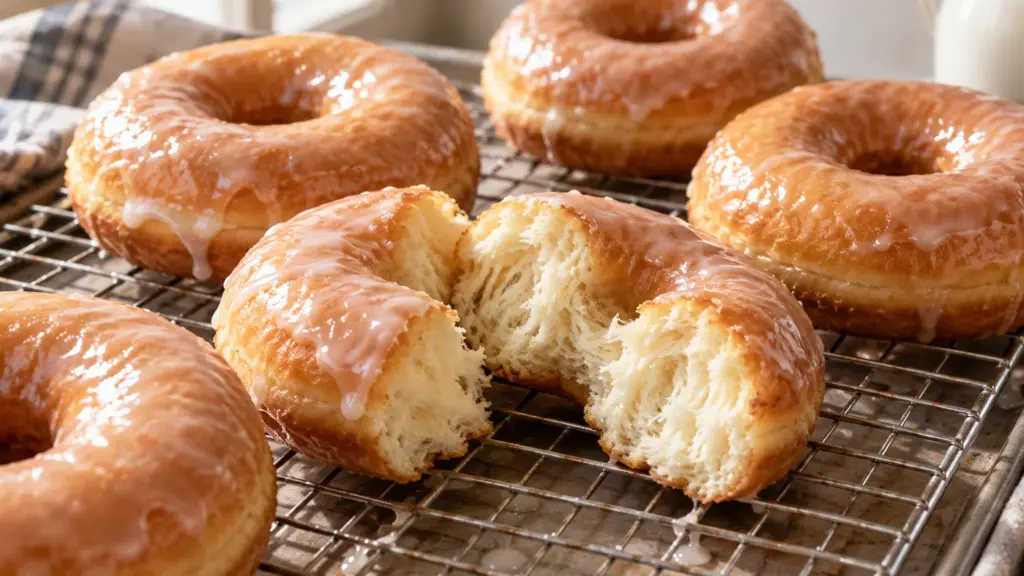
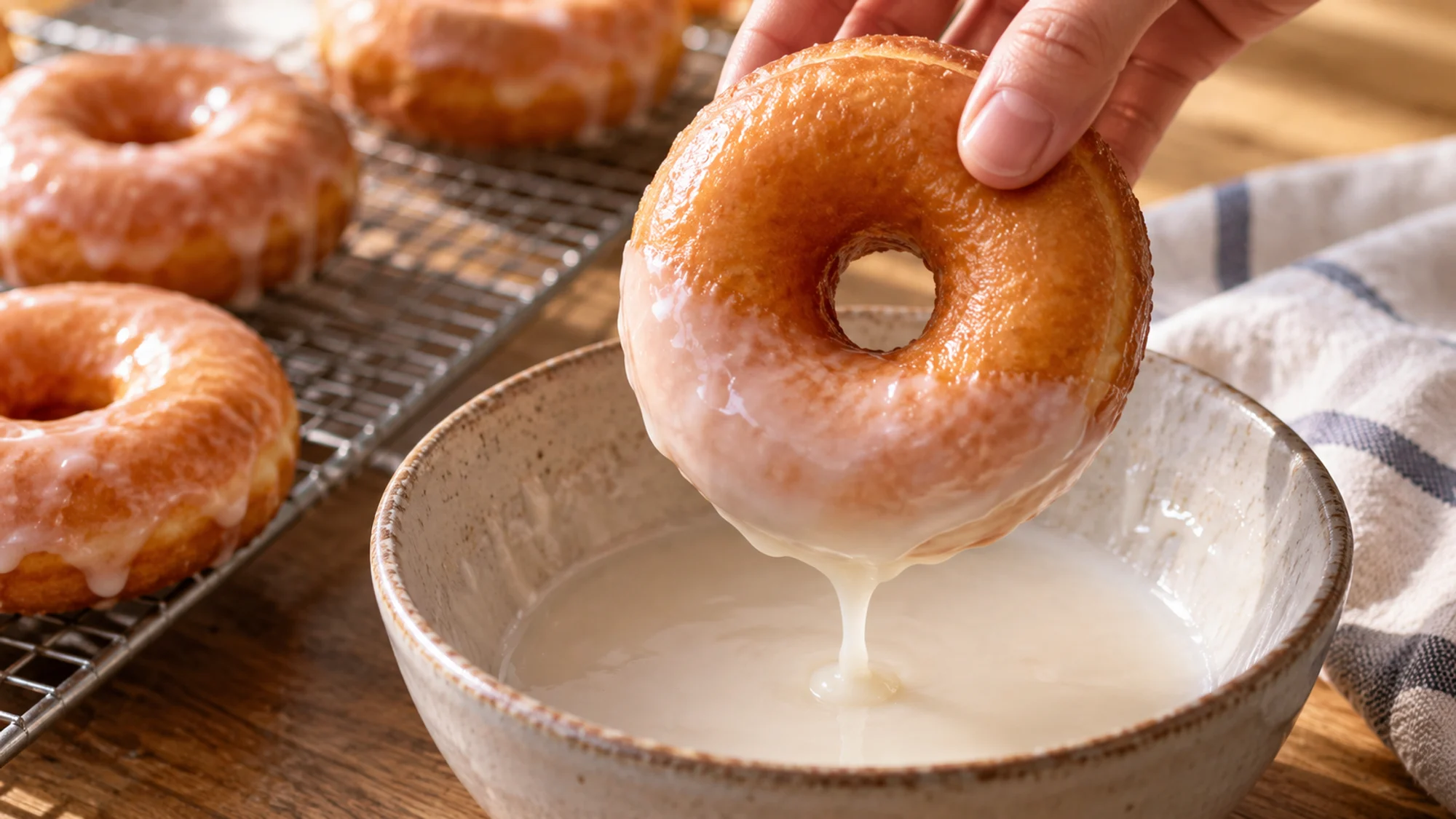
A warm donut is mostly a texture story: a delicate golden outside, a soft middle, and a glaze thin enough to crack gently at the first bite. These donuts use a yeast dough, two rises, and a short fry before a dip in vanilla glaze. Give the dough time to become puffy, then keep the oil temperature steady.
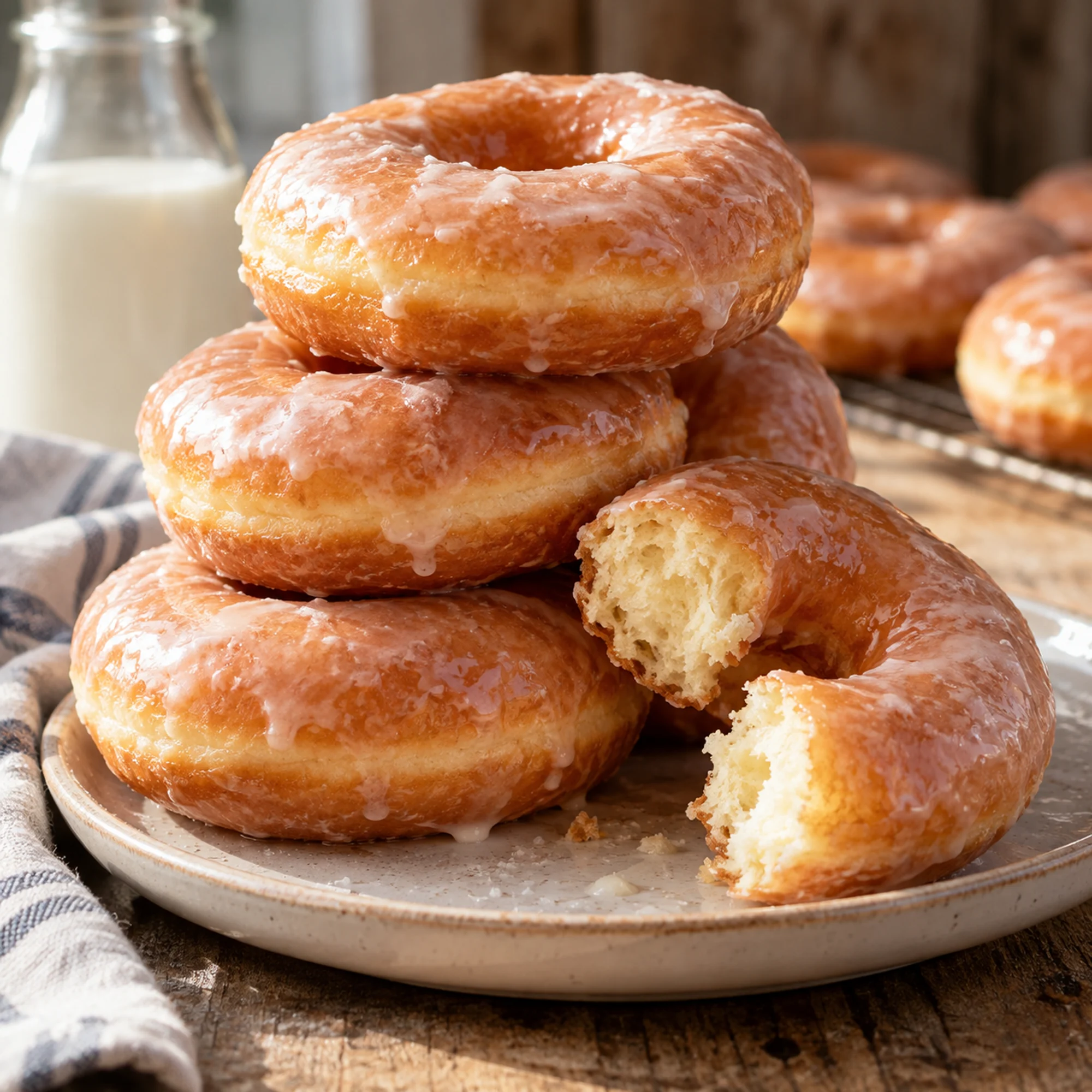
Watch the dough as well as the clock. A well-risen ring feels light and puffy before frying, and steady oil helps it cook through while turning evenly golden.
I prefer a simple vanilla glaze for this batch because the airy dough deserves attention. There is no need for a thick frosting or a tower of toppings. Plan this for a stretch of time when you can stay in the kitchen during frying and enjoy the donuts soon after they set.
Serving suggestions for donuts
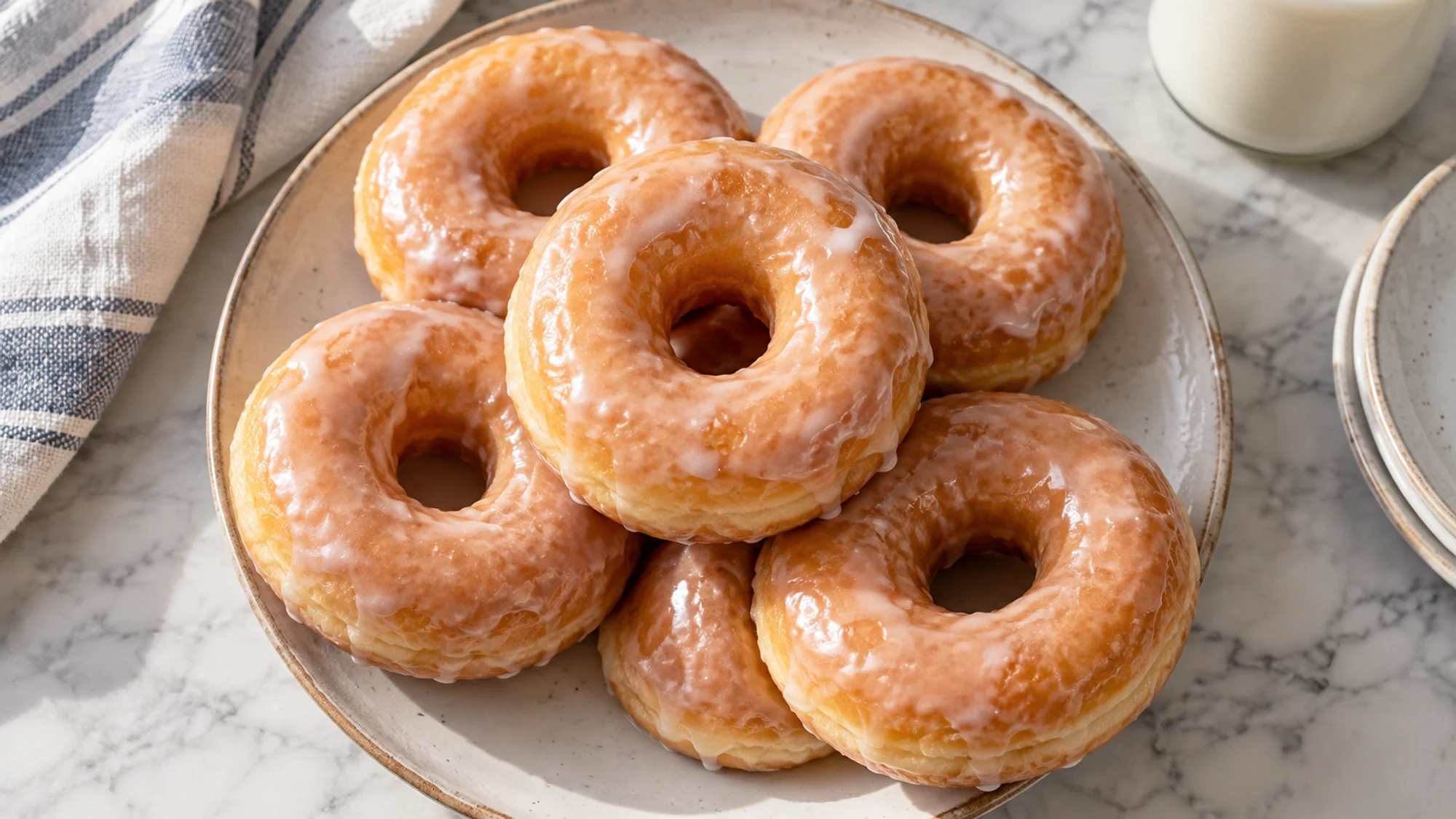
Serve the donuts once the glaze has set enough to stop dripping but the crumb still feels fresh and soft. A wire rack over a tray catches the excess glaze and keeps the bottoms from sitting in a puddle. Set out small plates because a thin glaze can still leave sweet fingerprints.
A cup of coffee or plain tea gives the sweetness some balance. Dishora’s café de olla has cinnamon and piloncillo if you want a more aromatic pairing. I would keep the rest of a brunch spread simple, with fruit and something savory alongside.
The donuts are at their best the day they are made. If there are extras, let them cool before covering loosely for short storage. For longer keeping, freeze unglazed donuts and glaze after thawing and gently warming. A fresh, tender texture is more appealing than a large batch saved too long.
Let the glaze set on a rack, then serve the donuts while the crumb is still soft and fresh.
Donuts variations
For a less sweet finish, skip the glaze and toss warm donuts lightly in cinnamon sugar. That is a different topping from the measured vanilla version, so prepare it separately rather than adding it over the glaze. Plain fried holes are also good for checking how the dough cooks.
Vanilla can be replaced by a small amount of lemon zest in the glaze for a citrus direction. Keep the milk and powdered sugar balance similar so it stays thin. I like a glaze that leaves a light coat; if it falls off completely, let the donuts cool for another minute before dipping.
Measure flour carefully so the dough does not become stiff. This flour measuring guide explains the difference between spooned and packed cups. Add only enough dusting flour to handle the dough, and reroll scraps once so the later donuts stay tender.
Choose one simple finish and keep the dough soft; extra flour changes the crumb more than a topping does.
Health benefits and balance
Donuts are a sweet fried treat, and a modest portion can fit into an otherwise varied day of eating. The recipe uses milk, egg, flour, butter, and sugar for its familiar dough texture. There is no reason to dress that up as a health benefit.
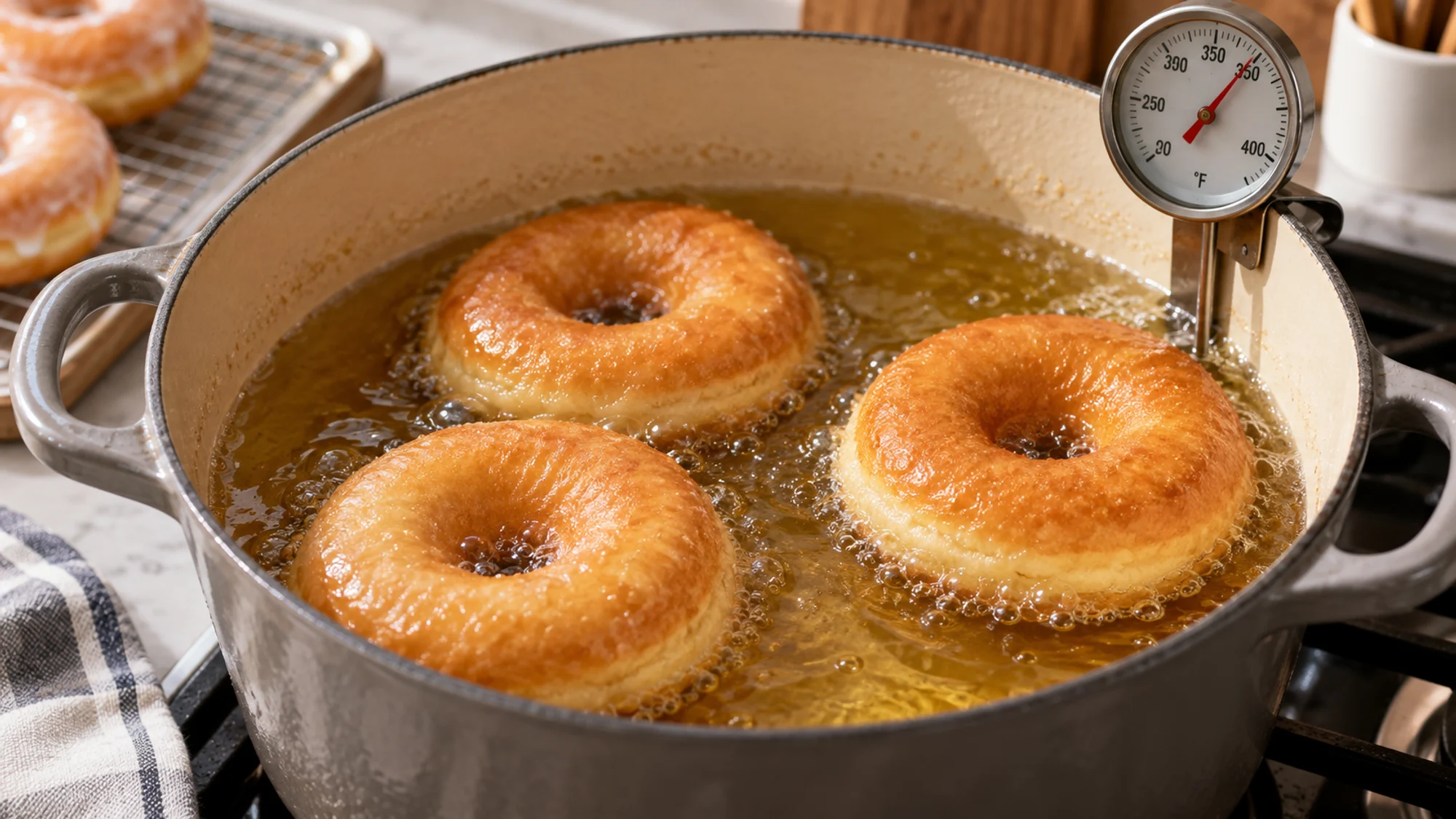
The useful focus here is safe frying. Use a deep, heavy pot with plenty of space above the oil, a reliable thermometer, and a clear work area. This frying guide covers practical handling of hot oil.
Keep water away from the pot, lower dough gently, and fry small batches so the oil temperature recovers. Do not leave the hot oil unattended. Let it cool fully before moving or storing it. Keep children and pets away from the cooking area while you work.
Enjoy the donuts for their flavor and texture, and give the hot oil your full attention.
Motivation conclusion
Set out the rack, glaze bowl, and frying tools before the dough finishes its second rise. This small bit of organization matters when the first batch comes out golden. Test one donut, let it cool briefly, and check that the middle is cooked before continuing.
Turn the heat up or down in small steps to hold the oil near its target. Then give the warm donuts a quick dip and a quiet minute on the rack. I would choose a dozen well-risen rings over rushing the dough; that soft interior is the whole reward for the waiting.
Patience during the rise and attention during the fry make a simple glazed donut worth the afternoon.
Donuts

Ingredients
- 3/4 cup whole milk warmed to 105–110°F
- 2 1/4 tsp active dry yeast
- 1/4 cup granulated sugar divided
- 1 large egg
- 3 cups all-purpose flour 360 g, plus a little for dusting
- 4 tbsp unsalted butter melted and cooled
- 1/2 tsp table salt
- 6 cups neutral frying oil enough for 2 inches, never more than halfway up the pot
- 2 cups powdered sugar
- 1/4 cup whole milk
- 1 tsp vanilla extract
Equipment
- Large mixing bowl
- Small saucepan
- Whisk
- Measuring cups and spoons or kitchen scale
- Rolling Pin
- 3-inch donut cutter
- Baking sheets
- Deep heavy 6-quart pot
- Frying thermometer
- Spider or slotted spoon
- Wire rack
Instructions
- Warm 3/4 cup milk to 105–110°F (41–43°C). Stir in the yeast and 1 teaspoon of the measured granulated sugar. Let stand 5 to 10 minutes, until foamy.
- Stir in the remaining granulated sugar, egg, cooled melted butter, flour, and salt. Knead on a lightly floured surface for 8 to 10 minutes, until smooth and soft, using only enough extra flour to prevent sticking.
- Place in a lightly oiled bowl, using a few drops of the measured frying oil. Cover and let rise in a warm place 60 to 90 minutes, until doubled.
- Roll the dough 1/2 inch thick. Cut rings with a 3-inch donut cutter, saving the holes. Place on lightly floured baking sheets. Reroll scraps once. Cover loosely and let rise 30 to 45 minutes, until puffy.
- Add about 2 inches of oil to a deep heavy pot, never filling it more than halfway. Heat to 350°F (175°C). Fry 2 or 3 donuts at a time for about 60 to 90 seconds per side, until golden and cooked through. Fry holes briefly, turning often. Lift out with a spider and drain on a wire rack. Keep oil near 350°F between batches.
- Whisk powdered sugar, 1/4 cup milk, and vanilla until smooth. Dip warm, not piping-hot, donuts into the glaze, then return to the rack to set. Enjoy the same day.
Video
Notes
Tried this recipe?
Let us know how it turned out!Emily Parker is DISHORA’s recipe-writing persona, bringing a warm, practical voice to everyday cooking. Her focus is simple ingredients, comforting flavors and clear steps that make a dish feel approachable. From cozy dinners to something sweet, Emily’s recipes invite readers to try something delicious and make it their own.